The Second Temple of Jerusalem stood at the center of Jewish religious and national life for centuries. Built after the return of Jewish exiles from Babylon, enlarged into a monumental complex during the reign of Herod the Great, and ultimately destroyed by the Romans in 70 CE, the Second Temple shaped Jewish history in ways that continue to be felt today.
For Jews, the Temple was much more than an impressive building. It was the Beit Hamikdash – the Holy Temple – a place of worship, pilgrimage, sacrifice, prayer and national gathering. Its destruction was one of the defining events of Jewish history, yet the memory of the Temple remained deeply embedded in Jewish prayer, ritual and hope.
This article explores the history of the Second Temple, how it differed from the First Temple, what happened during the Herodian period, why the Romans destroyed it, what remains today, and how the idea of a future Third Temple continues to appear in Jewish tradition.
What Was the Second Temple of Jerusalem?
The Second Temple was the Jewish Temple that stood in Jerusalem from the late sixth century BCE until 70 CE. It replaced the First Temple, traditionally associated with King Solomon, which had been destroyed by the Babylonians in 586 BCE.
After the Babylonian Empire fell to Persia, the Persian ruler Cyrus permitted exiled peoples, including the Jews, to return to their homelands and restore their religious institutions. Jewish returnees began rebuilding the Temple in Jerusalem, and the Second Temple was completed around 516 BCE.
The restored Temple once again became the center of Jewish worship. Priests conducted the Temple service, sacrifices were offered, and pilgrims traveled to Jerusalem during the major pilgrimage festivals of Passover, Shavuot and Sukkot.
To understand how this Temple fit into the larger history of Jerusalem, see our history of the First and Second Jerusalem Temples.
Why Was the Second Temple So Important?
Ancient Jewish religious life was deeply connected to the Temple. It was regarded as the sacred center of Jerusalem and the place associated with God’s presence among the Jewish people.
The Temple service included daily and festival offerings administered by the kohanim, or priests. On the three pilgrimage festivals, Jews traveled to Jerusalem from throughout the Land of Israel and, in later periods, from Jewish communities beyond it.
The Temple was therefore both a religious sanctuary and a powerful symbol of Jewish unity. Jerusalem’s position as the spiritual center of Judaism became inseparable from the Temple that stood there.
Was the Second Temple the Same as Solomon’s Temple?
No. The First Temple and Second Temple stood on the same sacred mountain in Jerusalem, but they belonged to different historical periods.
The First Temple of King Solomon belonged to the biblical monarchy and was destroyed by the Babylonian army in 586 BCE. The Second Temple was constructed decades later after Jews were permitted to return from Babylonian exile.
The earliest version of the Second Temple was more modest than the Temple remembered from the age of Solomon. Over the centuries, however, the complex changed considerably. Its most dramatic transformation occurred under Herod the Great.
Herod’s Expansion of the Second Temple
King Herod the Great began an enormous renovation and expansion of the Temple complex in the late first century BCE. His project transformed the Second Temple into one of the most impressive monumental complexes in the ancient world.
Herod enlarged the platform surrounding the Temple by constructing massive retaining walls and extending the Temple Mount. The sanctuary itself was rebuilt and beautified, while large courts, gates, colonnades and supporting structures surrounded it.
This is why the Temple during the final decades before its destruction is often called Herod’s Temple. It was not a third separate Temple. It was an extensive rebuilding and enlargement of the existing Second Temple.
What Did the Second Temple Look Like?
No photograph or contemporary architectural drawing of the Second Temple survives. Our understanding comes from ancient descriptions, archaeological evidence, rabbinic texts, historical sources and the surviving structures around the Temple Mount.
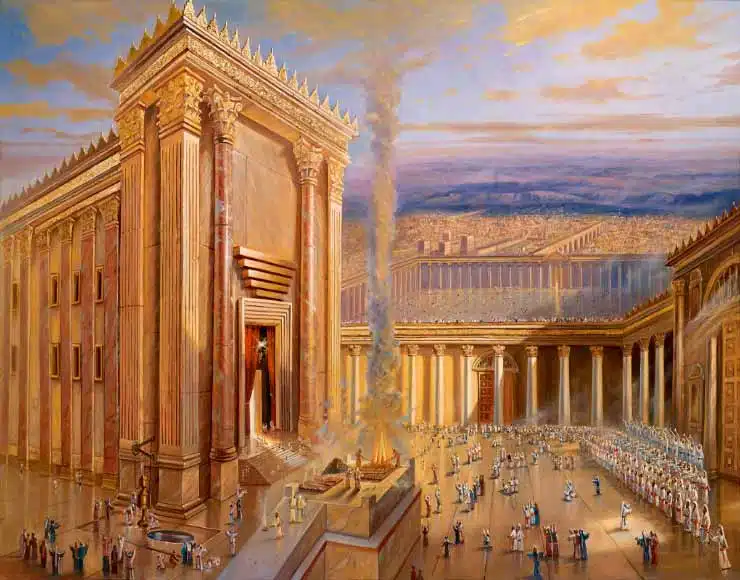
The complex included a series of courtyards leading toward progressively more sacred areas. At its heart stood the sanctuary containing the Holy Place and the Holy of Holies.
During Herod’s rebuilding program, the enormous Temple Mount platform created space for large numbers of worshippers and pilgrims. Monumental entrances and stairways connected the complex with the surrounding city.
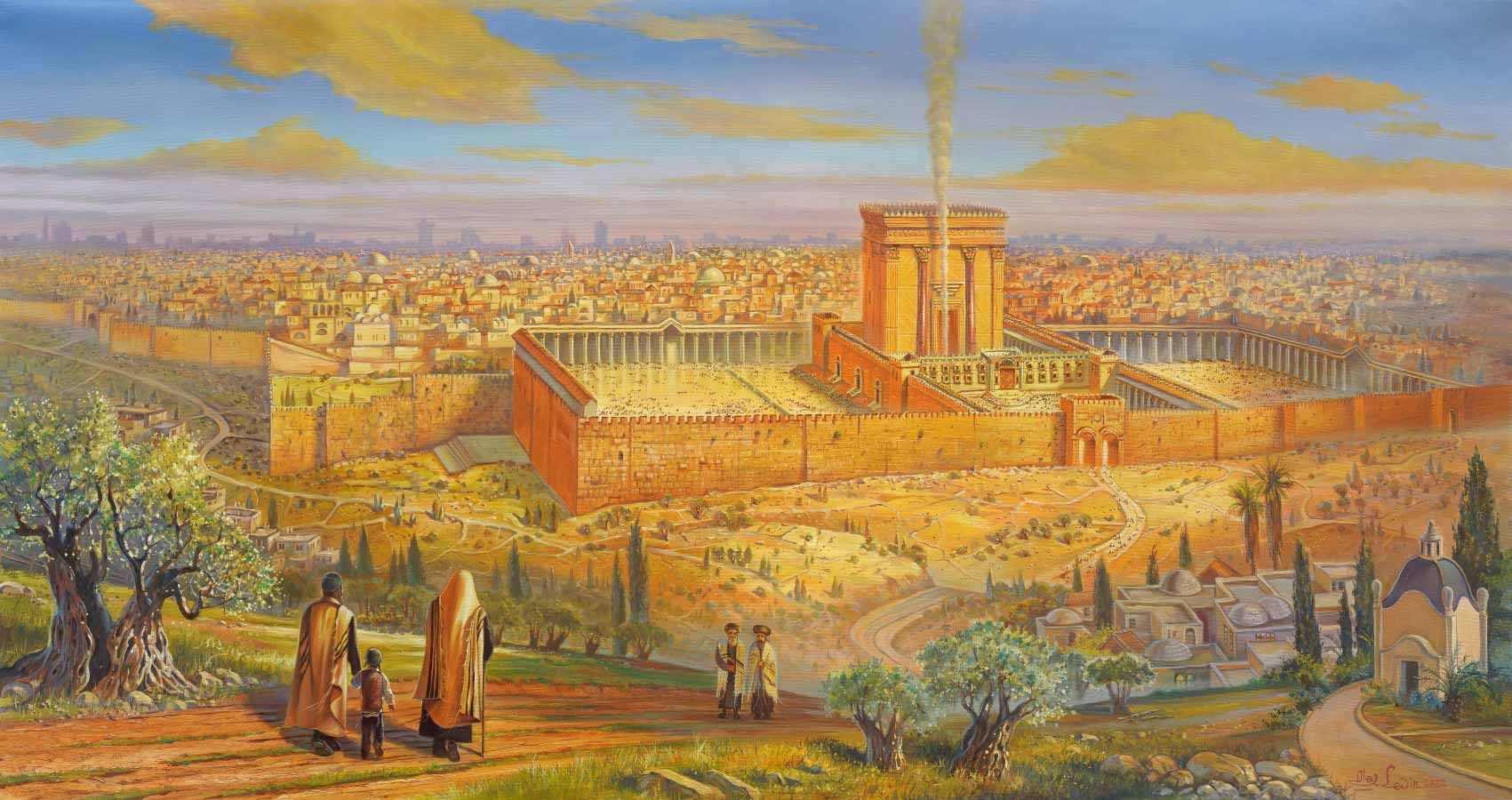
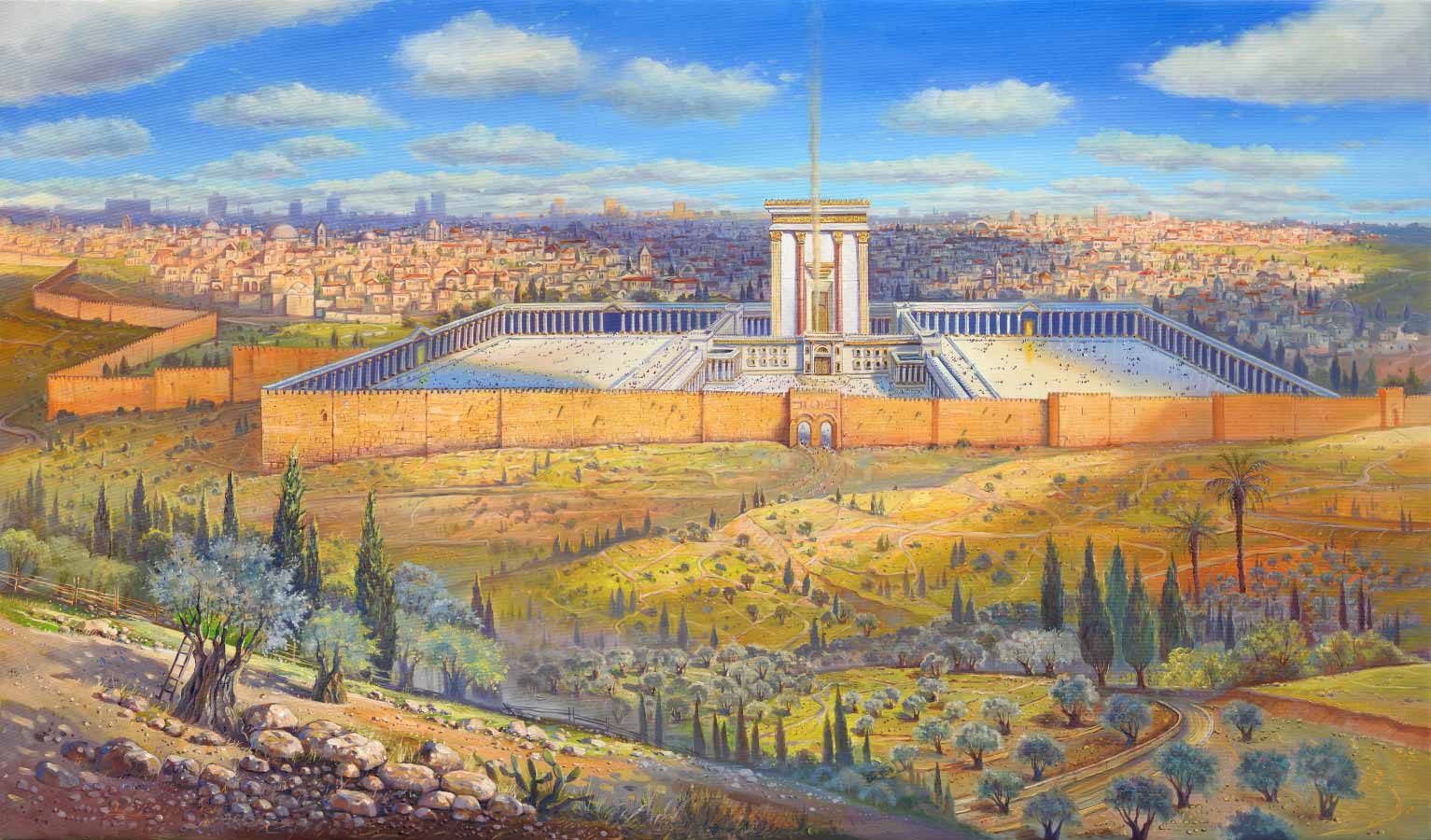
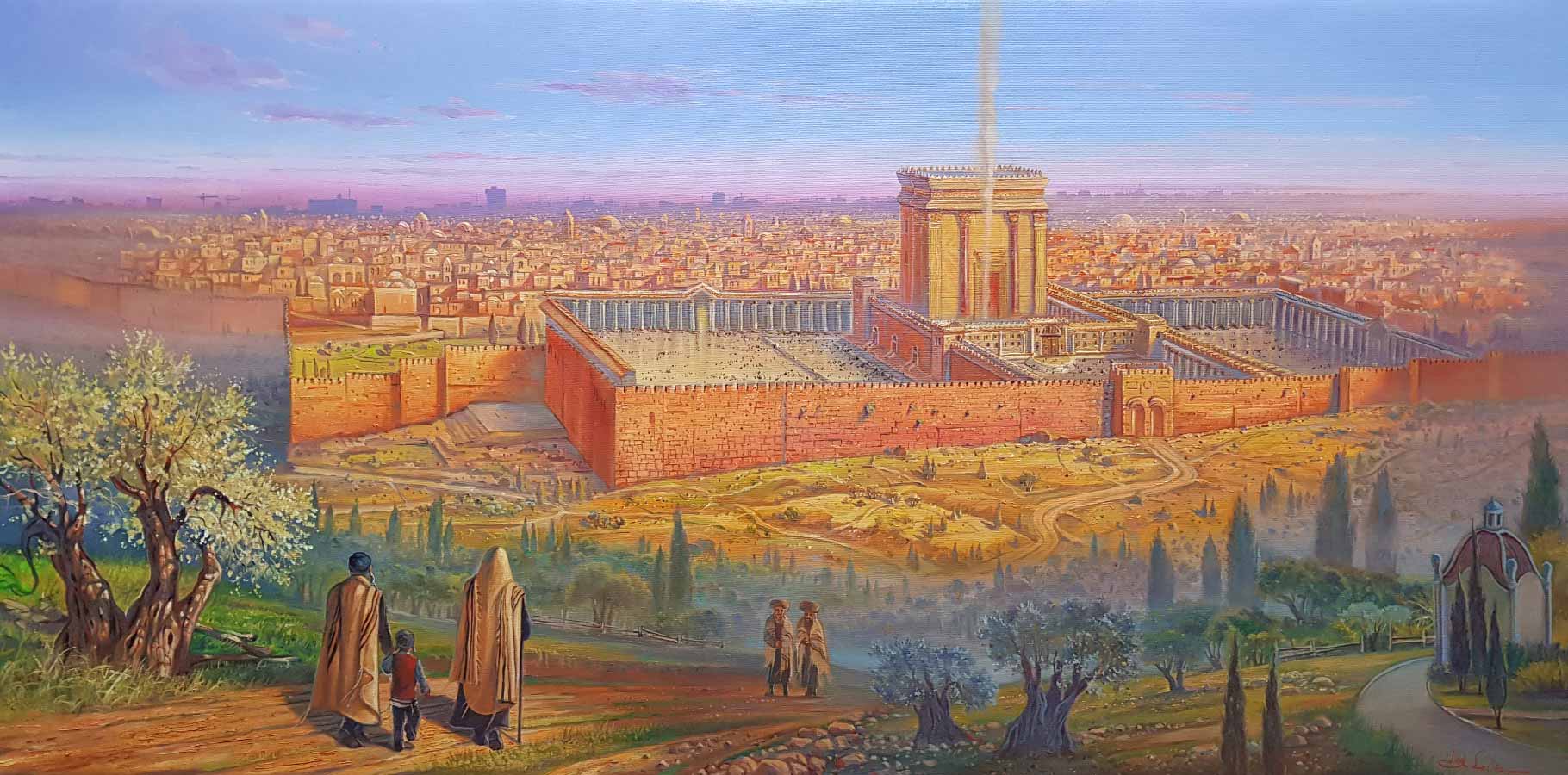
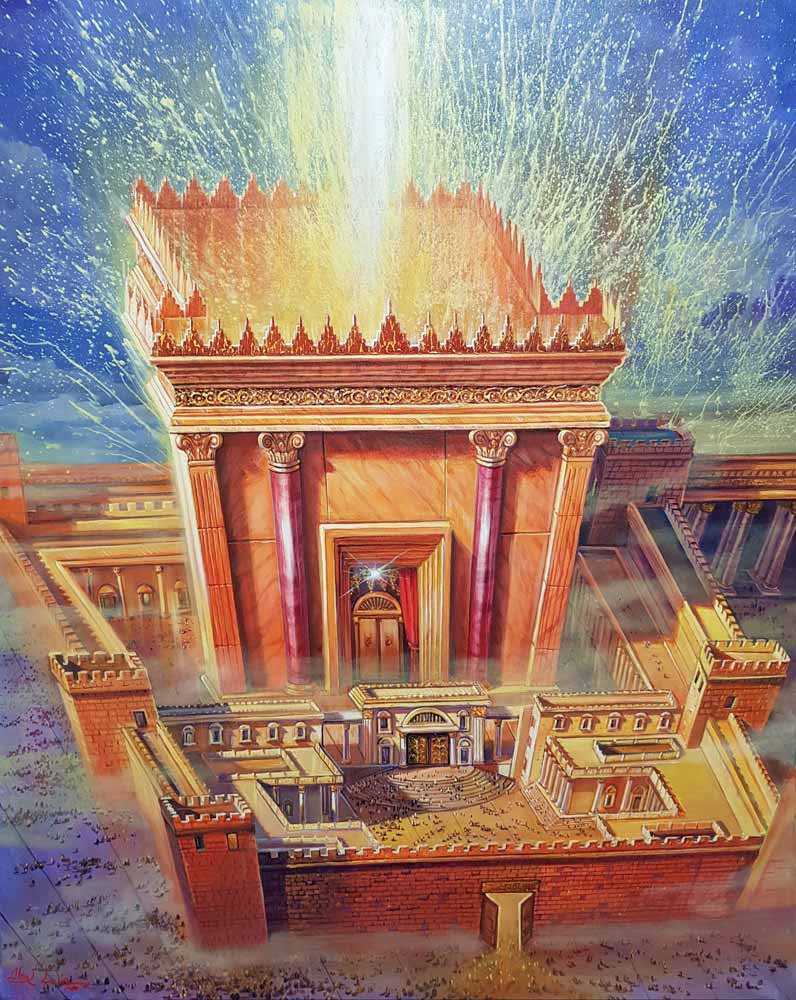
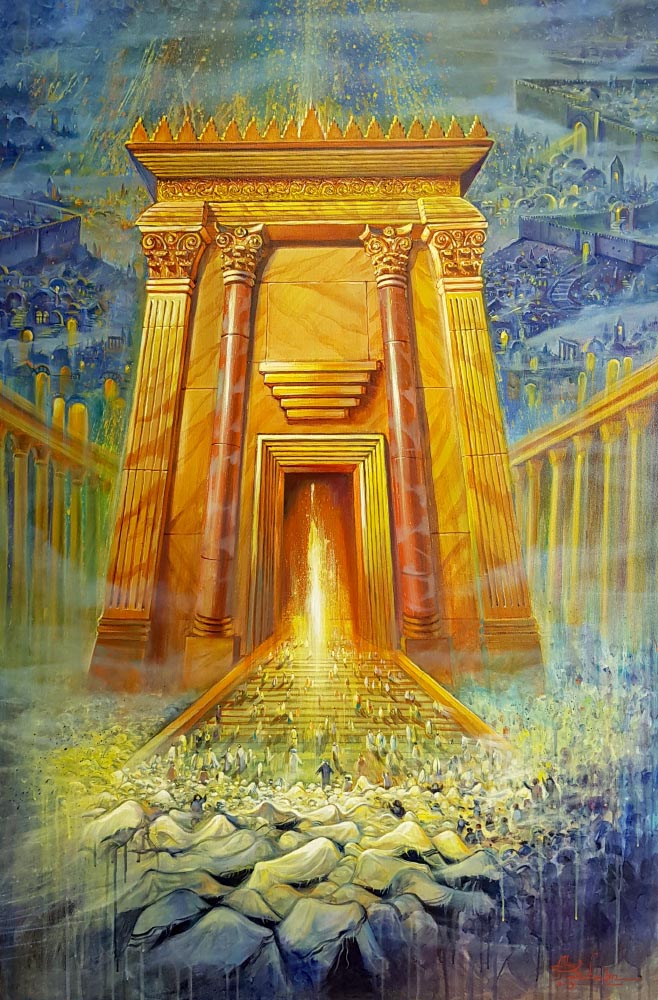
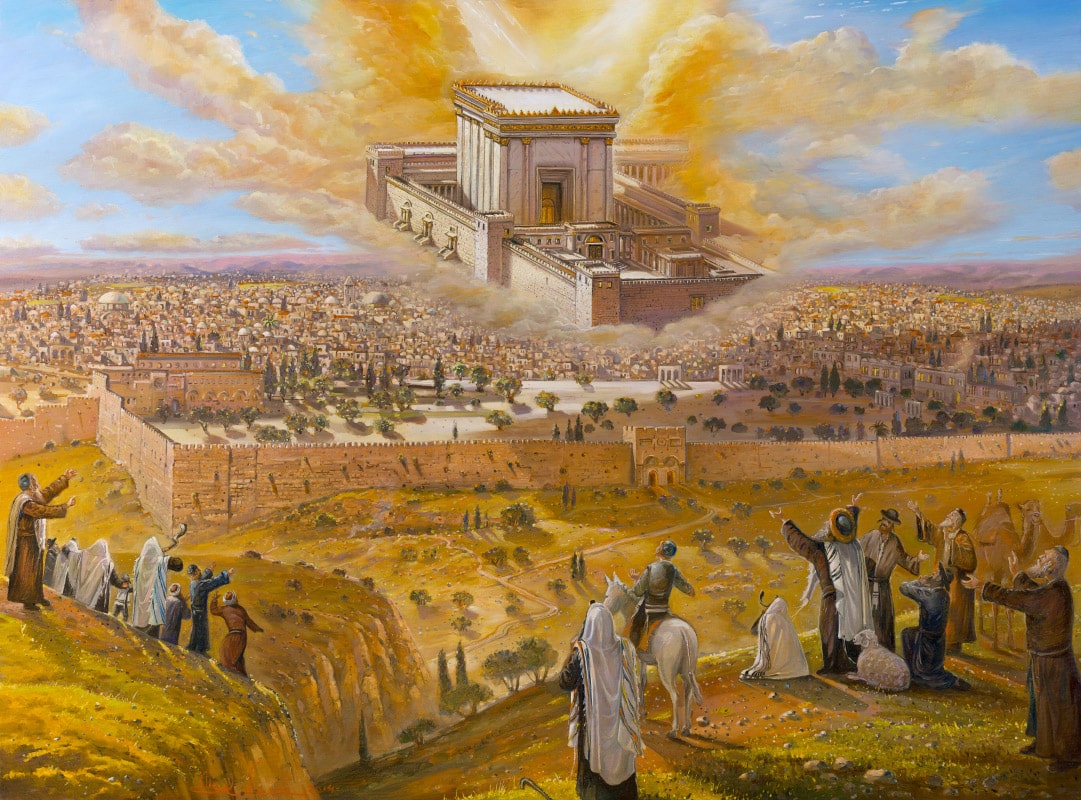
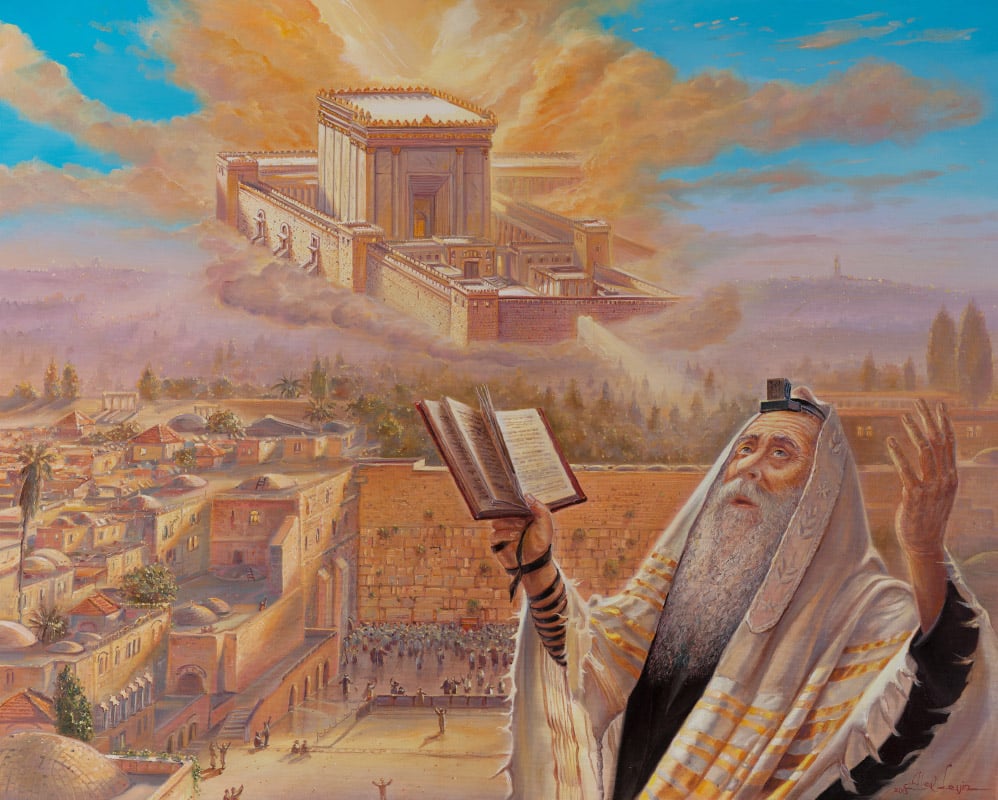
Artists and historians have produced many reconstructions of the Second Temple based on this evidence. Alex Levin’s Jerusalem Temple paintings interpret the Temple not only as a historical structure, but also as a spiritual symbol within Jerusalem.
The Second Temple Period and Jewish History
The term Second Temple period refers to a long and complex era of Jewish history. During these centuries, Jerusalem came under Persian, Hellenistic, Hasmonean and Roman rule.
Jewish society also underwent significant religious and political changes. Different Jewish groups emerged, and debates developed over law, worship, leadership and relations with foreign rulers.
The Maccabean revolt in the second century BCE led to the rededication of the Temple, an event remembered in the Jewish festival of Hanukkah. The Hasmonean dynasty subsequently ruled an independent Jewish state for a period before Roman influence and control expanded in the region.
The Second Temple in the Time of Herod and Rome
By the first century CE, Jerusalem had become a major pilgrimage center within the Roman Empire. During the festivals, enormous numbers of visitors came to the city and the Temple Mount became the focal point of worship.
At the same time, political tensions increased. Roman rule, taxation, disputes over leadership and competing Jewish movements contributed to growing instability.
In 66 CE, the Great Jewish Revolt against Rome began. Roman forces eventually moved against Jerusalem, leading to a devastating siege.
Who Destroyed the Second Temple?
The Roman army destroyed the Second Temple in 70 CE during the siege of Jerusalem. Roman forces were commanded by Titus, who later became Roman emperor.
Jerusalem suffered enormous destruction during the war. The Temple was burned and demolished, ending the system of Temple worship that had stood at the center of Jewish religious life.
The Roman victory was later celebrated in Rome. The famous Arch of Titus depicts Roman soldiers carrying objects associated with the conquered Temple, including the seven-branched menorah.
For a deeper look at both destructions, read why the Jerusalem Temples were destroyed.
What Happened to Judaism After the Second Temple Was Destroyed?
The destruction of the Second Temple forced Jewish religious life to adapt to a world without its central sanctuary.
Prayer, Torah study, communal worship, acts of charity and observance in the home assumed even greater importance. Rabbinic Judaism developed frameworks that allowed Jewish religious life to continue without sacrifices or a functioning Temple.
The synagogue became increasingly important as a center for prayer and study, while the memory of Jerusalem and the Temple remained present throughout Jewish liturgy.
Nearly two thousand years later, Jews still commemorate the destruction of both Temples on Tisha B’Av.
Is the Western Wall Part of the Second Temple?
The Western Wall, or Kotel, is connected directly to the Second Temple period, but it is important to describe it accurately.
The visible Western Wall is not a surviving wall of the Temple sanctuary itself. It forms part of the massive retaining wall system surrounding the expanded Temple Mount platform, much of which dates to the Herodian period.
Because of its proximity to the place where the Temple stood, the Kotel became one of Judaism’s most sacred places of prayer and pilgrimage.
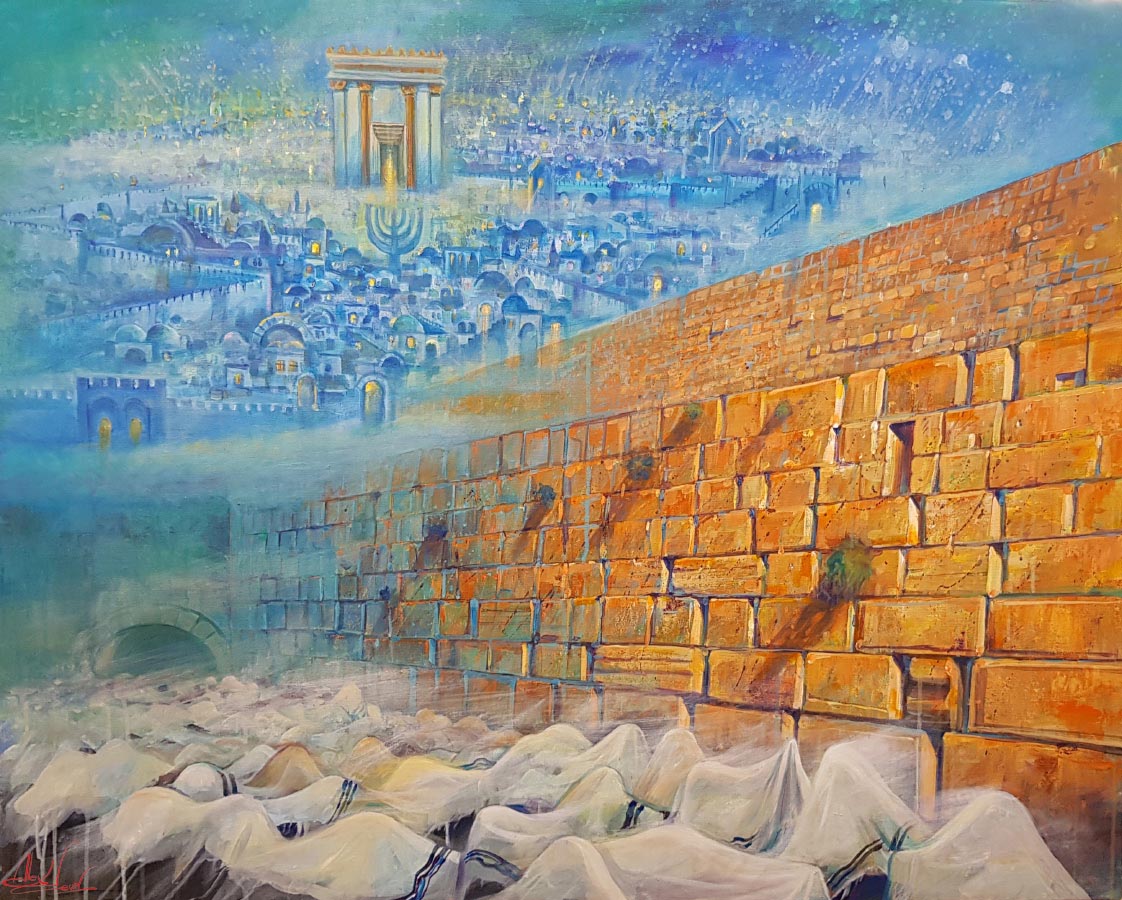
You can also explore Alex Levin’s Kotel paintings and Western Wall art, which depict the Wall through changing light, seasons and moments of Jewish prayer.
Why Is the Second Temple Still Important Today?
The Second Temple disappeared physically almost two thousand years ago, but its memory remains deeply woven into Jewish life.
References to Jerusalem and the Temple appear throughout traditional Jewish prayer. Jewish weddings include the breaking of a glass, commonly connected with the remembrance of Jerusalem’s destruction. Tisha B’Av mourns the destruction of both ancient Temples, and Passover concludes with the traditional hope, “Next year in Jerusalem.”
For historians, the Second Temple period is essential for understanding the development of Judaism in antiquity. For artists, it provides a powerful image of Jerusalem, memory, sacred space and longing.
What Is the Third Temple?
The expression Third Temple refers to the idea of a future Jewish Temple in Jerusalem following the First and Second Temples.
Traditional Jewish texts and liturgy preserve hopes for the restoration of Jerusalem and the Temple service, often in connection with the messianic age. However, Jewish views about a future Temple are not uniform.
Some understand the idea literally and anticipate an actual rebuilt Temple. Others believe its restoration will occur only through divine or messianic intervention. Some modern Jewish movements interpret the ancient language symbolically rather than as a call to rebuild the Temple or restore sacrifices.
For that reason, it is more accurate to speak about different Jewish views of the Third Temple rather than presenting a single belief shared identically by all Jews.
The Temple Mount Today
The location traditionally associated with the First and Second Temples is known in Judaism as Har HaBayit, the Temple Mount. Muslims know the site as Haram al-Sharif, the Noble Sanctuary.
Today the elevated compound contains the Dome of the Rock and Al-Aqsa Mosque and is sacred to both Judaism and Islam. Questions surrounding prayer, access, archaeology and any discussion of a future Temple are therefore religiously and politically sensitive.
The historical importance of the site, however, is unquestioned. It remains one of the most significant sacred landscapes in the world.
The Second Temple in Alex Levin’s Art
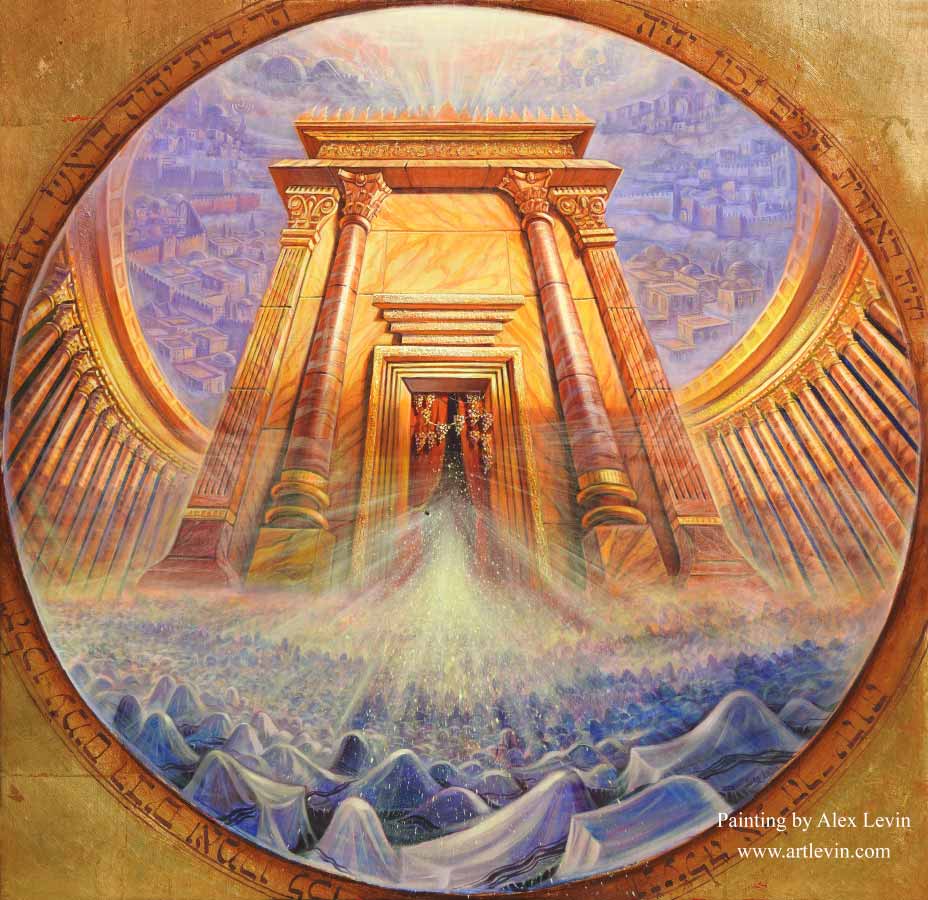
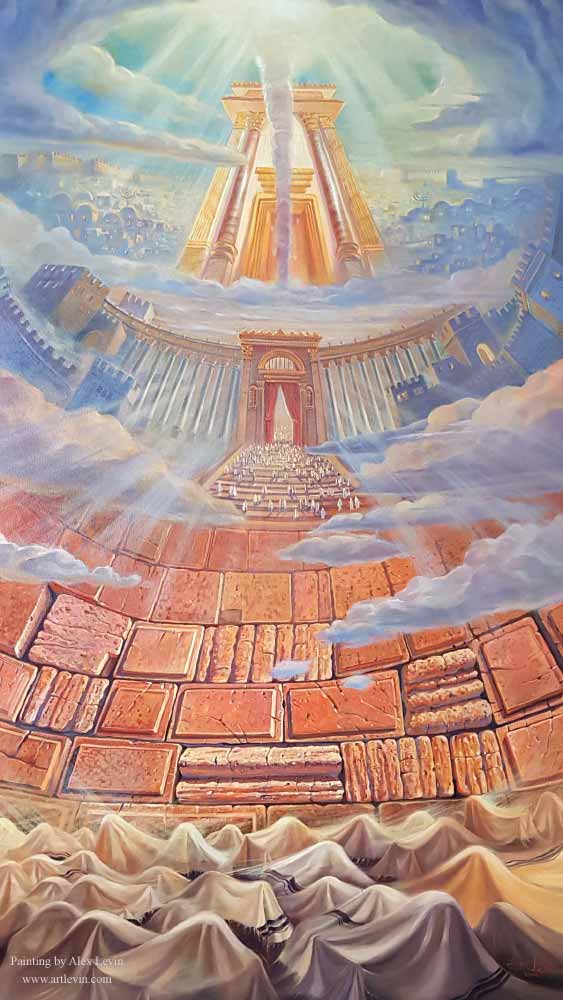
Jerusalem and the Jewish Temples have been recurring themes in Alex Levin’s work. His paintings do not attempt to function as archaeological blueprints. Instead, they combine historical inspiration with artistic imagination, spiritual light and the symbolism of Jerusalem.
Some works imagine pilgrims approaching the ancient Temple. Others depict the Temple rising above Jerusalem in radiant light or envision a future restored sanctuary.
For collectors interested in this subject, explore the complete collection of Jerusalem Temple paintings and Beis Hamikdash art by Alex Levin.
Frequently Asked Questions About the Second Temple
When was the Second Temple built?
The Second Temple was completed around 516 BCE after Jewish exiles returned to Jerusalem following the Babylonian captivity.
Who built the Second Temple?
Jewish returnees from the Babylonian exile rebuilt the Temple under Persian rule. The biblical books of Ezra and Haggai associate the rebuilding period with leaders including Zerubbabel and Joshua the High Priest.
Did Herod build the Second Temple?
Herod did not establish a completely new Third Temple. He dramatically reconstructed, expanded and beautified the existing Second Temple and enlarged the Temple Mount complex.
When was the Second Temple destroyed?
The Romans destroyed the Second Temple in 70 CE during the Great Jewish Revolt.
Who destroyed the Second Temple?
Roman forces under Titus destroyed Jerusalem and the Second Temple in 70 CE.
What remains of the Second Temple today?
The Temple sanctuary itself does not survive. Portions of the retaining walls and other archaeological remains associated with the Temple Mount complex survive, including the Western Wall.
Why was the destruction of the Second Temple important?
Its destruction ended Temple-centered sacrificial worship and accelerated major transformations in Jewish religious life, including the growing centrality of prayer, Torah study and rabbinic tradition.
Will there be a Third Temple in Jerusalem?
Traditional Jewish sources contain hopes for a future restoration of the Temple, often connected with the messianic age. Jewish communities and thinkers differ considerably, however, on whether this should be understood literally, symbolically or as something that can occur only through divine intervention.
A Temple Lost, but Never Forgotten
The Second Temple of Jerusalem stood for centuries at the heart of Jewish civilization. Its courts witnessed pilgrimage, worship, celebration and some of the most dramatic events in ancient Jewish history.
Its destruction in 70 CE ended one chapter of Jewish history while beginning another. Jewish life continued and developed across continents, but Jerusalem and the memory of the Temple were never forgotten.
That combination of history, loss, faith and hope is why the Temple continues to inspire historians, worshippers and artists today – and why it remains one of the most powerful symbols in Jewish art.
Explore: Jerusalem Temple Paintings and Beis Hamikdash Art