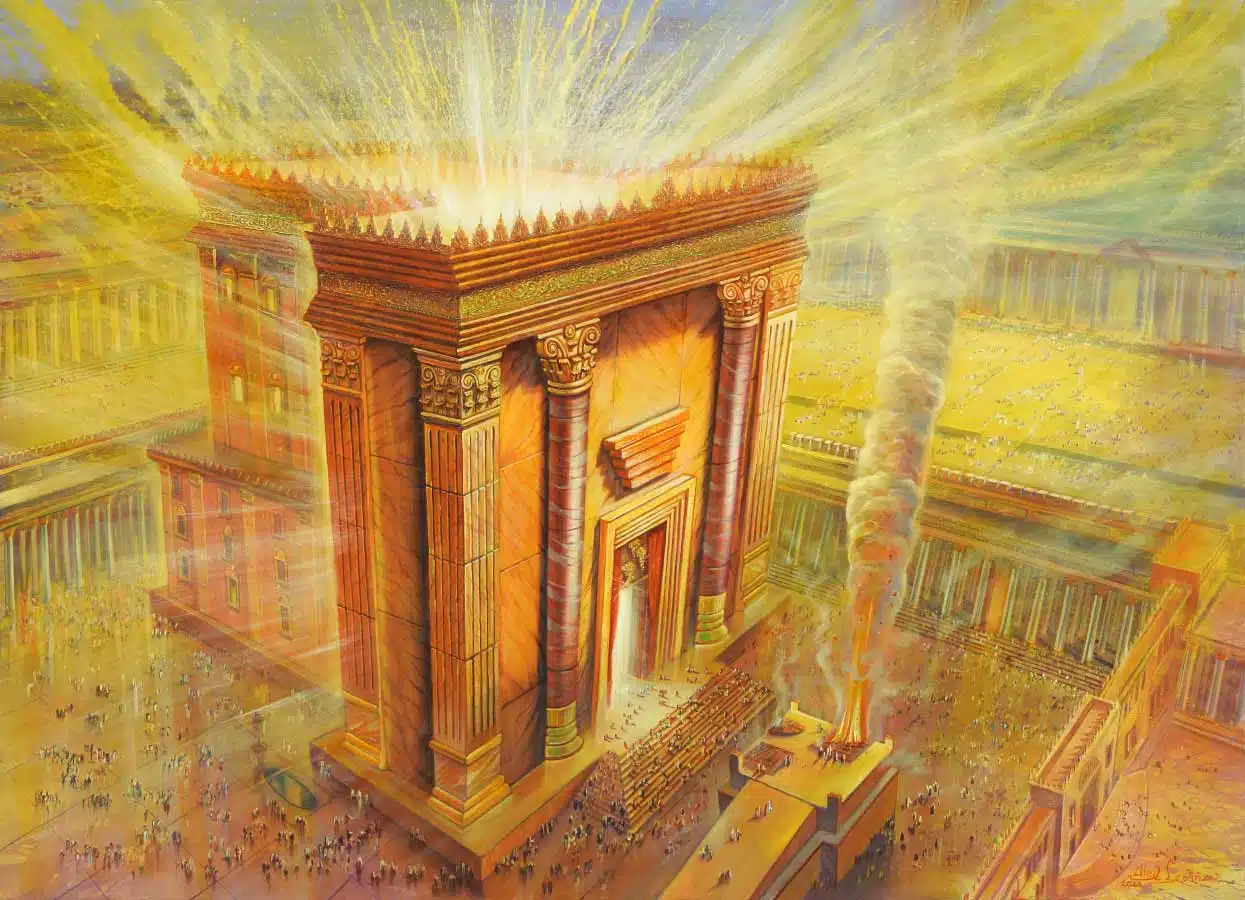
The First and Second Temples of Jerusalem – known in Hebrew as the Beit Hamikdash or Beis Hamikdash – stood at the center of Jewish religious and national life for centuries.
Built on the Temple Mount in Jerusalem, the Temples were places of worship, pilgrimage, sacrifice, prayer, and spiritual connection. Their history continues to shape Jewish tradition, prayer, art, and the enduring connection to Jerusalem.
Today, the story of the First and Second Temples remains one of the most important chapters in the history of Jerusalem and the Jewish people.
What Was the Beis Hamikdash?
The Hebrew term Beit Hamikdash, also commonly written Beis Hamikdash, means “The Holy House” or “The Holy Temple.”
It refers to the ancient Jewish Temple in Jerusalem that stood on the Temple Mount. Jewish tradition recognizes two historic Temples: the First Temple, associated with King Solomon, and the Second Temple, built after the return from the Babylonian exile.
Both Temples served as the spiritual center of Jewish life and as the destination for major pilgrimage festivals, including Passover, Shavuot, and Sukkot.
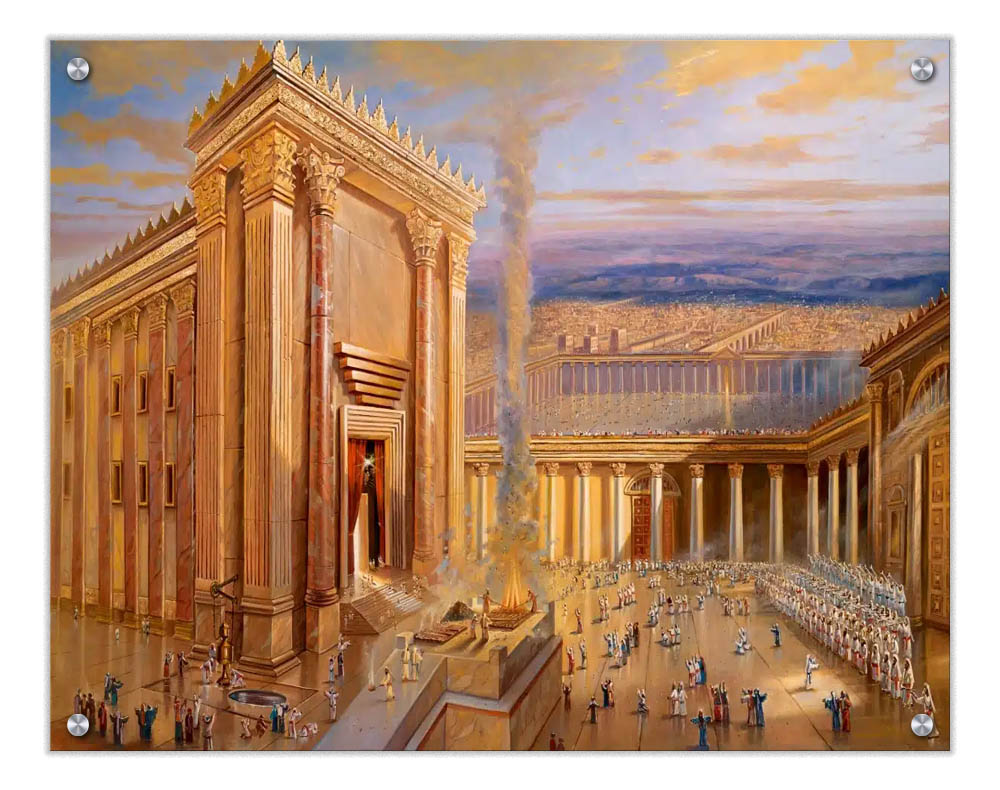

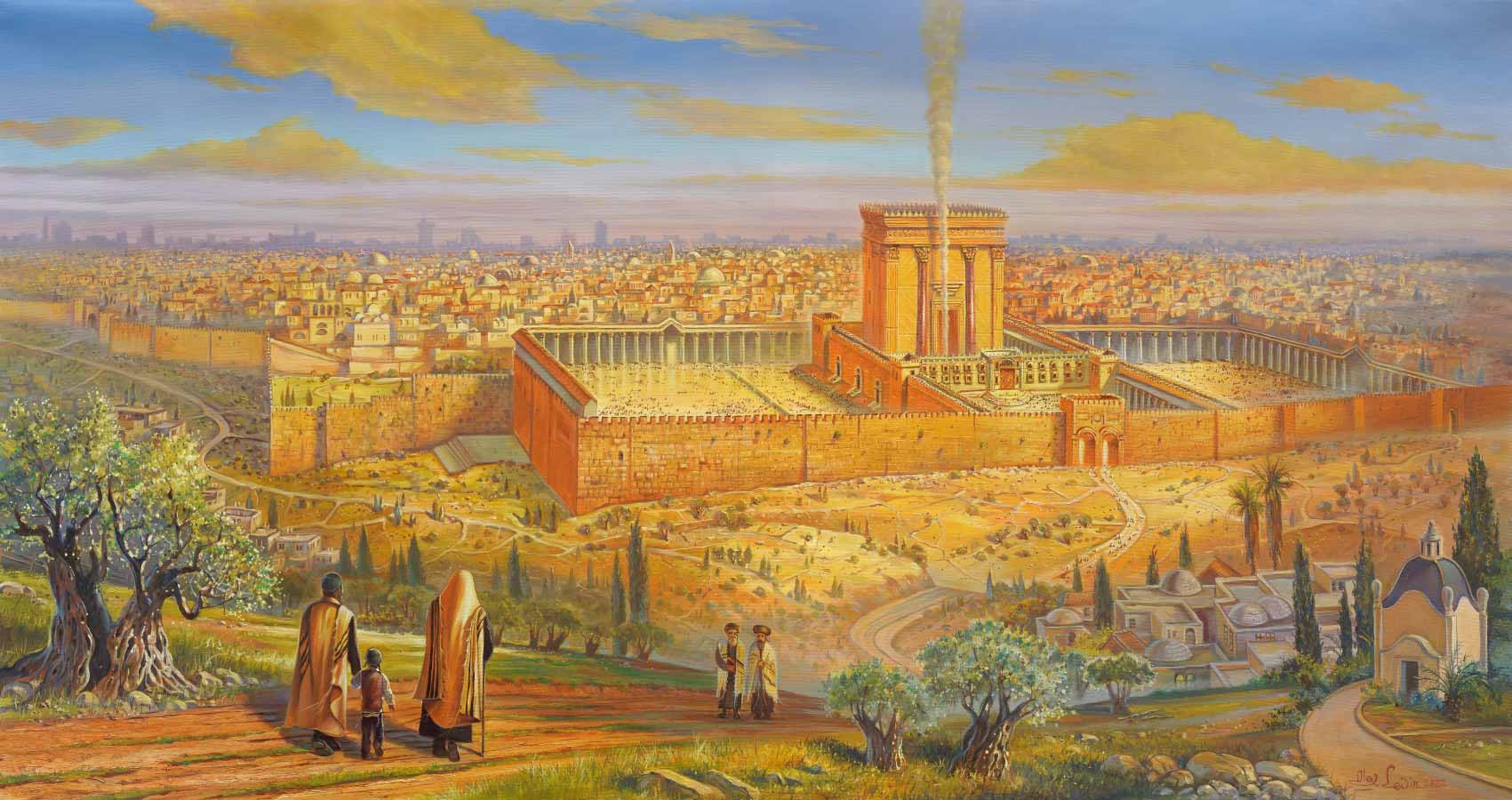
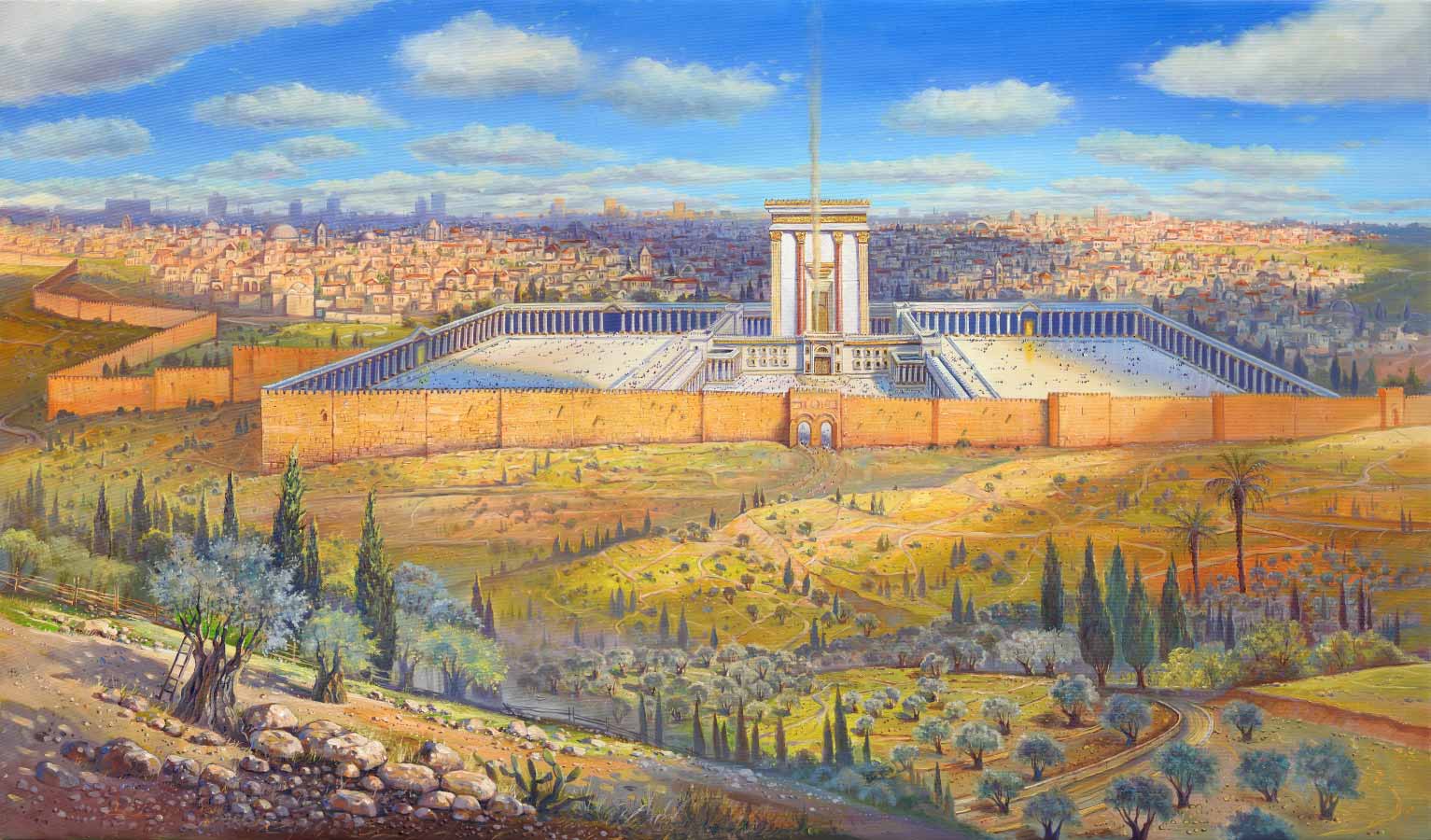
Who Built the First Temple in Jerusalem?
According to the Hebrew Bible, King Solomon built the First Temple in Jerusalem after the reign of his father, King David.
King David had established Jerusalem as the political and spiritual center of the united Kingdom of Israel and prepared for the construction of the Temple. His son Solomon ultimately carried out the project.
The First Temple, also known as Solomon’s Temple, stood on the Temple Mount and became the central place of worship for ancient Israel.
Its construction represented the establishment of a permanent sanctuary in Jerusalem, replacing the portable Tabernacle that had accompanied the Israelites during earlier periods of their history.
When Was the First Temple Built?
The First Temple is traditionally dated to the 10th century BCE, during the reign of King Solomon.
Biblical tradition describes the Temple as a magnificent structure containing sacred objects and spaces, including the Holy of Holies.
The Temple became the religious heart of Jerusalem and played a central role in Jewish worship during the First Temple period.
When Was the First Temple Destroyed?
The First Temple was destroyed by the Babylonian forces of King Nebuchadnezzar II, commonly dated to 586 BCE.
The Babylonians conquered Jerusalem, destroyed the Temple, and exiled many inhabitants of the Kingdom of Judah to Babylon.
The destruction of the First Temple marked the end of the First Temple period and began one of the most significant periods of exile in Jewish history.
The memory of the destroyed Temple remained deeply embedded in Jewish religious life, literature, and prayer.
Who Built the Second Temple in Jerusalem?
After the Persian Empire conquered Babylon, Jewish exiles were permitted to return to Jerusalem.
A new Temple was constructed on the site of the earlier sanctuary. This became known as the Second Temple.
The rebuilding took place under the leadership of the returning Jewish community, and the Second Temple was completed around 516-515 BCE.
Although it was initially more modest than Solomon’s Temple, it once again became the religious center of Jewish life in Jerusalem.
When Was the Second Temple Built?
The Second Temple was completed approximately 70 years after the destruction of the First Temple, around 516-515 BCE.
It stood for nearly six centuries.
During this long period, Jerusalem changed dramatically under Persian, Greek, Hasmonean, and Roman rule.
The Temple itself also underwent major changes.

Herod and the Expansion of the Second Temple
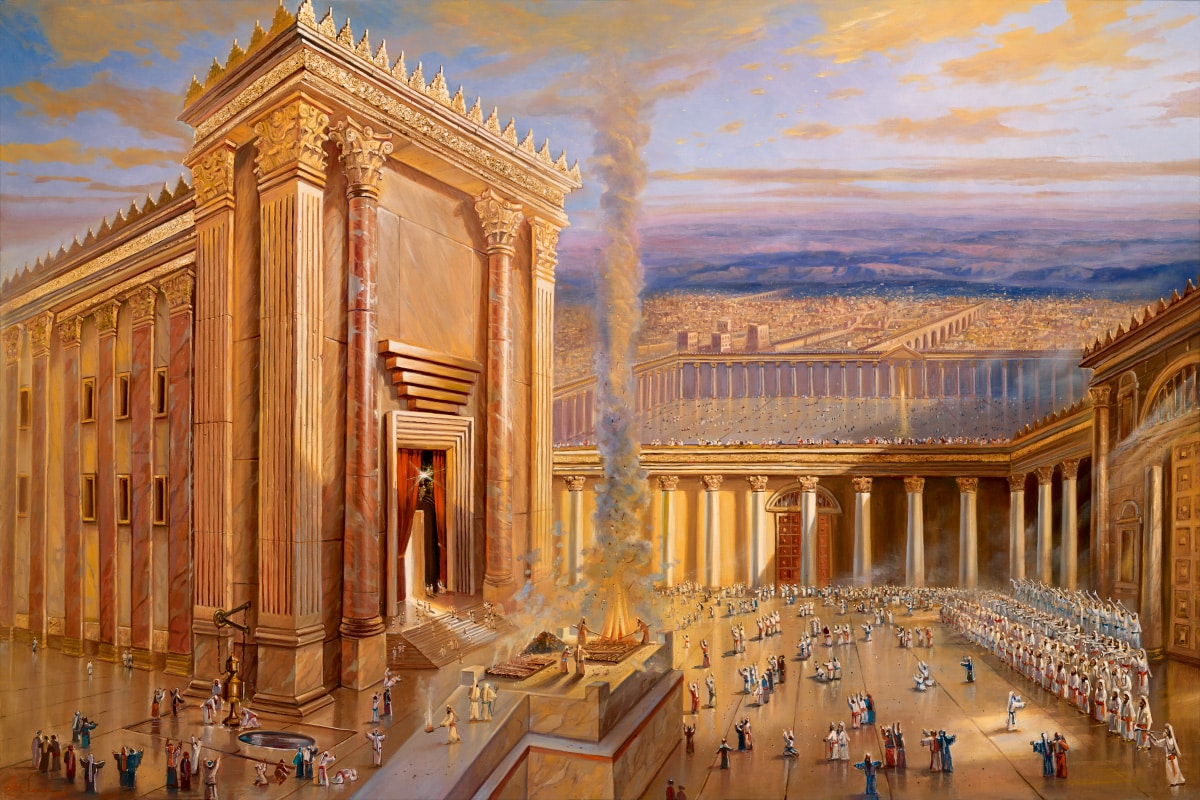
Several centuries after the Second Temple was first built, Herod the Great began an enormous renovation and expansion of the Temple complex.
Beginning in the late first century BCE, Herod’s project transformed the Temple Mount into one of the largest and most impressive religious complexes of the ancient world.
The retaining walls surrounding the expanded platform included the structure whose surviving western section is known today as the Western Wall, or Kotel.
The magnificent Temple described during the Roman period was therefore the Second Temple after extensive Herodian expansion.
When Was the Second Temple Destroyed?
The Second Temple was destroyed by Roman forces in 70 CE during the First Jewish-Roman War.
Roman troops under the future emperor Titus captured Jerusalem and destroyed much of the city, including the Temple.
The destruction of the Second Temple transformed Jewish religious and communal life and marked the end of the Second Temple period.
Without the Temple, Jewish worship increasingly centered on prayer, Torah study, synagogues, and community life.
The destruction is still commemorated in Jewish tradition, particularly on Tisha B’Av, the annual day of mourning associated with the destruction of both Temples.
How Many Times Was the Temple in Jerusalem Destroyed?
Jerusalem’s two historic Jewish Temples were each destroyed.
The First Temple was destroyed by the Babylonians in 586 BCE.
The Second Temple was destroyed by the Romans in 70 CE.
These two destructions mark the end of the First Temple and Second Temple periods respectively.
Because both Temples stood on the Temple Mount in Jerusalem, their destruction became one of the most powerful symbols of exile, loss, and the continuing Jewish connection to Jerusalem.
First Temple vs. Second Temple
| First Temple | Second Temple | |
|---|---|---|
| Also known as | Solomon’s Temple | Second Beit Hamikdash |
| Built | 10th century BCE | Completed around 516-515 BCE |
| Associated with | King Solomon | Returning Jewish exiles |
| Location | Temple Mount, Jerusalem | Temple Mount, Jerusalem |
| Major later expansion | – | Herod the Great |
| Destroyed by | Babylonians | Romans |
| Destroyed | 586 BCE | 70 CE |
Although the two Temples existed during very different historical periods, both represented Jerusalem’s central role in Jewish spiritual life.
Why Were the Jerusalem Temples So Important?
The Temples were far more than monumental buildings.
They represented the spiritual center of the Jewish people and the sacred relationship between Jerusalem, Jewish worship, and the Land of Israel.
Pilgrims traveled to Jerusalem for the major Jewish festivals. Priests performed the Temple service, offerings were brought, and the Temple Mount served as the focal point of national religious life.
Even after the Second Temple was destroyed, Jerusalem and the Temple remained central themes of Jewish prayer.
For nearly two thousand years, Jews throughout the world continued to pray toward Jerusalem and to express hope for a restored Jerusalem.
The phrase “Next year in Jerusalem”, traditionally recited at the conclusion of the Passover Seder and Yom Kippur, reflects this enduring connection.
The Jerusalem Temple in Jewish Art
For artists, the Jerusalem Temple presents a unique challenge.
Unlike the Western Wall and many landmarks of Jerusalem that can be observed directly, the ancient Temple no longer stands. Artists therefore combine historical descriptions, archaeological research, Jewish tradition, architecture, imagination, and spiritual interpretation when depicting the Beis Hamikdash.
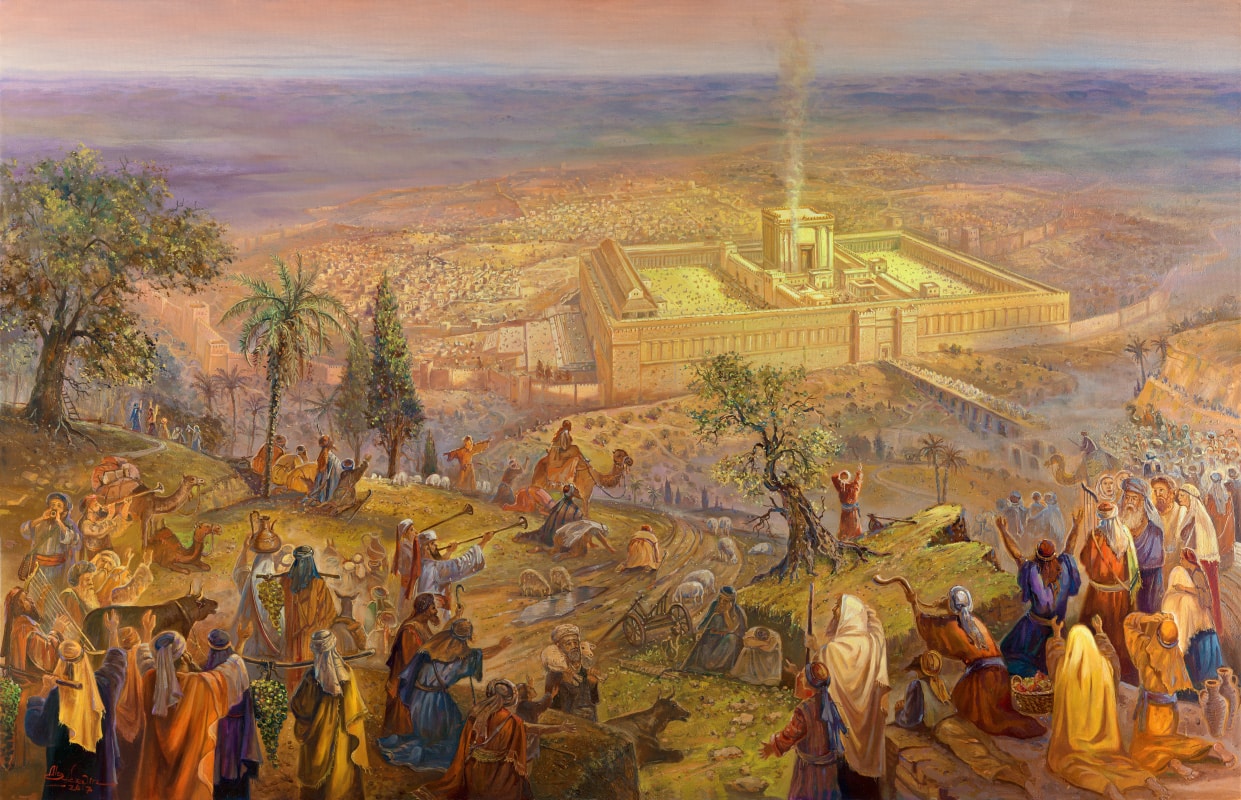
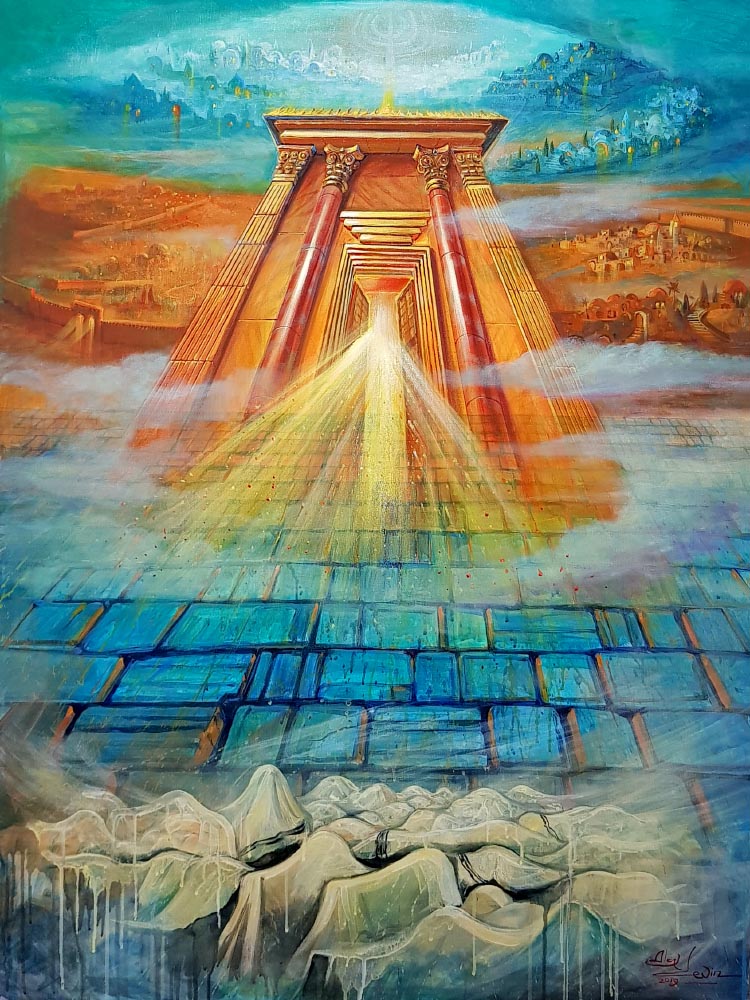
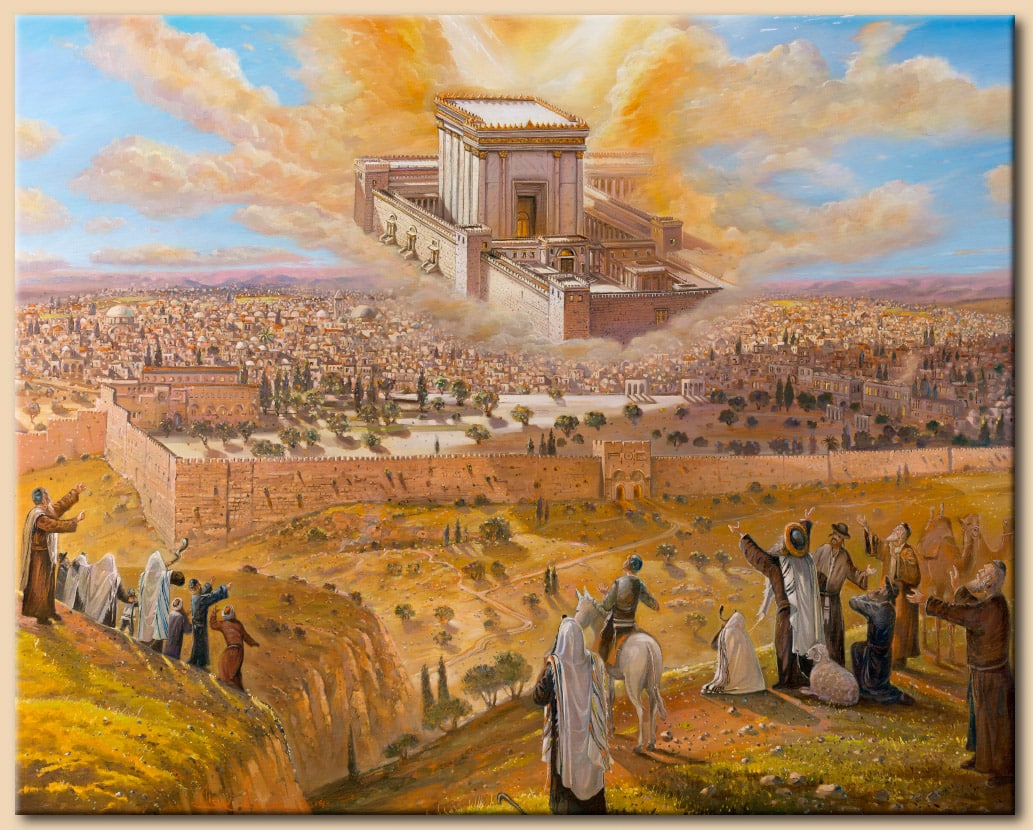
Alex Levin has explored the Jerusalem Temple extensively in his paintings, portraying scenes of the First Temple, Second Temple, and visionary images of a future Jerusalem.
His Temple paintings often combine historically inspired architecture with dramatic light, pilgrims approaching Jerusalem, the Temple Mount, and the spiritual atmosphere of the Holy City.
Jerusalem itself has remained one of the central subjects of Alex Levin’s work. You can also explore his broader collection of Jerusalem paintings, including views of the Old City, Kotel, gates, streets, and sacred landmarks.
Explore Jerusalem Temple Paintings
Explore Alex Levin’s collection of Jerusalem Temple paintings, including depictions of the First Temple, Second Temple, Beis Hamikdash, pilgrims approaching Jerusalem, and artistic visions of the Temple Mount.
View Jerusalem Temple Paintings by Alex Levin
The collection includes artwork available as fine-art reproductions as well as selected original paintings.