Jewish art spans thousands of years of history and includes far more than paintings alone. Ancient synagogue mosaics, illuminated manuscripts, Torah ornaments, ceremonial objects, architecture, sculpture, photography, and contemporary Jewish paintings all form part of a remarkably diverse artistic tradition.
There is no single style that defines Jewish art. Jewish artists have lived throughout the Middle East, Europe, North Africa, the Americas, and Israel, absorbing the artistic traditions of the places around them while interpreting Jewish faith, history, memory, community, and identity in different ways.
From ancient biblical imagery and medieval Judaica to Marc Chagall’s visions of Eastern European Jewish life and contemporary paintings of Jerusalem, Jewish art tells the story of a people across generations and continents.
What Is Jewish Art?
The term Jewish art can describe art created for Jewish religious purposes, artwork portraying Jewish subjects, or works created by Jewish artists whose cultural backgrounds influence their artistic vision.
Jewish art can therefore include many different forms:
- Biblical and Torah-inspired artwork
- Synagogue architecture and decoration
- Torah scroll ornaments and ceremonial objects
- Illuminated Jewish manuscripts
- Ketubah marriage contracts
- Paintings of Jewish holidays and traditions
- Scenes of Shabbat and Torah study
- Jewish portraits and rabbinic figures
- Shtetl and Eastern European Jewish life
- Holocaust and memorial art
- Jerusalem and Israel paintings
- Modern and contemporary Jewish art
Because Jewish communities developed in many different cultures, Jewish art has never been limited to one artistic style or technique.
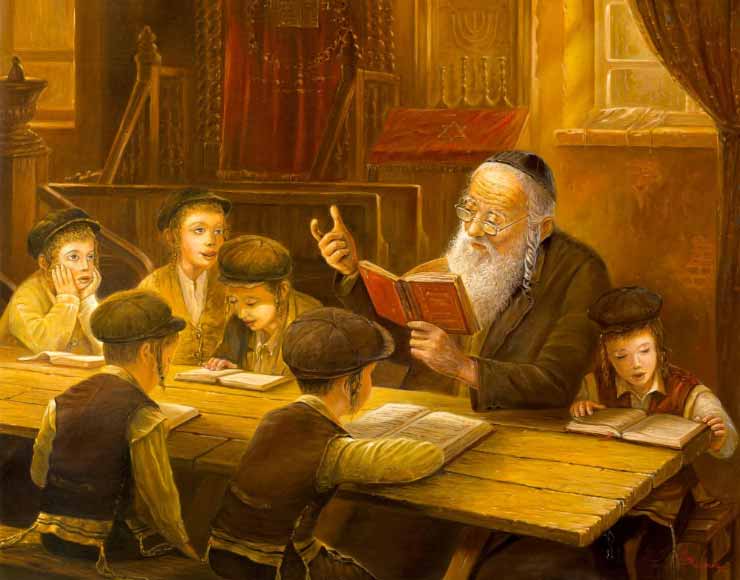
Ancient Jewish Art
Jewish artistic traditions extend back to the ancient world.
The Hebrew Bible itself describes elaborate artistic work connected with the Tabernacle and later the Temple in Jerusalem. The biblical artisan Bezalel is described in the Book of Exodus as possessing exceptional skill in working with gold, silver, bronze, stone, wood, and other materials.
Ancient Jewish visual culture included architecture, carved stone, mosaics, metalwork, ritual objects, decorative motifs, and, in some communities, figurative imagery.
Archaeological discoveries demonstrate that Jewish communities of antiquity used art in ways that were much more varied than is sometimes assumed.
The Dura-Europos Synagogue and Ancient Jewish Paintings
One of the most extraordinary surviving examples of ancient Jewish painting comes from the synagogue at Dura-Europos, an ancient city located in what is now Syria.
The synagogue was extensively decorated in the third century CE with large painted biblical scenes.
The walls included images connected with stories from the Hebrew Bible, demonstrating that at least some ancient Jewish communities created sophisticated figurative religious art.
The discovery was especially important because it challenged the once-common assumption that Jewish communities of antiquity completely avoided representations of human figures.
Today, the Dura-Europos synagogue remains one of the most important archaeological sources for understanding Jewish visual culture in late antiquity.
Ancient Synagogue Art
Other ancient synagogues throughout the Land of Israel and the wider Mediterranean world also contained elaborate artistic decoration.
Mosaic floors could include menorahs, shofars, Torah shrines, geometric patterns, plants, animals, inscriptions, and occasionally human figures.
The menorah became one of the most recognizable Jewish symbols in ancient art and appeared on mosaics, stone carvings, lamps, glass, and other objects.
These discoveries show that Jewish communities developed visual languages that reflected both Jewish religious identity and the artistic cultures surrounding them.
Was Art Forbidden in Judaism?
The relationship between Judaism and visual art is more complicated than the idea that Judaism simply prohibited images.
The Second Commandment prohibits the making and worship of idols. Throughout Jewish history, rabbinic communities interpreted the boundaries surrounding images in different ways depending on period, place, purpose, and religious context.
As archaeological discoveries such as Dura-Europos demonstrate, some Jewish communities created extensive figurative imagery while maintaining Jewish religious life.
The strongest concern historically has centered on idolatry and the religious use of images as objects of worship, rather than a universal prohibition on artistic creativity.
Jewish Art in the Middle Ages
During the Middle Ages, Jewish communities lived across Europe, North Africa, the Middle East, and parts of Asia.
Jewish artistic production from this period survives particularly through manuscripts, ceremonial objects, synagogue decoration, architecture, and personal religious items.
Jewish artists and craftsmen often worked within the artistic traditions of the societies around them while adapting those styles to Jewish texts and religious practices.
Despite periods of persecution and restrictions placed upon Jewish communities, Jewish visual culture continued to develop.
Illuminated Jewish Manuscripts
Some of the most beautiful surviving examples of medieval Jewish art are illuminated manuscripts.
Before printing became widespread, important religious texts were copied by hand. Wealthy patrons sometimes commissioned manuscripts decorated with elaborate borders, gold leaf, architectural designs, animals, biblical imagery, and scenes of Jewish life.
The Haggadah, the book used during the Passover Seder, became an especially important form of Jewish manuscript art.
Different Jewish communities produced Haggadot reflecting the artistic traditions of Spain, Italy, Germany, and other regions while illustrating the Exodus from Egypt and the rituals of Passover.
Jewish Ceremonial Art and Judaica
Another major branch of Jewish art is Judaica – objects connected with Jewish religious practice and tradition.
These objects can be both functional and highly artistic.
Examples include:
- Torah crowns and Torah pointers
- Silver breastplates and ornaments for Torah scrolls
- Menorahs and Hanukkah lamps
- Kiddush cups
- Havdalah spice boxes
- Mezuzah cases
- Shabbat candlesticks
- Etrog boxes
- Purim megillah cases
- Decorative ketubah marriage contracts
Jewish ceremonial objects were often created by highly skilled silversmiths, metalworkers, calligraphers, woodcarvers, and other craftsmen.
The design of Judaica frequently reflected the artistic traditions of the countries where Jewish communities lived.
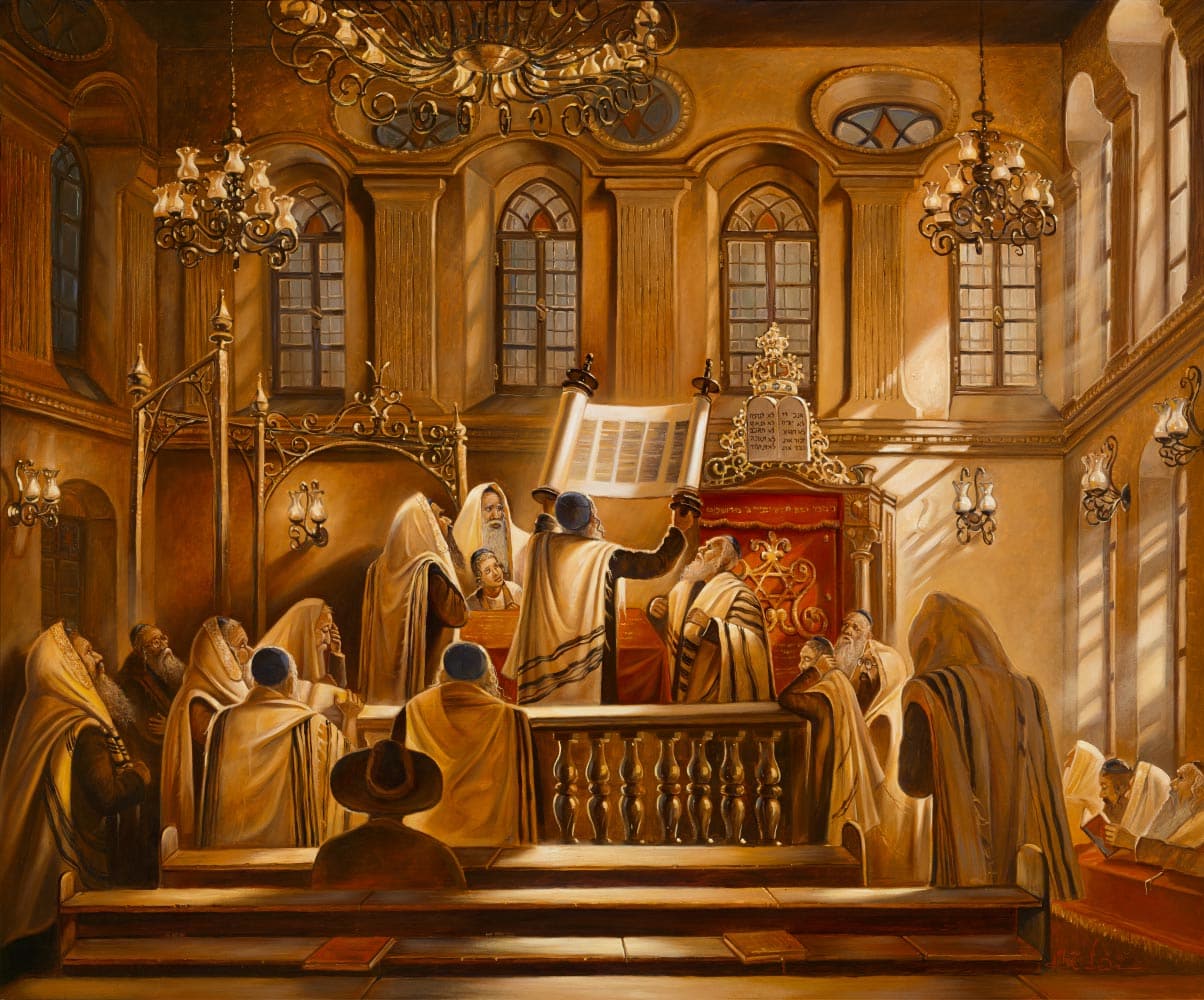
Jewish Art in the Early Modern Period
As European Jewish communities entered the modern era, opportunities for Jewish artists gradually expanded.
Political emancipation and changing social conditions enabled increasing numbers of Jewish artists to study in professional academies and participate in the broader European art world.
Some artists depicted explicitly Jewish themes, while others pursued landscapes, portraiture, abstraction, and the major artistic movements of their time without focusing primarily on Jewish subjects.
This distinction remains important today: an artist may be Jewish without producing specifically “Jewish art,” while artists from many backgrounds may create works dealing with biblical or Jewish themes.
Modern Jewish Art
The late 19th and 20th centuries produced numerous internationally important Jewish artists.
Among the best known are Marc Chagall, Camille Pissarro, Amedeo Modigliani, Chaim Soutine, Mark Rothko, Lee Krasner, Louise Nevelson, and many others.
Their artwork could not be more stylistically different.
Chagall frequently incorporated memories of Jewish life, biblical imagery, musicians, rabbis, and Eastern European villages into dreamlike compositions.
Rothko became one of the defining figures of Abstract Expressionism. Modigliani became famous for his distinctive portraits, while Pissarro was one of the founders of Impressionism.
You can explore these artists in more detail in our guide to famous Jewish artists and painters.
The Birth of Modern Jewish Art in Jerusalem
Jerusalem became an increasingly important center of Jewish artistic development during the early 20th century.
In 1906, artist and sculptor Boris Schatz founded the Bezalel School of Arts and Crafts in Jerusalem.
The institution sought to encourage Jewish artistic creativity while bringing together European artistic traditions, Jewish symbolism, Middle Eastern decorative influences, and the developing culture of the Land of Israel.
Bezalel later developed into today’s Bezalel Academy of Arts and Design and played an important role in the formation of modern Israeli art.
Jerusalem in Jewish Art
Few subjects appear as consistently in Jewish art as Jerusalem.
For generations, Jewish communities living far from the city included images of Jerusalem on synagogue walls, ritual objects, manuscripts, ketubot, and decorative artwork.
The city represented both a real geographic place and a spiritual symbol of Jewish history, prayer, exile, return, and hope.
Today, artists continue to portray Jerusalem’s Old City, the Kotel, Temple Mount, gates, streets, neighborhoods, and changing skyline.
Explore Alex Levin’s collection of Jerusalem paintings.
The Kotel in Jewish Painting
The Kotel, or Western Wall, has become one of the most recognizable subjects in modern Jewish art.
Paintings often portray worshippers praying beside the ancient stones, notes placed within the Wall, soldiers, families, rabbis, and dramatic views of the plaza throughout different times of day.
The Kotel’s connection to the Temple Mount gives it powerful historical and spiritual significance.
For contemporary artists, the Wall can represent prayer, Jewish continuity, memory, Jerusalem, and the relationship between the Jewish past and present.
View Alex Levin’s collection of Kotel paintings.
Torah Study in Jewish Art
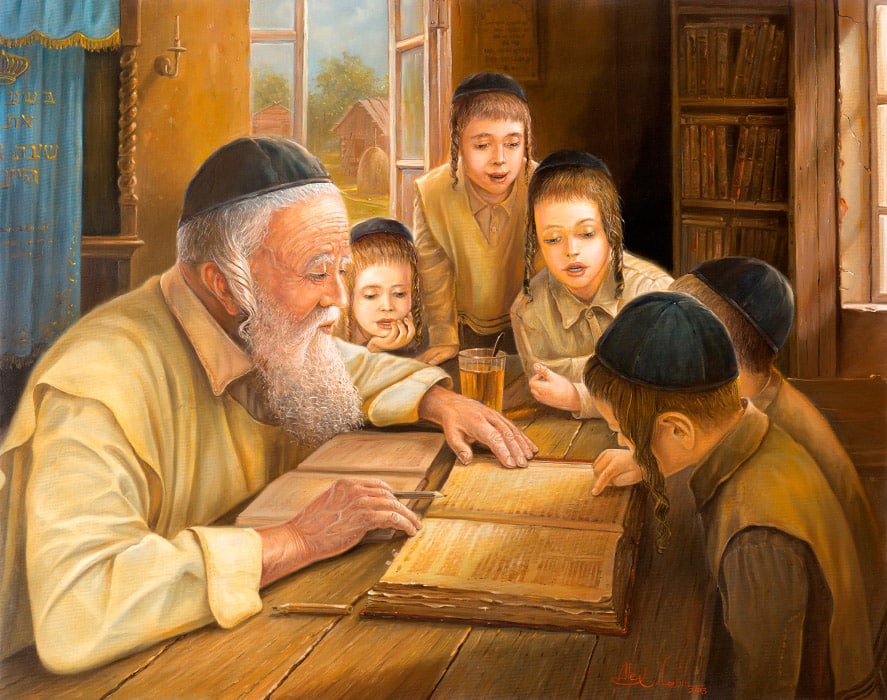
Torah study is another recurring subject in Jewish painting.
Artists have portrayed rabbis and students leaning over sacred texts, children learning Hebrew, scholars debating passages of Talmud, and families passing Jewish knowledge from one generation to another.
These scenes often emphasize the central role that learning has played in Jewish life across centuries and geographic boundaries.

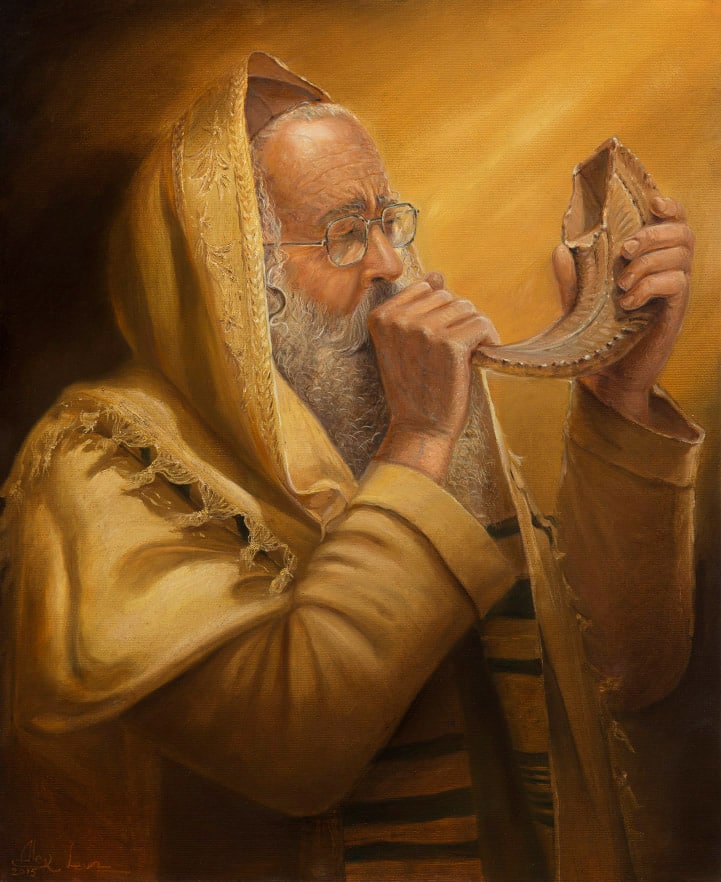
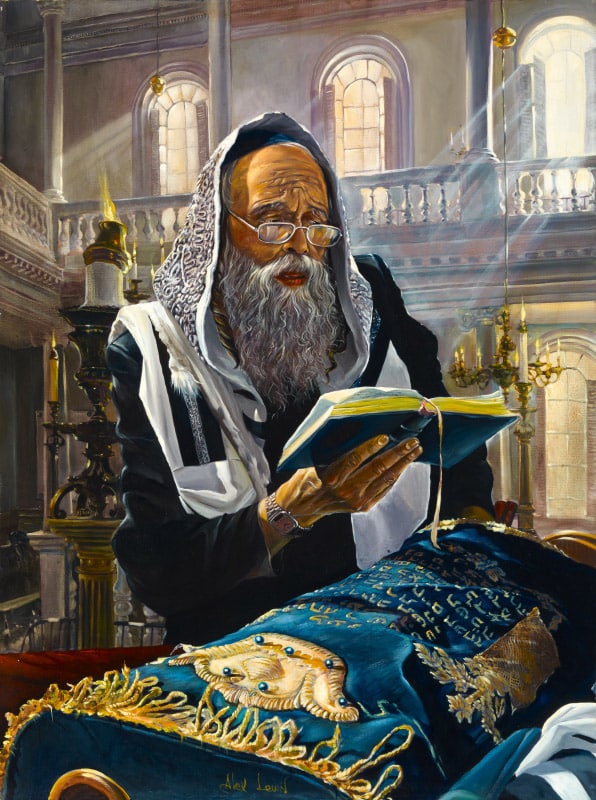
Explore Alex Levin’s Torah paintings.
Shabbat in Jewish Paintings
Shabbat provides artists with some of the most intimate scenes in Jewish art.
Shabbat candles, challah, Kiddush wine, family gatherings, synagogues, prayer, and the warm light of Friday evening have inspired generations of Jewish artists.
Unlike monumental historical subjects, Shabbat paintings often focus on ordinary family moments and traditions repeated every week.
These scenes help preserve the emotional side of Jewish life – family, peace, faith, continuity, and belonging.
Explore Alex Levin’s collection of Shabbat paintings.
Shtetl Life in Jewish Art
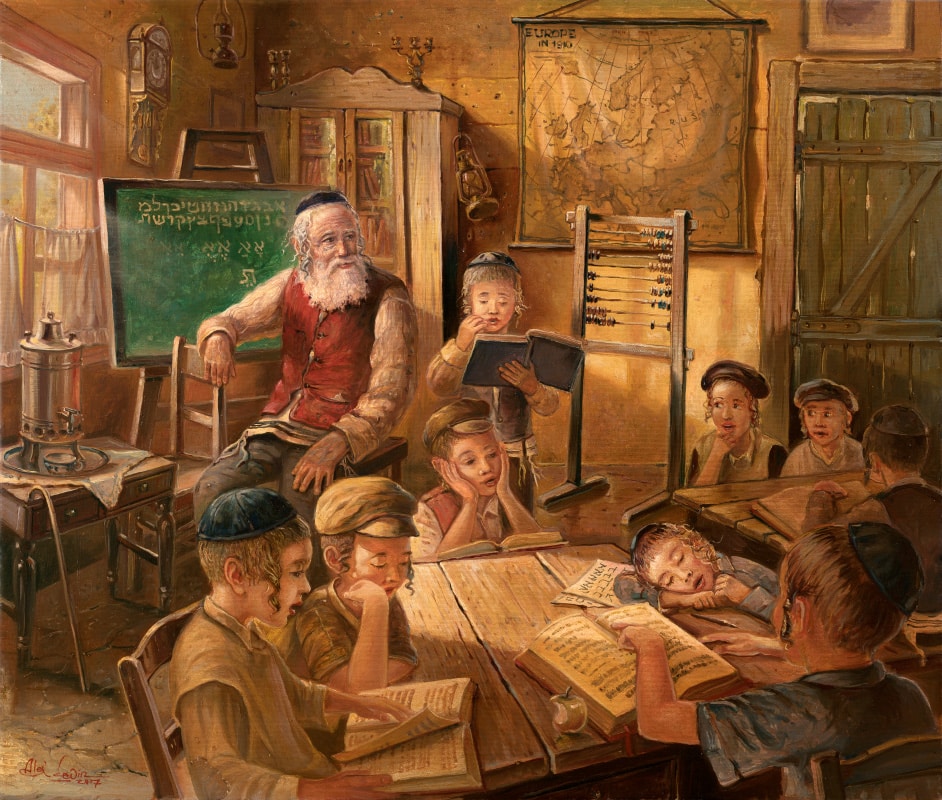
The Jewish communities of Eastern Europe became another major subject of Jewish painting.
Artists have portrayed narrow village streets, synagogues, rabbis, musicians, markets, weddings, Torah study, children, and family life.
After the destruction of countless Jewish communities during the Holocaust, these artistic representations acquired an additional importance as forms of cultural memory.
For descendants of Eastern European Jewish families, shtetl paintings can evoke a world known through family stories, photographs, literature, and inherited traditions.
Explore Alex Levin’s collection of shtetl paintings.
Jewish Portraits
Portraiture has also played an important role in Jewish art.
Artists have painted rabbis, scholars, Hasidic leaders, ordinary families, historical personalities, and influential Jewish figures.
Portraits can preserve not only physical appearance but also clothing, customs, personality, and the atmosphere of particular Jewish communities.
Contemporary Jewish portraits range from traditional realism to abstraction and highly modern interpretations.
View Alex Levin’s collection of Jewish portrait paintings.
Holocaust Art and Jewish Memory
The Holocaust profoundly transformed Jewish visual culture.
Survivors created drawings and paintings documenting ghettos, concentration camps, displacement, and loss. Later generations of artists have continued to confront the Holocaust through memorials, painting, sculpture, photography, and installation art.
Holocaust art can serve many purposes: testimony, mourning, remembrance, education, and reflection on the destruction of Jewish communities across Europe.
Contemporary artists also explore the relationship between Holocaust memory and subsequent generations who inherited family histories they did not personally experience.
Contemporary Jewish Art
Contemporary Jewish art is extraordinarily diverse.
Today’s artists work in realism, abstraction, surrealism, sculpture, digital media, photography, installation, and many other forms.
Some continue to interpret biblical stories and traditional religious imagery. Others explore Jewish identity, Israel, antisemitism, immigration, memory, politics, language, or the experience of living simultaneously within Jewish and broader contemporary cultures.
Modern Jewish art does not need to look traditional in order to engage deeply with Jewish ideas.
Explore Alex Levin’s contemporary Jewish art.
Jewish Paintings by Alex Levin
Israeli artist Alex Levin continues many of these traditions through paintings inspired by Jerusalem, Jewish history, Torah, Shabbat, Jewish holidays, shtetl life, rabbis, the Kotel, and the ancient Jerusalem Temple.
His work ranges from detailed traditional scenes to contemporary and surreal interpretations of Jewish themes.
Rather than presenting Jewish history only as something from the past, Levin often connects historic imagery with contemporary Jewish life and the modern city of Jerusalem.
Explore Jewish Paintings by Alex Levin
The Jewish Life collection includes artwork depicting Torah study, Shabbat, Jewish families, rabbis, holidays, shtetl scenes, prayer, celebrations, and traditions passed from generation to generation.
Frequently Asked Questions About Jewish Art
What is Jewish art?
Jewish art includes visual art connected with Jewish religion, culture, history, identity, and communities. It can include paintings, manuscripts, synagogue decoration, ceremonial Judaica, sculpture, architecture, photography, and contemporary art.
How old is Jewish art?
Jewish artistic traditions extend back to antiquity. Biblical texts describe artistic craftsmanship associated with the Tabernacle, while archaeological discoveries have revealed ancient Jewish mosaics, carvings, ritual objects, and synagogue paintings.
What is ancient Jewish art?
Ancient Jewish art includes objects and decoration created by Jewish communities in antiquity, such as synagogue mosaics, carved stone, menorah imagery, ritual objects, architecture, and biblical wall paintings such as those discovered in the third-century synagogue at Dura-Europos.
Did ancient Jews create paintings?
Yes. The synagogue at Dura-Europos contained extensive painted biblical scenes dating from the third century CE. Other ancient Jewish sites contain mosaics and figurative imagery, showing that Jewish approaches to visual representation varied among different communities and periods.
Does Judaism prohibit art?
Judaism prohibits idolatry, but Jewish communities have produced visual and decorative art for thousands of years. Interpretations concerning particular forms of imagery have varied across periods and communities.
What is Judaica art?
Judaica art generally refers to artistic and ceremonial objects connected with Jewish life and religious practice, including menorahs, Kiddush cups, Shabbat candlesticks, Torah ornaments, mezuzah cases, ketubot, Havdalah objects, and other decorative ritual items.
What subjects are common in Jewish paintings?
Common subjects include Jerusalem, the Kotel, Torah study, Shabbat, Jewish holidays, rabbis, Jewish families, shtetl life, biblical stories, Israel, Jewish history, the Holocaust, and contemporary Jewish identity.
Where can I buy Jewish paintings?
Jewish paintings can be purchased directly from artists, galleries, and specialized Judaica art websites. ArtLevin.com offers original artwork and fine-art reproductions by Israeli artist Alex Levin, including Jewish Life, Jerusalem, Torah, Shabbat, Kotel, and contemporary Jewish paintings.