The most compelling Lubavitcher Rebbe paintings do more than portray a revered Jewish leader – they guide the eye, shape the mood of the room, and hold a viewer in a moment of reflection. In Alex Levin’s work, the Rebbe is not presented as a static icon. Instead, light, color, texture, and composition are used to create portraits that feel alive with presence and spiritual energy.
That is part of what makes these works so resonant. The Rebbe’s face, his eyes, his hands, the Torah, and the surrounding fields of color all contribute to a visual language of inspiration. Some pieces feel intimate and contemplative, others radiant and expansive, but each one invites a closer look. For collectors, families, and communities, these paintings can bring a sense of focus and warmth to a wall while also conveying a deeper message of Jewish continuity and faith.
Alex Levin has spoken about the Rebbe as a source of inspiration, and that feeling comes through in the painting choices throughout this body of work. Rather than relying on a single formula, the portraits vary in palette and atmosphere. Some use warm golds and reds to suggest blessing and vitality. Others rely on blues and cool whites to create calm, clarity, and spiritual distance. A few move toward abstraction, allowing color itself to become part of the subject.
What is especially interesting from a visual standpoint is how the viewer’s eye is led. In these paintings, the gaze is often anchored first by the eyes of the Rebbe, then by surrounding elements such as a Torah scroll, a blessing gesture, or a field of color that frames the face. That movement matters. It creates a sense of arrival, as if the image is inviting the viewer to slow down and not simply look, but notice.
Color also plays a major role in how each work feels. Warm tones can make the portrait seem luminous and immediate, while cooler tones can bring a quieter, more contemplative atmosphere. The result is not just variety for the sake of variety, but a different emotional register in each composition. That gives collectors a chance to choose between a more formal portrait presence and a more expressive, energetic interpretation.
Texture is equally important. Even in reproductions, the sense of layered brushwork or faceted abstraction gives the surface a living quality. The portraits do not flatten the Rebbe into a simple likeness. Instead, texture adds vitality, suggesting light moving across cloth, beard, background, and symbolic objects. This is one reason these paintings can work so well in both private and communal spaces – they are visually rich without losing dignity.
For readers exploring the full theme, the collection at artlevin.com offers a range of approaches, from traditional portraiture to contemporary interpretations that place the Rebbe within a more dynamic visual field. You can browse the full selection here: Lubavitcher Rebbe Paintings by Alex Levin.
Selected works
Featured Paintings by Alex Levin
Radiant Stillness
This portrait uses a bright, open palette to create a feeling of illumination around the Rebbe’s face. The yellow field behind him gives the composition immediate warmth, while the blue hat and cool facial tones keep the image grounded and balanced.
The eye is drawn first to the face, then outward into the surrounding geometric color, which creates a steady visual rhythm. It is a strong choice for viewers who want a painting that feels uplifting without losing compositional clarity.

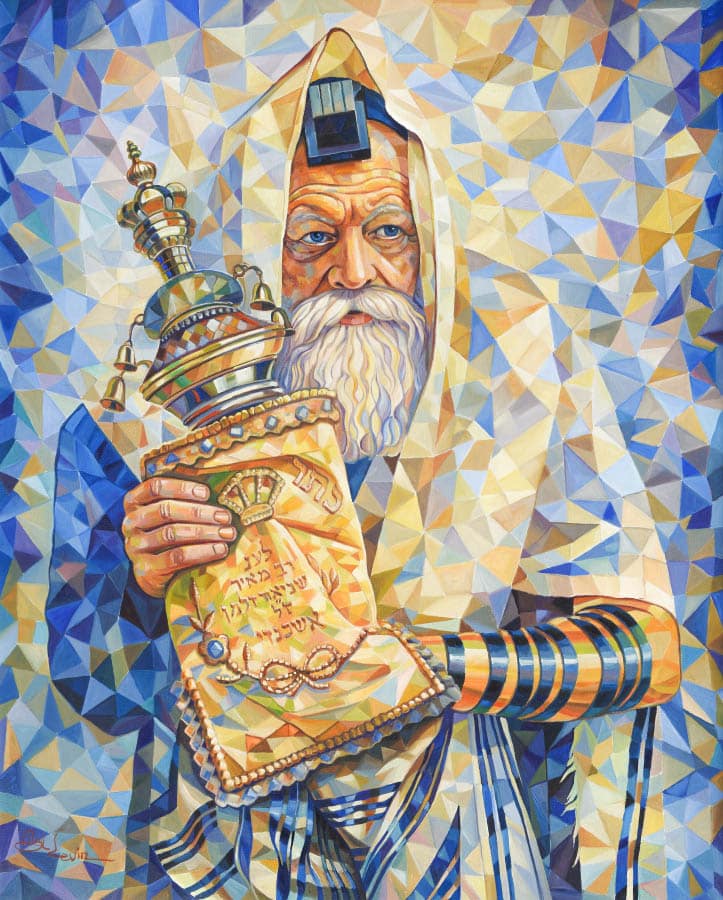
Torah and Presence
Here, the Torah becomes a powerful visual anchor, not just a symbolic object. The gold scroll and the Rebbe’s posture work together to create a composition that feels ceremonial and focused, with the cool blue background giving the scene a measured sense of depth.
The contrast between the ornate Torah and the faceted setting keeps the viewer’s attention moving between symbol and portrait. This work is especially effective for spaces where Jewish learning and spiritual leadership are meant to be visually emphasized.
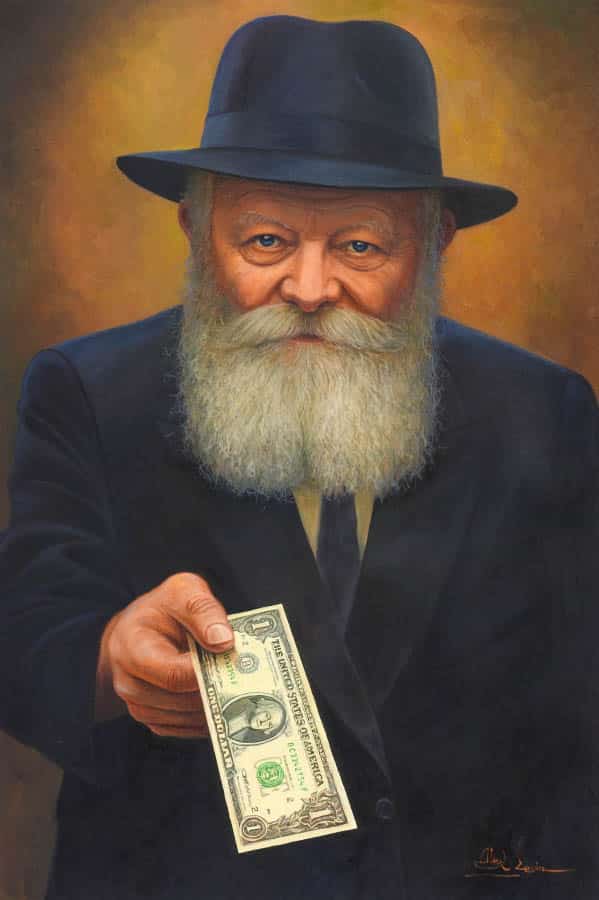
Blessing Extended
This painting centers on the gesture of giving, and the one-dollar bill becomes a surprising but meaningful focal point. The warm background pushes the Rebbe forward, making the hand and the offering feel immediate and direct.
The composition is compact and highly legible, so the viewer quickly understands the narrative and then lingers on the expression. It has a strong human presence, with the hand gesture creating a line of movement that reaches toward the viewer.
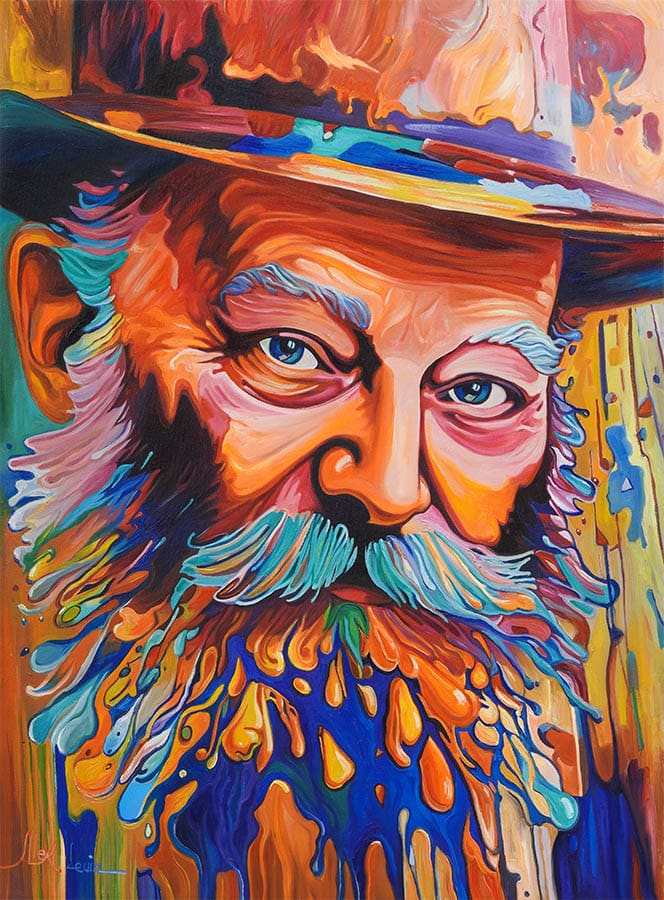
Path of Faith
The close framing of this work gives special importance to the eyes and the layered color that passes through the beard and hat. Turquoise, orange, and blue create movement inside an otherwise calm portrait structure, so the image feels both meditative and alive.
This is one of the most visually dynamic pieces in the group because the color does not merely surround the subject – it travels through the composition. That movement encourages repeated looking, which is part of its quiet strength.
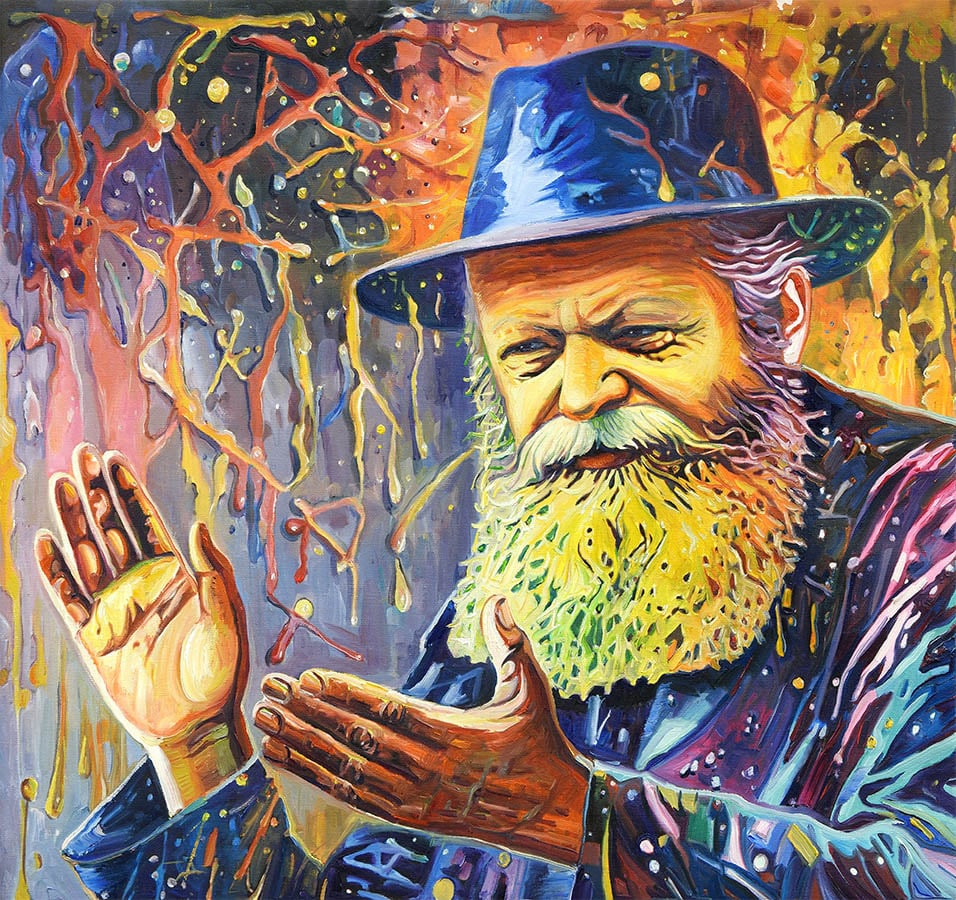
Energetic Gesture
The clapping hands and the energetic splashes of color create a sense of motion that is almost musical. Blue, orange, and yellow burst around the figure, but the portrait remains readable because the Rebbe’s form is still held clearly at the center.
This work offers the most animated visual pace of the selection. It feels celebratory and immediate, with the paint handling helping the viewer sense momentum rather than stillness.
Seen together, these paintings show how much can be expressed through color relationships, surface energy, and the direction of the viewer’s gaze. Some works lead gently into contemplation, while others create a brighter, more expansive feeling. All of them share the same underlying purpose: to honor the Rebbe with visual dignity and emotional force.
If you are considering a portrait for a home, study space, synagogue, or Chabad setting, these different compositions offer distinct moods while staying connected to the same inspiring subject. Explore the full range of Lubavitcher Rebbe paintings and discover which palette and presence speak most strongly to you.