Maarat Hamachpela in Hebron is one of the most profound places in Jewish memory. It is a site associated with the forefathers and foremothers, with ancestral continuity, and with the feeling that Jewish history is not abstract but rooted in real ground, real walls, and real generations. In art, that sense of rootedness becomes especially powerful because a painting can hold both physical presence and spiritual meaning at once.
If you would like to see the artwork itself, begin with the Maarat Hamachpela painting by Alex Levin. It offers a visual entry point into a place that is both historical and deeply devotional, making it a compelling choice for a home that values Jewish heritage and connection to the Land of Israel.
What makes this subject especially resonant is not only its importance, but the way it invites reflection. Maarat Hamachpela is not merely a famous site in Hebron. For many viewers it represents continuity, burial, memory, promise, and the enduring bond between the Jewish people and their ancestors. A painting of this מקום can serve as a quiet reminder that spiritual life is built on foundations laid long before us.
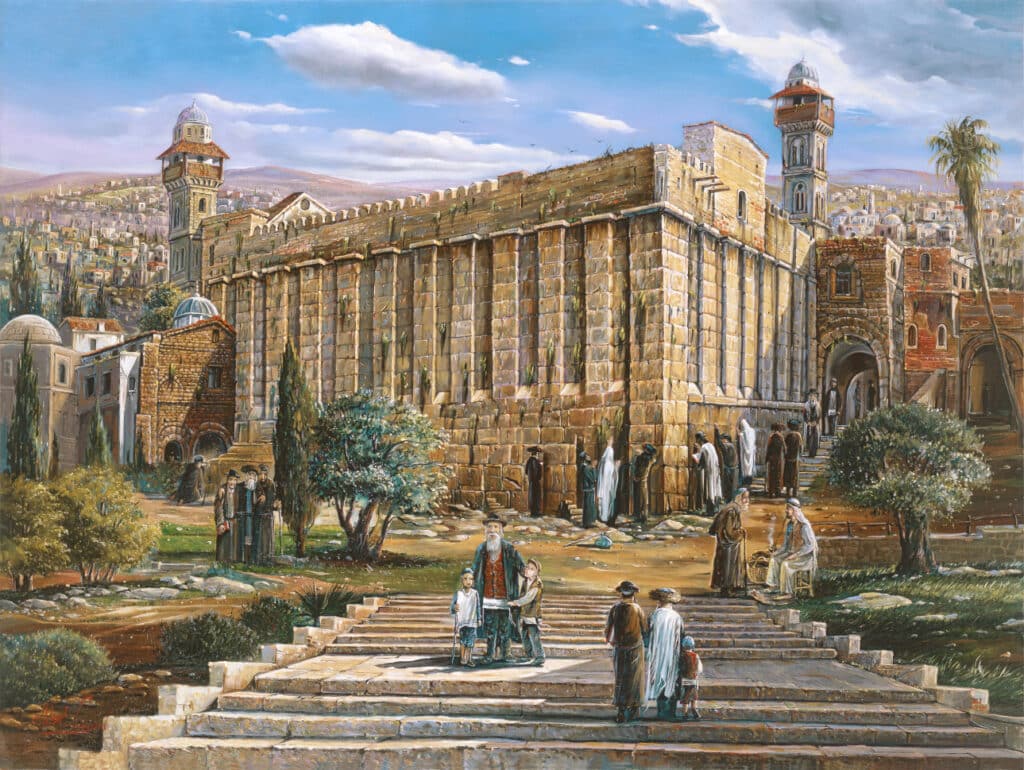
In Alex Levin’s approach, the site is not treated as a distant monument. Instead, it feels lived-in and present. The stone architecture, the travelers, and the surrounding atmosphere create a scene that is both grounded and contemplative. That balance matters. When sacred places are painted with care, they become approachable without losing their awe. The viewer can enter the scene, but also feel the dignity that surrounds it.
This is one reason Maarat Hamachpela holds such meaning in Judaica art. Sacred places are often most moving when they are seen not as symbols alone, but as destinations, memories, and touchstones of faith. The Cave of the Patriarchs belongs in that category. It speaks to ancestral prayer, to tradition carried through time, and to the idea that holiness can be encountered in a specific place and still speak universally.
The painting also connects naturally with other holy places that define Jewish memory. Some viewers think of the Kotel, where prayer gathers in the open air. Others think of Rachel’s Tomb, where maternal longing and intercession shape the emotional tone of the site. Maarat Hamachpela belongs alongside these places as part of a broader spiritual geography – one in which Hebron, Jerusalem, and the roads between them form a living map of Jewish identity.
That is why a work like this can feel so meaningful in a home, study, or synagogue setting. It does more than decorate a wall. It invites conversation about roots, legacy, and sacred history. It can also serve as a bridge between generations, because older viewers may connect it to prayer and memory, while younger viewers may discover in it a visual introduction to an ancient and treasured site.
Why the scene matters so deeply
In Jewish tradition, the power of a sacred place often lies in its continuity. Maarat Hamachpela carries the weight of ancestry in a way few sites can. A painting of it therefore speaks not just about geography, but about belonging. It asks the viewer to consider where identity begins, how memory is preserved, and why certain places remain central across centuries.
Alex Levin’s painting reflects that feeling through composition and atmosphere rather than explanation. The architecture stands with authority, while the figures in the scene help bring scale and human presence into view. This combination makes the image feel accessible, yet still dignified. You sense both the greatness of the place and the humility of those approaching it.
For collectors who value Jewish art with spiritual depth, this kind of subject has a special place. It is not loud, and it does not need to be. Its strength lies in resonance. The longer you look, the more you feel the connection between stone and story, between present-day viewing and ancient remembrance.
That emotional quality is especially important in sacred art. A home is not only a place to display beauty. It is also a place where memory is lived daily. A painting of Maarat Hamachpela can quietly reinforce that sense of continuity, making the room feel more grounded, more reflective, and more connected to Jewish history.
How to think about this painting in your space
Because the subject is so historic and spiritual, it works well in spaces where contemplation is welcome. A study, library, dining area, or entryway can all be suitable settings. The painting has enough presence to anchor a wall, yet it also carries a calmness that lets it blend with traditional or contemporary interiors alike.
Some collectors are drawn to this work because it speaks to the holiness of Hebron specifically. Others respond to the broader emotional message – faith rooted in place, and memory made visible. Either way, the image offers more than a scene. It gives the viewer a starting point for reflection, prayer, and conversation.
If you enjoy exploring related holy sites in Jewish art, you may also appreciate how other paintings in the collection bring different dimensions of sacred geography into view. A work centered on Rachel’s Tomb emphasizes tenderness and longing, while an image of Jerusalem often emphasizes prayer and communal gathering. Maarat Hamachpela stands apart through its direct link to the patriarchs and matriarchs, which gives it a distinct gravity.
That distinctiveness is part of its appeal as an artwork. It is recognizable, but not commonplace. Revered, but still visually engaging. Historical, but also immediate. Those qualities make it an especially thoughtful choice for anyone building a collection of Jewish art with spiritual and ancestral meaning.
Discover the featured paintings
Stone and Memory
This painting centers the Cave of the Patriarchs with a strong sense of presence and reverence. The architecture feels solid and enduring, while the surrounding human activity adds scale and warmth, turning the site into a lived spiritual landmark rather than a distant landmark alone.
It is a fitting choice for viewers who want a direct and recognizable image of Maarat Hamachpela that speaks to ancestry, faith, and the continuity of Jewish history.

Pilgrims at the Gate
Here the approach to Maarat Hamachpela becomes the emotional focus. The travelers and animals create movement and anticipation, suggesting arrival, devotion, and the long road toward a sacred destination.
The scene gives the holy site a sense of pilgrimage and gathering, making it especially meaningful for collectors drawn to the human side of sacred memory.

Light Through the Story
This interpretation uses color and atmosphere to express the spiritual weight of the site. The more abstract energy gives the painting a contemplative quality, allowing the viewer to feel the holiness of Hebron in a more expressive visual language.
It is a strong option for someone who wants Maarat Hamachpela to feel both timeless and emotionally expansive, with a modern artistic pulse.

A Road of Reverence
Pilgrims in prayerful dress move toward the site with camels and resting figures in view, creating a composition that feels journey-like and devotional. The painting emphasizes approach rather than arrival, which gives it a beautifully reflective rhythm.
This work is especially appealing if you want the sacred place framed by human devotion and the quiet dignity of a communal journey.

A Sacred Banner Scene
This version presents Maarat Hamachpela with a clear, decorative strength that suits festive or seasonal display. The image keeps the focus on the holy site itself while offering a warm, welcoming atmosphere.
It can work well for a sukkah or other celebratory setting where Jewish imagery is meant to feel both meaningful and visually inviting.
Maarat Hamachpela remains powerful because it is more than a historic place. It is a sacred link between the present and the ancestral past, between Jewish memory and living devotion. A painting of this site can bring that meaning into your home in a way that feels graceful, thoughtful, and deeply rooted.
If this image speaks to you, explore the full Maarat Hamachpela painting page and consider which style best matches your space – traditional, contemporary, or especially reflective. The right artwork can become a lasting reminder of heritage, prayer, and connection to Hebron.