Explore the Roots – Newspaper Paintings collection and you will find that modern Israeli art can be deeply historical without feeling stuck in the past. Alex Levin’s newspaper-based works transform vintage printed pages into living visual memory, giving old headlines, portraits, and textures a new role inside a contemporary painting language.
That tension between old paper and fresh paint is part of what makes this body of work so compelling. The collection does not simply illustrate history – it reinterprets it. The newspaper surface brings date, atmosphere, and documentary weight, while the painted image adds emotion, symbolism, and a contemporary point of view. For collectors drawn to modern Israeli art, these works offer a rare combination of heritage, design, and narrative clarity.
What makes this approach especially resonant is that it reflects a central truth about Israeli culture itself: the present is never far from the past. The country’s early decades were shaped by idealism, survival, immigration, state-building, and spiritual renewal, and those themes continue to echo through art today. In this collection, old newsprint becomes more than a background. It becomes part of the story, reminding viewers that identity is built from memory as much as from experience.
Alex Levin’s newspaper paintings also stand out because they invite a slower kind of looking. The viewer is encouraged to notice the type, fragments of language, and historical traces embedded in the surface before moving into the painted image. That layered reading is one reason the collection feels so contemporary. It is visually complex, but also easy to live with at home, where it can become a conversation piece rather than simply a decorative object.
For anyone comparing styles within modern Israeli art, the Roots series offers something distinctive: it is not abstraction for its own sake, and it is not conventional realism either. Instead, it places recognizable figures, scenes, and symbols inside a rich collage of documentary texture. The result feels both intimate and public, as though a private artwork is also carrying a shared national memory.
This is also why the collection fits so naturally alongside other subjects associated with Israeli identity – from Jerusalem and the Kotel to the founding generation and the ideals that shaped the state. Some paintings honor leaders, some reflect prayer and sacrifice, and others carry the emotional weight of a moment when the future was still being written. Each one has its own character, yet all of them belong to the same broader visual conversation.
The vintage newspaper element is particularly powerful because it establishes a direct visual link to a specific era. In a painting, that can do more than date the image. It can suggest urgency, uncertainty, optimism, and collective memory all at once. When combined with Levin’s strong draftsmanship and expressive composition, the result is an art form that feels thoughtful and grounded, yet still immediate enough for a modern home or office.
Collectors often look for art that can bridge design and meaning, and that is exactly where this collection excels. It works beautifully for people who want a piece with Israeli subject matter, but also for those who value originality, texture, and an artwork that reveals itself over time. Because the newspaper layers are integral to the composition, each painting feels like a visual document of both art history and national history.
If you are interested in a broader perspective on the artist’s subject matter, you may also enjoy Paratroopers at the Western Wall, Ben Gurion, The founder of the State of Israel, and Long live Israel. Together, they show how Levin moves between remembrance, faith, and national identity while still maintaining a distinctly modern visual style.
Modern Israeli art with historical depth
The phrase modern Israeli art can mean many things, but in this collection it clearly points to work that engages the present through the materials and memory of the past. Rather than treating old newspapers as a decorative novelty, Levin uses them as a meaningful foundation. The printed pages create texture, rhythm, and context, while the painted forms determine the emotional tone of each image.
That balance helps the collection feel relevant to contemporary collectors. It speaks to a world where people are increasingly interested in authenticity, story, and layered meaning. In that sense, the paintings are modern not only because of their style, but because of the way they think. They ask viewers to consider how history survives inside art, and how art can keep history alive.
The collection also reflects a specifically Israeli visual sensibility: practical, direct, symbolic, and emotionally charged. The newspaper surface feels archival, but the painting itself is alive with movement and intention. This contrast gives the work its energy. It is a reminder that memory does not have to be static to be respectful.
A collection for homes that value meaning
Many people choose art because they want beauty on the wall. Others choose it because they want a subject that speaks to faith, identity, or family history. The Roots – Newspaper Paintings collection offers both. These works can bring warmth and sophistication to a living room, study, dining area, or office, while also carrying a deeper cultural message.
Because each painting is distinct, the collection offers a range of moods. Some images feel commemorative and solemn. Others feel hopeful, dignified, or quietly celebratory. That variety makes it easier to find a piece that matches both a space and a personal connection. Yet all of them remain unified by the same artistic idea: the past can be renewed without being erased.
For viewers who appreciate Israeli history, Hebrew typography, or the interplay between image and document, this collection offers an especially rewarding experience. It does not flatten history into symbolism. Instead, it lets history remain visible, layered, and human.
Why this collection feels timely
In a fast-moving visual culture, many collectors are looking for work that slows the eye down. Newspaper paintings do exactly that. They reward close inspection, but they also have enough graphic presence to hold a room. That combination of intimacy and impact is one reason modern Israeli art continues to evolve through collections like this one.
Ultimately, the Roots series is about continuity. It honors the materials of the past while giving them a future. For anyone drawn to art that carries identity, memory, and design in equal measure, this collection offers a compelling place to begin.
Discover the featured paintings
Founding Moment
This portrait centers the founding era with a directness that feels both historic and immediate. The layered newspaper surface adds documentary gravity, while the blue-toned portrait gives the composition a calm, authoritative presence.
It is a strong example of how modern Israeli art can honor a national milestone without losing painterly intimacy. The image feels commemorative, but also personal, as if history is being held in the frame rather than simply illustrated.

The Builder’s Reflection
This work presents Ben Gurion in a contemplative pose, making the portrait feel less like a public monument and more like a moment of inward thought. The newspaper background reinforces the sense of recorded history, while the portrait itself carries quiet emotional weight.
As part of the Roots collection, it shows how a familiar figure can be reimagined through texture and mood. The result is dignified, restrained, and visually suited to a collector who wants meaning without excess.

Duty and Prayer
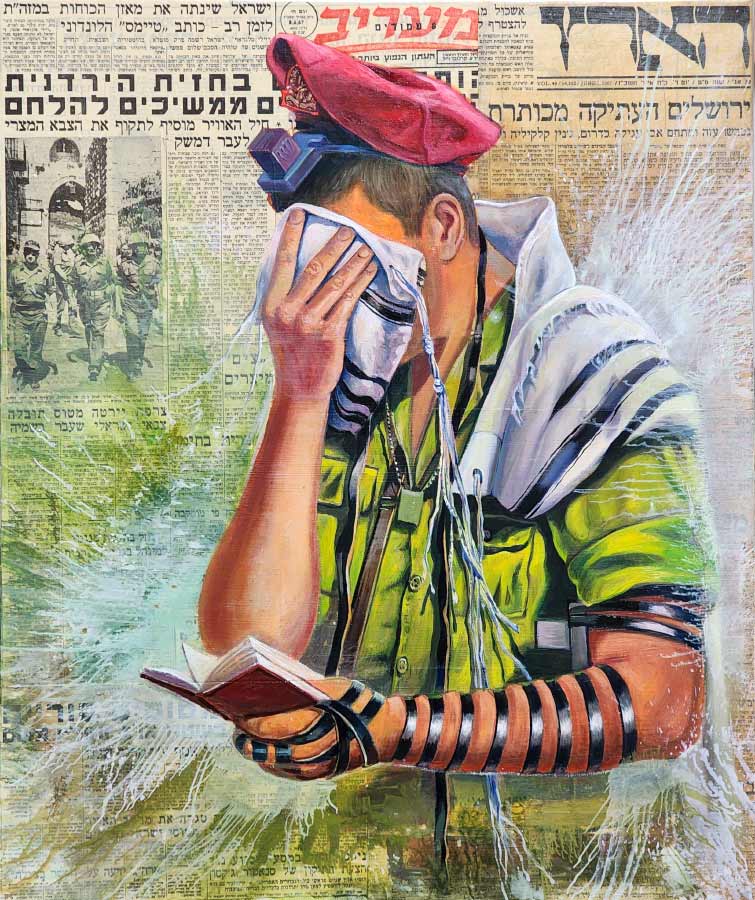
Here the newspaper collage supports a striking image of devotion and service. The soldier’s prayerful posture creates a powerful contrast between action and reflection, which gives the painting its emotional depth.
The work belongs naturally within modern Israeli art because it joins symbolic content with a contemporary mixed-media language. It speaks about identity in a way that is direct, layered, and visually memorable.
At the Wall
This painting captures one of the most resonant subjects in Israeli visual culture, placing paratroopers at the Western Wall within a textured historical field. The newspaper material heightens the sense of memory, as though the scene is carried forward through time.
Its strength lies in the balance between sacred location and human presence. The composition feels both ceremonial and grounded, which makes it a meaningful anchor piece within the collection.

A Living Declaration
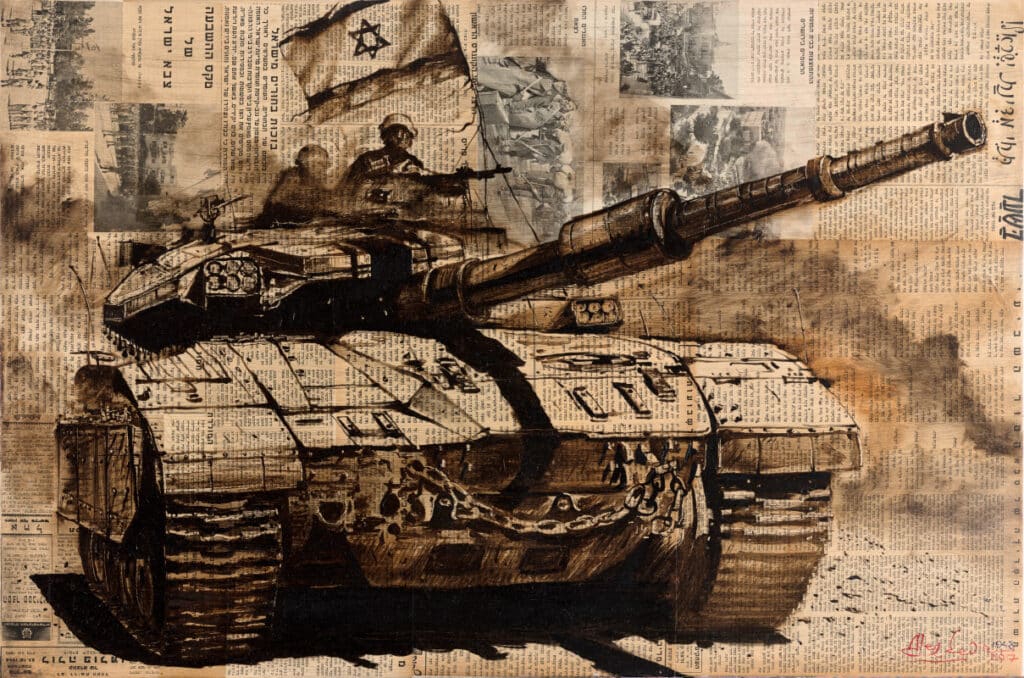
With its strong patriotic imagery, this work transforms a public statement into a vivid visual statement. The newspaper layers help connect the image to the moment of statehood, while the composition keeps the energy forward-looking rather than nostalgic.
It is especially effective for collectors who want modern Israeli art that feels confident and symbolic. The painting holds history, but it also projects momentum and continuation.
The Roots – Newspaper Paintings collection is a compelling reminder that art can preserve memory without becoming trapped in it. By placing vintage newspapers at the heart of the composition, Alex Levin creates paintings that are rooted in history and fully alive in the present.
If you are drawn to modern Israeli art with depth, texture, and a strong connection to the story of Israel, this collection is well worth exploring further. Each work offers its own perspective, yet all share the same living conversation between past and present.
Continue exploring the Roots – Newspaper Paintings collection to find the piece that speaks most strongly to your space and your story.