Why Is the Lubavitcher Rebbe’s Picture Seen in So Many Jewish Homes?
Walk into many Chabad homes, synagogues, Jewish schools, community centers, or Chabad Houses around the world and you may notice a familiar face: Rabbi Menachem Mendel Schneerson, known throughout the Jewish world as the Lubavitcher Rebbe.
For some visitors, this raises a natural question: Why do people display a picture of the Lubavitcher Rebbe in their homes?
The answer goes much deeper than decoration.
For many people inspired by the Rebbe, his image serves as a visual reminder of his teachings, leadership, compassion, and belief in the potential of every individual. Looking at a photograph or portrait of the Rebbe can recall not merely the person, but the values and responsibilities he encouraged people to carry into everyday life.

Who Was the Lubavitcher Rebbe?
Rabbi Menachem Mendel Schneerson (1902-1994) was the seventh Rebbe of the Chabad-Lubavitch movement and one of the most influential Jewish leaders of the twentieth century.
From Chabad headquarters at 770 Eastern Parkway in Brooklyn, New York, the Rebbe helped transform Chabad into a worldwide Jewish movement. Under his leadership, emissaries established Jewish centers in communities around the world.
His message emphasized Jewish education, mitzvot, acts of kindness, personal responsibility, and the importance of every individual.
The Rebbe met and corresponded with people from remarkably different backgrounds – rabbis, students, families, political leaders, businesspeople and individuals seeking guidance. His teachings repeatedly encouraged people not simply to admire Jewish values, but to translate them into action.
This helps explain why his image became meaningful to so many families.
What Does a Picture of the Rebbe Represent?
A Lubavitcher Rebbe picture is not simply a historical portrait.
For many who display one, it represents ideas associated with the Rebbe’s teachings.
A Reminder to Keep Growing
One explanation published by Chabad describes the Rebbe’s picture as a reminder of a person’s potential.
The Rebbe continually encouraged people not to remain satisfied with what they had already accomplished. There was always another mitzvah to perform, another person to help, another opportunity to learn, and another way to bring goodness into the world.
For someone who was personally influenced by the Rebbe – or by his teachings – seeing his portrait can serve as a quiet daily reminder:
What more can I do today?
A Connection to Jewish Identity
Jewish homes have always contained objects that connect daily life with Jewish identity and memory.
A mezuzah stands at the doorway. Shabbat candlesticks mark the arrival of Shabbat. Jewish books fill shelves. Jerusalem and Kotel artwork can express a connection to the Land of Israel.
For families connected to Chabad, a portrait of the Lubavitcher Rebbe may become another visual expression of that identity.
It can represent a connection to a teacher, a tradition, and a way of approaching Jewish life.
Is Displaying a Picture of the Rebbe a Form of Worship?
This question sometimes arises when someone unfamiliar with Chabad sees a prominent Rebbe portrait in a home or institution.
A picture of the Rebbe is not an object of worship.
Judaism directs prayer and worship to God, not to rabbis or other human beings.
In an explanation addressing this exact concern, Chabad Rabbi Aron Moss describes reverence for the Rebbe in terms of admiration for the life he lived, the responsibilities he accepted, and his influence on other people.
The distinction is important.
The portrait is meaningful because of what the person represents, rather than because the physical image itself is considered sacred.
In this sense, a Rebbe portrait can function much like a portrait of a respected teacher or ancestor – an image that evokes memories, teachings and values.
Why Are Rebbe Portraits So Common in Chabad Houses?
The worldwide network of Chabad Houses is closely connected with the Rebbe’s vision.
The Rebbe encouraged his emissaries, known as shluchim, to build Jewish life wherever Jews could be found.
Today, Chabad centers operate throughout the world, often in places where Jewish resources were previously limited.
A portrait of the Rebbe inside a Chabad House therefore has a particularly strong meaning. It can remind the emissaries and their communities of the mission that inspired the institution itself.
The image connects a local Jewish center to a much larger story.
Photography and Art Can Express Different Things
Most images of the Rebbe found in Jewish homes are photographs.
A photograph documents a moment.
A painting can do something different.
An artist can interpret light, expression, movement, color and atmosphere in ways that photography cannot. A portrait can emphasize contemplation, energy, wisdom or the relationship between a person and the world surrounding him.
This is one reason portraits of important Jewish figures have a unique place within contemporary Jewish art.
Painting the Lubavitcher Rebbe
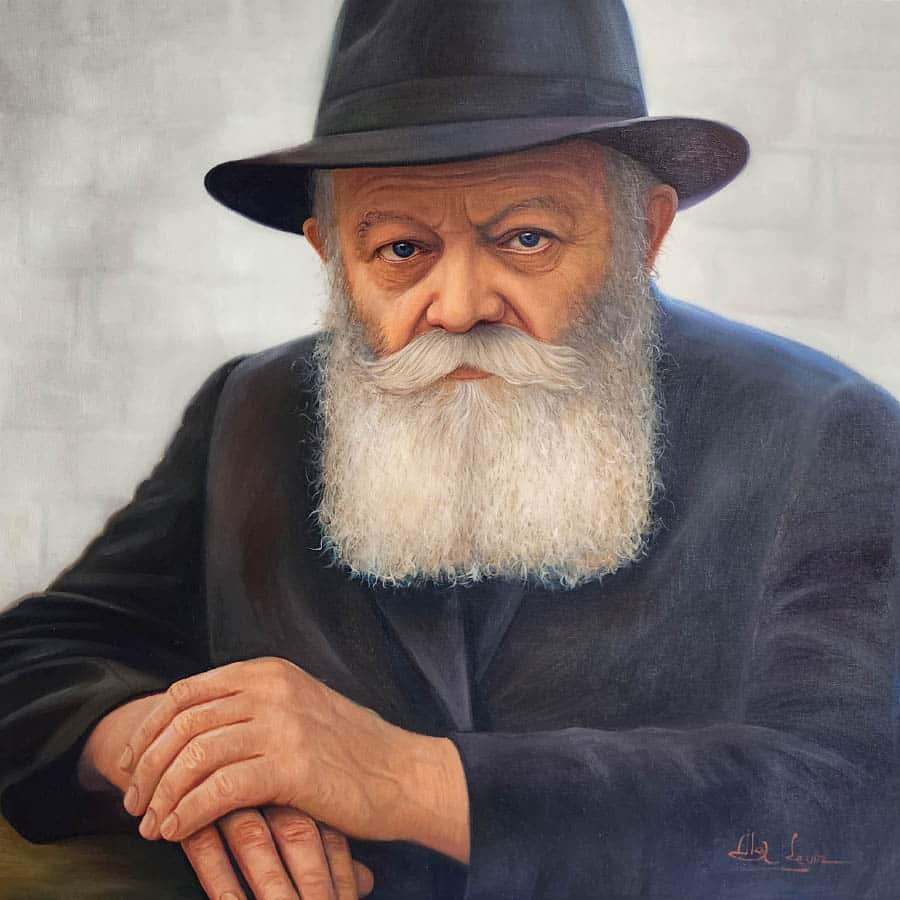
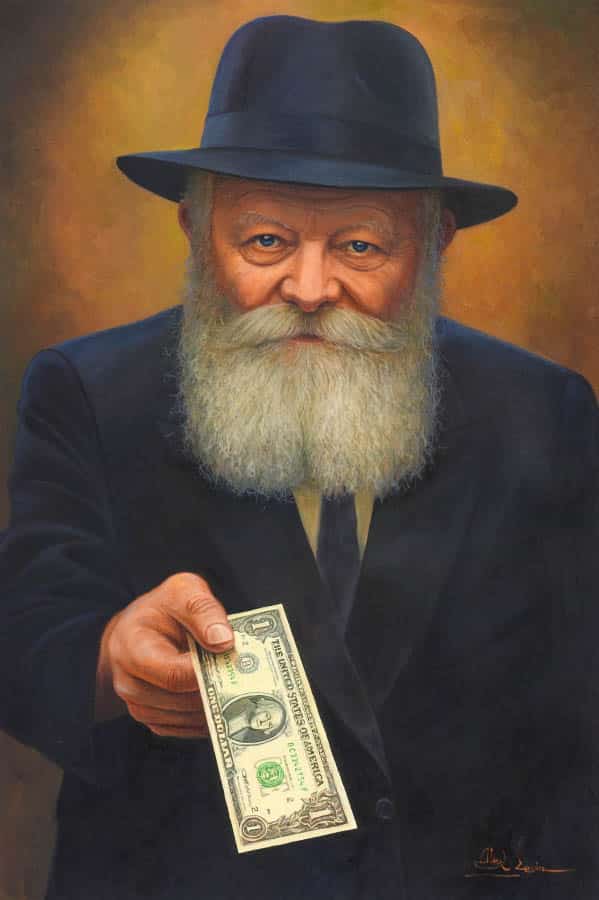
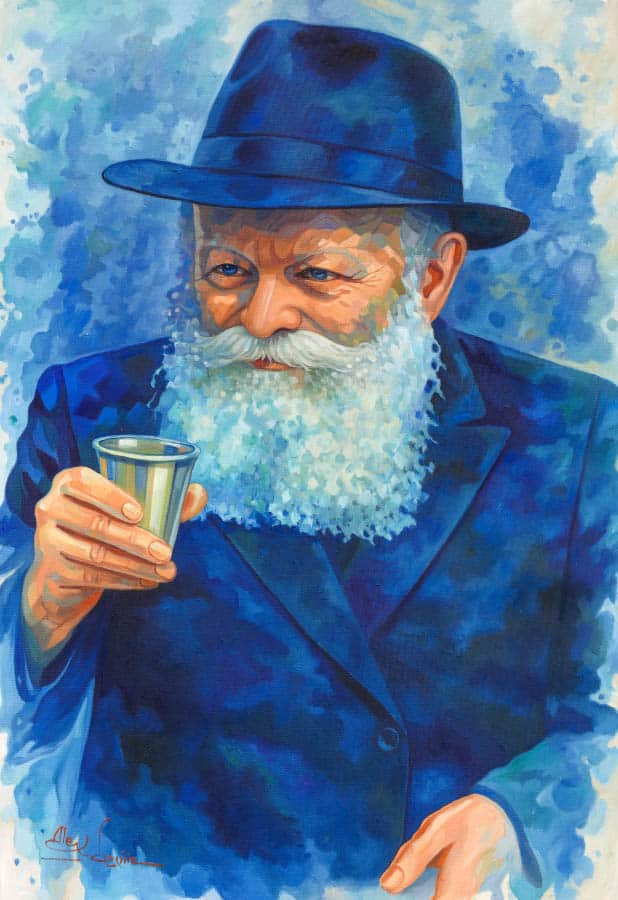
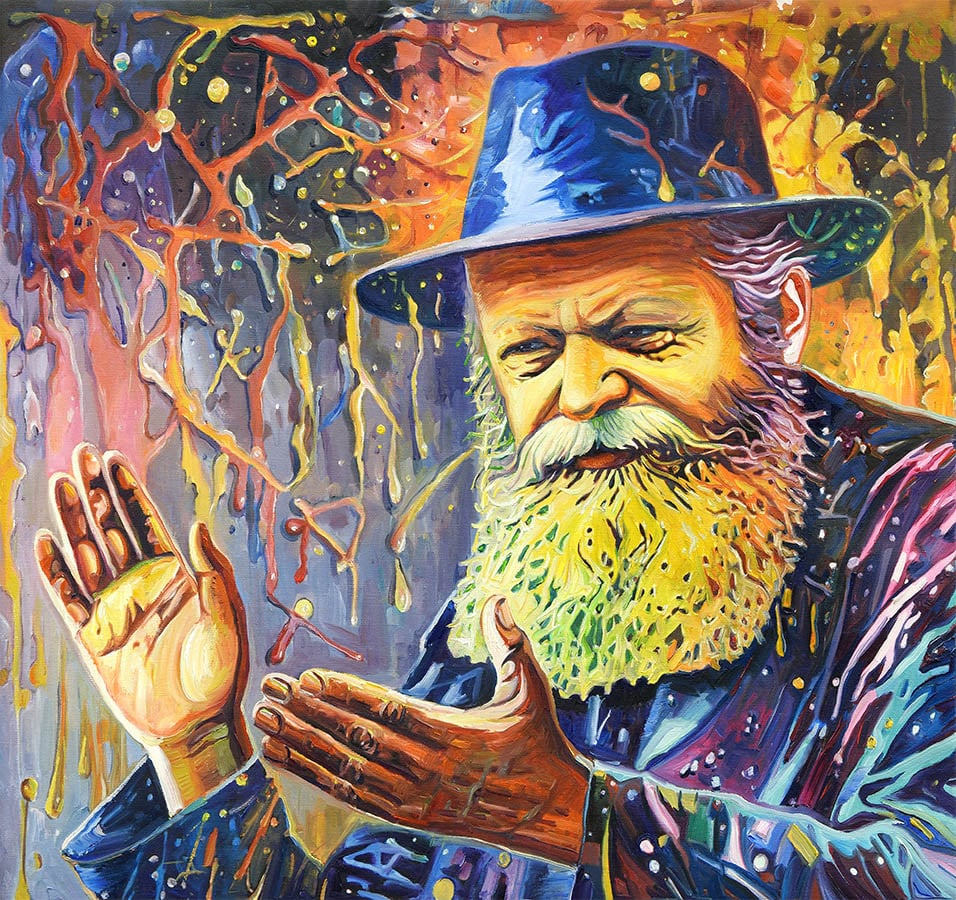
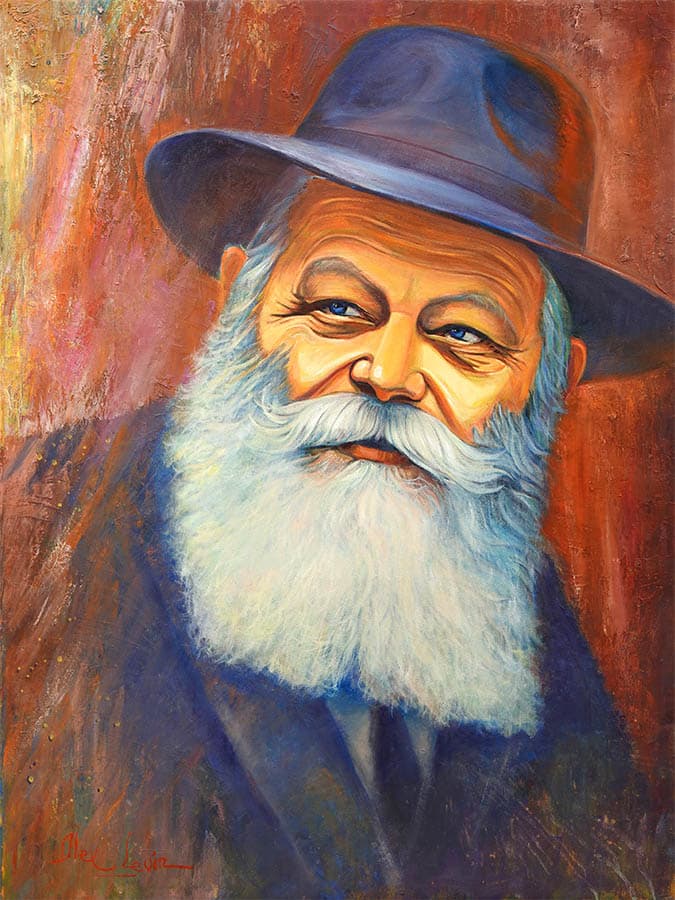
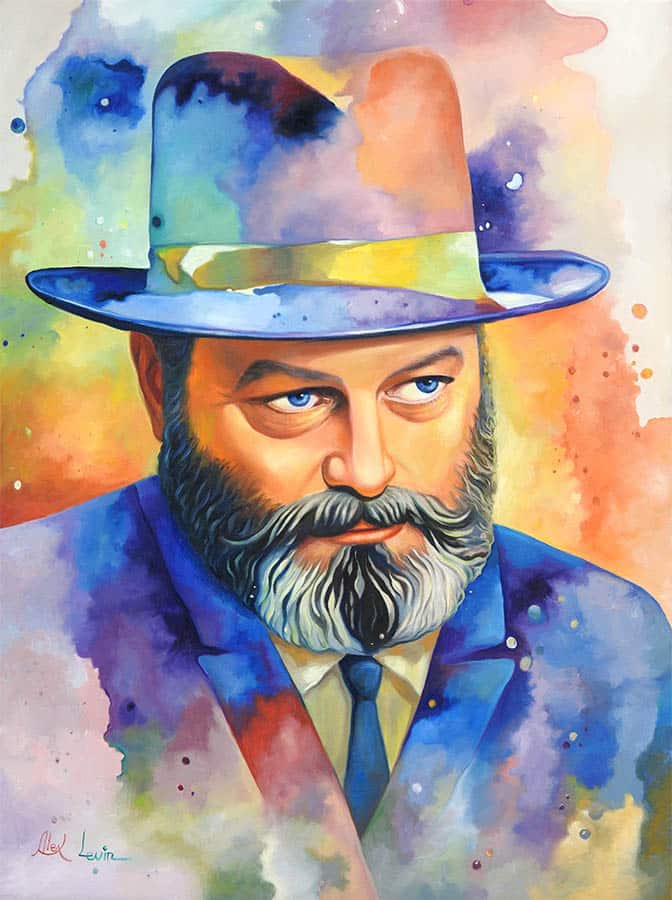
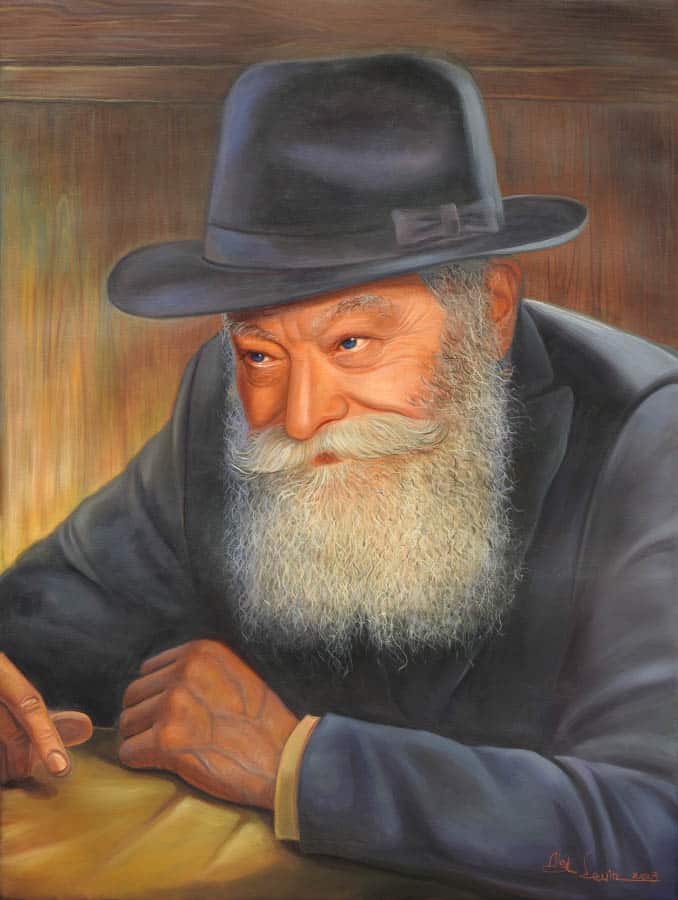
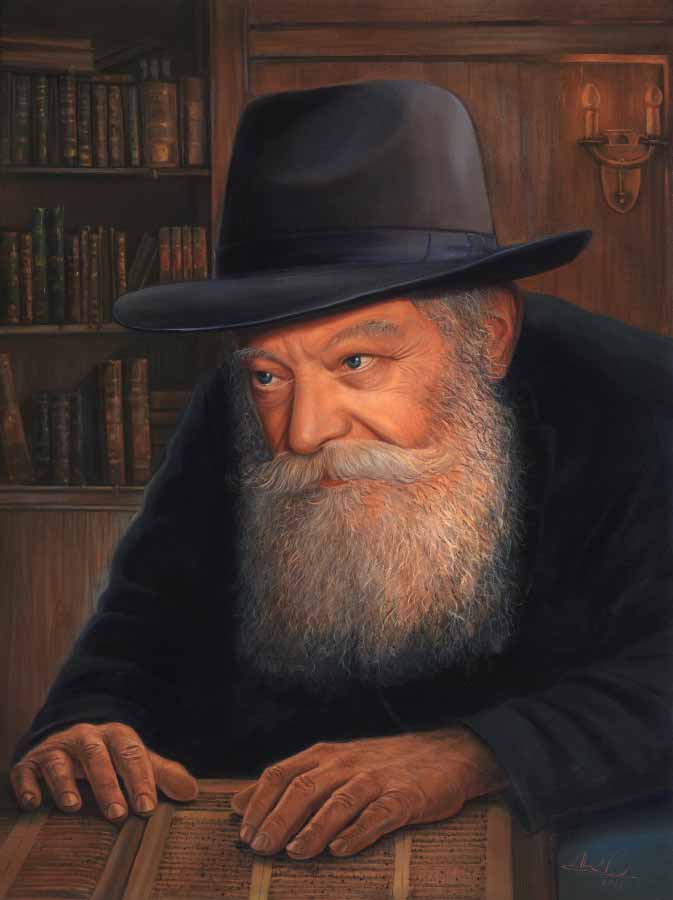
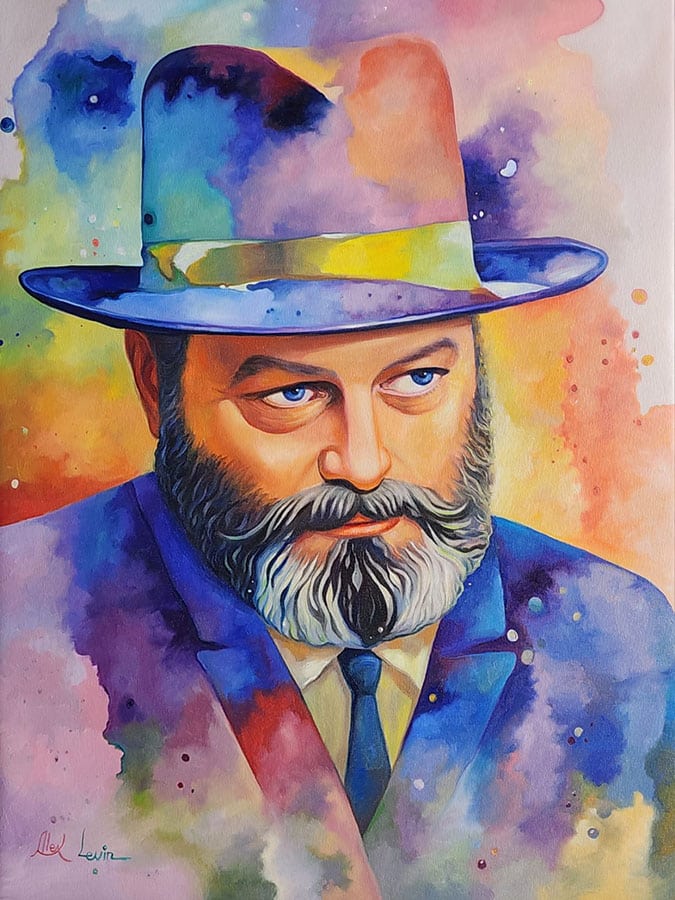
Israeli artist Alex Levin has explored the image of the Lubavitcher Rebbe through both traditional portraiture and contemporary Jewish art.
Rather than repeating one interpretation, Levin portrays the Rebbe through different visual languages.
Some works are realistic and quiet. Others employ intense colors, geometric fragments, light and abstraction.
In one painting, the Rebbe may appear in deep contemplation.
In another, the Torah becomes an important part of the composition.
These different approaches allow the same historical figure to be viewed through different emotional perspectives.
Explore Paintings of the Lubavitcher Rebbe
The Rebbe and the Torah in Jewish Art
One particularly meaningful artistic theme depicts the Lubavitcher Rebbe with the Torah.
The Torah was central to the Rebbe’s life and teachings, making this imagery more than simply a portrait.
When artist Alex Levin places the Rebbe together with the Torah, the composition connects the individual with something far larger: Jewish learning, continuity and a tradition carried from one generation to the next.
In contemporary interpretations, light and abstract forms can make that relationship even more prominent.
View The Lubavitcher Rebbe with the Torah
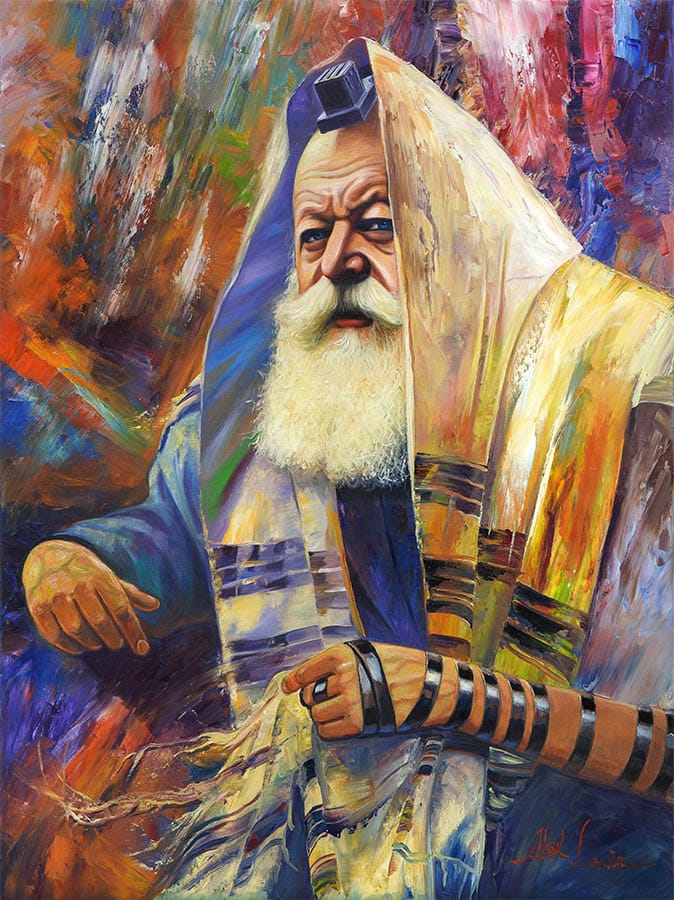
The Rebbe in Prayer
Another recurring subject is the Rebbe in prayer.
Prayer naturally creates a very different type of portrait.
Instead of emphasizing public leadership, the image captures a more inward moment – concentration, reflection and spiritual devotion.
Alex Levin’s painting The Lubavitcher Rebbe in Prayer – Light of the Torah uses this idea as the center of a contemporary Jewish composition.
View The Lubavitcher Rebbe in Prayer – Light of the Torah
Traditional and Contemporary Portraits of the Rebbe
A traditional Lubavitcher Rebbe portrait focuses primarily on likeness, expression and character.
Contemporary Jewish art can approach the subject differently.
Color may represent energy.
Light may symbolize spiritual influence.
Geometric forms can suggest complexity, movement or the connection between different generations.
This allows Jewish artists to preserve recognizable imagery while speaking in a modern visual language.
Alex Levin’s collection includes both approaches, ranging from traditional portraiture to abstract and contemporary interpretations of the Rebbe.
View the Portrait of the Lubavitcher Rebbe
Why People Still Display Pictures of the Rebbe Today
Rabbi Menachem Mendel Schneerson passed away in 1994, but his teachings and the institutions created under his leadership continue to influence Jewish communities around the world.
That helps explain why his image remains so visible.
For different people, a picture of the Lubavitcher Rebbe may evoke different things:
- memories of meeting the Rebbe personally;
- a connection to Chabad and its teachings;
- inspiration to perform another mitzvah;
- a reminder to help another person;
- Jewish continuity and identity;
- respect for an influential Jewish teacher and leader.
For someone who never met the Rebbe, the image can still represent ideas encountered through his teachings and the communities inspired by them.
A portrait therefore becomes more than an image of a historical figure.
It can become a reminder of an idea.
And perhaps that is one reason it continues to have such a prominent place on so many walls.
Frequently Asked Questions About Lubavitcher Rebbe Pictures
Why do Chabad families hang pictures of the Lubavitcher Rebbe?
Many Chabad families display a picture of the Rebbe as a reminder of his teachings, leadership and encouragement to continually grow spiritually and perform good deeds.
Is a picture of the Lubavitcher Rebbe considered sacred?
A portrait or photograph of the Rebbe is not an object of worship. Its significance comes from the person, teachings and values it represents to the people who display it.
Who was the Lubavitcher Rebbe?
The Lubavitcher Rebbe was Rabbi Menachem Mendel Schneerson (1902-1994), the seventh leader of the Chabad-Lubavitch movement and one of the most influential Jewish leaders of the twentieth century.
Why are pictures of the Rebbe displayed in Chabad Houses?
Chabad emissaries established communities around the world as part of a movement greatly expanded under the Rebbe’s leadership. His portrait can serve as a reminder of the vision and mission behind their work.
What is the difference between a photograph and a painting of the Rebbe?
A photograph records the Rebbe at a particular moment. A painting allows an artist to interpret his expression, character and legacy through color, light, composition and symbolism.
Where can I find paintings of the Lubavitcher Rebbe?
Alex Levin has created a collection of traditional, contemporary and abstract paintings of Rabbi Menachem Mendel Schneerson. The collection includes portraits, images of the Rebbe in prayer, works depicting the Rebbe with the Torah and modern interpretations using color and abstraction.
Explore the complete collection of Lubavitcher Rebbe paintings by Alex Levin