There are moments in Jerusalem when the city feels transformed.
Friday night at the Kotel is one of those moments.
As the sun sets behind the hills and the sky shifts from gold to deep blue, thousands begin walking toward the Western Wall. Families, students, soldiers, rabbis, children – all moving in the same direction.
Shabbat is arriving.
And nowhere is that arrival felt more powerfully than at the Kotel.
The Meaning of Friday Night in Jewish Life
In Jewish tradition, Friday night marks the beginning of Shabbat – the sacred day of rest.
It is not simply the end of the week. It is a transition into holiness.
The Talmud describes Shabbat as a “taste of the World to Come.” It is a pause from work, from distraction, from routine. It is a return to soul.
When Shabbat begins in Jerusalem, especially at the Western Wall, the experience is amplified.
The stones of the Kotel have witnessed centuries of prayer, exile, return, and longing. On Friday night, that history feels alive.
The Atmosphere of Shabbat at the Western Wall
Unlike the quiet introspection of sunrise prayer, Friday night at the Kotel is communal and vibrant.
You hear:
-
Singing that echoes across the plaza
-
Harmonies blending from different groups
-
Children running between families
-
The rustle of prayer shawls
-
The rhythm of traditional melodies
The plaza fills with white shirts, black coats, colorful dresses, and joyful anticipation.
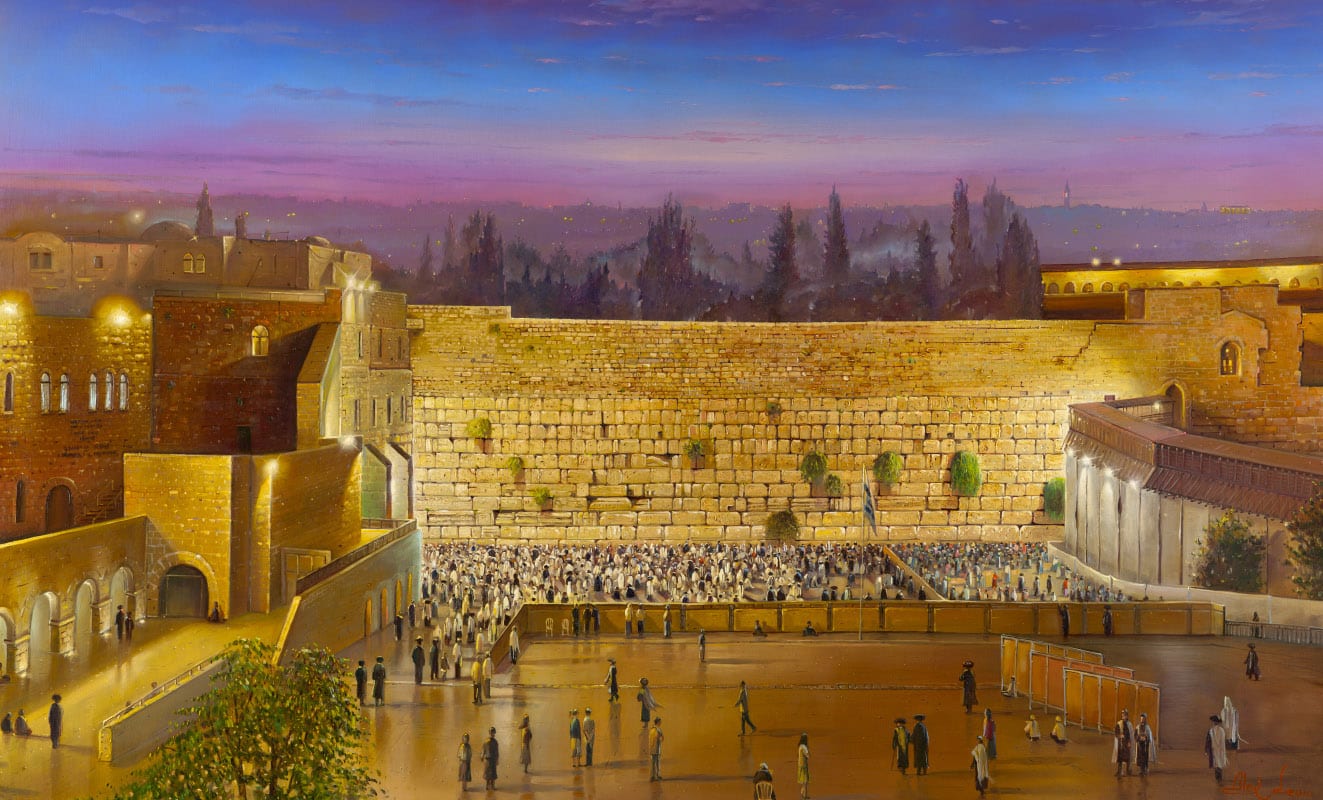
The golden lighting of the Wall against the darkening sky creates a powerful visual contrast – earth and heaven meeting in a single frame.
That atmosphere cannot be replicated anywhere else in the world.
Why Friday Night at the Kotel Feels So Unique
There are many beautiful synagogues in Jerusalem.
But Friday night at the Western Wall is different because:
-
It is open to the sky
-
It gathers people from every background
-
It represents national as well as personal faith
-
It connects modern Israel to ancient Jerusalem
At the Kotel, you stand at a place that has survived destruction and exile. Welcoming Shabbat there becomes an act of continuity.
It is a reminder that Jewish life did not end with the Temple. It continues.
Community and Unity at the Kotel
One of the most powerful aspects of Friday night at the Kotel is unity.
Religious and secular Jews stand side by side. Visitors from America, Europe, and Israel pray in the same space. Songs begin in one group and spread to another.
For a brief moment, the divisions of everyday life fade.
The Western Wall becomes:
-
A meeting point
-
A shared memory
-
A collective heartbeat
That unity is why Shabbat scenes at the Kotel resonate deeply in art.
Friday Night at the Kotel – Captured in Painting
In my painting Friday Night at the Kotel, I sought to express that communal energy.
The scene is illuminated by warm golden light, reflecting off the ancient stones. The sky deepens into twilight blues and purples, framing the Wall in dramatic contrast.
Rather than focusing on individual faces, the composition emphasizes movement and gathering. The figures become part of a spiritual flow, unified in prayer.
This painting speaks to:
-
Jewish identity
-
The beauty of Shabbat
-
The continuity of tradition
-
The emotional power of Jerusalem
View the artwork here:
Friday Night at the Kotel
The Symbolism of Light at the Western Wall
If sunrise represents renewal, Friday night represents sanctification.
The artificial lighting of the Wall during Shabbat evening carries symbolic meaning:
-
Warm tones suggest warmth of community
-
The illuminated stones represent endurance
-
The dark sky reflects mystery and transcendence
Light plays a central role in Jewish ritual. Candles are lit at the beginning of Shabbat. The Kotel’s illumination mirrors that act on a grand scale.
It transforms stone into sanctuary.
Why Shabbat Scenes Are Powerful in Jewish Homes
Many collectors choose Friday night at the Kotel paintings because they reflect a core rhythm of Jewish life.
Every week, without fail, Shabbat arrives.
Having a visual reminder of that rhythm brings:
-
Stability
-
Warmth
-
Spiritual grounding
-
Cultural continuity
Placed in a living room or study, the painting becomes more than decoration. It becomes part of the weekly cycle of reflection.
Comparing Sunrise and Friday Night at the Kotel
Both moments at the Western Wall are deeply meaningful, yet they evoke different emotions.
Sunrise at the Kotel is:
-
Quiet
-
Personal
-
Reflective
-
Renewing
Friday night at the Kotel is:
-
Communal
-
Joyful
-
Musical
-
Collective
Many collectors feel drawn to both scenes because together they represent the full spiritual rhythm of Jewish life: individual devotion and communal celebration.
You can explore more Western Wall art here:
Kotel Paintings Collection
The Western Wall as an Eternal Symbol
The Kotel is not simply a historical remnant.
It is a living symbol of:
-
Jewish survival
-
Spiritual persistence
-
Connection to Jerusalem
-
The unbroken chain of tradition
Friday night prayer at the Kotel embodies that continuity. It shows that despite exile and hardship, Jewish life continues to gather, sing, and welcome Shabbat.
That message resonates far beyond Jerusalem.
A Universal Moment with Personal Meaning
Even for those who have never visited Jerusalem, Friday night at the Kotel carries universal themes:
-
Belonging
-
Tradition
-
Community
-
Sacred time
The painting allows viewers to experience that atmosphere, to feel part of something larger than themselves.
It invites reflection on one’s own traditions, family gatherings, and weekly rituals.
Bringing Shabbat in Jerusalem into Your Home
Owning a Friday night at the Kotel painting brings Jerusalem’s spiritual center into your space.
It becomes:
-
A reminder of Shabbat’s arrival
-
A symbol of Jewish unity
-
A connection to Israel
-
A source of warmth and reflection
Whether displayed in a home, synagogue, or office, it serves as a quiet yet powerful affirmation of identity.
Final Reflection
Friday night at the Kotel is not just a scene. It is a feeling.
It is the feeling of standing among thousands who share your history and your hope.
It is the sound of ancient melodies carried into modern air.
It is the glow of sacred light against timeless stone.
Through art, that moment can be preserved, shared, and experienced again and again.