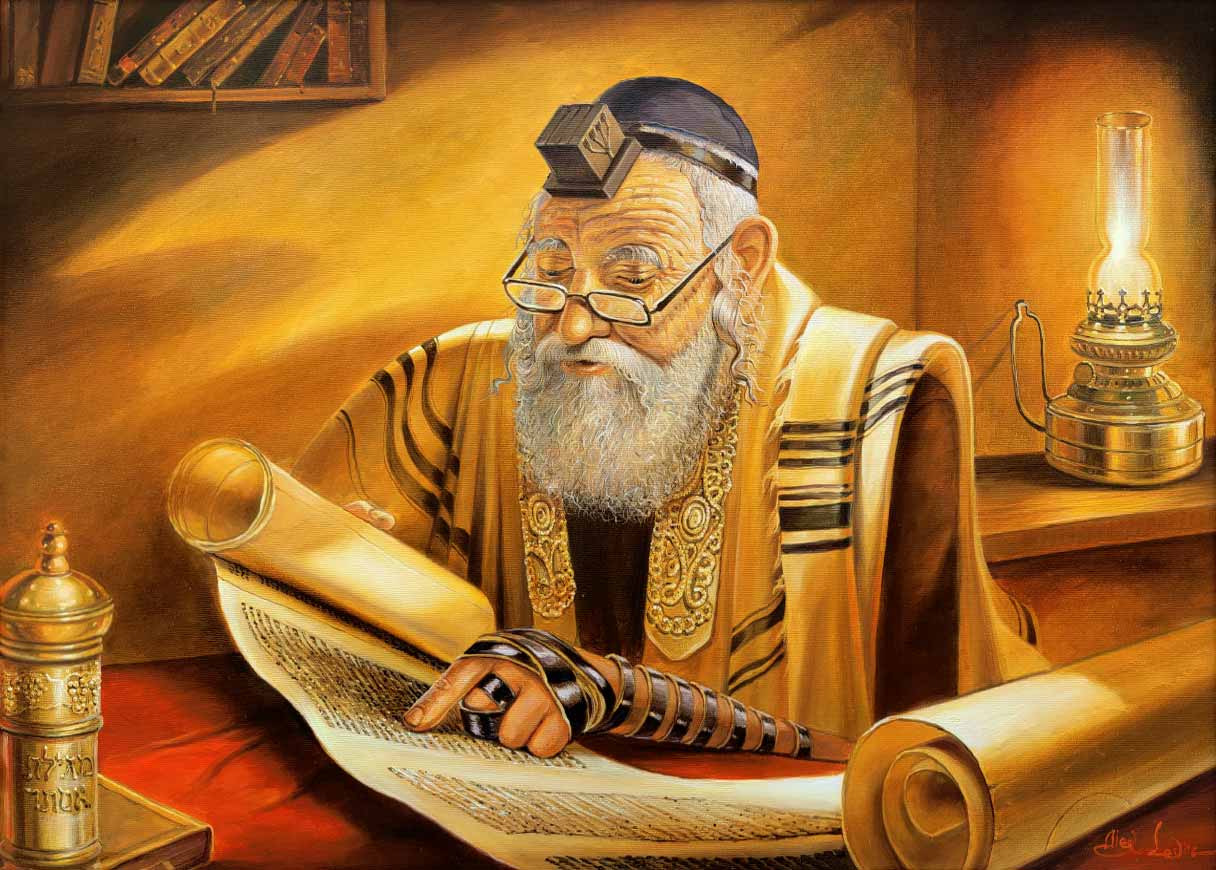
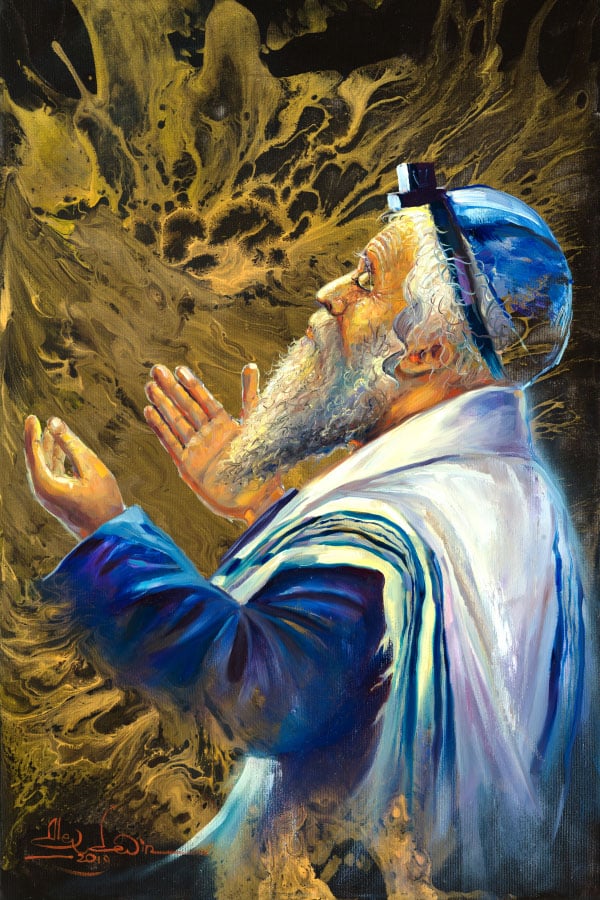
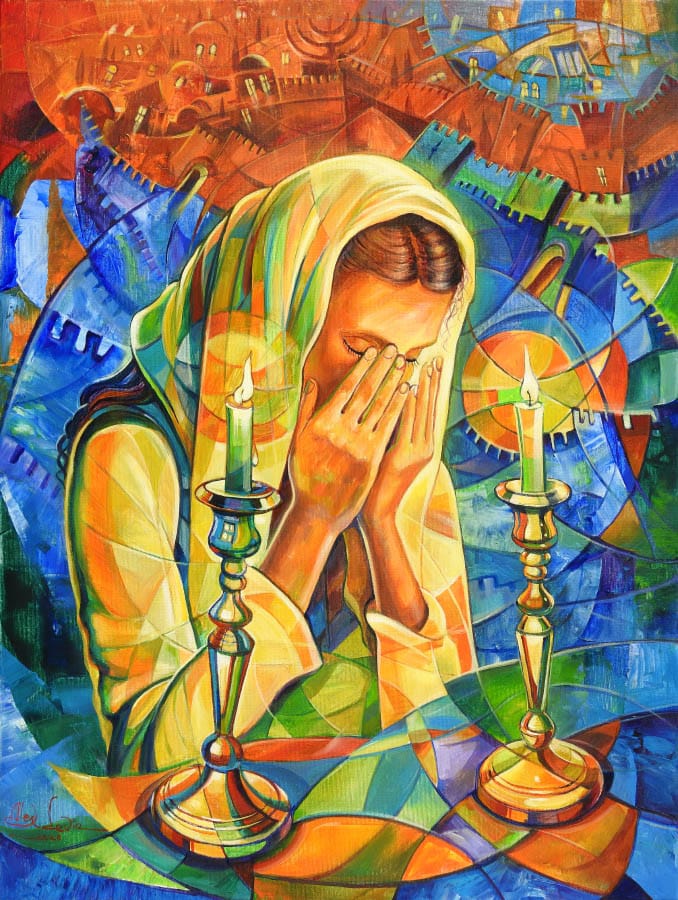
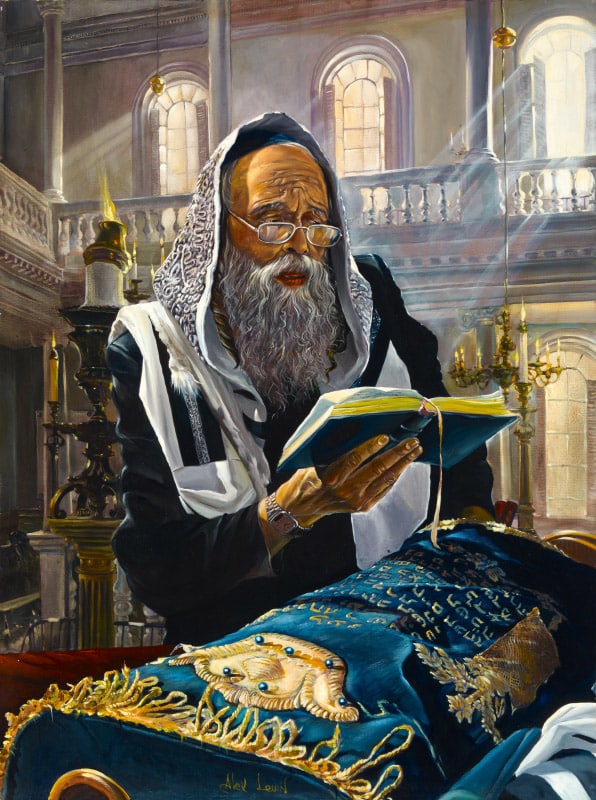
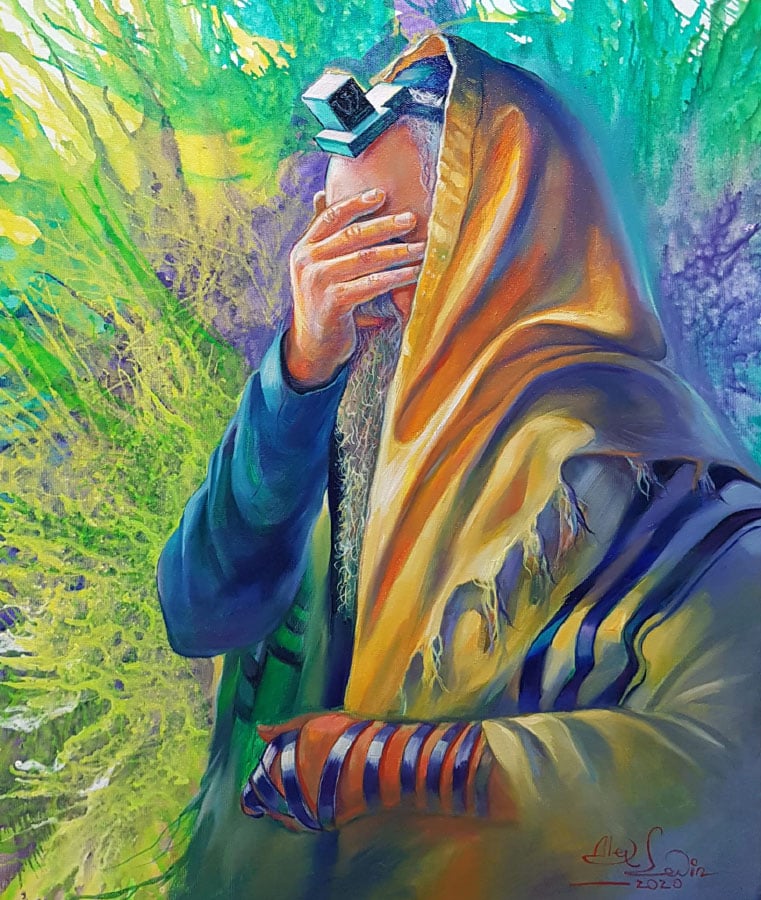
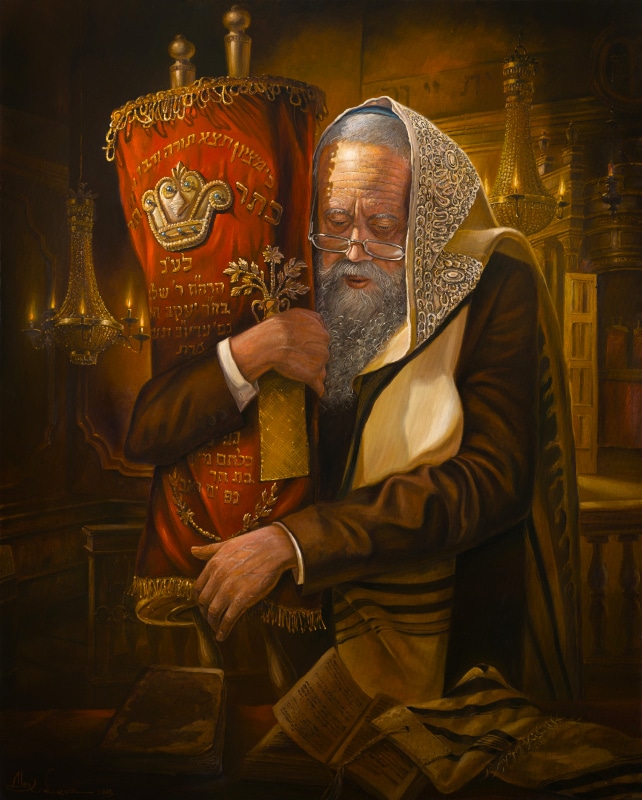
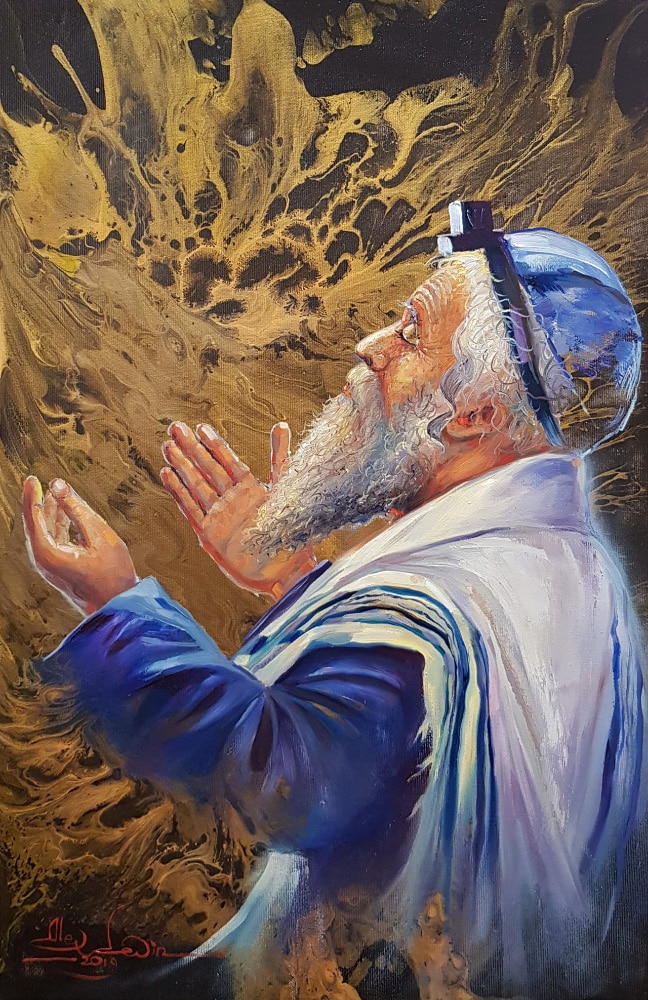
Rosh Hashanah art brings the symbols and traditions of the Jewish New Year into visual form. The sound of the shofar, apples dipped in honey, pomegranates, festive meals, prayer, Tashlich and Jerusalem all provide artists with subjects rich in both beauty and meaning.
Rosh Hashanah is not simply a celebration of a new calendar year. It begins a period of prayer, reflection and spiritual renewal leading into Yom Kippur.
For Jewish artists, this combination of hope and introspection creates an especially meaningful subject. A Rosh Hashanah painting can portray a joyful family table, the solemn sound of the shofar, worshippers gathered beside water for Tashlich, or symbolic fruits associated with wishes for a good and sweet year.
What Is Rosh Hashanah?
Rosh Hashanah literally means “Head of the Year” in Hebrew.
It is observed on the first and second days of the Hebrew month of Tishrei and marks the beginning of the Jewish calendar year.
Unlike the secular New Year, Rosh Hashanah combines celebration with serious spiritual reflection.
Jewish tradition views the holiday as a time of judgment, prayer, self-examination and hope for the year ahead.
Rosh Hashanah also begins the Ten Days of Repentance, which culminate with Yom Kippur.
Why Is Rosh Hashanah Important in Jewish Art?
Rosh Hashanah gives artists an unusually rich collection of visual symbols.
The holiday can be represented through the shofar, honey, apples, pomegranates, round challah, prayer books, candles, festive tables and scenes of Tashlich.
Each object carries meaning beyond its appearance.
A shofar can symbolize awakening. Honey suggests hopes for sweetness. A pomegranate can represent abundance. Flowing water in a Tashlich painting can suggest repentance and the possibility of beginning again.
For this reason, Rosh Hashanah art can work on several levels at once – as Jewish holiday art, as a family scene, as symbolic artwork and as an expression of faith and renewal.
The Shofar – The Central Symbol of Rosh Hashanah
The shofar, traditionally made from a ram’s horn, is the most recognizable religious symbol of Rosh Hashanah.
Hearing the shofar is a central observance of the holiday.
Its sound is unlike ordinary music. The blasts are intended to awaken attention and encourage spiritual reflection.
Artists can portray the shofar realistically, showing a person raising the horn to his lips, or symbolically, allowing the instrument to represent prayer, repentance, revelation and the call to return.
Explore Alex Levin’s collection of Shofar paintings.
The Sound of the Shofar in Jewish Art
A painting cannot literally produce sound, yet artists can suggest sound through movement, posture and composition.
A figure blowing the shofar naturally directs the viewer’s attention outward, as though the sound is traveling beyond the boundaries of the canvas.
In Alex Levin’s work, the shofar appears in both traditional and contemporary Jewish scenes.
Sounding the Shofar in Jerusalem connects the ancient instrument with the spiritual atmosphere of Jerusalem.
Other works interpret the shofar more symbolically, combining it with light, biblical imagery and contemporary visual elements.
What Does the Shofar Symbolize?
The shofar has many associations in Jewish tradition.
On Rosh Hashanah it can represent awakening, repentance, divine sovereignty and the need to examine one’s actions.
The shofar also appears elsewhere in biblical and Jewish tradition, including the revelation at Mount Sinai.
This allows artists to use the instrument as a bridge between ancient biblical history and contemporary Jewish worship.
Apples and Honey in Rosh Hashanah Art
Apples dipped in honey are among the best-known visual symbols of the Jewish New Year.
The custom expresses a simple and memorable hope: that the coming year will be good and sweet.
Because apples and honey are immediately recognizable, they appear frequently in Rosh Hashanah greeting cards, illustrations, table decorations and Jewish holiday art.
An artist can portray the subject as a realistic still life or place the foods within a larger family scene around the holiday table.
Why Is Honey Associated With the Jewish New Year?
Honey naturally represents sweetness.
At Rosh Hashanah meals, many Jewish families dip apple slices and challah into honey while expressing hopes for a sweet year.
The symbolism is direct, but its simplicity is part of its strength.
Food becomes a physical expression of a spiritual wish.
In visual art, the golden color of honey also works beautifully with the reds of apples and pomegranates and the warm light of a holiday table.
Pomegranates and Rosh Hashanah
The pomegranate is another fruit strongly associated with Rosh Hashanah and Jewish art.
Its deep red skin, crown-like top and large number of seeds have made it a powerful symbol of abundance.
Jewish tradition also connects the pomegranate with mitzvot and spiritual merit.
It is sometimes said that every pomegranate contains exactly 613 seeds corresponding to the traditional number of Torah commandments. That is a popular symbolic tradition rather than a botanical fact – actual pomegranates contain varying numbers of seeds.
The fruit’s beauty and symbolism make it especially attractive to Jewish artists.
Explore Pomegranate Paintings by Alex Levin
Pomegranates in Jewish and Israeli Art
Pomegranates have appeared in Jewish visual culture for centuries.
The fruit is one of the Seven Species associated with the Land of Israel and also appears in biblical descriptions connected with the ancient Temple and priestly garments.
Contemporary artists continue to use the pomegranate because it connects natural beauty with Jewish history and symbolism.
Alex Levin often places bright red pomegranates against Jerusalem stone or Israeli landscapes, visually connecting the fruit with the land itself.
The Seven Species and Rosh Hashanah
The pomegranate is one of the Seven Species of Israel mentioned in the Torah.
The Seven Species are wheat, barley, grapes, figs, pomegranates, olives and dates.
Although the Seven Species are not exclusively Rosh Hashanah symbols, their connection with the Land of Israel makes them natural subjects for Jewish New Year artwork and holiday tables.
You can learn more in our guide to the Seven Species of Israel.
Round Challah on Rosh Hashanah
Challah for Rosh Hashanah is often baked in a round shape rather than the familiar braid associated with an ordinary Shabbat.
The circle can represent continuity, the annual cycle and the beginning of another year.
Some families add raisins or other sweet ingredients, and the challah may be dipped in honey.
For an artist, a round challah can immediately transform a Jewish table scene into one associated specifically with the High Holiday season.
Rosh Hashanah Candle Lighting
Candle lighting also forms part of the visual atmosphere of Rosh Hashanah.
The warm light of holiday candles can create an intimate setting for paintings of Jewish family life.
Candlelight naturally emphasizes faces, table settings, wine, challah and other ceremonial objects.
In art, this warm glow can communicate both celebration and the reflective nature of the holiday.
What Is Tashlich?
Tashlich is a Rosh Hashanah prayer ceremony traditionally performed beside a natural body of water.
The name comes from the Hebrew concept of “casting away.”
During the ceremony, verses and prayers associated with repentance are recited beside water.
The custom evokes the biblical language of casting sins into the depths of the sea.
When the first day of Rosh Hashanah falls on Shabbat, communities that observe Tashlich generally perform it on the second day instead.
Tashlich in Jewish Art
Tashlich creates a particularly beautiful subject for Jewish painting.
Unlike a synagogue scene, it often takes place outdoors beside a river, pond, lake or sea.
An artist can portray an entire community gathered near the water – men, women and children participating in a tradition practiced by generations before them.
Alex Levin’s Tashlich in Shtetl places this Rosh Hashanah custom within the atmosphere of an Eastern European Jewish community.
The scene combines prayer, nature, family and Jewish memory.
Rosh Hashanah in the Shtetl
For generations, Jewish communities throughout Eastern Europe observed Rosh Hashanah in towns and villages far from Israel.
The synagogue, family table, shofar and Tashlich ceremony became familiar parts of the annual rhythm of Jewish life.
Paintings of Rosh Hashanah in a shtetl can therefore preserve more than a holiday ritual.
They can also preserve clothing, architecture, landscapes and community traditions belonging to a Jewish world that was largely destroyed during the Holocaust.
Explore Alex Levin’s collection of Shtetl paintings.
Rosh Hashanah and Jerusalem
Jerusalem naturally provides another setting for Jewish New Year art.
The ancient stones of the city, synagogues, Jewish Quarter, Kotel and distinctive Jerusalem light can become the background for scenes of prayer and preparation for the High Holidays.
A painting combining Jerusalem with a shofar, pomegranates or worshippers connects the annual holiday cycle with the historic center of Jewish spiritual life.
Explore Alex Levin’s collection of Jerusalem paintings.
The Jewish New Year and the Kotel
During the High Holiday period, prayer takes on particular importance.
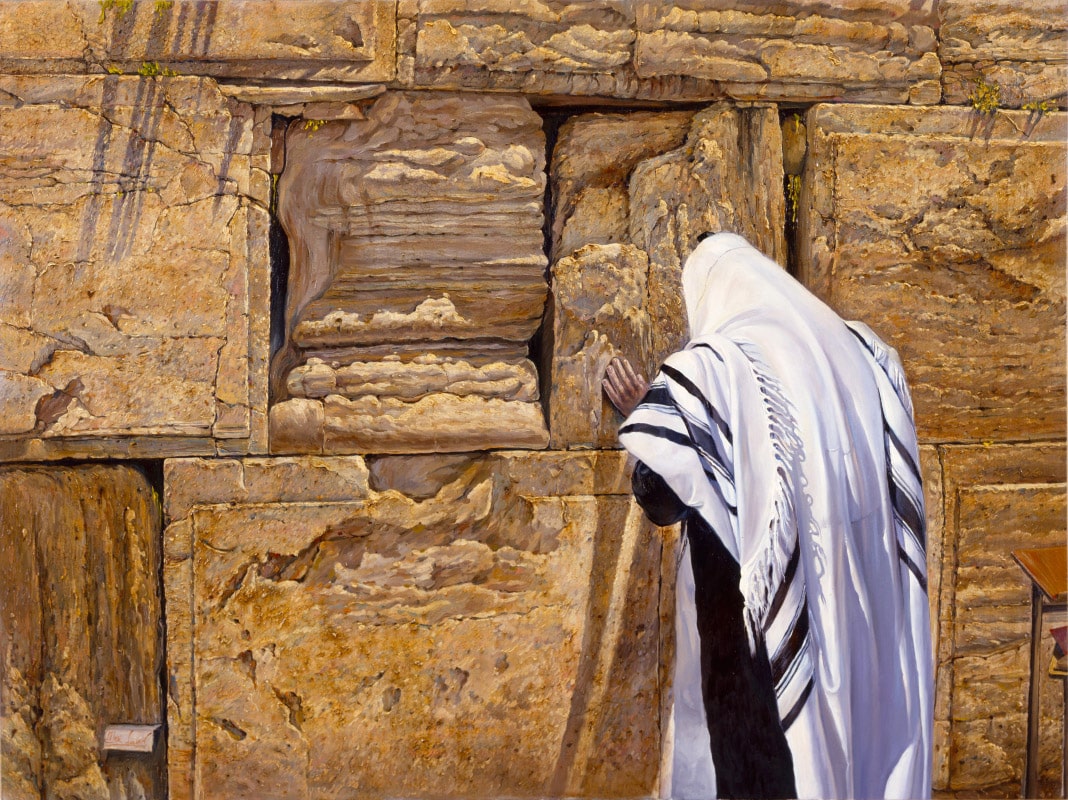
The Kotel, or Western Wall, is therefore a powerful subject for artwork connected with the Jewish New Year.
Paintings may show worshippers praying near the ancient stones, reading from prayer books or reflecting quietly.
The Kotel’s connection with Jerusalem and the ancient Temple gives the scene additional historical depth.
View Alex Levin’s collection of Kotel paintings.
Rosh Hashanah as a Time of Reflection
Rosh Hashanah combines celebration with introspection.
Jewish families enjoy festive meals and wish each other a good year, but synagogue prayers also emphasize judgment, responsibility and the opportunity for change.
This emotional contrast gives artists more possibilities than a purely celebratory holiday.
A Rosh Hashanah painting may be colorful and joyful, or quiet and contemplative.
Both approaches can reflect authentic aspects of the holiday.
Rosh Hashanah and the Days of Awe
Rosh Hashanah begins the period commonly known as the Days of Awe or the Ten Days of Repentance.
The period concludes with Yom Kippur.
This connection explains why themes of prayer, reflection, repentance and renewal appear so frequently in High Holiday artwork.
Rosh Hashanah looks toward the possibilities of a new year, while also asking people to consider the year that has passed.
What Does Shanah Tovah Mean?
Shanah Tovah means “good year.”
It is one of the most familiar greetings exchanged around Rosh Hashanah.
A longer traditional greeting is L’Shanah Tovah Tikatevu, expressing the wish that the recipient be inscribed for a good year.
Because greetings are such an important part of the holiday, Rosh Hashanah has also inspired generations of illustrated cards and Jewish New Year artwork.
Rosh Hashanah Greeting Cards and Jewish Art
Jewish New Year greeting cards became an important form of popular Jewish visual culture.
Historic cards portrayed families, synagogues, shofars, Jewish soldiers, Jerusalem, biblical imagery, immigrants and scenes of everyday Jewish life.
Modern digital greetings continue the same basic idea in a new format.
Art remains an effective way to express a wish that can be understood emotionally before the viewer even reads the words.
Modern Rosh Hashanah Art
Contemporary Rosh Hashanah art does not need to resemble a traditional holiday card.
Artists may use abstraction, surrealism, Hebrew letters, symbolic colors and unusual compositions to reinterpret familiar subjects.
A giant shofar may become the center of a symbolic landscape. Pomegranate seeds can form a path or pattern. Hebrew words may be incorporated into Jerusalem architecture.
These approaches allow ancient traditions to become part of contemporary Jewish visual culture.
Shofar of Revelation by Alex Levin
Alex Levin’s Shofar of Revelation – The Path to Light demonstrates how a traditional Jewish symbol can be transformed through contemporary art.
The shofar dominates the composition while other biblical symbols create connections with Mount Sinai, spiritual awakening and the journey toward greater understanding.
Although the shofar has meanings beyond Rosh Hashanah, its central role during the Jewish New Year makes this imagery especially relevant during the High Holiday season.
Jewish New Year Art for the Home
Rosh Hashanah artwork can be displayed year-round rather than only during the holiday.
A shofar painting may represent faith and spiritual awakening throughout the year.
A pomegranate painting can connect a home with the Land of Israel, abundance and Jewish symbolism.
Tashlich artwork may remind viewers of reflection and renewal, while Jerusalem artwork carries meaning regardless of season.
This makes Jewish New Year themes suitable not only for holiday decoration but also for permanent Judaica collections.
Rosh Hashanah Art as a Jewish Gift
Jewish New Year art can also make a meaningful gift for family, friends, a synagogue or a Jewish home.
The best choice depends on the recipient.
A pomegranate painting may suit someone who loves Israel and nature. A shofar image may carry stronger religious meaning. Jerusalem art can connect the holiday with the Holy City, while a Tashlich scene may appeal to someone interested in traditional Jewish life.
Because these symbols represent renewal and hope, they can also be appropriate for housewarmings and other new beginnings.
Rosh Hashanah Paintings by Alex Levin
Israeli artist Alex Levin explores many of the symbols connected with Rosh Hashanah through his broader body of Jewish and Israeli art.
His works include the shofar, pomegranates, Tashlich, Jerusalem, prayer, traditional Jewish communities and contemporary interpretations of biblical symbolism.
Rather than creating one narrow Rosh Hashanah series, these themes appear throughout his Jewish Life, Jerusalem, nature and contemporary collections.
Explore Jewish Life Paintings by Alex Levin
You can also browse Shofar paintings, Pomegranate paintings, and Jerusalem paintings.
Frequently Asked Questions About Rosh Hashanah Art
What is Rosh Hashanah art?
Rosh Hashanah art is artwork inspired by the Jewish New Year and its traditions. Common subjects include the shofar, apples and honey, pomegranates, Tashlich, prayer, Jerusalem, festive meals and Jewish family life.
What are the main symbols of Rosh Hashanah?
The shofar is the central religious symbol of Rosh Hashanah. Other familiar symbols include apples and honey, round challah, pomegranates, holiday candles, prayer books and symbolic foods eaten with hopes for a good year.
Why is the shofar important on Rosh Hashanah?
Hearing the shofar is one of the central observances of Rosh Hashanah. Its sound is associated with awakening, reflection, repentance and recognition of divine sovereignty.
Why do Jews eat apples and honey on Rosh Hashanah?
Apples dipped in honey express the hope for a good and sweet new year. Their simple symbolism has made them one of the most recognizable images associated with Rosh Hashanah.
Why are pomegranates associated with Rosh Hashanah?
Pomegranates are associated with abundance and mitzvot in Jewish tradition and are among the symbolic foods eaten by some families during Rosh Hashanah. They are also one of the Seven Species of Israel.
Do pomegranates always have 613 seeds?
No. Pomegranates contain varying numbers of seeds. The association between pomegranates and the traditional 613 mitzvot is symbolic rather than a botanical rule.
What is Tashlich?
Tashlich is a Rosh Hashanah prayer ceremony traditionally performed beside a body of water. The prayers express themes of repentance and symbolically casting away sins.
What does Shanah Tovah mean?
Shanah Tovah means “good year” in Hebrew and is a common greeting during Rosh Hashanah.
What makes good Rosh Hashanah artwork?
Meaningful Rosh Hashanah artwork usually connects a recognizable holiday symbol with a deeper idea such as renewal, sweetness, prayer, repentance, family, Jerusalem or Jewish continuity.
Where can I find Rosh Hashanah paintings?
ArtLevin.com offers Jewish artwork by Israeli artist Alex Levin featuring Rosh Hashanah-related themes including the shofar, Tashlich, pomegranates, Jerusalem and traditional Jewish life.