Moving into a new home is one of life’s most meaningful milestones. In Jewish tradition, a home is more than a physical space – it can become a place of family, Torah, hospitality, celebration, kindness, and peace.
Many families mark a move with a Jewish blessing for the new home, the placement of a mezuzah, a housewarming gathering known as Chanukat HaBayit, and meaningful Judaica that reflects Jewish identity and tradition.
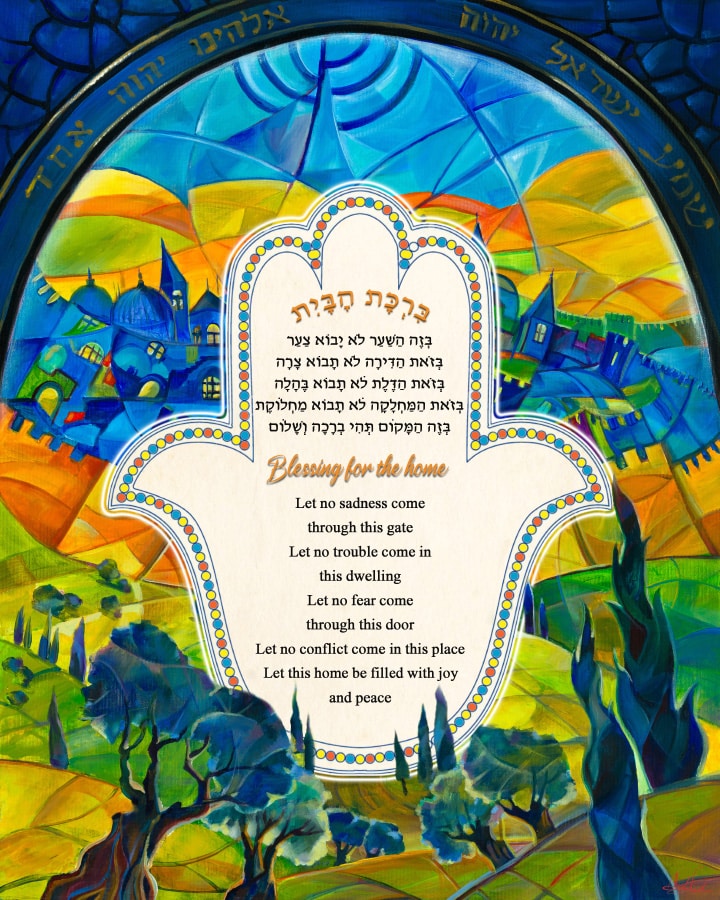
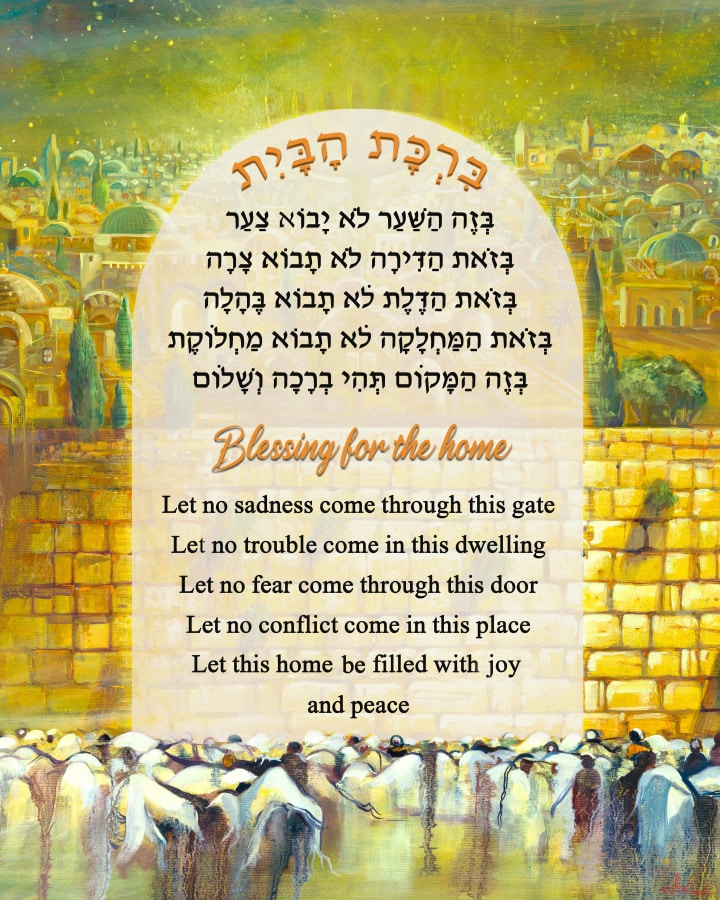
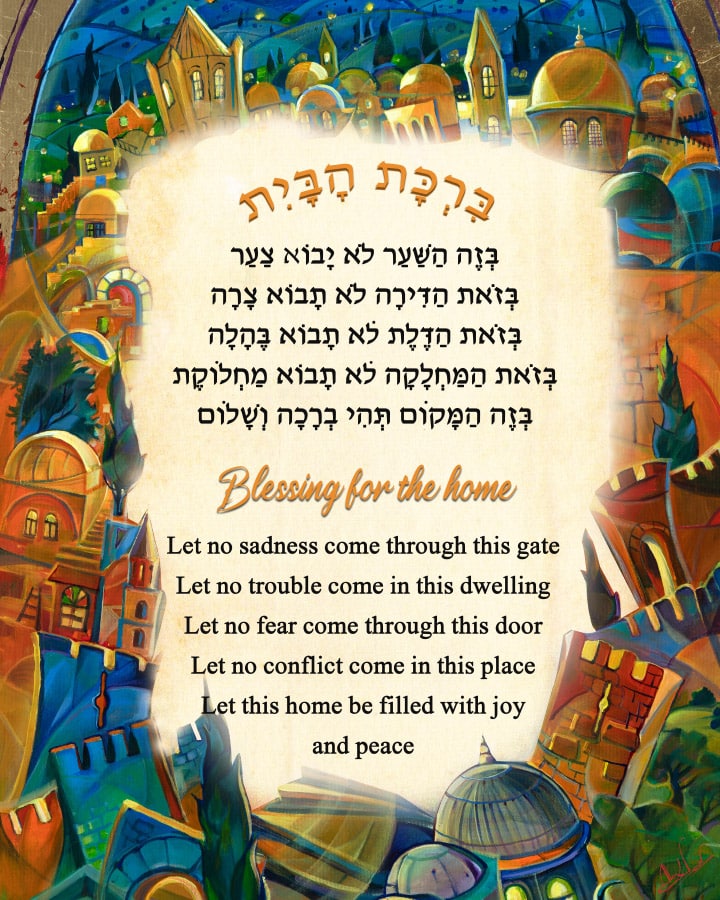
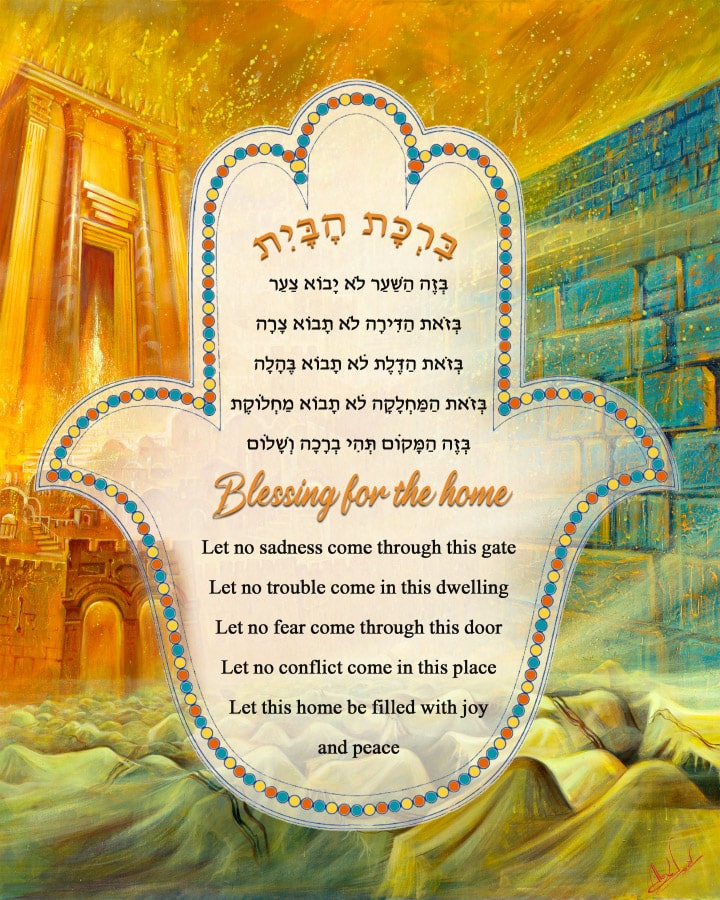
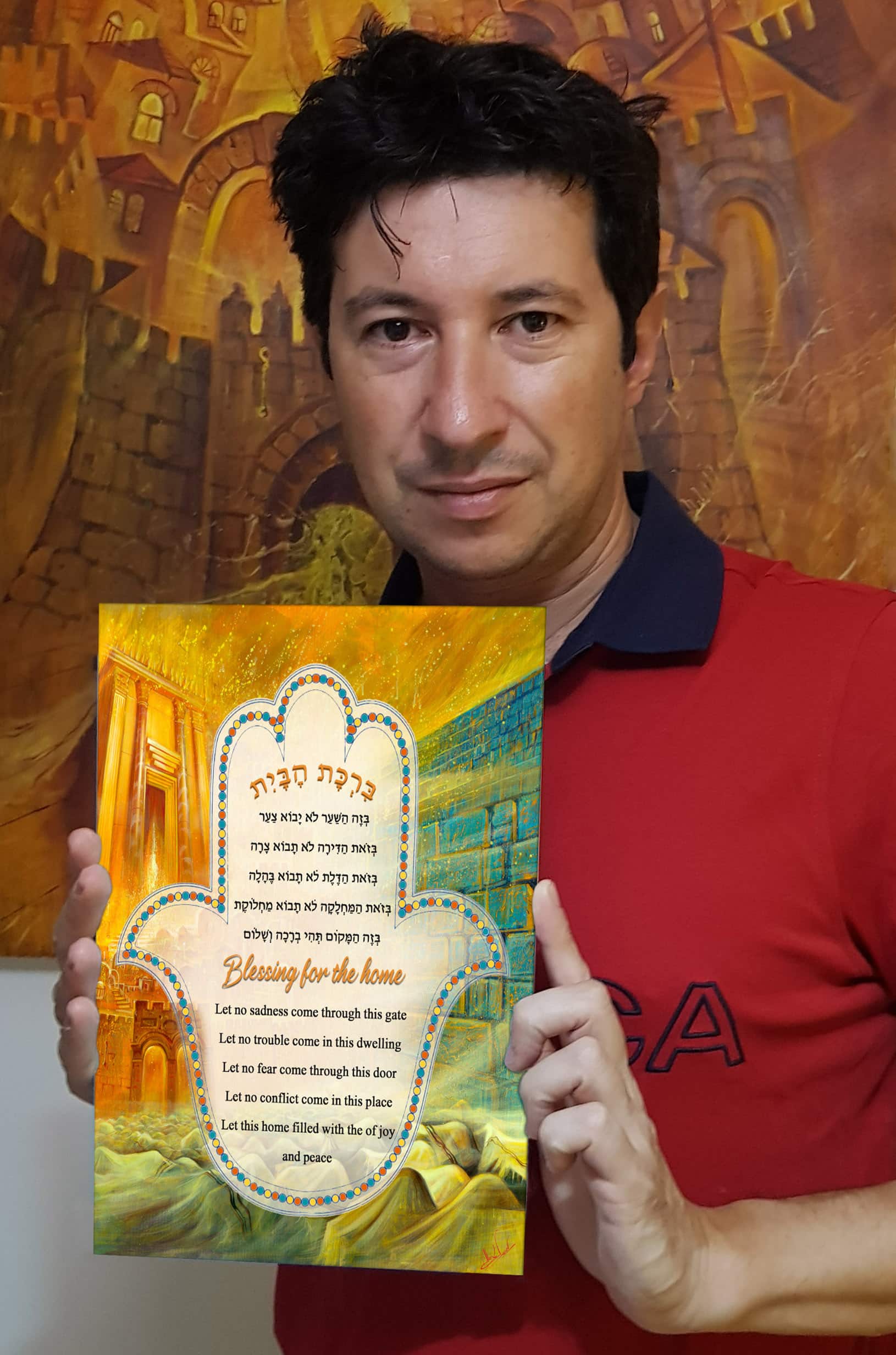
A decorative Birkat HaBayit, or blessing for the home, has also become a popular way to express hopes for peace, happiness, health, prosperity, and blessing within the household.
What Is a Jewish Blessing for a New Home?
There is not one single universal Jewish prayer that every family is required to recite when moving into a new home.
Instead, Jewish families may mark the occasion through several traditions, including affixing a mezuzah, saying blessings, studying Torah, inviting family and friends for a Chanukat HaBayit, giving charity, and displaying meaningful Jewish texts or artwork in the home.
One popular decorative tradition is Birkat HaBayit – literally, a “blessing of the home.”
Different versions of Birkat HaBayit express hopes that the home will be filled with blessing, happiness, friendship, peace, prosperity, health, and divine protection.
What Is Birkat HaBayit?
Birkat HaBayit is Hebrew for “Blessing of the Home.”
Today, Birkat HaBayit is commonly displayed as decorative Judaica in Jewish homes and businesses. It may be written in Hebrew, English, or both and incorporated into plaques, prints, paintings, calligraphy, or other forms of Jewish art.
There are several versions of the blessing rather than one universally fixed text.
The central idea is the same: to express a wish that the home be a place of peace, blessing, generosity, health, love, and happiness.
Because of this meaning, Birkat HaBayit has become a popular gift for a new home, wedding, anniversary, or other important family occasion.
Is Birkat HaBayit a Required Jewish Prayer?
No. A decorative Birkat HaBayit should not be confused with a specific mitzvah required when moving into a Jewish home.
The most important traditional mitzvah associated with establishing a Jewish residence is the mezuzah.
Birkat HaBayit is better understood as a meaningful Jewish blessing and decorative expression of the values people hope will fill their home.
This distinction is important because Jewish customs surrounding a new home can differ among families and communities.
The Mezuzah and a New Jewish Home
One of the most important traditions when establishing a Jewish home is affixing a mezuzah to the appropriate doorposts.
A kosher mezuzah contains a handwritten parchment with passages from the Torah, including the Shema.
The mezuzah transforms the doorway into a visible reminder of Jewish faith and identity and is one of the most recognizable features of a Jewish home.
A blessing is recited when a mezuzah is properly affixed according to Jewish law.
Because the exact requirements can depend on the doorway, type of residence, location, and circumstances, anyone with specific halachic questions should consult a knowledgeable rabbi.
What Is Chanukat HaBayit?
A Jewish housewarming is commonly called Chanukat HaBayit, meaning the “dedication of the house.”
A Chanukat HaBayit provides an opportunity to gather family and friends and begin life in the new home with Torah, blessings, food, friendship, and celebration.
Some families invite a rabbi, share words of Torah, recite Psalms, give charity, or mark the occasion in another way that reflects their family’s traditions.
The idea is not simply to celebrate purchasing or moving into a building, but to dedicate the home to a meaningful Jewish life.
Jewish Traditions When Moving Into a New Home
Jewish customs surrounding a new home vary widely, but several traditions are commonly associated with the occasion.
- Affixing kosher mezuzot to appropriate doorways
- Hosting a Chanukat HaBayit gathering
- Studying or sharing words of Torah
- Giving tzedakah, or charity
- Bringing Jewish books into the home
- Displaying meaningful Judaica and Jewish artwork
- Inviting family, friends, and neighbors to celebrate together
Some Jewish communities also have additional customs connected with moving day and the first days in a new home.
Bread and Salt in a New Jewish Home
In some Jewish communities there is a custom of bringing bread and salt into a new home.
Bread represents sustenance and the hope that the inhabitants will always have what they need.
Salt, which historically preserved food and does not easily spoil, can symbolize permanence and continuity.
This is a custom rather than a universal requirement, but it remains a meaningful tradition in some Jewish families.
Shehecheyanu and a New Home
A new home is a joyous milestone, and some Jewish traditions connect the occasion with the blessing of Shehecheyanu.
Shehecheyanu expresses gratitude for being sustained and reaching a special moment.
Customs surrounding when and how the blessing is recited can vary. One practice is to recite Shehecheyanu over a new fruit while also having the new home in mind.
Families who want guidance for their particular circumstances can consult their rabbi.
What Makes a Jewish Home?
A Jewish home is not defined only by the objects hanging on its walls.
Jewish tradition places great value on what happens inside the home – hospitality, Shabbat, Torah learning, family meals, charity, kindness, celebration of Jewish holidays, and the passing of traditions from one generation to another.
A mezuzah, Judaica, Hebrew books, Shabbat candlesticks, Jewish paintings, and a Birkat HaBayit can serve as visible reminders of those deeper values.
The goal is to create a home filled not only with beautiful objects but with Jewish life.
What Is a Good Jewish Housewarming Gift?
A meaningful Jewish housewarming gift usually combines beauty with symbolism or practical use in Jewish life.
Popular ideas include:
- Birkat HaBayit – Jewish Home Blessing
- Mezuzah case
- Shabbat candlesticks
- Kiddush cup
- Challah board or cover
- Jewish books
- Jerusalem artwork
- Kotel painting
- Jewish Life painting
- Contemporary Judaica art
The best gift is often one that reflects something personal about the family – their connection to Jerusalem, their heritage, their traditions, or the Jewish values they want their new home to represent.
Birkat HaBayit as a Jewish Housewarming Gift
A Home Blessing – Birkat HaBayit is especially appropriate for a housewarming because the message is directly connected with the new home.
Unlike an ordinary decorative item, a home blessing expresses wishes for the people who will live there.
It can be displayed near the entrance, in a living room, dining area, office, or another prominent place in the home.
Alex Levin’s Jewish Home Blessing – Birkat HaBayit collection combines the traditional concept of the home blessing with artwork inspired by Jerusalem.
Explore Jewish Home Blessings by Alex Levin
Jerusalem Art as a Housewarming Gift
Jerusalem artwork is another meaningful choice for a Jewish home.
For generations, Jerusalem has represented Jewish history, prayer, memory, and connection to the Land of Israel.
A painting of the Old City, Jerusalem skyline, city gates, or sacred landmarks can therefore carry meaning beyond ordinary home decoration.
Explore Alex Levin’s collection of Jerusalem paintings.
Kotel Paintings for a Jewish Home
The Kotel, or Western Wall, is one of the most recognizable Jewish landmarks in the world.
A Kotel painting may symbolize Jerusalem, prayer, faith, Jewish continuity, and a personal connection with Israel.
For this reason, Western Wall artwork can make a particularly meaningful Jewish wedding, anniversary, or housewarming gift.
Explore Alex Levin’s collection of Kotel paintings.
Jewish Life Paintings for the Home
Some collectors prefer artwork that portrays Jewish traditions rather than a specific location.
Paintings of Shabbat candles, Torah study, Jewish holidays, rabbis, family gatherings, and Jewish celebrations can bring the visual language of Jewish life into a home.
These works can be especially meaningful when they reflect customs practiced by the family itself.
Explore Alex Levin’s Jewish Life paintings.
Shabbat Art for a New Home
Shabbat is one of the traditions most closely associated with Jewish family life.
Artwork depicting Shabbat candles, Kiddush, challah, prayer, and families gathered around the table can symbolize peace and the transition from the working week into the Sabbath.
Shabbat paintings work especially naturally in dining rooms, living rooms, and areas where family and guests gather.
Explore Alex Levin’s collection of Shabbat paintings.
Contemporary Judaica for a Modern Jewish Home
A Jewish home does not need to be decorated exclusively with traditional-looking artwork.
Contemporary Judaica can incorporate Jerusalem, Hebrew letters, Jewish symbols, Torah imagery, and religious themes through abstraction, modern color, unusual perspectives, and contemporary design.
This can work especially well in modern interiors where the owners want artwork that expresses Jewish identity while complementing contemporary furnishings.
Explore Alex Levin’s contemporary Jewish art.
Jewish Home Blessings by Alex Levin
Israeli artist Alex Levin combines Jewish symbolism with artwork inspired by Jerusalem and the Holy Land.
His Birkat HaBayit designs turn the traditional concept of a Jewish home blessing into decorative artwork suitable for a new home, wedding gift, anniversary, or other meaningful occasion.
View the Home Blessing – Birkat HaBayit Collection
Frequently Asked Questions About Jewish New Home Blessings
What is the Jewish blessing for a new home?
There is no single universal prayer required for every Jewish family moving into a new home. Common traditions include affixing a mezuzah, hosting a Chanukat HaBayit, sharing Torah, and expressing blessings for peace and happiness in the home. Decorative Birkat HaBayit texts are also popular.
What does Birkat HaBayit mean?
Birkat HaBayit means “Blessing of the Home” in Hebrew. Decorative versions typically express wishes for peace, health, happiness, prosperity, friendship, and blessing within the household.
What is Chanukat HaBayit?
Chanukat HaBayit means “dedication of the house” and refers to a Jewish housewarming or home-dedication gathering. Families may invite relatives and friends, share words of Torah, give charity, and celebrate beginning life in the new home.
Do Jewish homes need a mezuzah?
Jewish law requires a mezuzah on qualifying doorways of a Jewish residence. Because details can vary according to the type of room, doorway, ownership, rental circumstances, and location, specific questions should be addressed to a knowledgeable rabbi.
What should I bring to a Jewish housewarming?
Popular gifts include a Birkat HaBayit, mezuzah case, Shabbat items, Kiddush cup, challah accessories, Jewish books, Jerusalem artwork, Judaica, or another item connected with Jewish family life.
Is a Home Blessing a good Jewish housewarming gift?
Yes. A Birkat HaBayit is especially appropriate because its message is connected directly with hopes for peace, happiness, health, and blessing in the new home.
Where should a Jewish Home Blessing be displayed?
There is no single required location for a decorative Birkat HaBayit. Families may display it near an entrance or in a living room, dining area, office, or another prominent place where it can be seen and enjoyed.
Where can I buy a Jewish Home Blessing?
ArtLevin.com offers a collection of Jewish Home Blessings – Birkat HaBayit featuring artwork by Israeli artist Alex Levin.