Solomon’s Temple in Jerusalem, also known as the First Temple, was the sacred sanctuary traditionally built by King Solomon in ancient Jerusalem.
According to the Hebrew Bible, Solomon constructed the Temple after succeeding his father, King David. It became the central sanctuary of ancient Israel and one of the most important buildings in Jewish history.
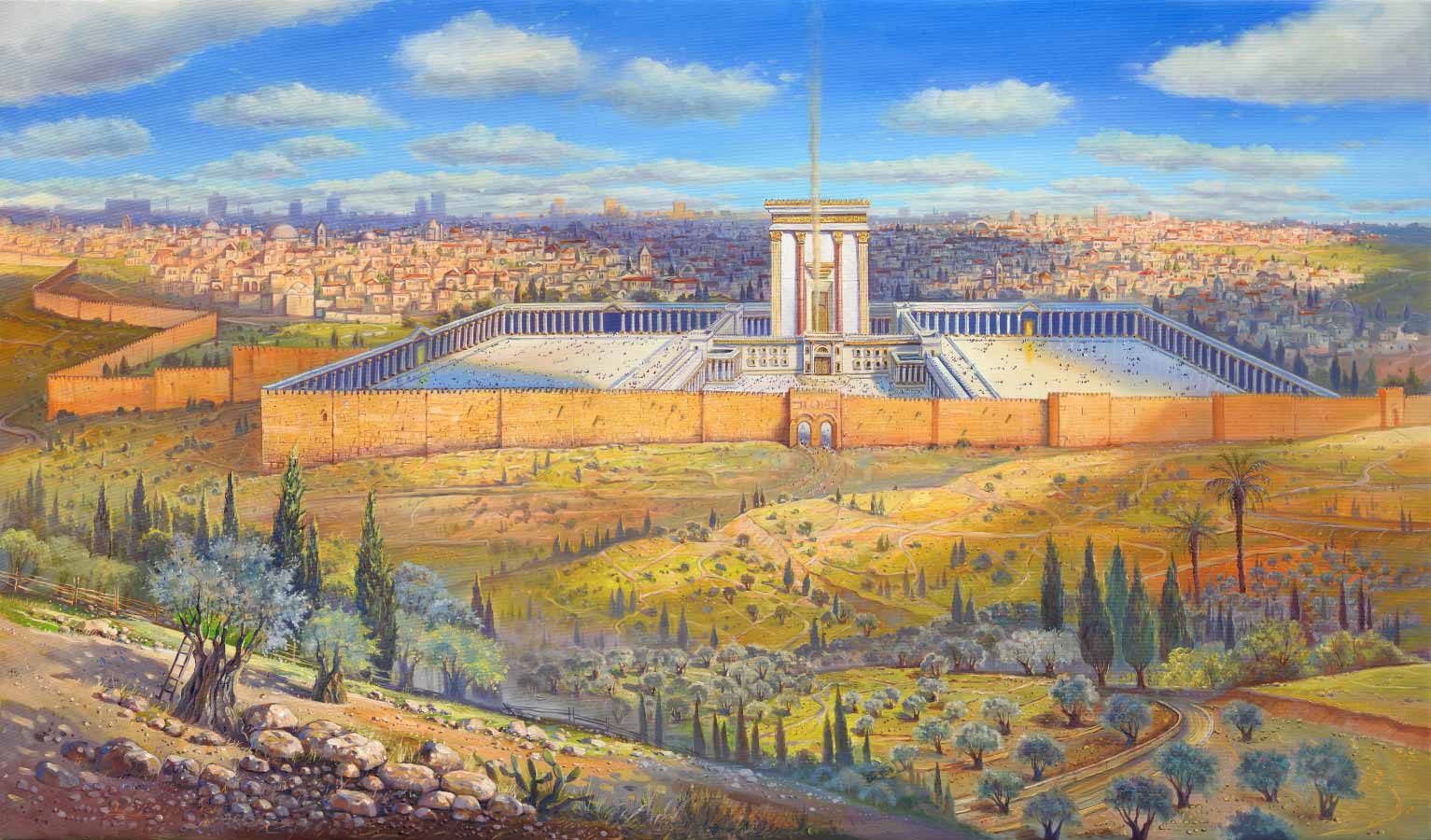
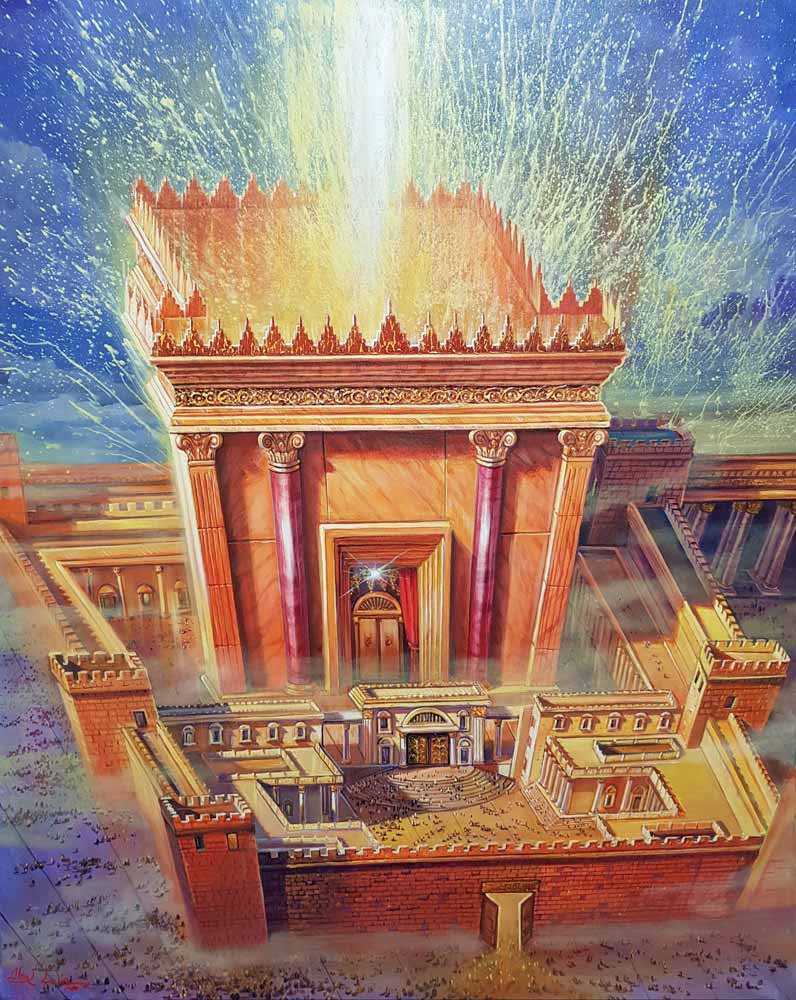
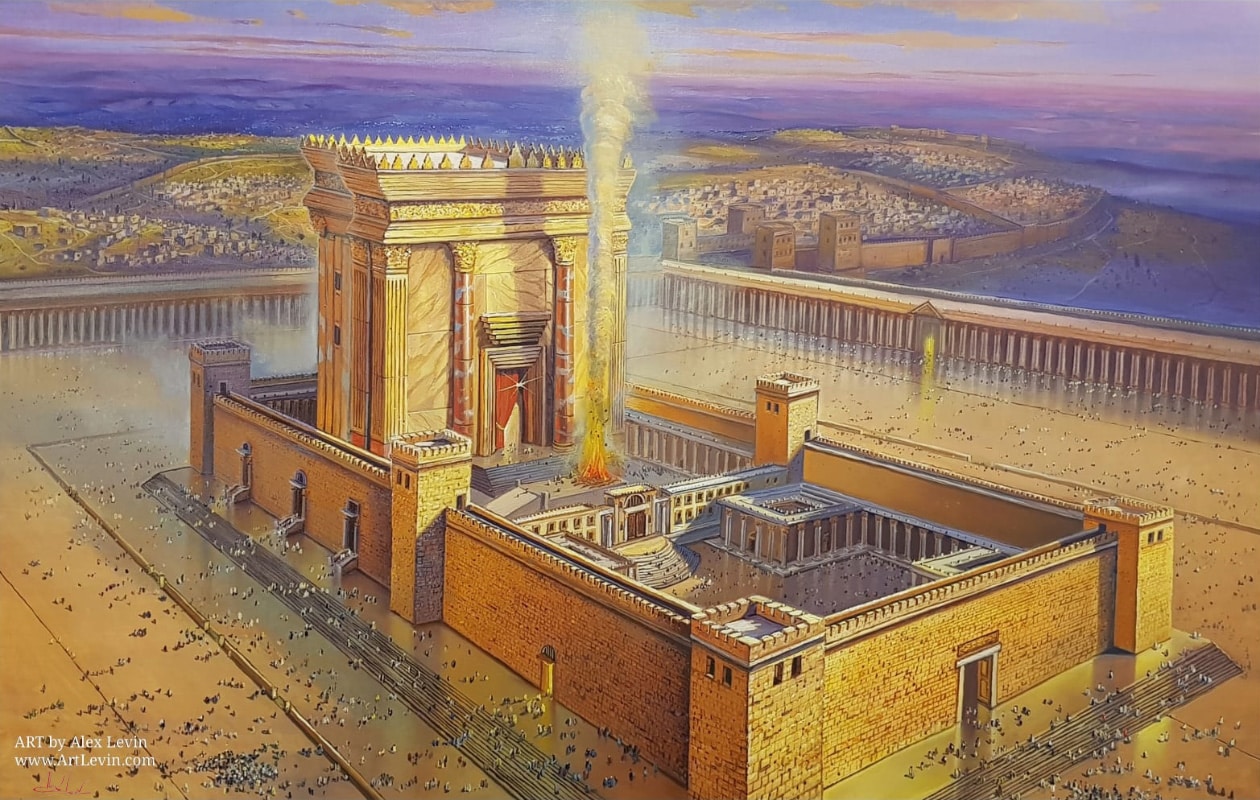
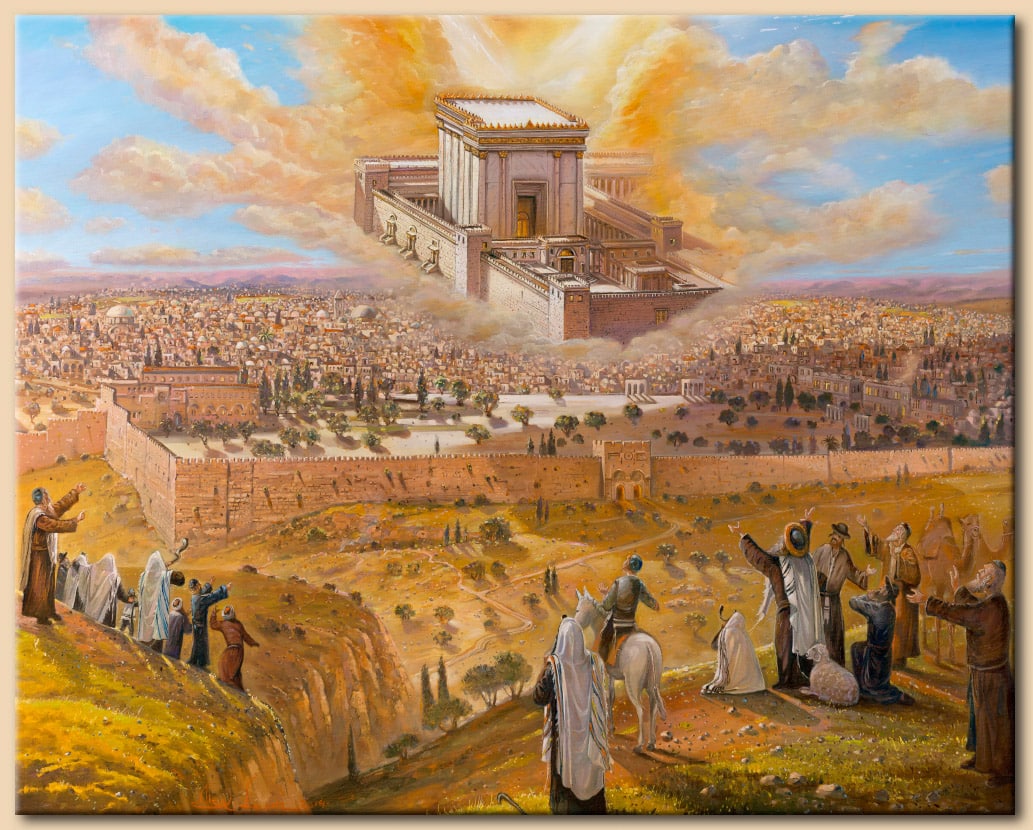
No photograph, drawing or complete architectural plan of Solomon’s Temple survives from antiquity. Modern images of the First Temple are therefore reconstructions based primarily on biblical descriptions, comparisons with ancient Near Eastern architecture, historical research and artistic interpretation.
That uncertainty is precisely what makes the Temple such a fascinating subject for historians, archaeologists and artists.
What Was Solomon’s Temple?
Solomon’s Temple was the First Temple in Jerusalem according to the biblical account.
It is also called:
- The First Temple
- The Temple of King Solomon
- Solomon’s Temple
- The First Jerusalem Temple
- The First Beit HaMikdash
In Hebrew, the Holy Temple is called Beit HaMikdash – בית המקדש.
The First Temple became associated with the priestly service, sacrifices, pilgrimage festivals, the Ark of the Covenant and the religious life of ancient Jerusalem.
Who Built Solomon’s Temple?
According to the Hebrew Bible, King Solomon built the First Temple.
Solomon was the son and successor of King David.
David had established Jerusalem as his capital and brought the Ark of the Covenant to the city, but the biblical narrative assigns the actual construction of the Temple to Solomon.
The Temple therefore became one of the defining achievements associated with Solomon’s reign.
Was Solomon a Real King?
Solomon is described extensively in the Hebrew Bible, particularly in First Kings and Second Chronicles.
He is portrayed as the son of King David, ruler of Israel, builder of the Jerusalem Temple and a king famous for wisdom and wealth.
Historical reconstruction of Solomon’s reign is more difficult.
Unlike later biblical kings who appear in external inscriptions and records, direct archaeological and written evidence relating specifically to Solomon is limited.
Scholars therefore continue to debate the size, wealth and political reach of the kingdom described in the biblical account.
For this reason, it is helpful to distinguish between what the biblical text says and what archaeology can independently establish.
When Did King Solomon Live?
King Solomon is traditionally placed in the 10th century BCE.
Common historical chronologies place his reign approximately around the middle decades of that century, although exact dates vary between scholarly reconstructions.
The biblical account states that Solomon reigned for forty years.
Rather than assigning an exact birth date that cannot be established, it is more accurate to describe Solomon as a king traditionally associated with the 10th century BCE.
When Was Solomon’s Temple Built?
According to First Kings, construction began in the fourth year of Solomon’s reign.
The biblical narrative states that the Temple itself took seven years to complete.
Using conventional chronologies for Solomon’s reign, construction is often placed in the mid-10th century BCE.
Exact modern calendar dates remain uncertain because the chronology of the early Israelite monarchy is reconstructed from ancient sources rather than contemporary dated building records.
Why Did Solomon Build the Temple?
The biblical narrative presents the Temple as a permanent sanctuary for the worship of God in Jerusalem.
Before the Temple, the Israelites’ sacred center was associated with the portable Mishkan, or Tabernacle.
King David wanted to construct a permanent sanctuary, but the biblical account gives that responsibility to his son Solomon.
The Temple provided a permanent home for the Ark of the Covenant and became the central location associated with sacrifices and priestly worship.
Where Was Solomon’s Temple Built?
Solomon’s Temple is traditionally located on the site today known as the Temple Mount in Jerusalem.
In Hebrew, the Temple Mount is called:
Har HaBayit – הר הבית
The same elevated area later became the site of the Second Temple.
Today, the Temple Mount/Haram al-Sharif contains the Dome of the Rock and Al-Aqsa Mosque and remains one of the world’s most religiously sensitive places.
Was Solomon’s Temple on Mount Moriah?
Jewish tradition identifies the Temple Mount with Mount Moriah.
The Book of Chronicles explicitly connects Solomon’s Temple with Mount Moriah and with the site David had prepared.
Mount Moriah is also traditionally associated with the biblical Binding of Isaac.
These connections gave the location meaning that extended far beyond the architecture of the Temple itself.
What Did Solomon’s Temple Look Like?
This is one of the most searched questions about the First Temple.
No surviving contemporary picture shows what Solomon’s Temple actually looked like.
Most modern visual reconstructions rely heavily on the descriptions in First Kings 6-7 and Second Chronicles 3-4, together with knowledge of architecture from the ancient Near East.
The Temple is generally reconstructed as a long rectangular sanctuary approached through an entrance or porch.
Its most important internal spaces included:
- An entrance porch
- A main sanctuary or Holy Place
- The inner sanctuary or Holy of Holies
- Side chambers
- Courtyards and associated ritual areas
How Large Was Solomon’s Temple?
First Kings describes the main Temple building as:
- 60 cubits long
- 20 cubits wide
- 30 cubits high
A cubit was an ancient unit based approximately on the length of the forearm, but its precise measurement varied.
This means that converting biblical dimensions into exact modern feet or meters always involves some uncertainty.
The biblical dimensions also refer primarily to the sanctuary building rather than the entire Temple precinct and associated structures.
Was Solomon’s Temple Enormous?
The Temple’s importance was greater than the physical size of its main sanctuary might suggest.
Modern viewers sometimes imagine an enormous building comparable to a giant cathedral.
The biblical measurements describe a relatively compact central sanctuary surrounded by courts, chambers and associated structures.
Its significance came from its religious function, sacred objects and location rather than simply from enormous physical dimensions.
The Porch of Solomon’s Temple
The entrance to the Temple included a porch positioned before the main sanctuary.
This created a visual and ceremonial transition between the exterior courtyard and the sacred interior.
Modern artistic reconstructions often emphasize the entrance because it provides the Temple with a monumental facade.
However, details of its exact appearance remain debated.
Jachin and Boaz – The Two Pillars
Two great bronze pillars stood near the entrance to Solomon’s Temple according to the biblical description.
They were given names:
Jachin – יכין
and
Boaz – בעז
The pillars are among the most distinctive architectural elements described in the account of Solomon’s Temple.
The biblical text describes elaborate capitals and decorative metalwork associated with them.
Because their precise structural role is uncertain, modern reconstructions sometimes portray them differently.
The Holy Place
Beyond the Temple entrance was the main sanctuary, often called the Holy Place.
This area contained sacred furnishings used in Temple worship.
The biblical accounts describe objects associated with lighting, incense and sacred bread.
Access became increasingly restricted as one moved toward the innermost sanctuary.
What Was the Holy of Holies?
The innermost chamber of Solomon’s Temple was the Holy of Holies.
In Hebrew it is called:
Kodesh HaKodashim – קודש הקודשים
This was considered the most sacred part of the Temple.
According to the biblical description, it formed a cubic space measuring twenty cubits in each dimension.
What Was Inside the Holy of Holies?
According to the biblical narrative, the Ark of the Covenant was placed inside the Holy of Holies.
The space also contained enormous cherubim whose wings extended across the inner sanctuary.
The Ark was associated with the covenant between God and Israel and had accompanied the Israelites before a permanent Temple existed.
Bringing the Ark into Solomon’s Temple therefore represented a major moment in the biblical dedication narrative.
What Was the Ark of the Covenant?
The Ark of the Covenant was a sacred chest described in the Torah.
It was associated with the tablets of the covenant and Israel’s sacred traditions.
Before Solomon’s Temple was constructed, the Ark had been associated with the portable Tabernacle and later with Jerusalem under King David.
According to First Kings, priests carried the Ark into the Temple and placed it in the Holy of Holies during the dedication.
Did Solomon’s Temple Have a Menorah?
The biblical descriptions include lamps and lampstands among the Temple furnishings.
The Temple’s ritual objects also included altars, tables and other sacred vessels.
Later Jewish visual culture would make the menorah one of the most recognizable symbols associated with the Jerusalem Temple.
The famous seven-branched menorah shown on the Roman Arch of Titus, however, relates to the later Second Temple destroyed in 70 CE, not directly to Solomon’s First Temple.
The Bronze Sea
One of the most dramatic objects described outside the sanctuary was a huge bronze basin often called the Molten Sea or Bronze Sea.
The biblical description says it rested upon twelve bronze oxen.
This enormous basin was associated with ritual washing by the priests.
Because of its unusual design, it frequently appears in reconstructions of the First Temple complex.
The Temple’s Bronze Work
The biblical description emphasizes elaborate bronze craftsmanship.
In addition to the two pillars and Bronze Sea, the Temple complex contained movable bronze stands, basins and ritual equipment.
The craftsmanship required for these objects suggests a highly specialized metalworking tradition within the biblical account.
Who Was Hiram of Tyre?
The biblical story connects construction of the Temple with Hiram, king of Tyre.
Tyre was an important Phoenician coastal city north of ancient Israel.
According to First Kings, Hiram supplied valuable timber and craftsmen for Solomon’s building projects.
Cedar from Lebanon played a particularly important role.
The biblical account therefore presents Solomon’s Temple not as a purely local construction project but as one involving international trade and specialized craftsmanship.
Why Was Cedar Used in Solomon’s Temple?
Cedar of Lebanon was highly prized in the ancient Near East.
Its size, fragrance, durability and straight timber made it particularly valuable for monumental buildings.
The biblical account repeatedly mentions cedar in connection with Solomon’s Temple and royal construction projects.
Wood also softened and decorated an interior otherwise built substantially from stone.
Was the Inside of Solomon’s Temple Covered With Gold?
The biblical description emphasizes extensive use of gold inside the Temple.
Walls, furnishings and sacred objects are described with gold decoration or overlay.
This imagery contributed enormously to later artistic representations of Solomon’s Temple as a glowing, magnificent sanctuary.
Modern paintings often emphasize golden surfaces because the biblical narrative repeatedly presents precious materials as part of the Temple’s splendor.
Was Solomon’s Temple White and Gold?
We cannot know its exact visible color scheme with certainty.
The biblical text mentions stone, cedar, cypress, bronze and extensive gold decoration.
Modern artists frequently use pale stone and gold because those materials communicate the Jerusalem setting and the biblical description of precious decoration.
However, any complete color reconstruction inevitably includes artistic interpretation.
How Long Did It Take to Build Solomon’s Temple?
According to First Kings, Solomon’s Temple took approximately seven years to construct.
The biblical narrative says work began in Solomon’s fourth year and was completed in his eleventh year.
The same text says Solomon’s royal palace complex required considerably longer.
Who Worked on Solomon’s Temple?
The biblical account describes a large organized labor force.
It refers to quarry workers, stonecutters, craftsmen, supervisors and laborers involved in obtaining timber and preparing construction materials.
Phoenician cooperation is especially emphasized.
These descriptions present the Temple as a major royal building project requiring regional resources and specialized labor.
How Was Solomon’s Temple Built?
According to First Kings, stone was prepared before being brought to the construction site.
The biblical narrative famously says that the sound of hammer, axe or iron tool was not heard at the Temple during its construction.
This passage contributed to later Jewish traditions about the exceptional character of the building process.
How Was Solomon’s Temple Dedicated?
The dedication of the Temple occupies a major section of First Kings.
The Ark of the Covenant was brought into the Holy of Holies, sacrifices were offered and Solomon delivered a lengthy prayer.
The dedication transformed the completed structure from a royal construction project into the central sacred sanctuary described by the biblical narrative.
Solomon’s Prayer at the Temple
Solomon’s dedication prayer emphasizes that even an extraordinary building cannot literally contain God.
The Temple instead becomes a focal point for prayer.
The biblical account imagines Israelites turning toward the Temple in times of difficulty, exile or repentance.
This relationship between Jerusalem, Temple and prayer would remain powerful long after the building itself disappeared.
Did People Travel to Solomon’s Temple?
The Jerusalem Temple eventually became closely associated with the great Jewish pilgrimage festivals:
- Passover
- Shavuot
- Sukkot
In later Temple practice, these festivals brought pilgrims to Jerusalem from throughout the Land of Israel and beyond.
The Temple was therefore not only a building but the center of an entire sacred geography focused on Jerusalem.
Was Solomon’s Temple the Only Place Jews Worshiped?
The biblical history of ancient Israel is more complicated than that.
Other local worship sites existed, and religious centralization in Jerusalem developed over time.
Later biblical writers strongly emphasized Jerusalem as the proper central sanctuary.
This is another reason historians distinguish between the theological presentation of the biblical texts and what can be reconstructed archaeologically about religious practice during the early monarchy.
What Does Archaeology Tell Us About Solomon’s Temple?
Archaeology provides important information about ancient Jerusalem and architecture from neighboring cultures, but reconstructing Solomon’s Temple is unusually difficult.
The Temple Mount itself is one of the most sensitive archaeological locations in the world, and modern excavation of the presumed Temple site is highly restricted.
No universally accepted archaeological remains of Solomon’s Temple itself have been excavated and identified.
This means historians depend heavily on biblical descriptions and comparisons with temples and buildings excavated elsewhere in the ancient Near East.
Has Solomon’s Temple Ever Been Found?
No complete remains of Solomon’s Temple have been excavated and identified.
This does not mean that historians simply assume nothing existed there.
Rather, direct archaeological investigation of the Temple Mount is extremely limited, and centuries of rebuilding have profoundly altered the site.
Scholarly discussion therefore concerns questions such as the date, scale and exact architecture of the First Temple rather than the discovery of an intact building.
Why Do Reconstructions of Solomon’s Temple Look Different?
If you compare modern images of Solomon’s Temple, you will immediately notice differences.
One reconstruction may show tall towers. Another may present a relatively low rectangular sanctuary. Colors, courtyards, roofs and surrounding buildings also vary.
This happens because the ancient texts do not answer every architectural question.
Artists and model builders must make decisions about:
- Roof design
- Window placement
- Exterior decoration
- Color
- Courtyard arrangement
- Surrounding structures
- Scale of architectural elements
Those decisions create substantially different visual interpretations from the same written sources.
What Did Solomon’s Temple Really Look Like?
The most accurate answer is that we do not know exactly.
The Hebrew Bible preserves detailed measurements and descriptions of important features, which allow plausible reconstructions.
Archaeology also provides comparative architecture from neighboring ancient cultures.
But no surviving contemporary illustration allows us to confirm a complete exterior appearance.
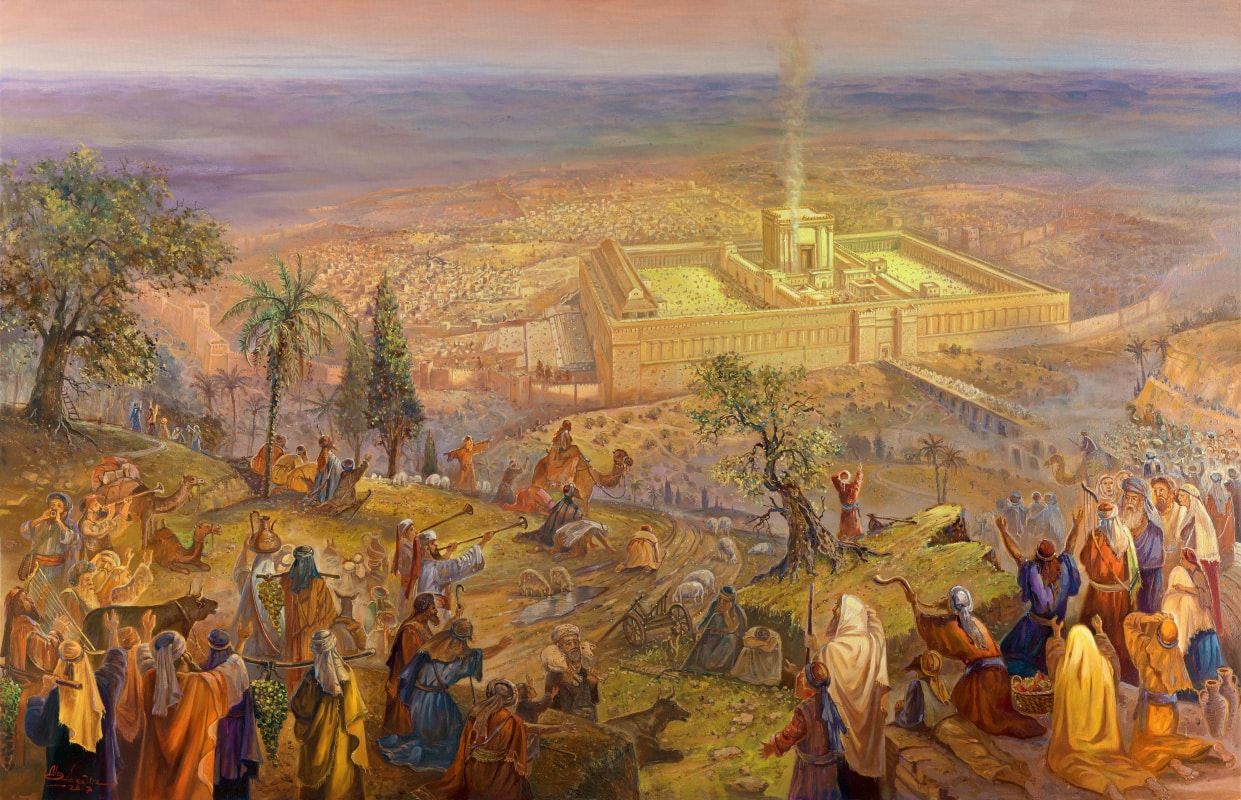
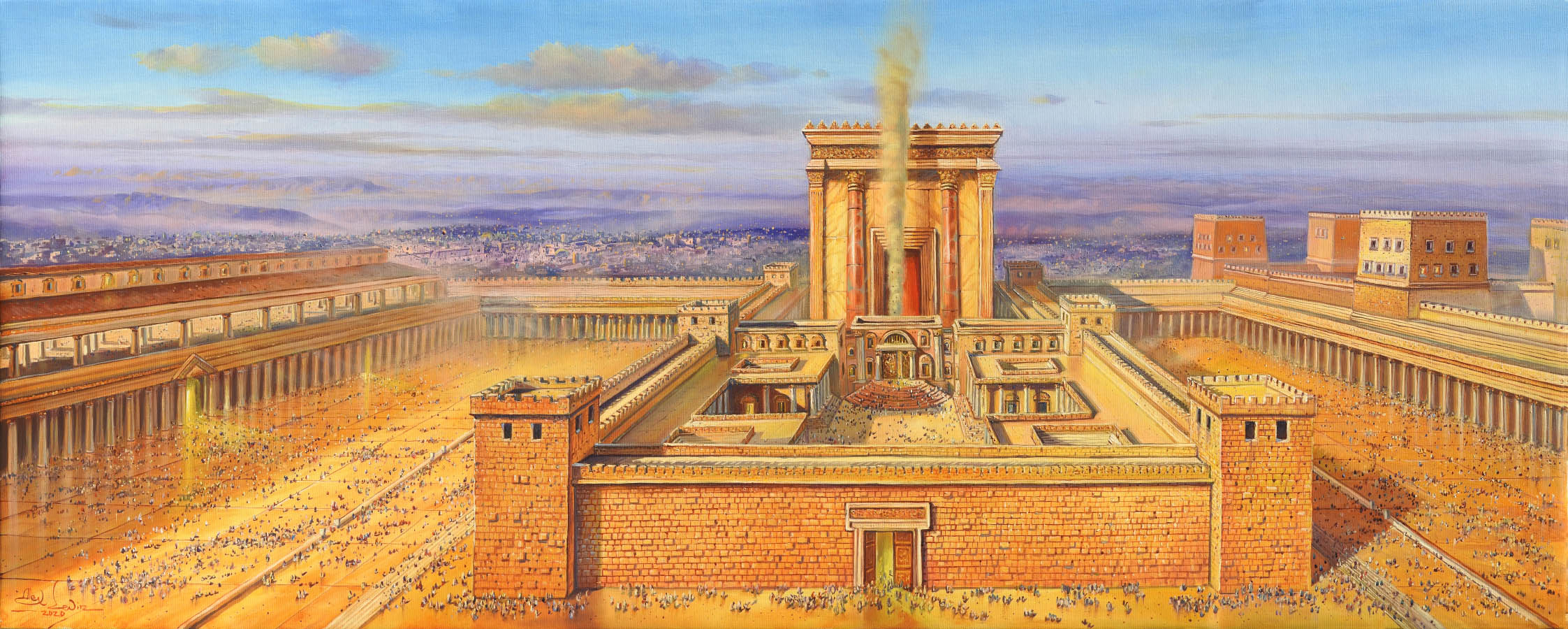
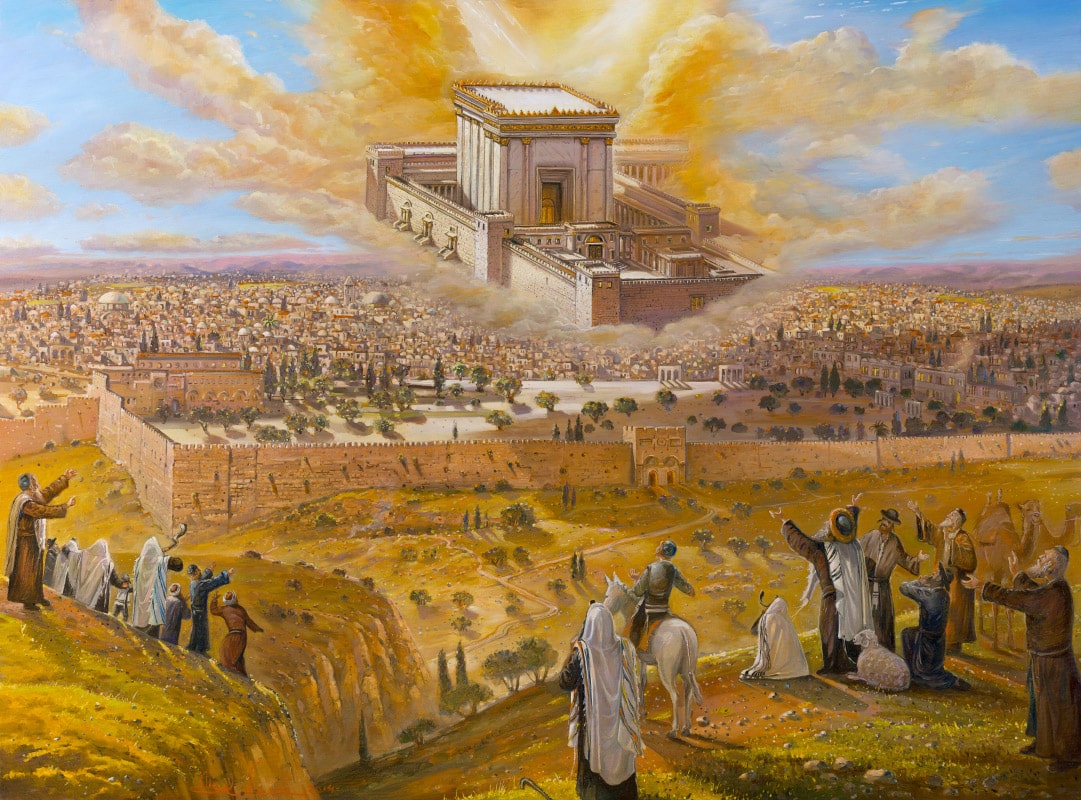
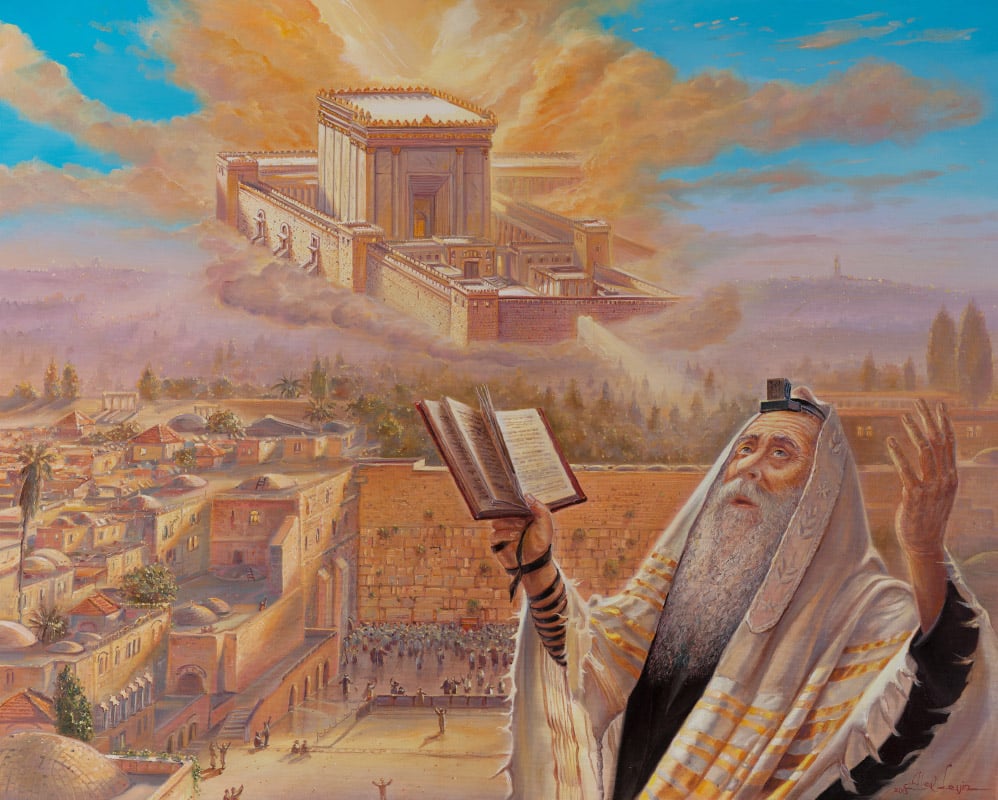
Every image labeled “Solomon’s Temple” should therefore be understood as a reconstruction.
Pictures of Solomon’s Temple
People searching for pictures of Solomon’s Temple are generally viewing one of three things:
- Scholarly or educational reconstructions
- Architectural models
- Artistic paintings and illustrations
These images can help visualize biblical descriptions, but they should not be presented as photographs of a known ancient building.
Artist Renderings of Solomon’s Temple
Artistic reconstruction offers something different from a technical architectural diagram.
An artist can show the Temple functioning within Jerusalem.
People can approach the sanctuary, sunlight can illuminate the building and the surrounding city can help viewers understand scale.
This makes historical painting particularly effective for viewers trying to imagine what ancient Jerusalem may have felt like rather than simply studying a floor plan.
Solomon’s Temple in Jerusalem Art
Artists have portrayed Solomon’s Temple for centuries.
Some works emphasize architectural reconstruction.
Others concentrate on the dedication, King Solomon, the Ark of the Covenant or the magnificent interior.
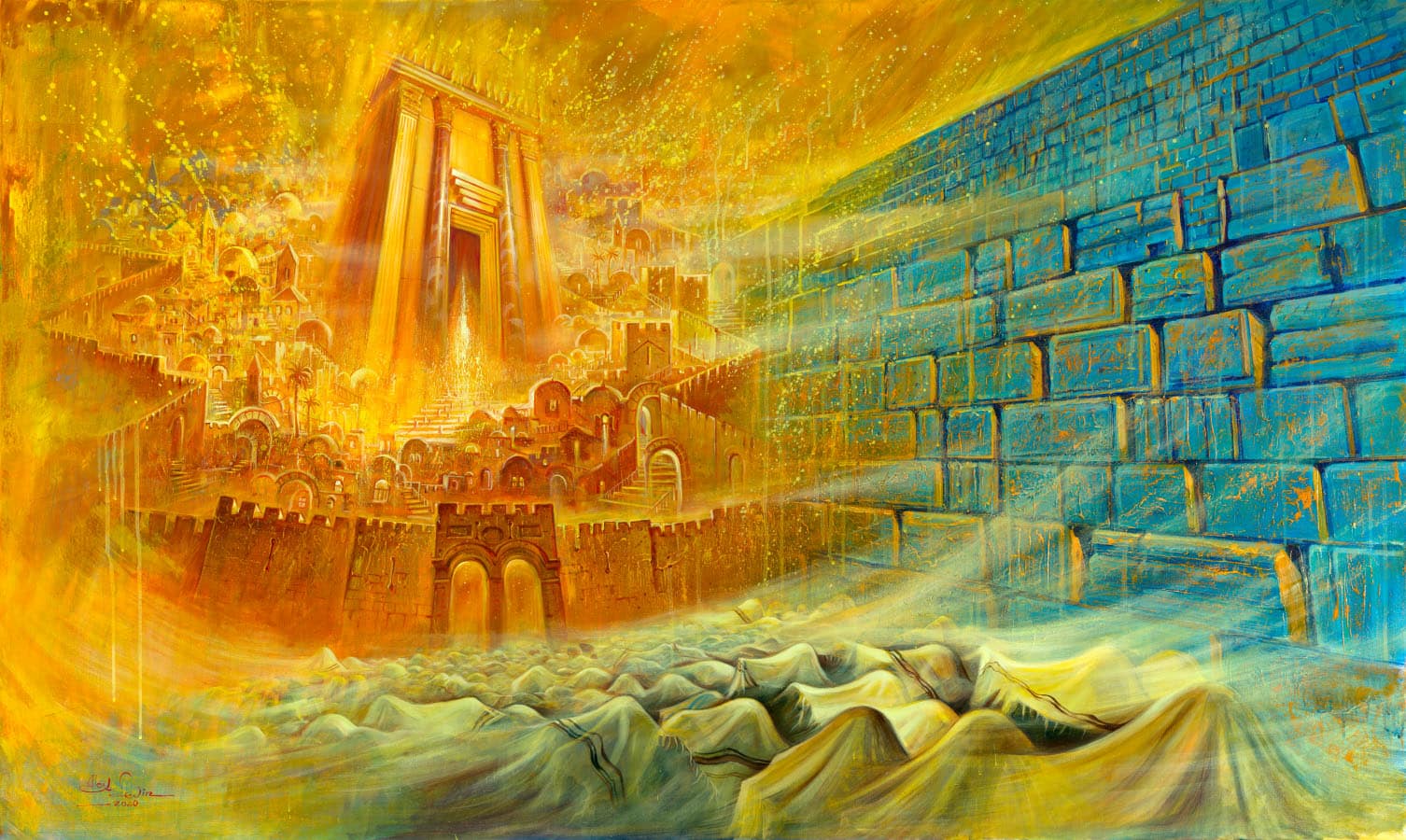
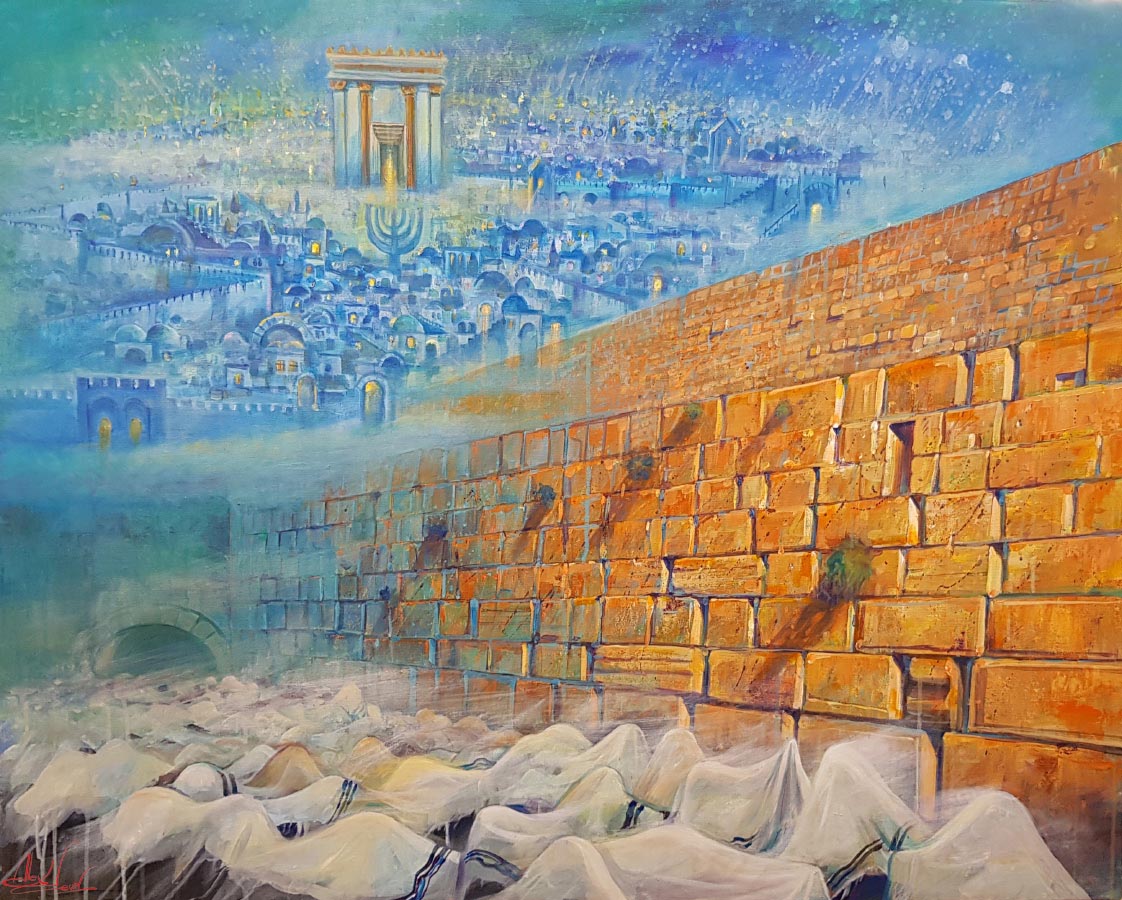
Still others use the First Temple symbolically to represent ancient Jerusalem, Jewish sovereignty or the connection between biblical history and the modern city.
King Solomon Painting by Alex Levin
Israeli artist Alex Levin has explored King Solomon and the Jerusalem Temple through historical Jewish painting.
His King Solomon painting portrays the biblical king in front of a reconstructed Jerusalem Temple.
The artwork should be understood as an artistic interpretation rather than a literal portrait of Solomon or an archaeological photograph of the Temple.
No authenticated contemporary portrait of King Solomon survives.
Do We Know What King Solomon Looked Like?
No.
There is no authenticated portrait or physical description precise enough to reconstruct King Solomon’s face.
Any modern painting, illustration, film depiction or sculpture of Solomon is an artistic interpretation.
This is similar to artistic portrayals of many personalities from the ancient biblical world.
Why Paint King Solomon?
Although Solomon’s appearance is unknown, his identity is immediately connected with several major themes:
- Wisdom
- Jerusalem
- The First Temple
- Royal authority
- Biblical history
- Jewish heritage
An artist can therefore portray Solomon symbolically, using architecture, clothing and the Temple to identify the subject.
The Wisdom of King Solomon
Solomon is perhaps as famous for wisdom as for the Temple.
The biblical account includes the well-known story of two women who each claimed the same child.
Solomon proposed dividing the child, revealing the true mother when she begged that the child instead be given alive to the other woman.
The story became one of the most famous examples of Solomon’s legendary judicial wisdom.
Solomon and the Queen of Sheba
Another famous biblical story describes the Queen of Sheba visiting Solomon after hearing reports of his wisdom.
She came with questions and valuable gifts.
The narrative reinforces the biblical image of Solomon’s Jerusalem as an important royal center known beyond Israel.
The meeting later became a popular subject in Jewish, Christian and Islamic art and literature.
Solomon in Jewish Tradition
In Jewish tradition, Solomon is remembered as both a wise king and the builder of the First Temple.
Later traditions expanded his reputation considerably, associating him with wisdom, judgment, poetry and extraordinary knowledge.
Several biblical books have traditionally been connected with Solomon, although modern scholarship distinguishes between traditional attribution and historical authorship.
Solomon in Christianity and Islam
Solomon also became an important figure beyond Judaism.
Christian traditions inherited the biblical accounts of Solomon, his wisdom and the Temple.
In Islam he is known as Sulayman and is regarded as a prophet and king.
This broader religious importance helps explain why searches for Solomon’s Temple come from audiences around the world and appear under many different spellings and languages.
What Happened to Solomon’s Temple?
The First Temple did not survive.
Jerusalem eventually came under pressure from the expanding Babylonian Empire.
After rebellion against Babylonian rule, Jerusalem was besieged and captured.
The Babylonians under King Nebuchadnezzar II destroyed the First Temple in 586 BCE.
The destruction was followed by the Babylonian Exile and became one of the defining catastrophes of ancient Jewish history.
Who Destroyed Solomon’s Temple?
The First Temple was destroyed by the Neo-Babylonian Empire under King Nebuchadnezzar II.
The destruction occurred as part of the Babylonian conquest of Jerusalem and the Kingdom of Judah.
For the complete story, read How Many Times Was the Temple in Jerusalem Destroyed?.
Was Solomon’s Temple Ever Rebuilt?
Solomon’s original Temple was not rebuilt as the same structure.
After the Persian conquest of Babylon, exiled Judeans were permitted to return.
A new Temple was eventually constructed in Jerusalem.
This became known as the Second Temple.
Was the Second Temple Solomon’s Temple?
No.
The Second Temple stood at the same sacred center in Jerusalem but was a different building constructed after the Babylonian Exile.
Centuries later, Herod the Great dramatically reconstructed and expanded the Second Temple complex.
That Temple remained the Second Temple and was eventually destroyed by Roman forces in 70 CE.
Read the complete comparison in the history of the First and Second Jerusalem Temples.
Solomon’s Temple vs. the Second Temple
| Solomon’s Temple | Second Temple | |
|---|---|---|
| Also called | First Temple | Second Temple |
| Traditional builder | King Solomon | Returned Judean exiles |
| Historical era | First Temple period | Second Temple period |
| Later major reconstruction | Various repairs over its history | Massively expanded under Herod |
| Destroyed by | Babylonian Empire | Roman Empire |
| Destroyed | 586 BCE | 70 CE |
Was Herod’s Temple Solomon’s Temple?
No.
Herod lived many centuries after Solomon.
His enormous construction project transformed the existing Second Temple and Temple Mount complex.
Herod’s Temple is therefore part of the Second Temple period, not the First Temple of Solomon.
Is the Western Wall From Solomon’s Temple?
No.
The visible monumental Western Wall is associated with the expanded Temple Mount platform from the Second Temple period, especially Herod’s enormous building program.
It is not a surviving wall of Solomon’s Temple.
It is also not a wall of the Temple sanctuary itself, but part of the retaining structure supporting the Temple Mount platform.
Learn more in What Is the Kotel?.
Can You Visit Solomon’s Temple Today?
No physical First Temple building survives that visitors can walk through today.
The Temple Mount is traditionally identified as the location of the ancient Temples, but the First Temple itself was destroyed more than 2,500 years ago.
Visitors can study archaeological remains from ancient Jerusalem, museum collections, architectural models and artistic reconstructions to understand the First Temple period.
Why Does Solomon’s Temple Still Matter?
Solomon’s Temple disappeared physically, but its cultural influence continued.
The Temple shaped Jewish concepts of Jerusalem, sacred space, worship and historical memory.
Its destruction became part of Jewish mourning, while the idea of the Temple continued in prayer and religious tradition.
It also profoundly influenced Christian and Islamic understandings of biblical Jerusalem.
Solomon’s Temple in Modern Jewish Art
For contemporary Jewish artists, Solomon’s Temple offers an unusual challenge.
The subject is historically important but visually uncertain.
An artist must transform textual descriptions into architecture while deciding how much to reconstruct and how much to interpret.
This makes First Temple painting a meeting point between history, archaeology and imagination.
Jerusalem Temple Paintings by Alex Levin
Alex Levin has created an extensive body of artwork inspired by the Jerusalem Temple.
Some works attempt detailed historical reconstruction. Others present the Temple symbolically or connect it with later Jerusalem.
The paintings include interpretations of the First Temple, Second Temple and future Temple imagery.
Explore Jerusalem Temple Paintings by Alex Levin
King Solomon Wall Art
Collectors particularly interested in Solomon can view Alex Levin’s King Solomon Jewish Wall Art.
The painting combines a portrait interpretation of the biblical king with an artistic reconstruction of the Jerusalem Temple behind him.
Because neither Solomon’s physical appearance nor the complete Temple facade is known with certainty, the work should be appreciated as historical and biblical art rather than a literal documentary image.
Why Artistic Reconstructions Matter
A floor plan can show dimensions.
A written description can list materials.
But an artistic reconstruction can help viewers imagine an ancient building as part of a living city.
People, sunlight, Jerusalem stone and surrounding architecture create scale and atmosphere that measurements alone cannot provide.
The best historical art makes the distinction clear between what is known from sources and what has been reconstructed through artistic interpretation.
Frequently Asked Questions About Solomon’s Temple
What was Solomon’s Temple?
Solomon’s Temple was the First Temple in Jerusalem according to the Hebrew Bible. It served as the central sacred sanctuary of ancient Israel and is traditionally associated with King Solomon.
Who built Solomon’s Temple?
The Hebrew Bible attributes construction of the First Temple to King Solomon, son of King David.
When was Solomon’s Temple built?
The biblical account places its construction during Solomon’s reign in the 10th century BCE. Exact modern calendar dates depend on the chronology used.
Where was Solomon’s Temple?
It is traditionally located on the Temple Mount in Jerusalem, the site later associated with the Second Temple.
What did Solomon’s Temple look like?
No contemporary image survives. Modern reconstructions rely mainly on descriptions in First Kings and Second Chronicles together with comparisons to ancient Near Eastern architecture.
How big was Solomon’s Temple?
First Kings describes the central sanctuary as 60 cubits long, 20 cubits wide and 30 cubits high. The exact modern dimensions depend on the length assigned to an ancient cubit.
What was inside Solomon’s Temple?
The biblical account describes the Holy Place, Holy of Holies, Ark of the Covenant, cherubim, lampstands, tables, altars and other sacred furnishings.
What was inside the Holy of Holies?
According to First Kings, the Ark of the Covenant was placed in the Holy of Holies beneath large cherubim.
What were Jachin and Boaz?
Jachin and Boaz were the names given to two monumental bronze pillars associated with the entrance of Solomon’s Temple.
How long did Solomon’s Temple take to build?
According to First Kings, the Temple took approximately seven years to construct.
Was Solomon’s Temple the First Temple?
Yes. Solomon’s Temple and the First Temple are two names for the same Temple in the traditional biblical account.
Was Herod’s Temple Solomon’s Temple?
No. Herod reconstructed and greatly expanded the Second Temple many centuries after Solomon.
Who destroyed Solomon’s Temple?
The Babylonian Empire under Nebuchadnezzar II destroyed the First Temple during its conquest of Jerusalem in 586 BCE.
Was Solomon’s Temple rebuilt?
A new Temple was later built after the Babylonian Exile. This was the Second Temple rather than a restoration of Solomon’s original building.
Is the Western Wall part of Solomon’s Temple?
No. The Western Wall is associated with the retaining structure of the expanded Temple Mount from the Second Temple period, not Solomon’s First Temple.
Are pictures of Solomon’s Temple historically accurate?
They are reconstructions. Biblical texts provide important architectural details, but no surviving contemporary image shows the complete Temple. Modern illustrations therefore combine historical evidence with interpretation.
Do we know what King Solomon looked like?
No authenticated portrait of King Solomon survives. Modern images of Solomon are artistic interpretations.
Where can I see paintings of Solomon’s Temple?
ArtLevin.com features King Solomon and Jerusalem Temple artwork by Israeli artist Alex Levin, including historical reconstructions and symbolic interpretations of the First and Second Temples.
Explore Jerusalem Temple Paintings