Modern Jewish art brings Jewish history, religion, identity and memory into conversation with the artistic languages of the modern world.
It can be realistic or abstract, religious or secular, traditional or experimental. Some artists portray Jerusalem, Torah study, Shabbat and Jewish family life. Others explore migration, the Holocaust, Israel, Hebrew letters, memory, identity and contemporary Jewish experience through abstraction, conceptual art or symbolism.
There is no single visual style that defines modern Jewish art.
What connects much of this work is the continuing conversation between Jewish tradition and the changing world in which Jewish artists live.
What Is Modern Jewish Art?
Modern Jewish art is a broad term for visual art connected with Jewish history, culture, religion, identity or experience and created within the modern era.
It can include:
- Painting
- Sculpture
- Printmaking
- Photography
- Jewish ceremonial art
- Abstract art
- Mixed media
- Installation art
- Digital art
- Contemporary Judaica
Some works are explicitly Jewish because they portray Torah, Jerusalem, rabbis or Jewish holidays.
Others express Jewish identity much more indirectly through memory, language, family history, migration, political experience or personal symbolism.
Is Modern Jewish Art a Single Art Movement?
No.
Modern Jewish art is not comparable to Impressionism, Cubism or Surrealism, which describe particular artistic movements or approaches.
Jewish artists have participated in virtually every major development of modern art.
Two Jewish artists may have completely different styles while both exploring subjects connected with Jewish life or identity.
For this reason, it is more useful to think of modern Jewish art as a broad cultural category rather than a single artistic school.

When Did Modern Jewish Art Begin?
There is no single starting date.
Jewish artists created visual art long before the modern period, including illuminated manuscripts, synagogue decoration, ritual objects, architecture and ceremonial art.
During the 19th and early 20th centuries, however, increasing numbers of Jewish artists entered European art academies and participated directly in the development of modern painting and sculpture.
At the same time, new Jewish artistic institutions began exploring whether there could be a distinctively modern Jewish visual culture.
The founding of the Bezalel School of Arts and Crafts in Jerusalem in 1906 became one important milestone in that development.
Traditional Jewish Art vs. Modern Jewish Art
Traditional Jewish art is often associated with ceremonial objects and recognizable religious subjects.
Examples include:
- Torah ornaments
- Ketubot
- Menorahs
- Mezuzah cases
- Passover Haggadot
- Synagogue decoration
- Hebrew calligraphy
Modern Jewish artists may continue to use those same symbols while changing their visual language completely.
A menorah can become an abstract pattern. Hebrew letters can become geometric forms. Jerusalem can be fragmented into blocks of color. A Torah scroll can become the center of a surreal composition.
The subject may remain ancient while the artistic language becomes modern.
What Themes Appear in Modern Jewish Art?
Modern Jewish artists work with an enormous range of subjects, but several themes appear repeatedly.
These include:
- Jerusalem
- Jewish identity
- Torah and Hebrew text
- Shabbat
- Jewish holidays
- The shtetl
- Migration and exile
- The Holocaust and memory
- Israel
- Family and tradition
- Jewish spirituality
- Modern Jewish life
The same artist may move between several of these themes throughout a career.
Jerusalem in Modern Jewish Art
Jerusalem remains one of the most powerful subjects in Jewish visual culture.
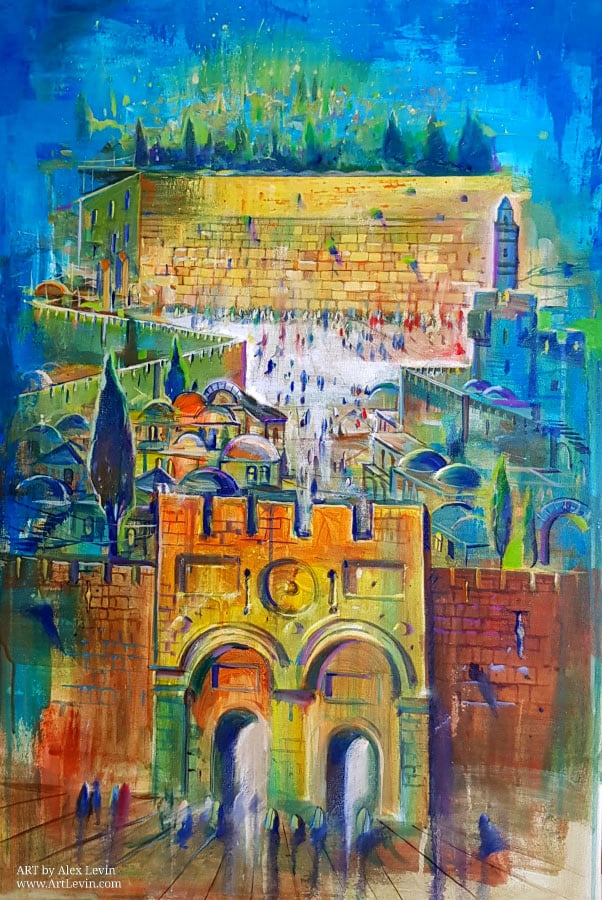
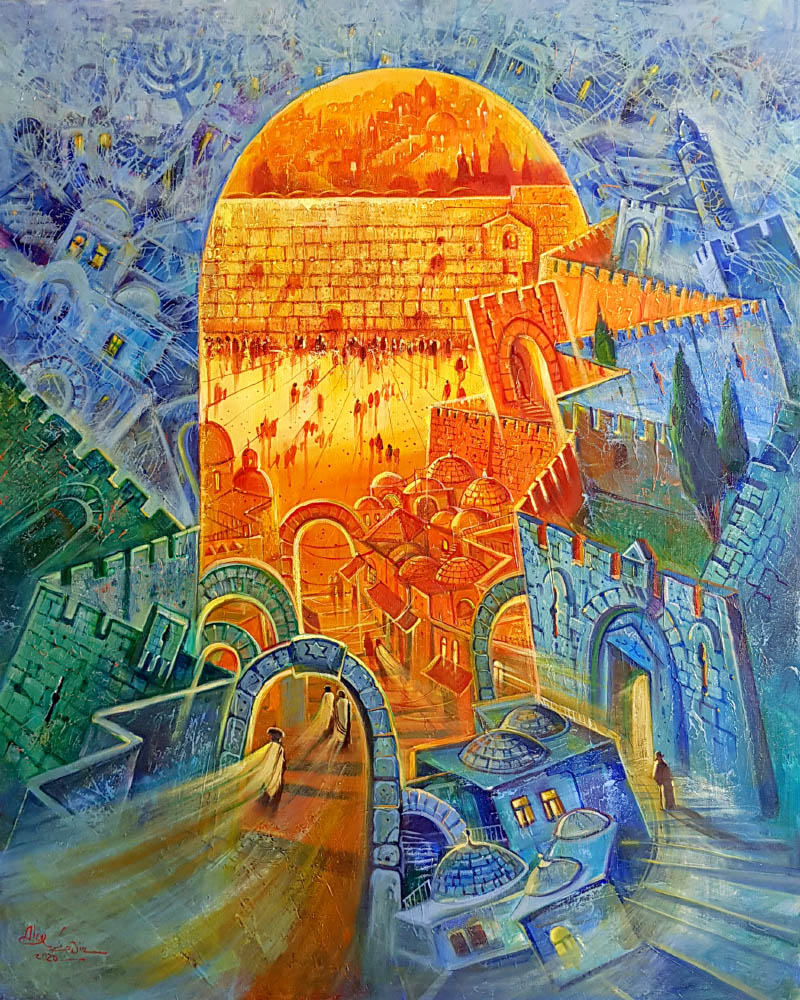
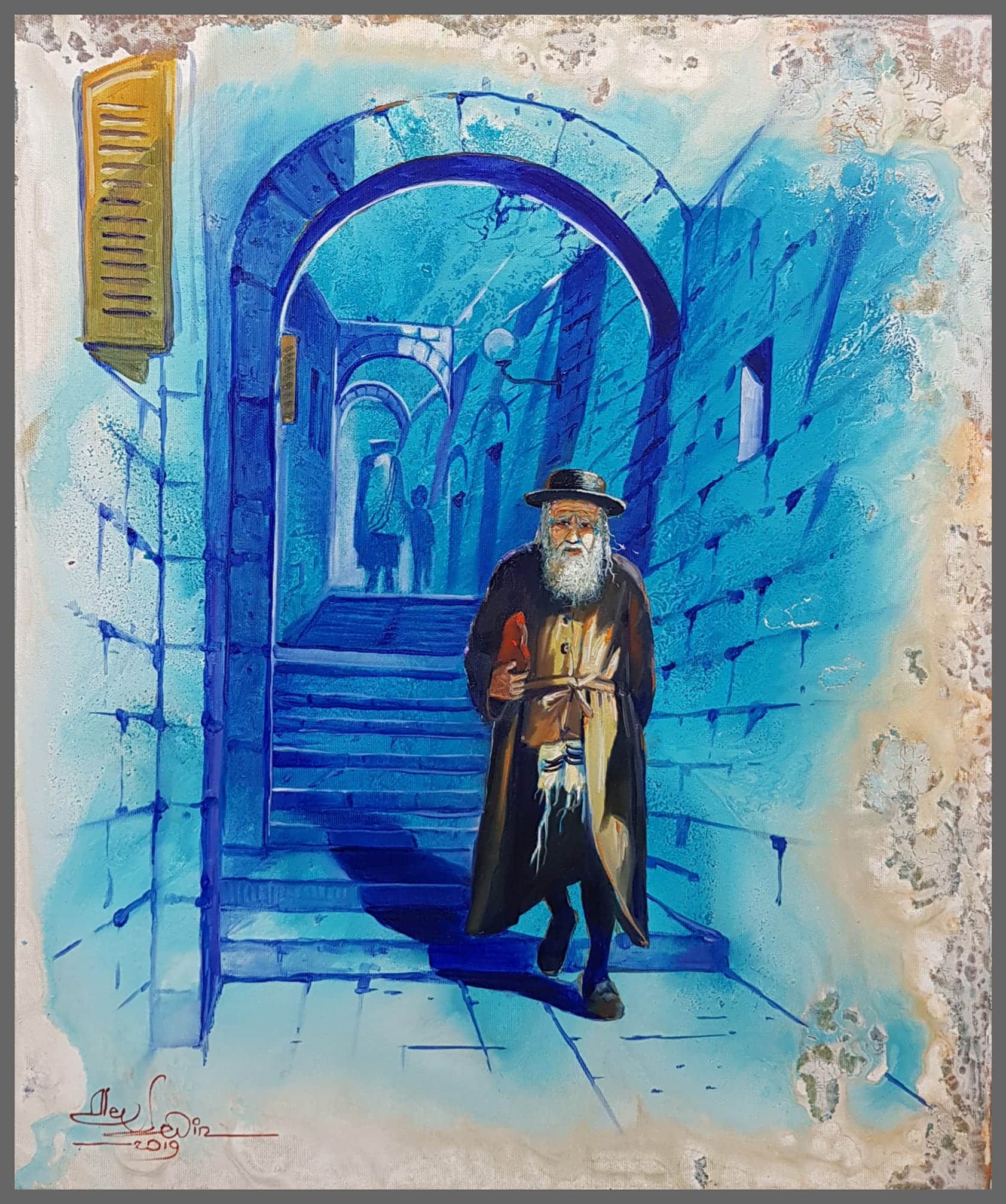
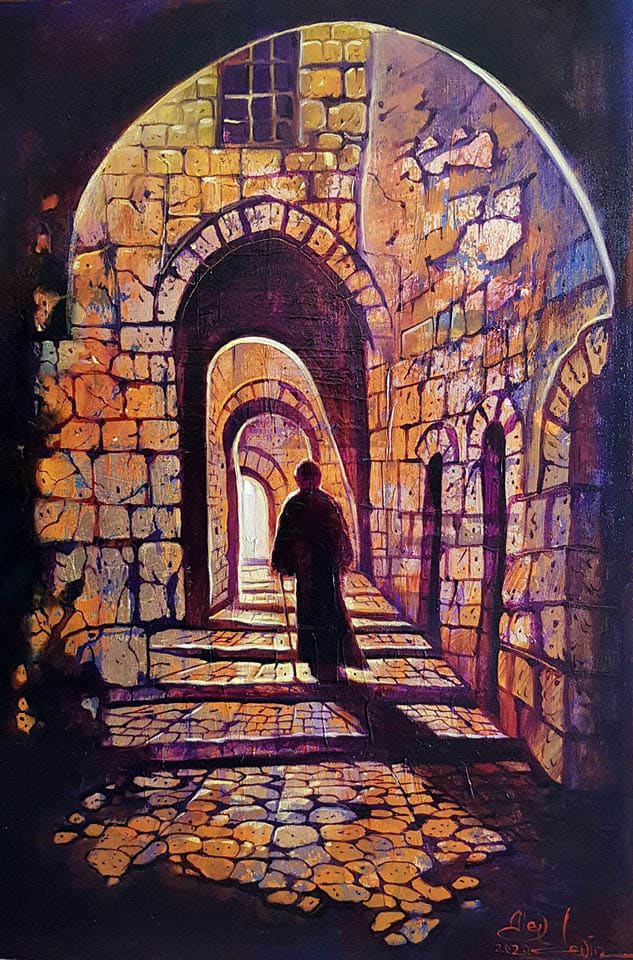
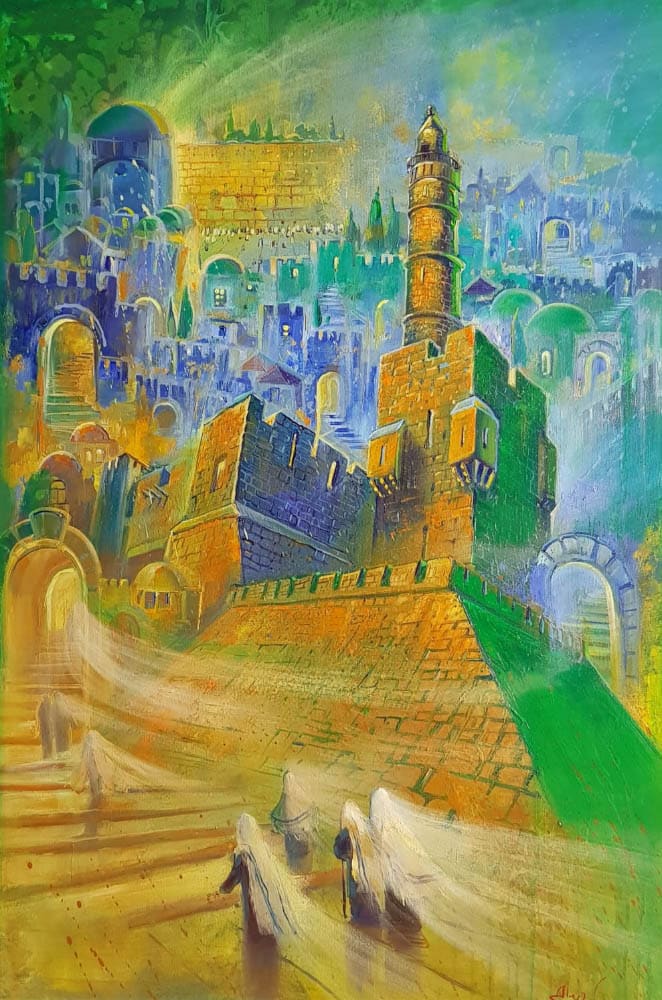
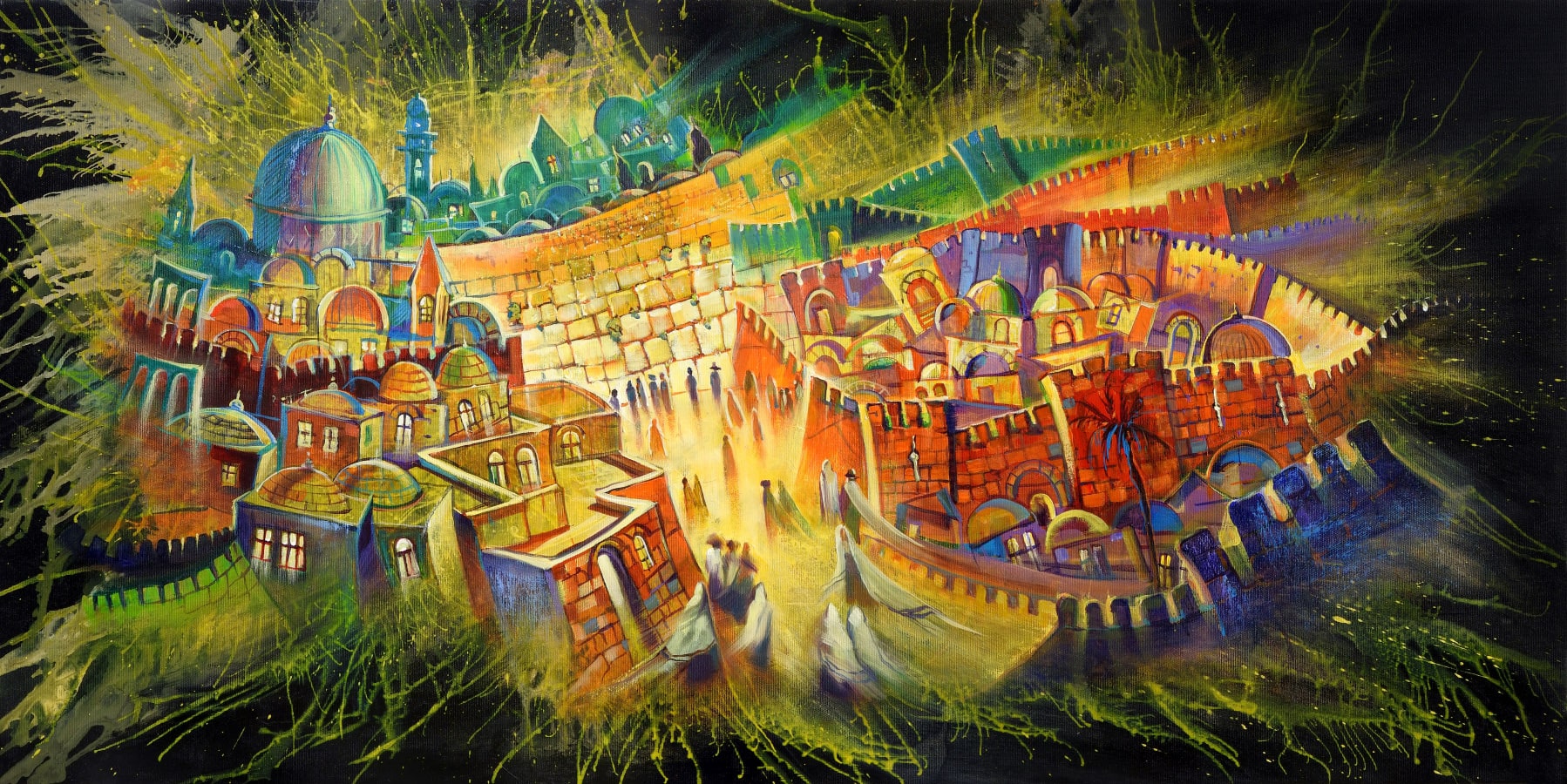
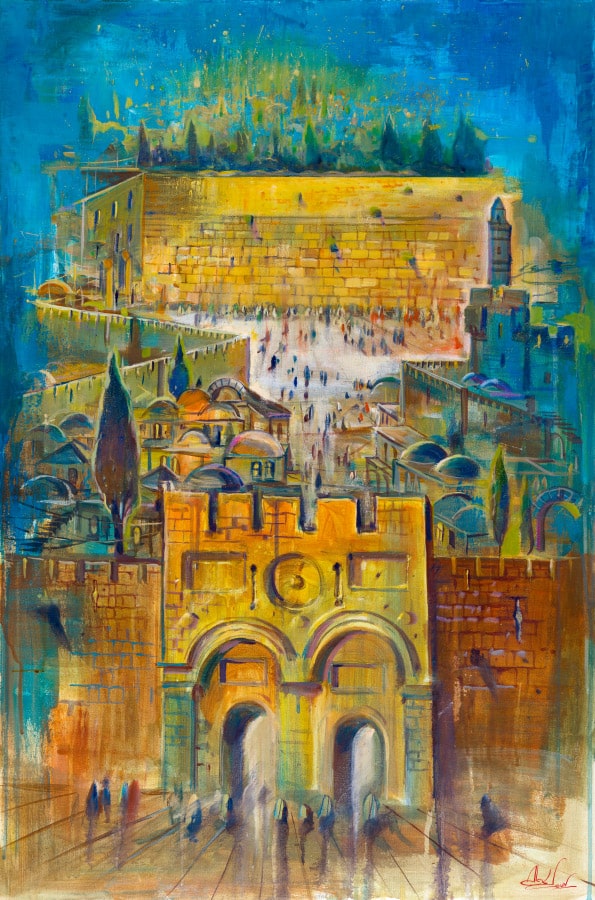
Traditional artists may paint the Old City, Kotel or Jerusalem skyline realistically.
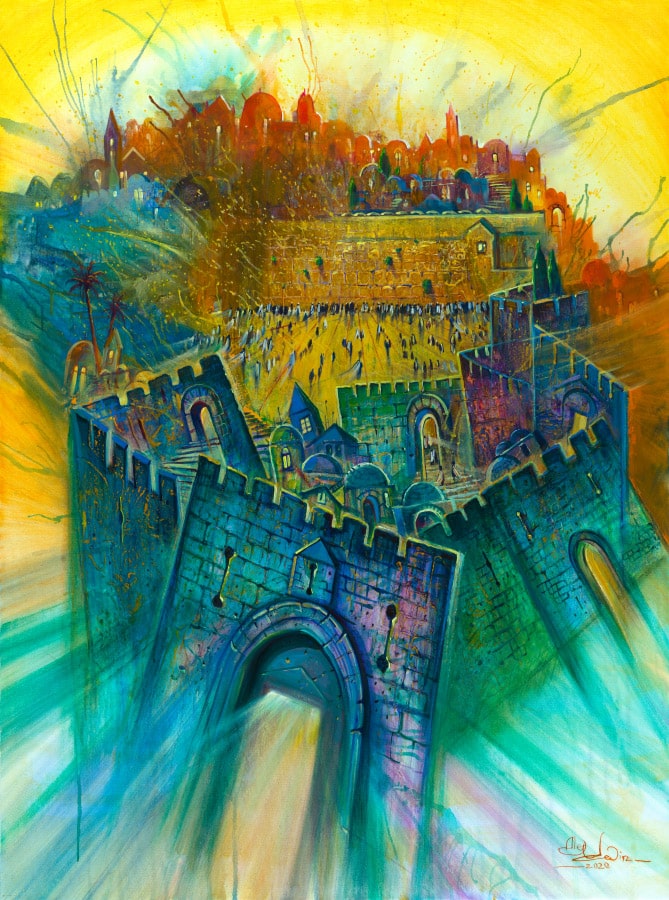
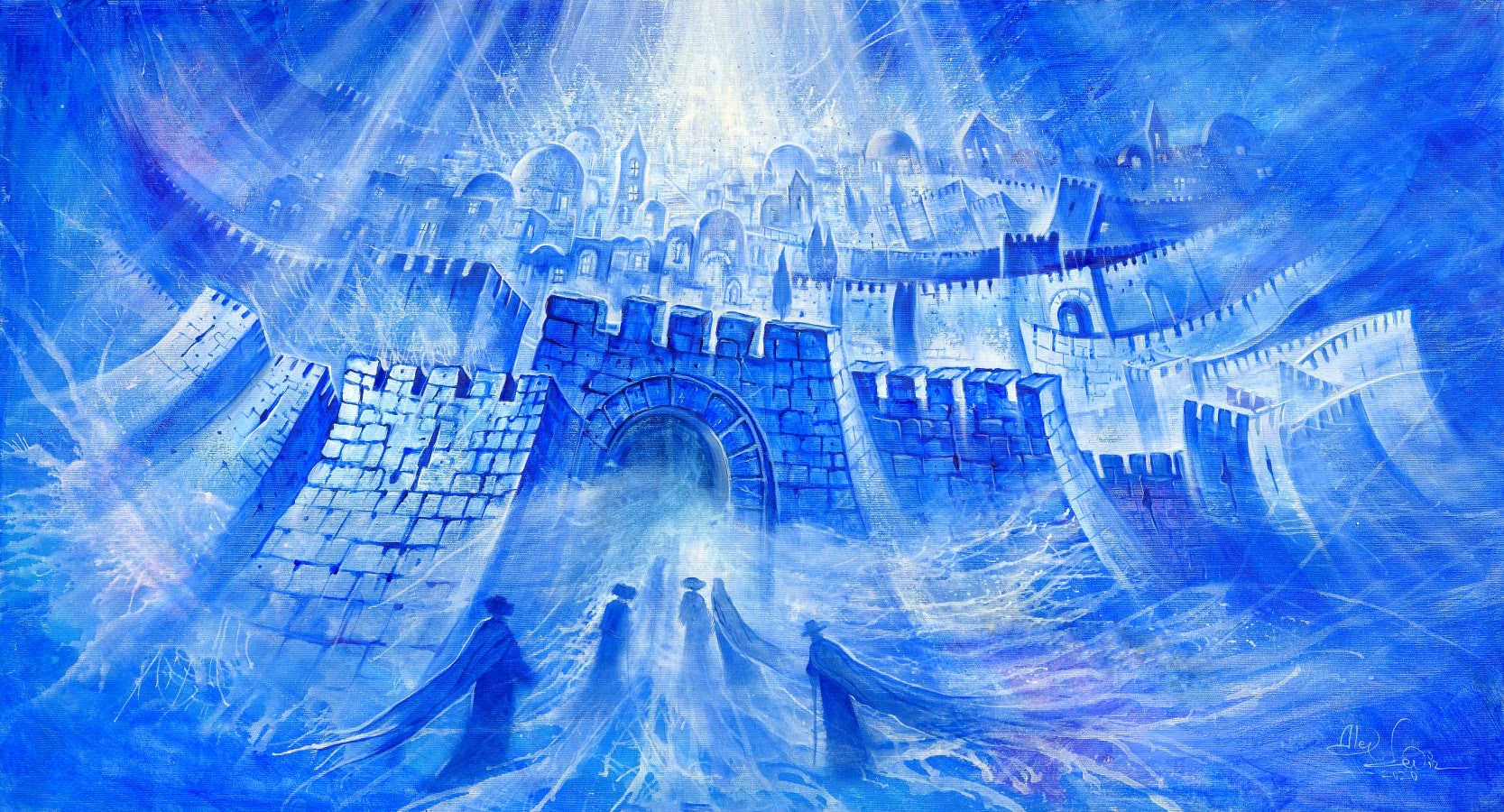
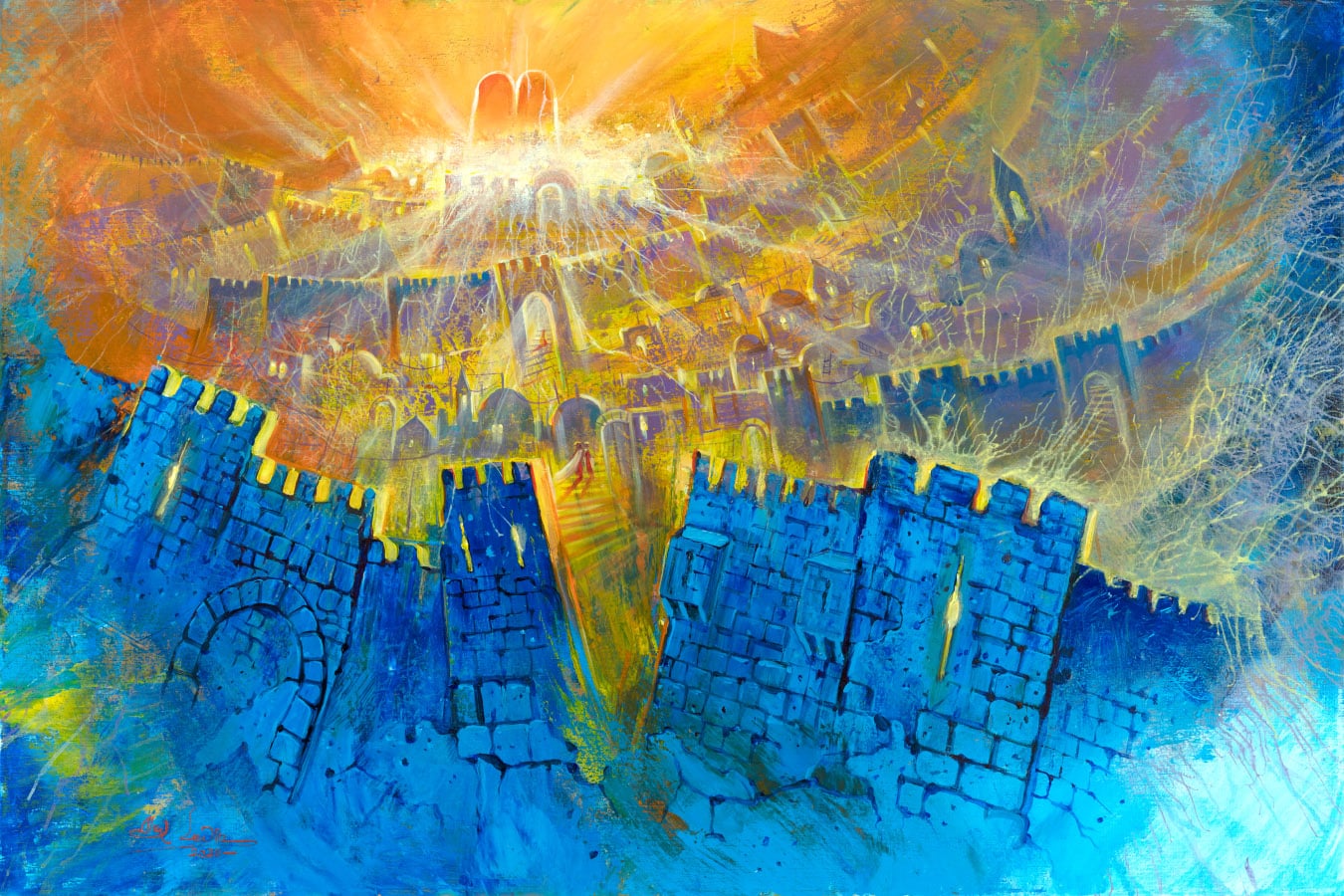
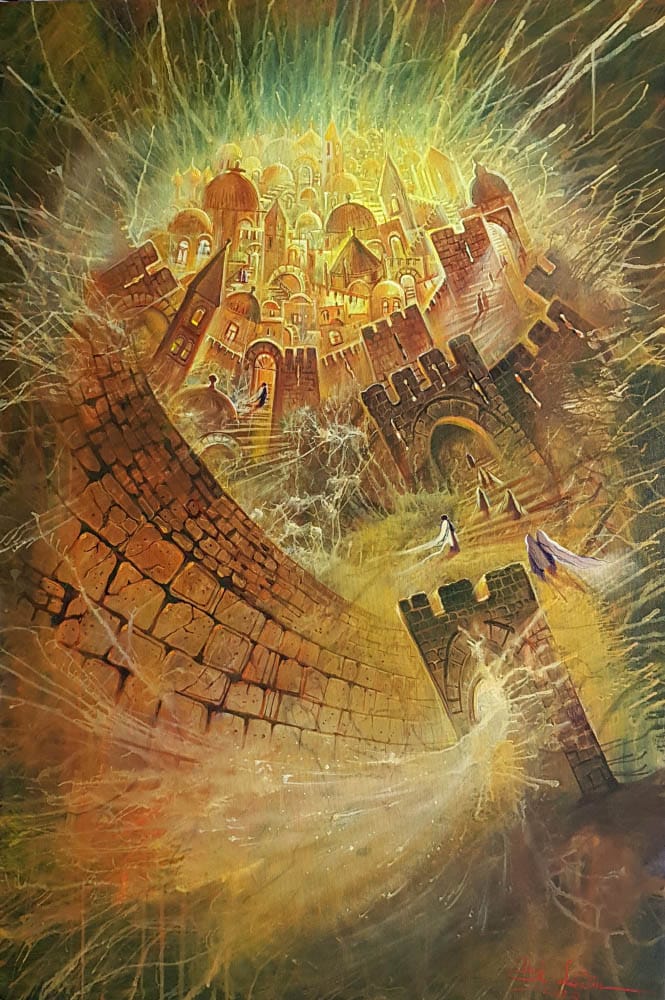
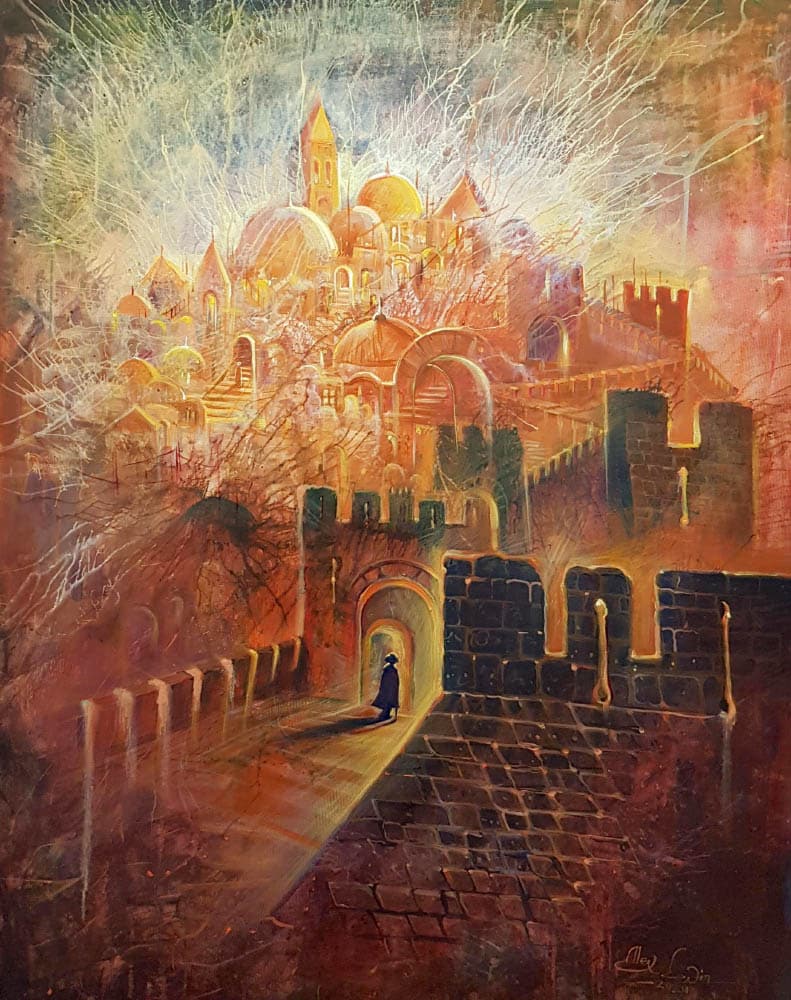
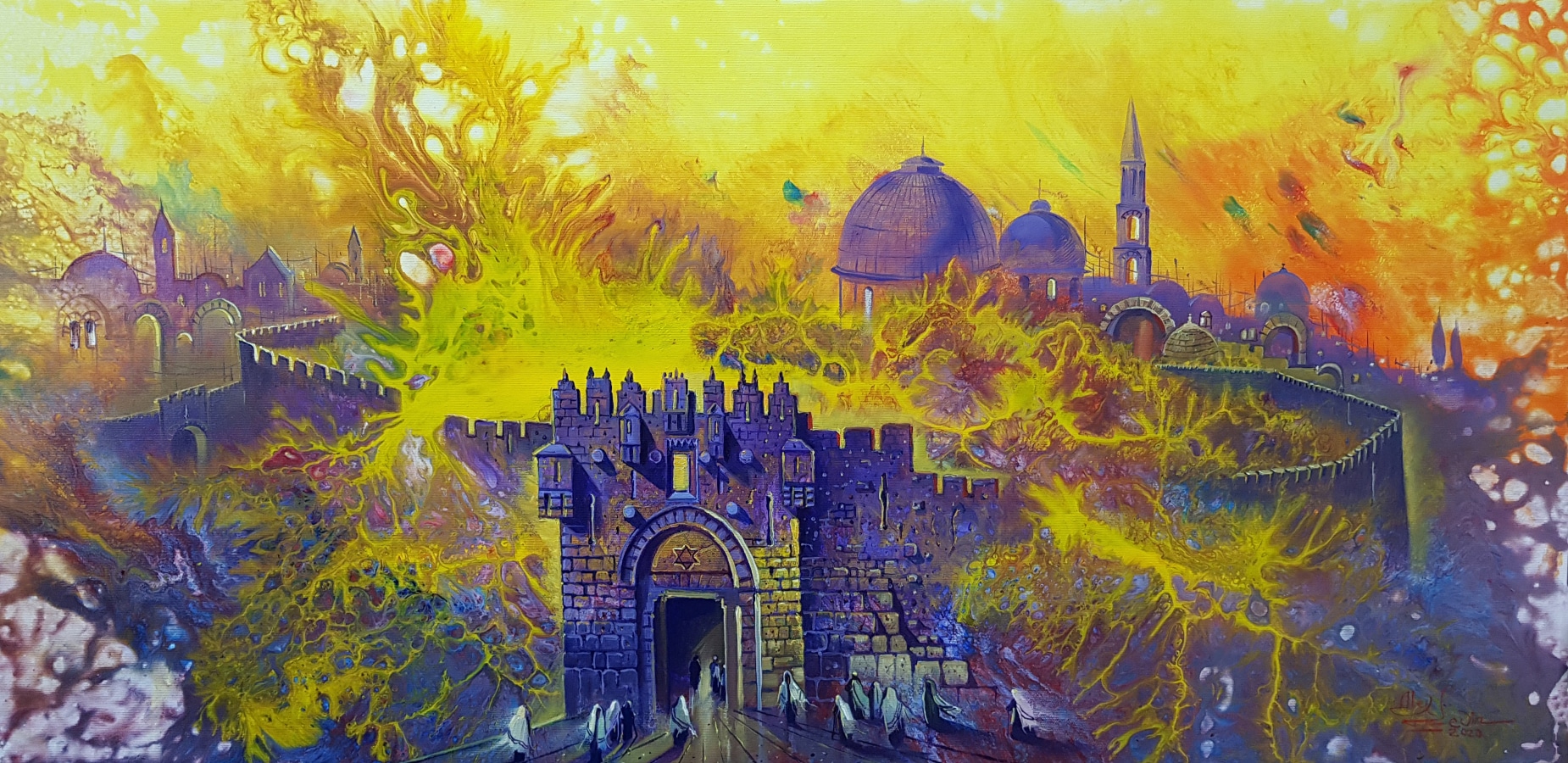
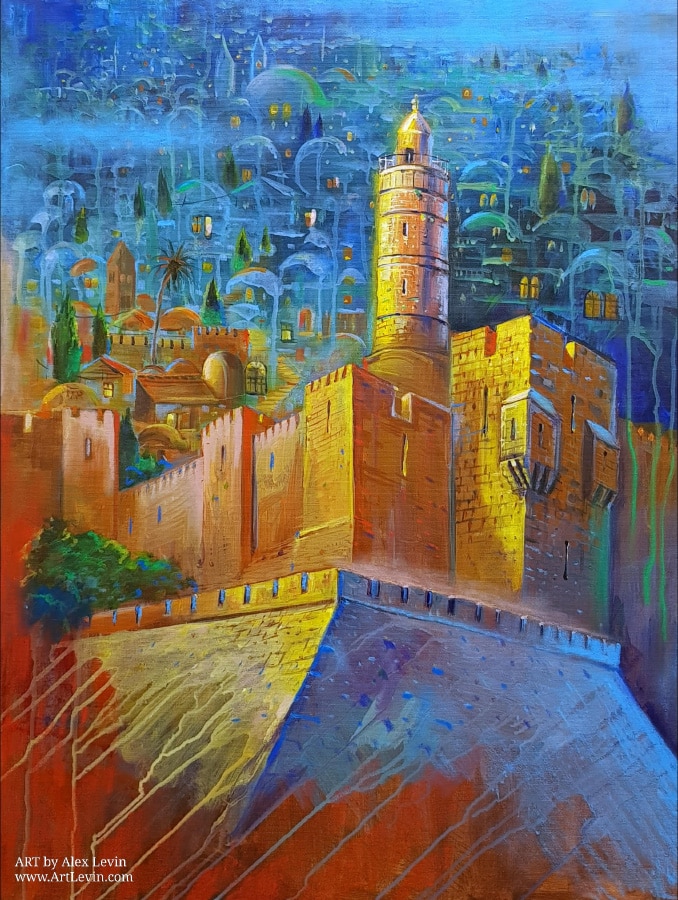
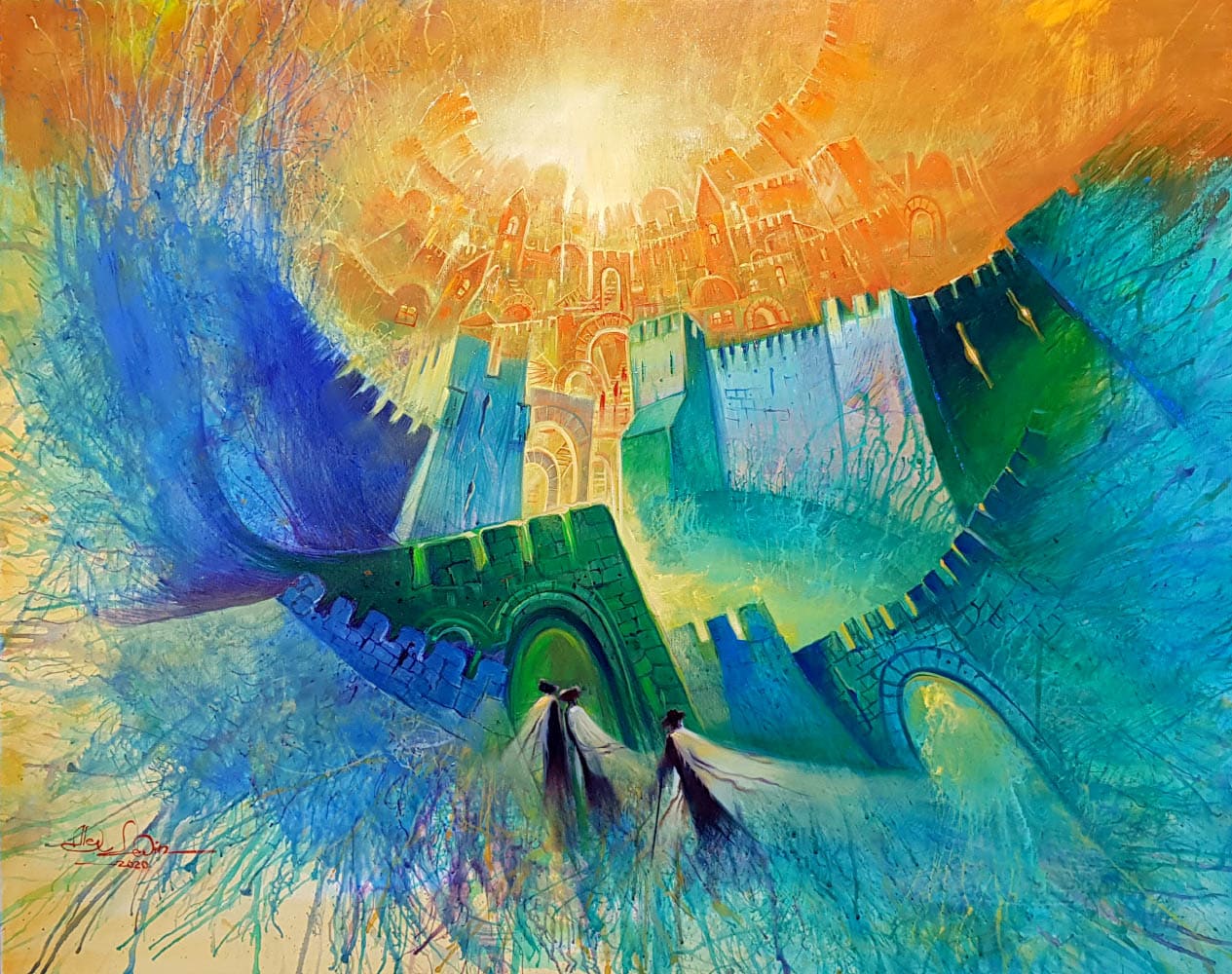
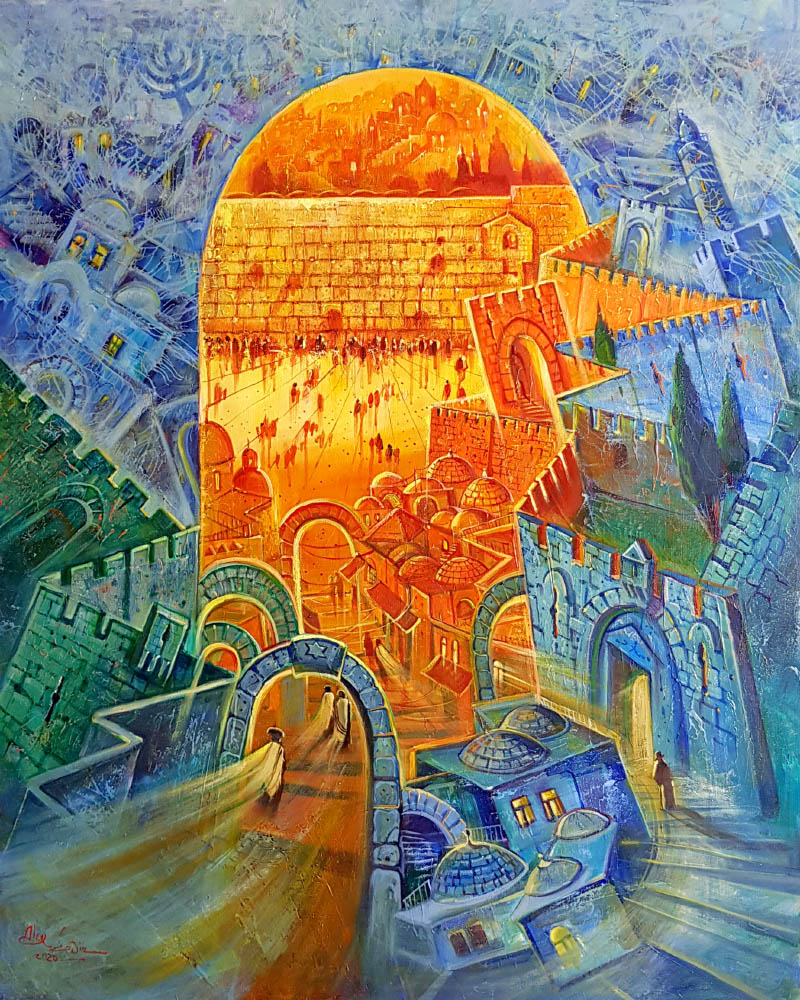
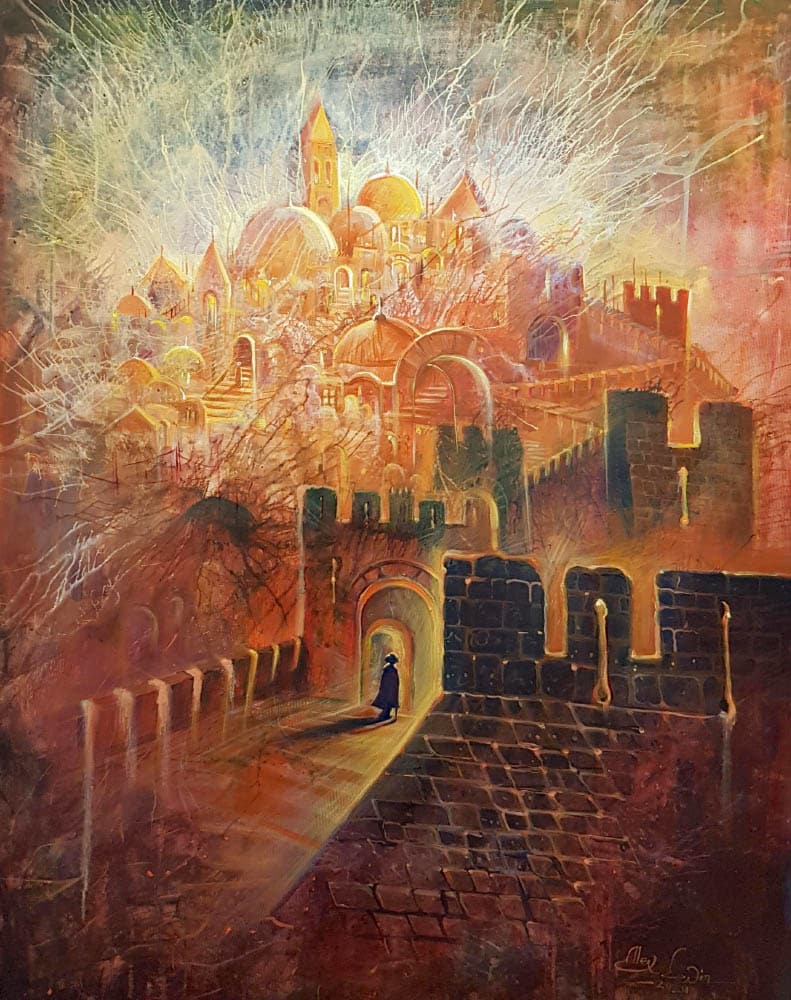
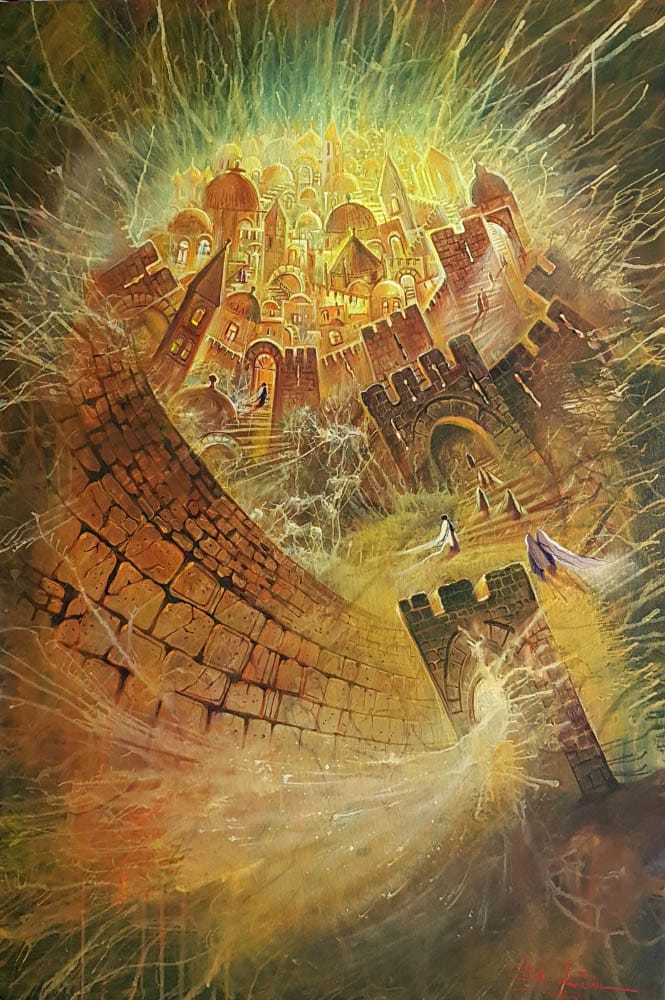
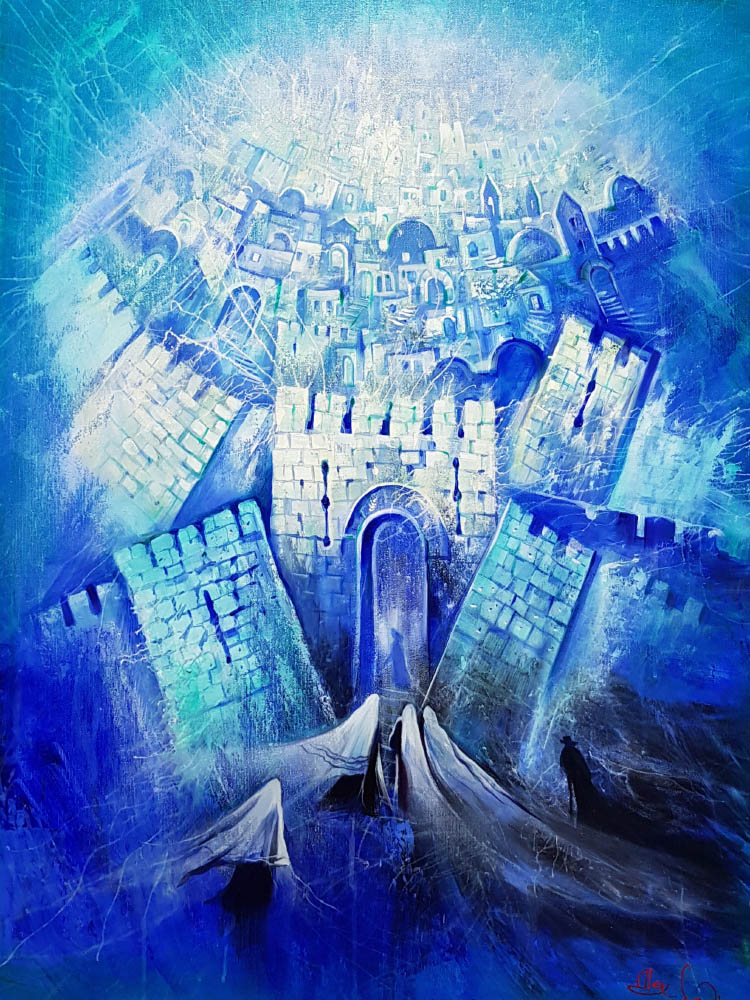
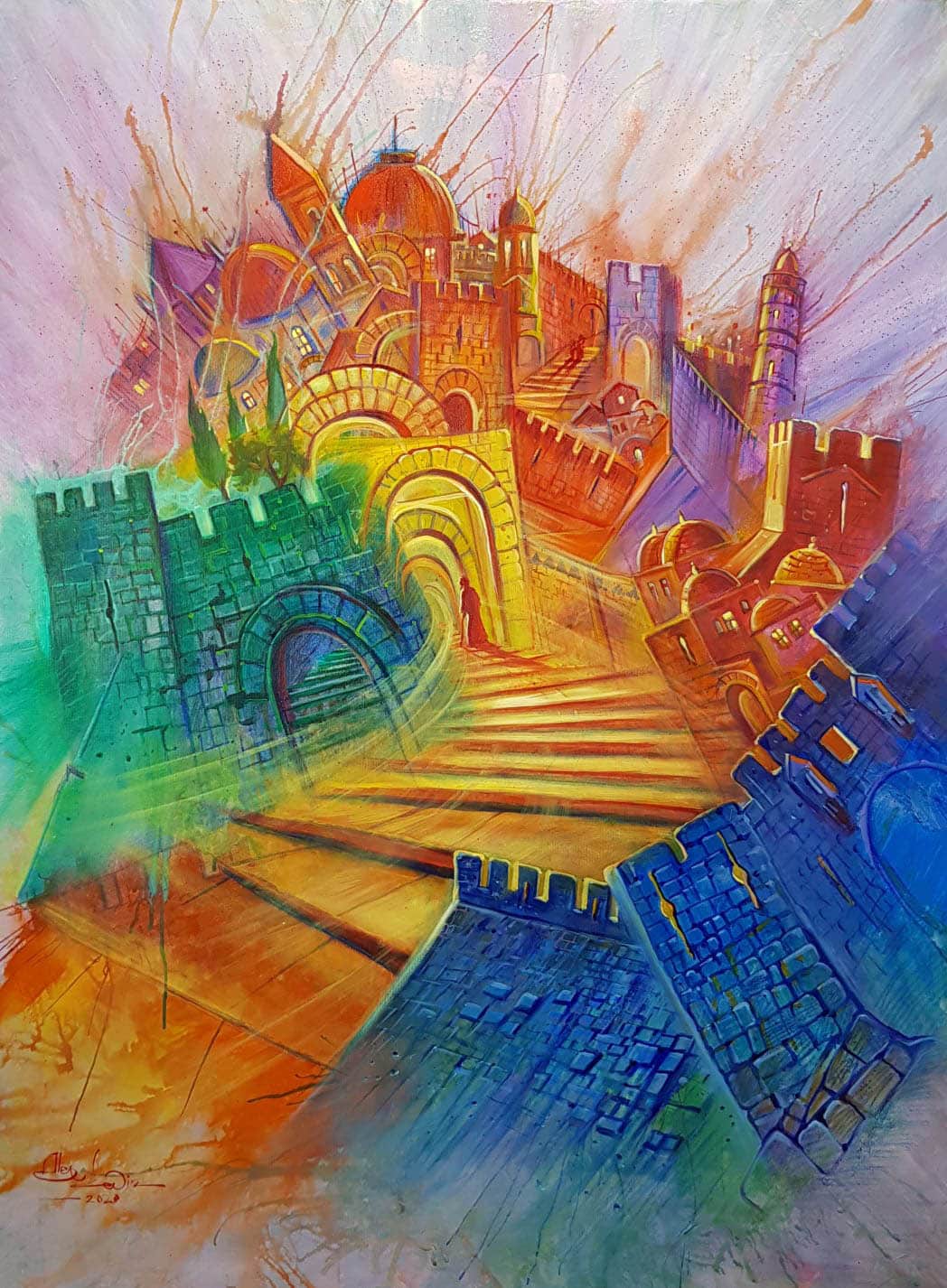
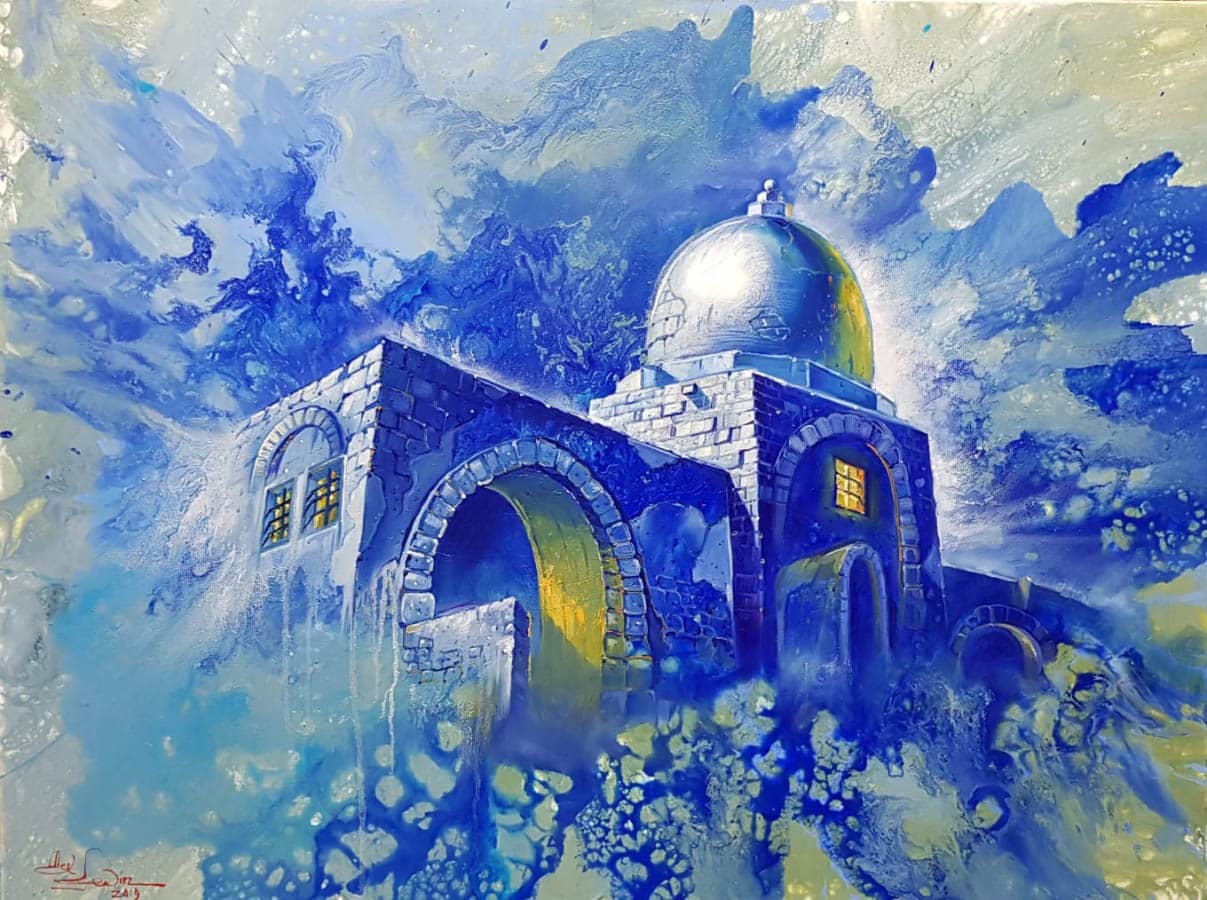
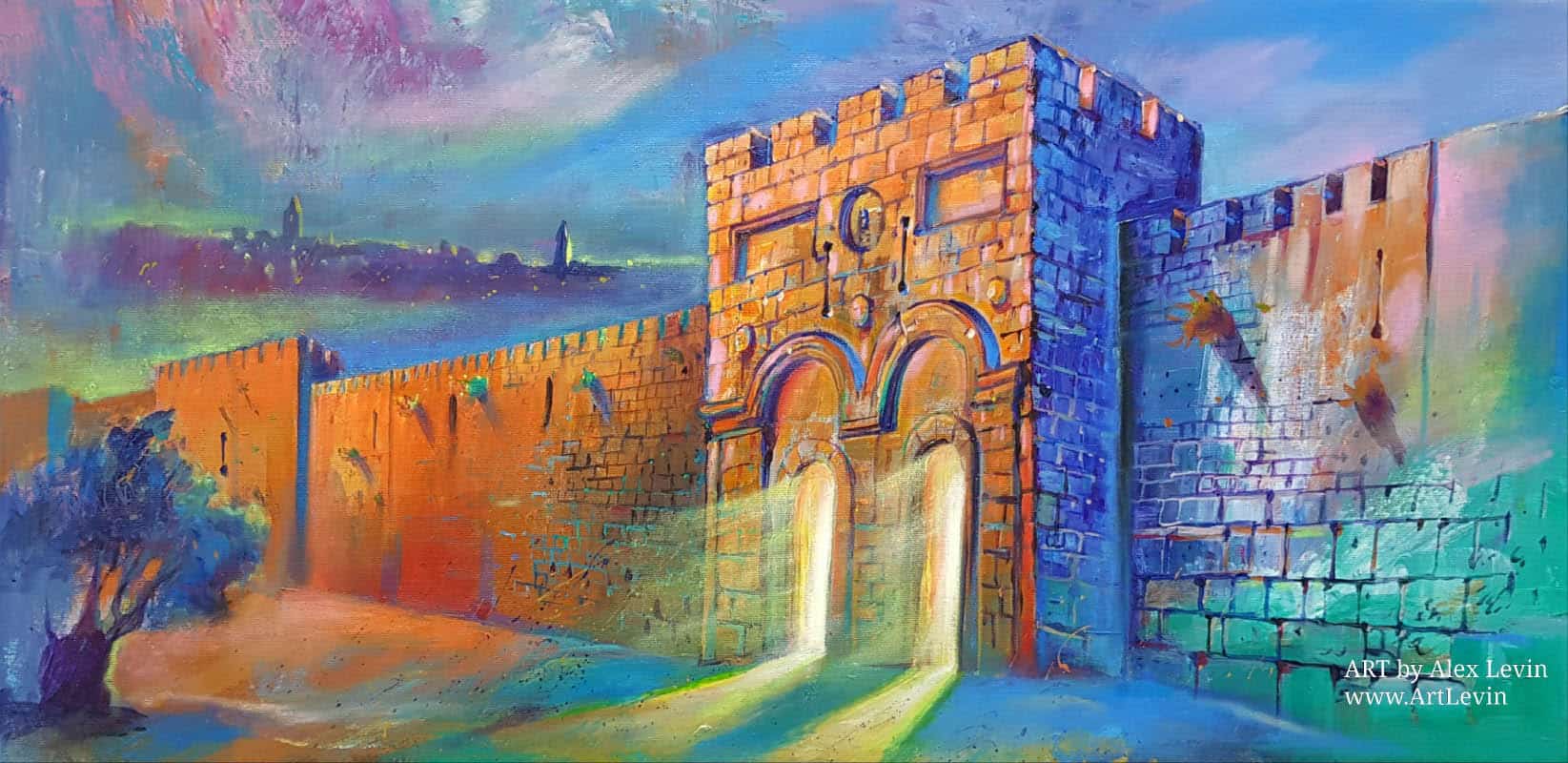
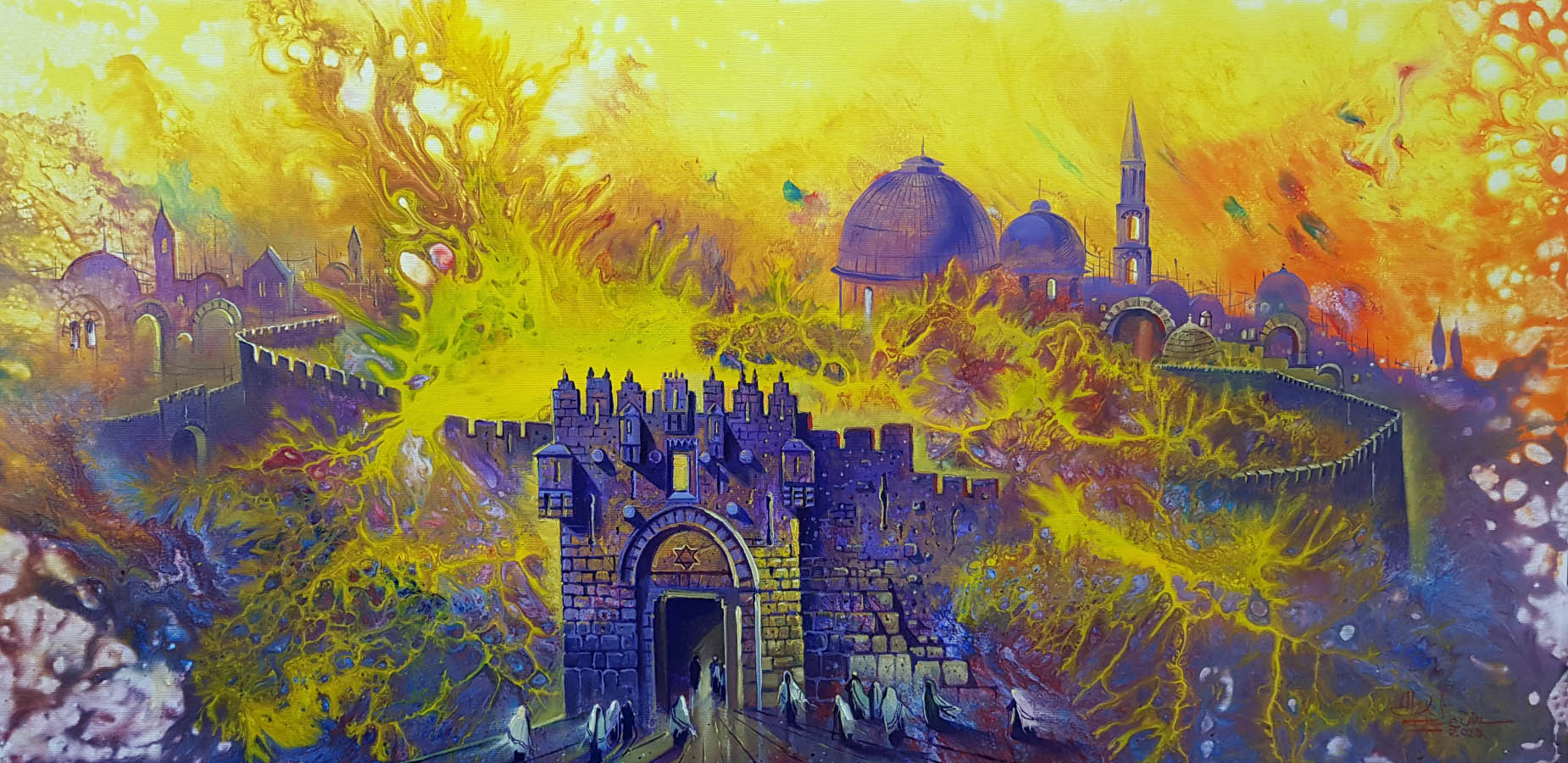
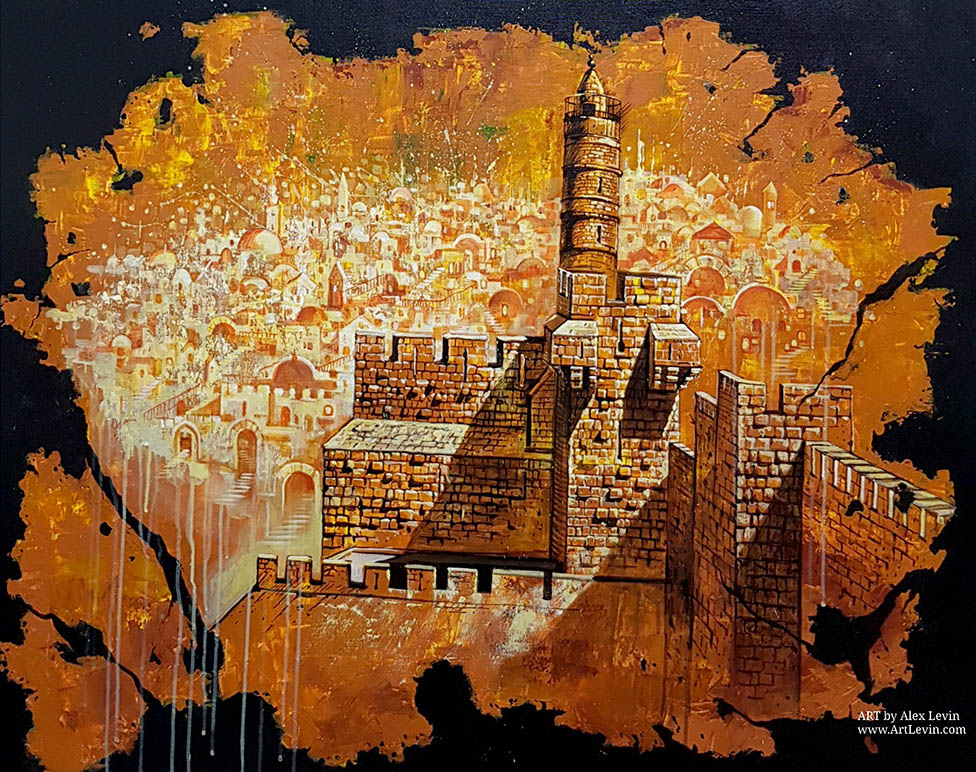
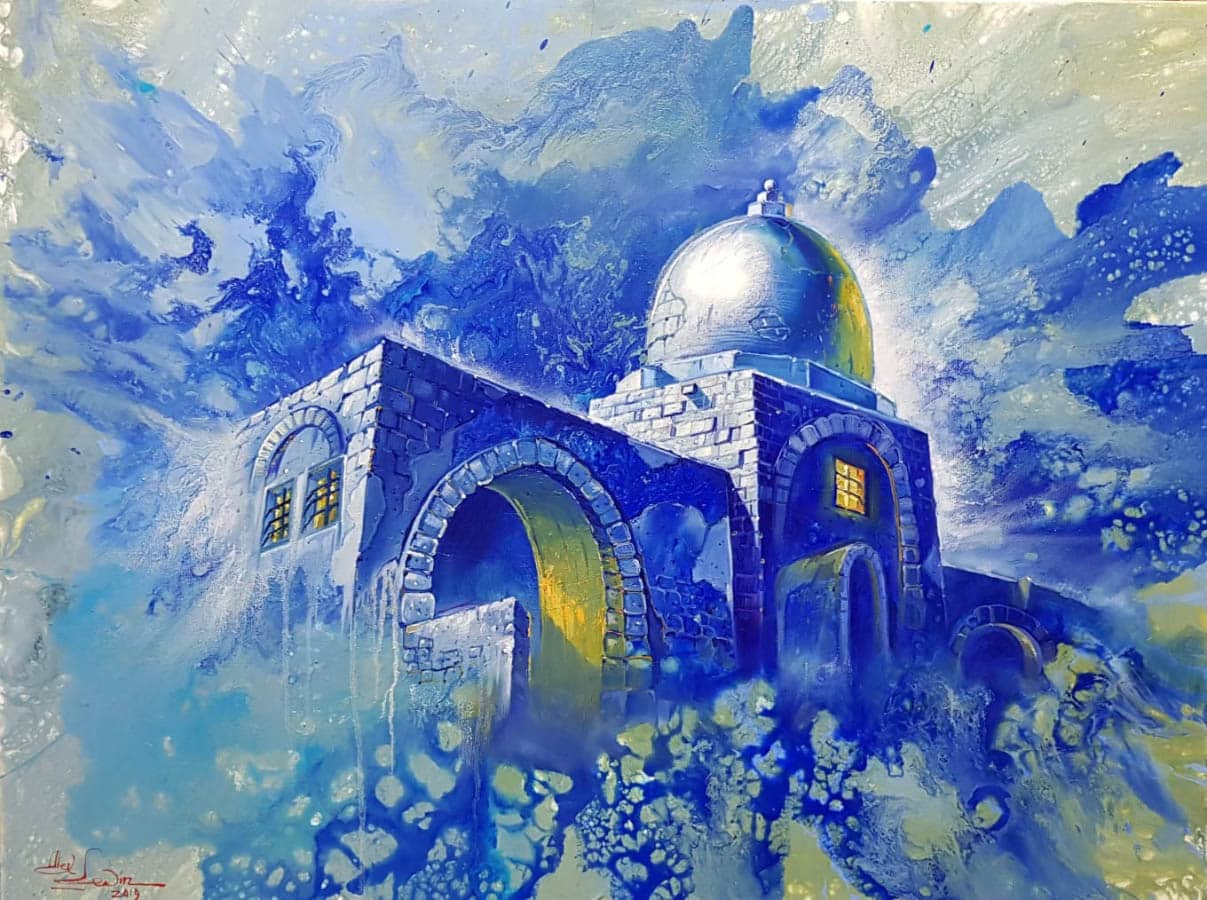
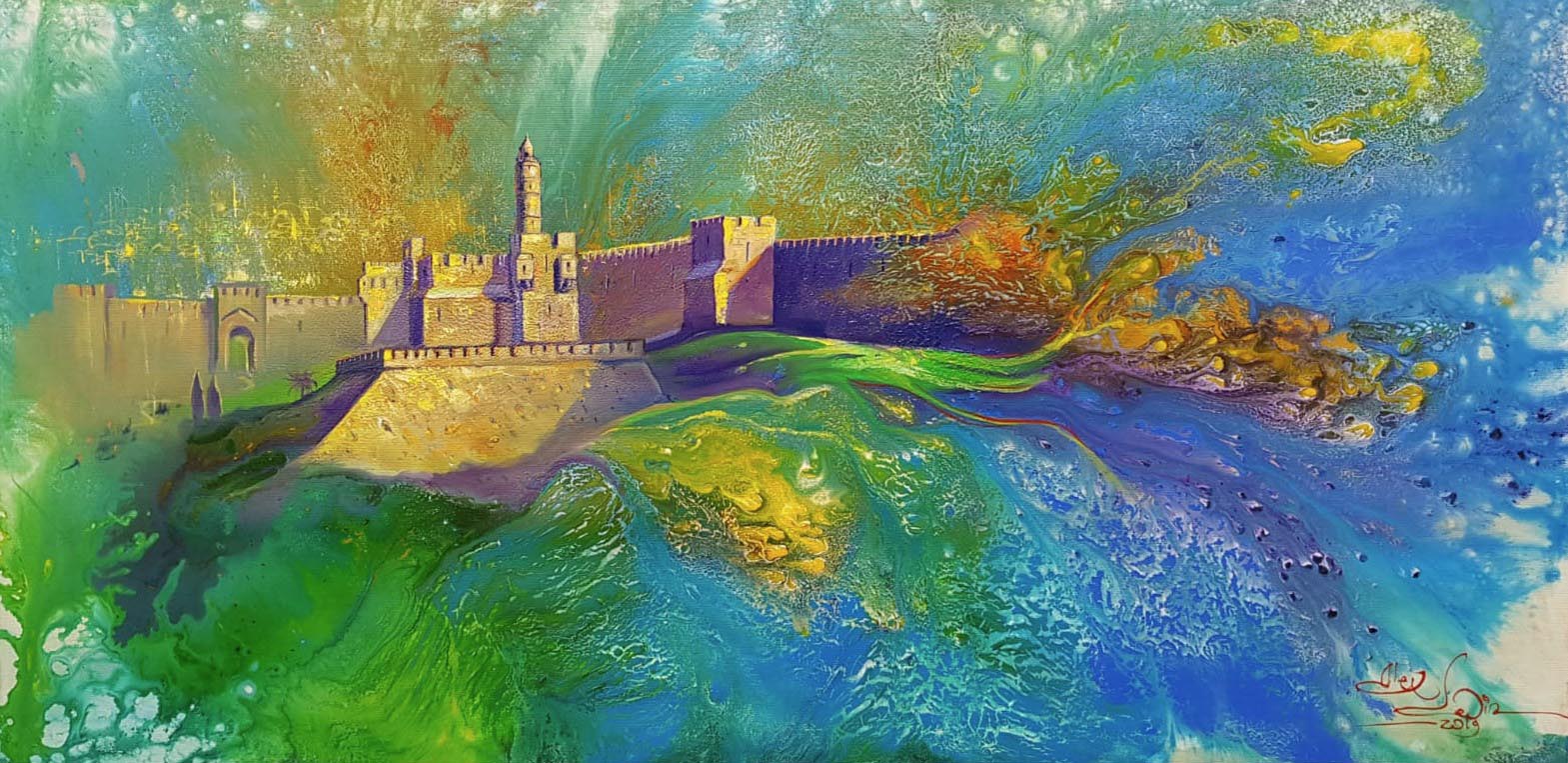
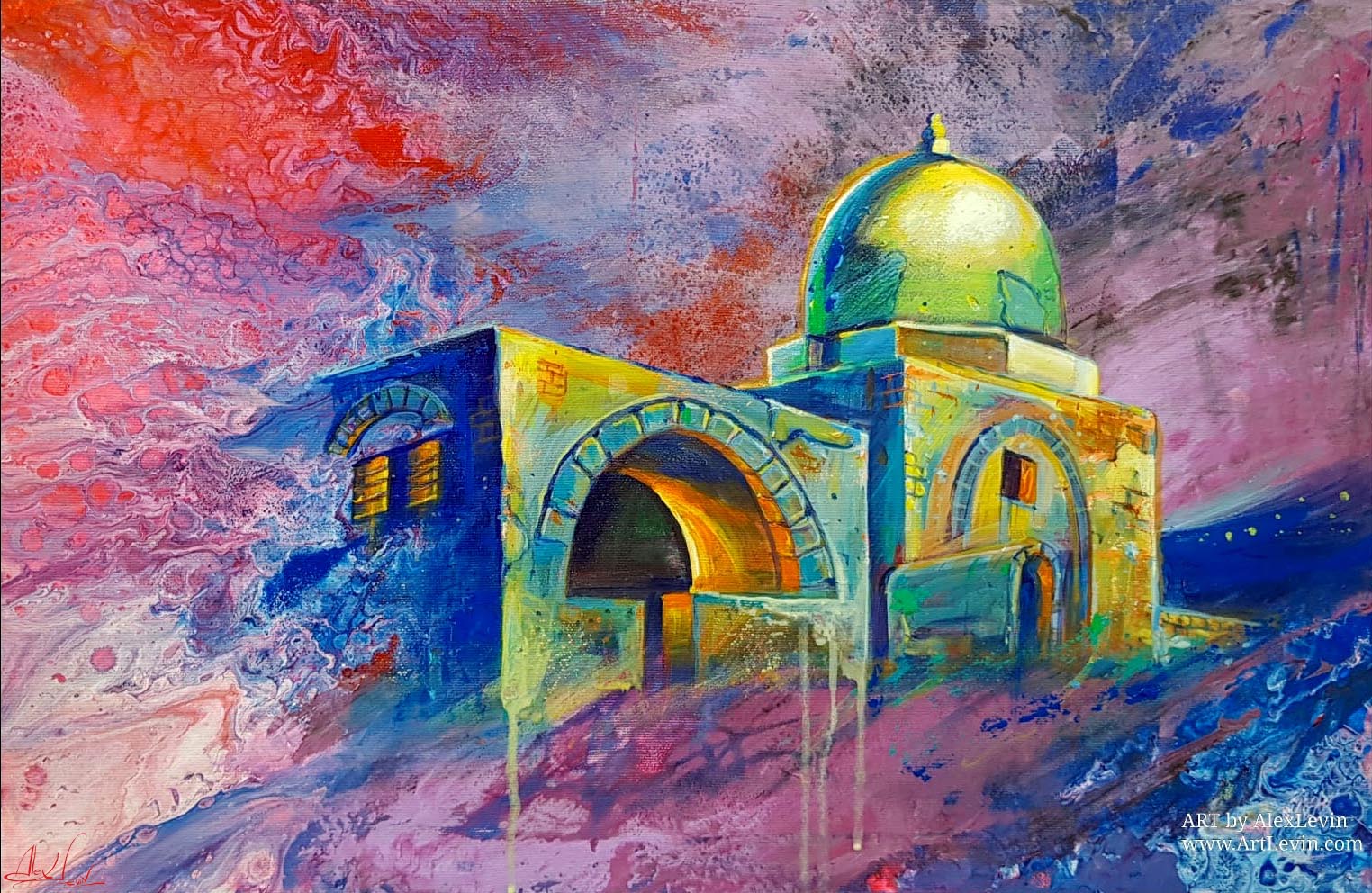
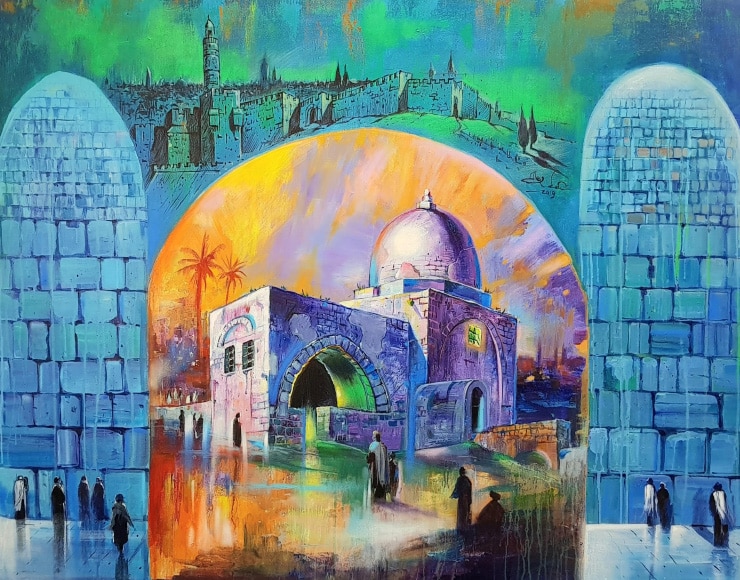
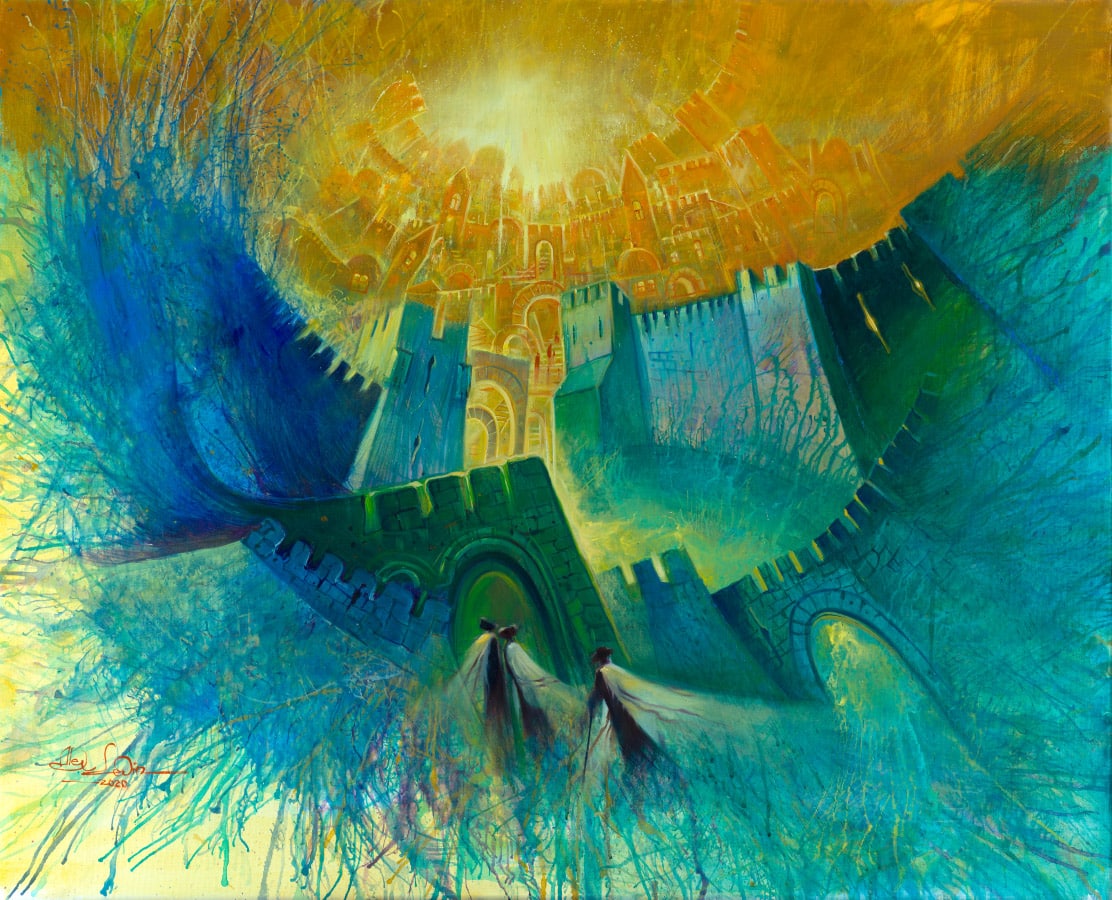
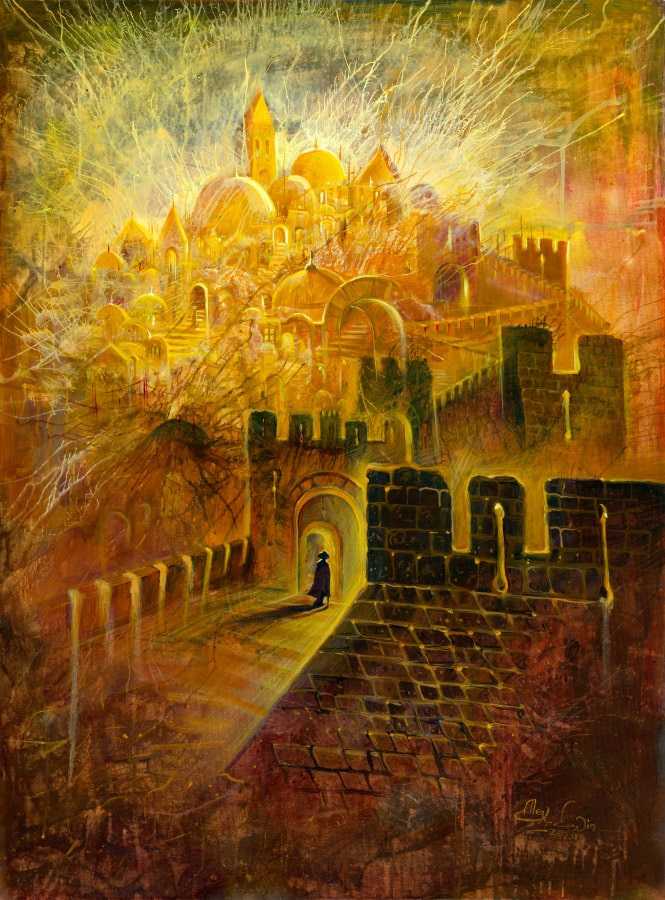
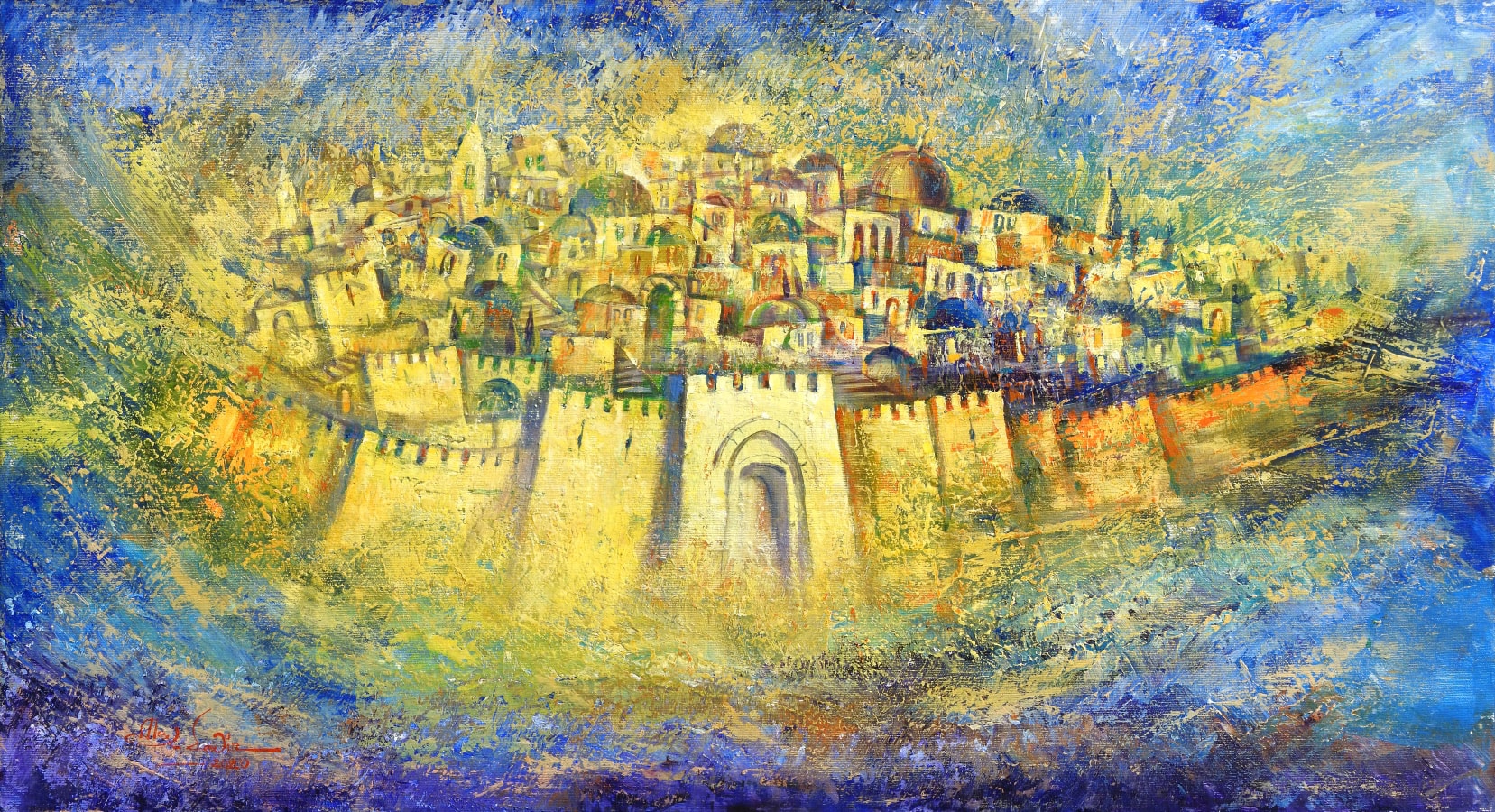
Modern artists can take the same subject and transform it through abstraction, surrealism, unusual color or fragmented architecture.
Jerusalem is particularly suited to modern interpretation because the city contains many historical periods simultaneously.
Ancient stones, modern neighborhoods, biblical memory and contemporary life can all exist within the same composition.
Explore Alex Levin’s Jerusalem paintings.
The Kotel in Modern Jewish Art
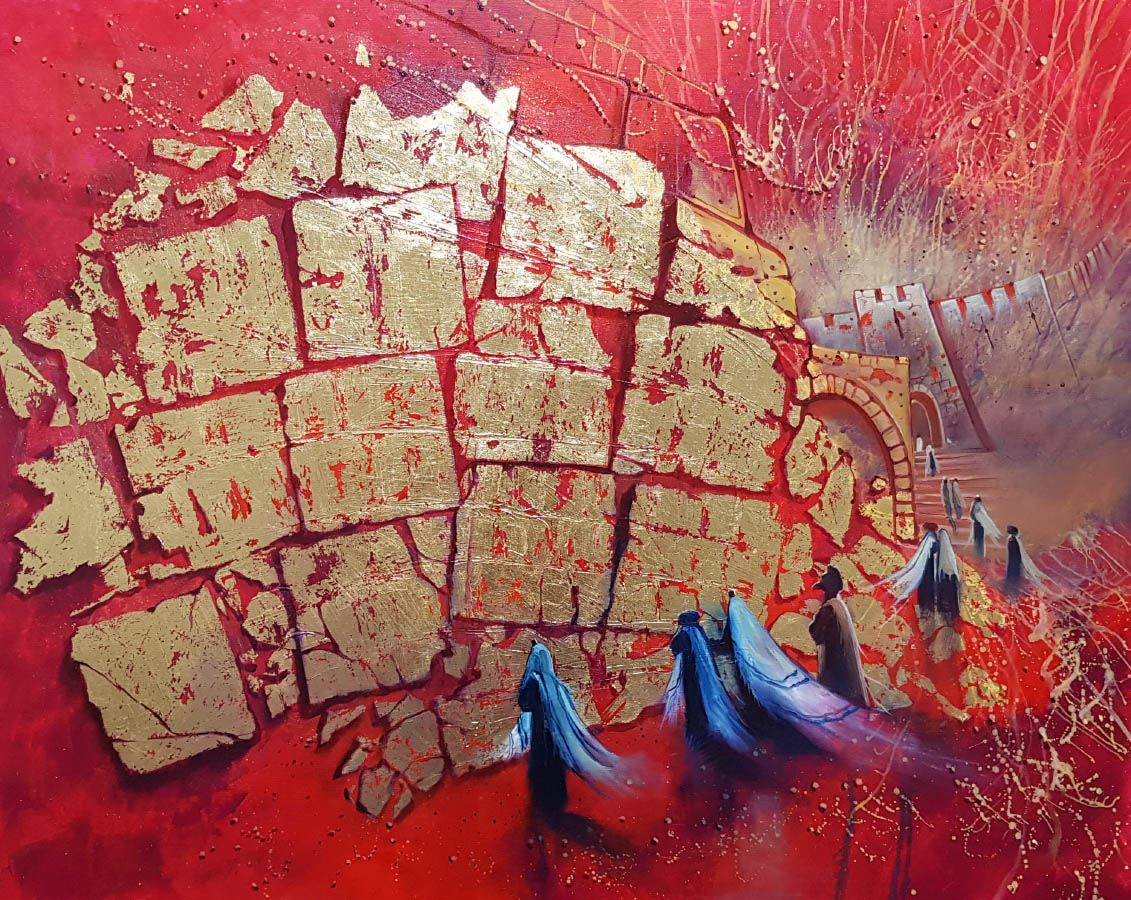
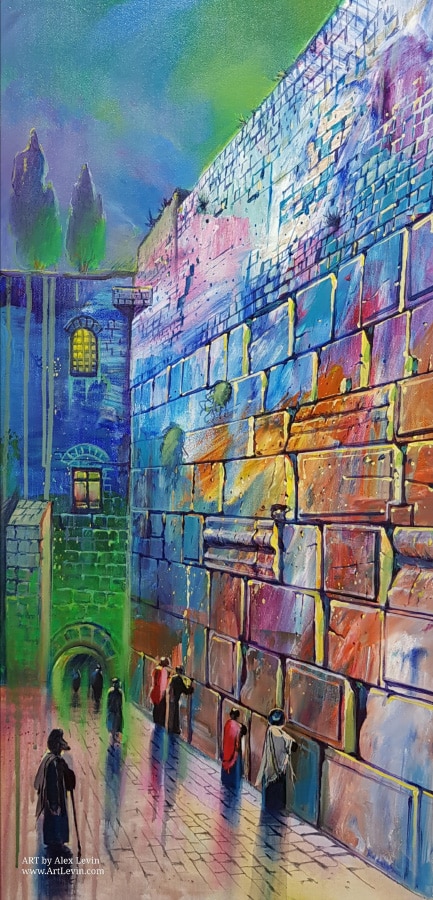
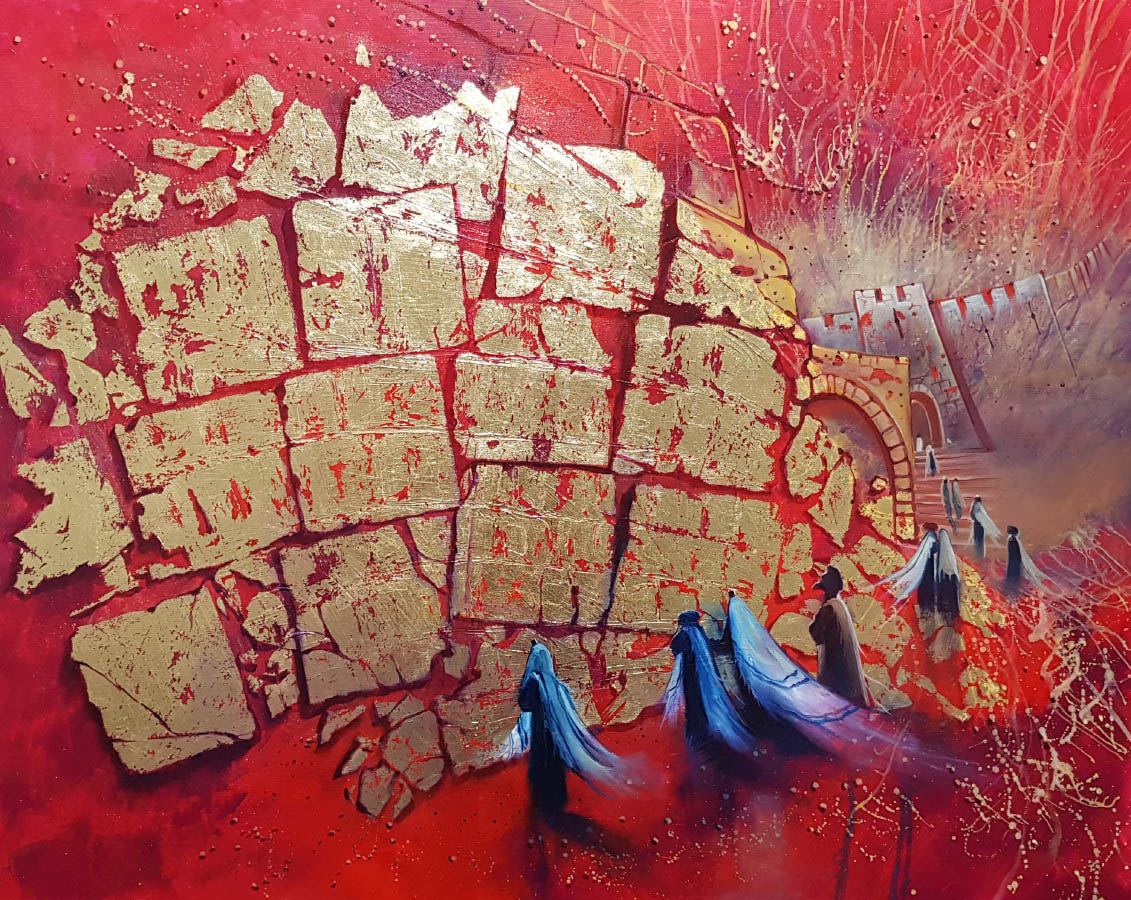
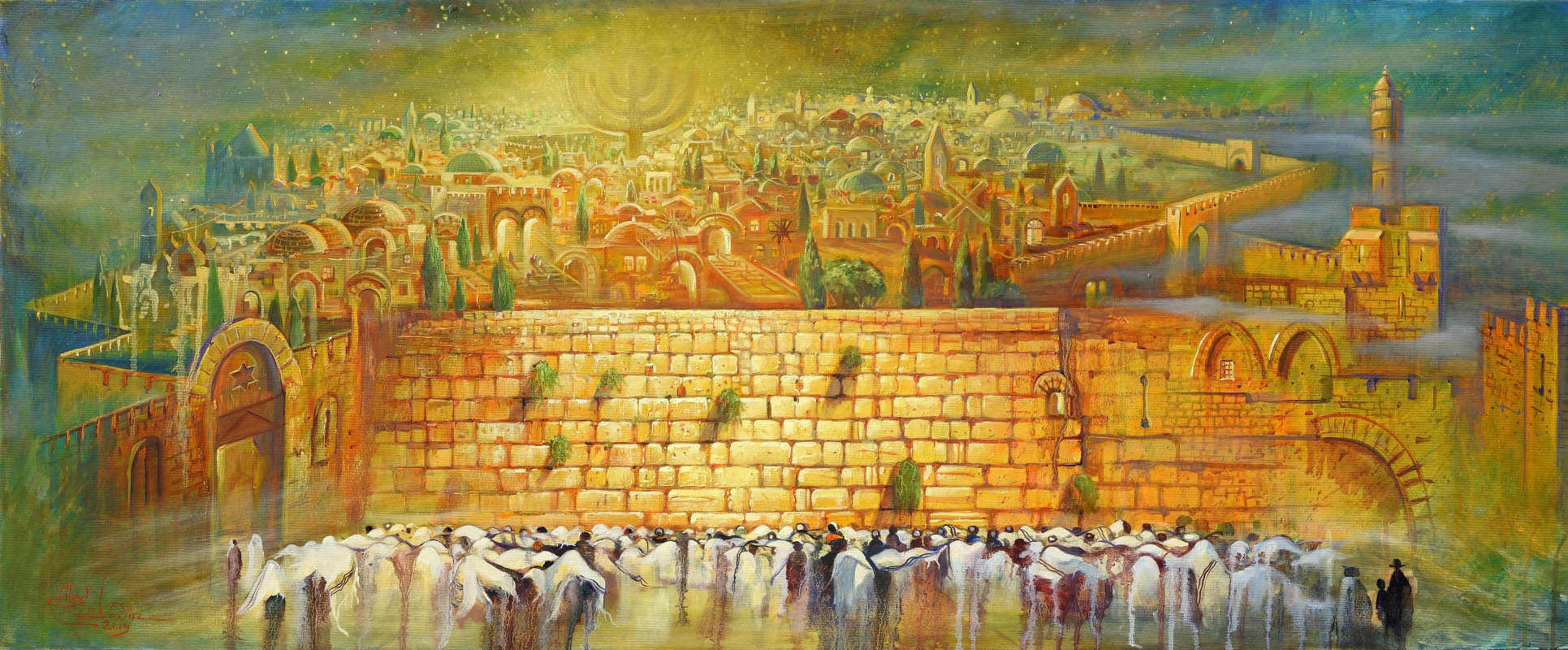
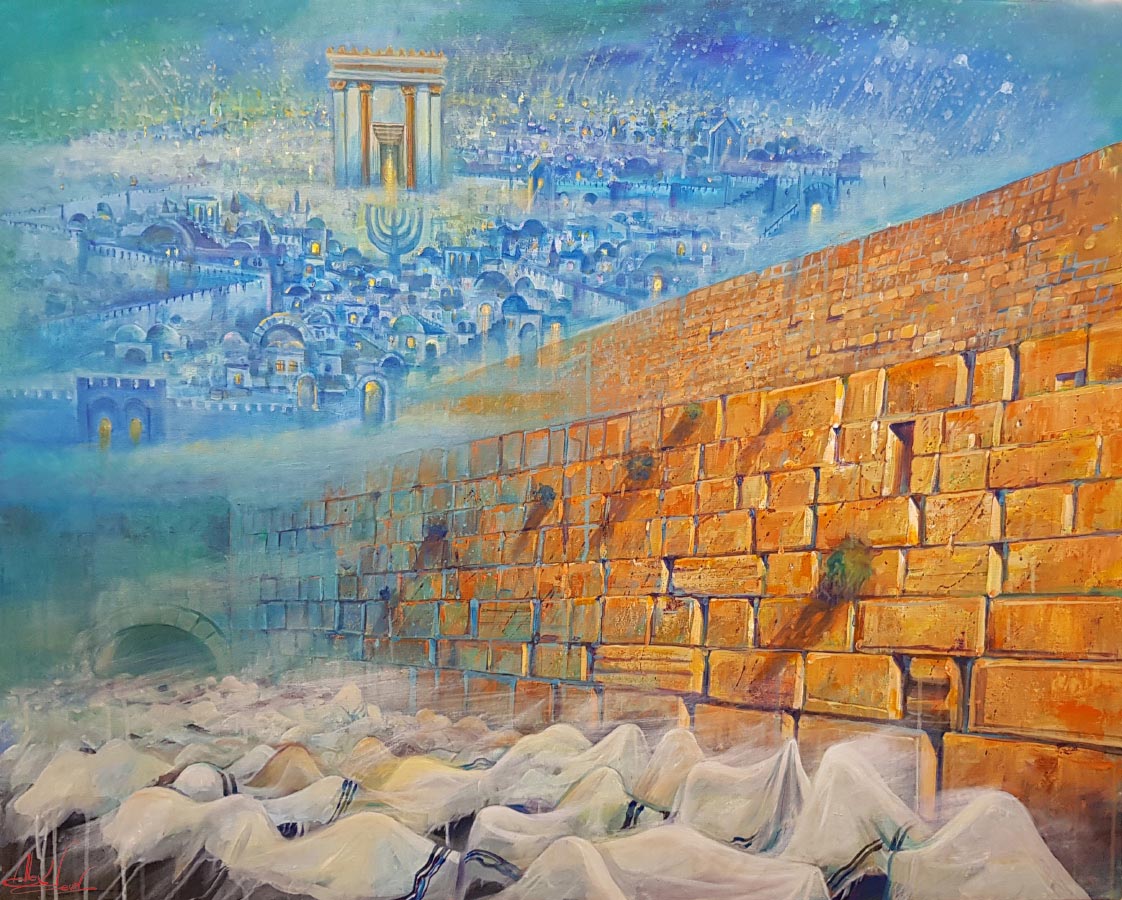
The Kotel, or Western Wall, offers another example of how a traditional Jewish subject can be interpreted through modern art.
A realistic artist might carefully reproduce individual stones and praying figures.
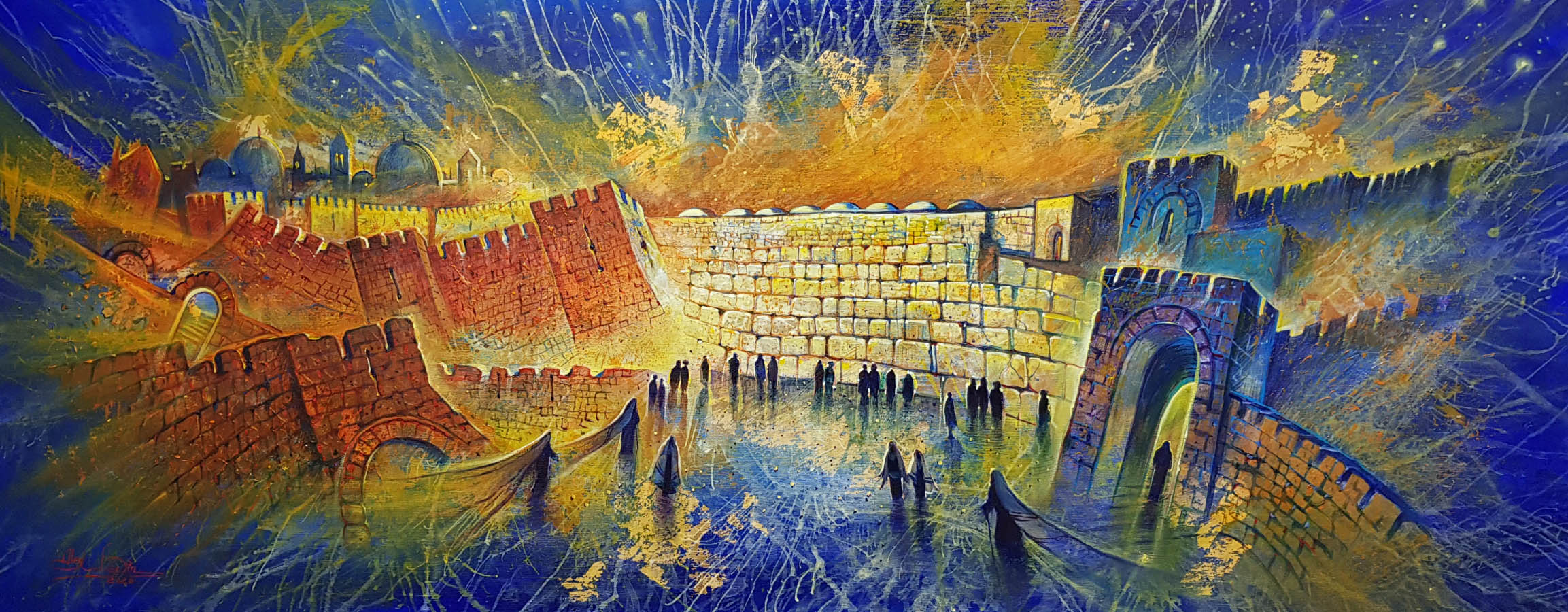
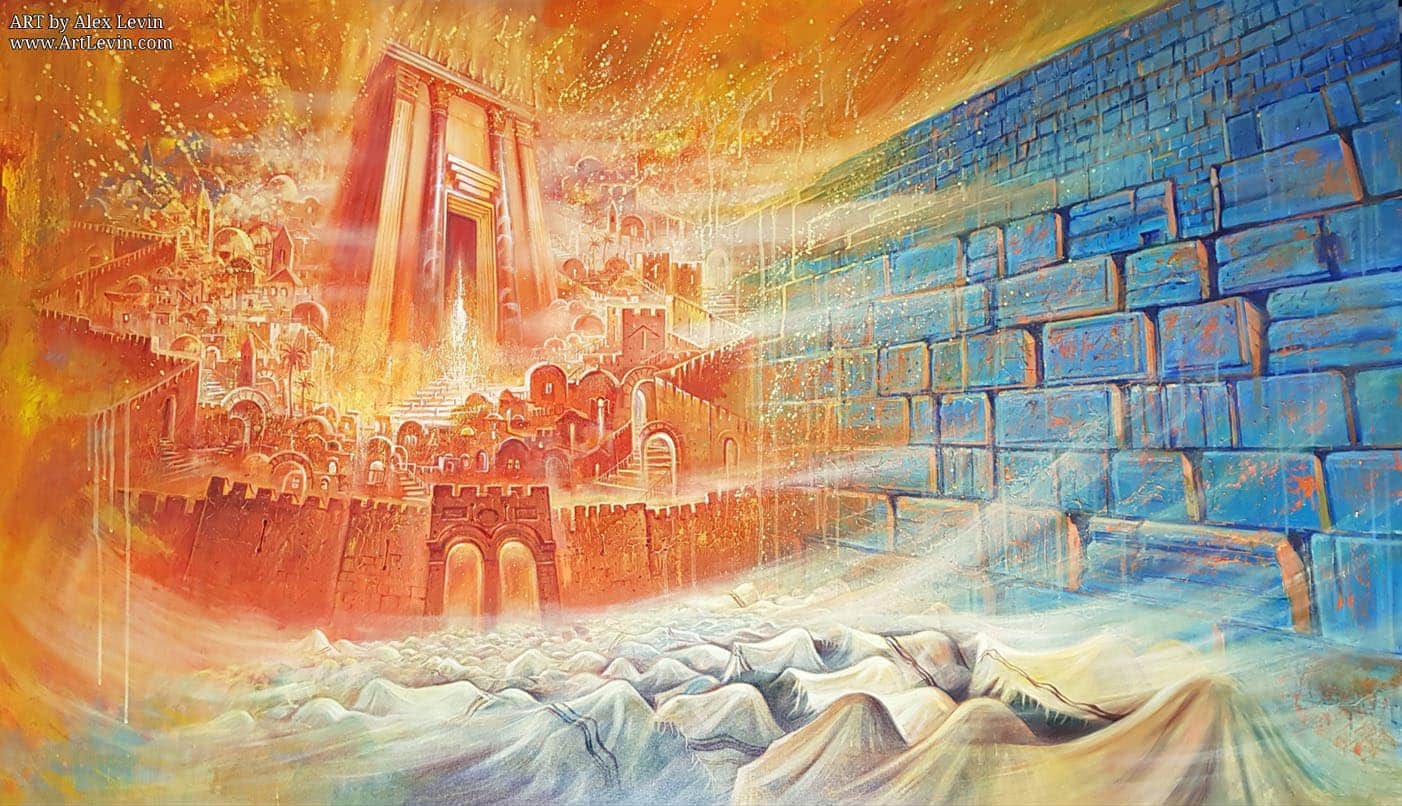
An abstract artist might reduce the Wall to blocks of color and light.
Another artist might incorporate Hebrew letters, written prayers or symbolic figures into the architecture.
The physical location remains recognizable while the artistic meaning changes dramatically.
Explore Alex Levin’s Kotel paintings.
Hebrew Letters in Modern Jewish Art
The Hebrew alphabet has become an especially important visual element in modern Jewish art.
Artists may use complete biblical verses, isolated letters or fragments of Hebrew words.
Sometimes the text remains readable.
In other works, letters become shapes and patterns that function almost abstractly.
Hebrew therefore allows an artist to combine language and image within one composition.
Words associated with prayer, Torah, Jerusalem or Jewish identity can carry meaning while also functioning visually.
Learn more in our guide to Hebrew art and Hebrew letters in art.
Torah in Modern Jewish Art
The Torah remains one of the central symbols of Jewish identity.
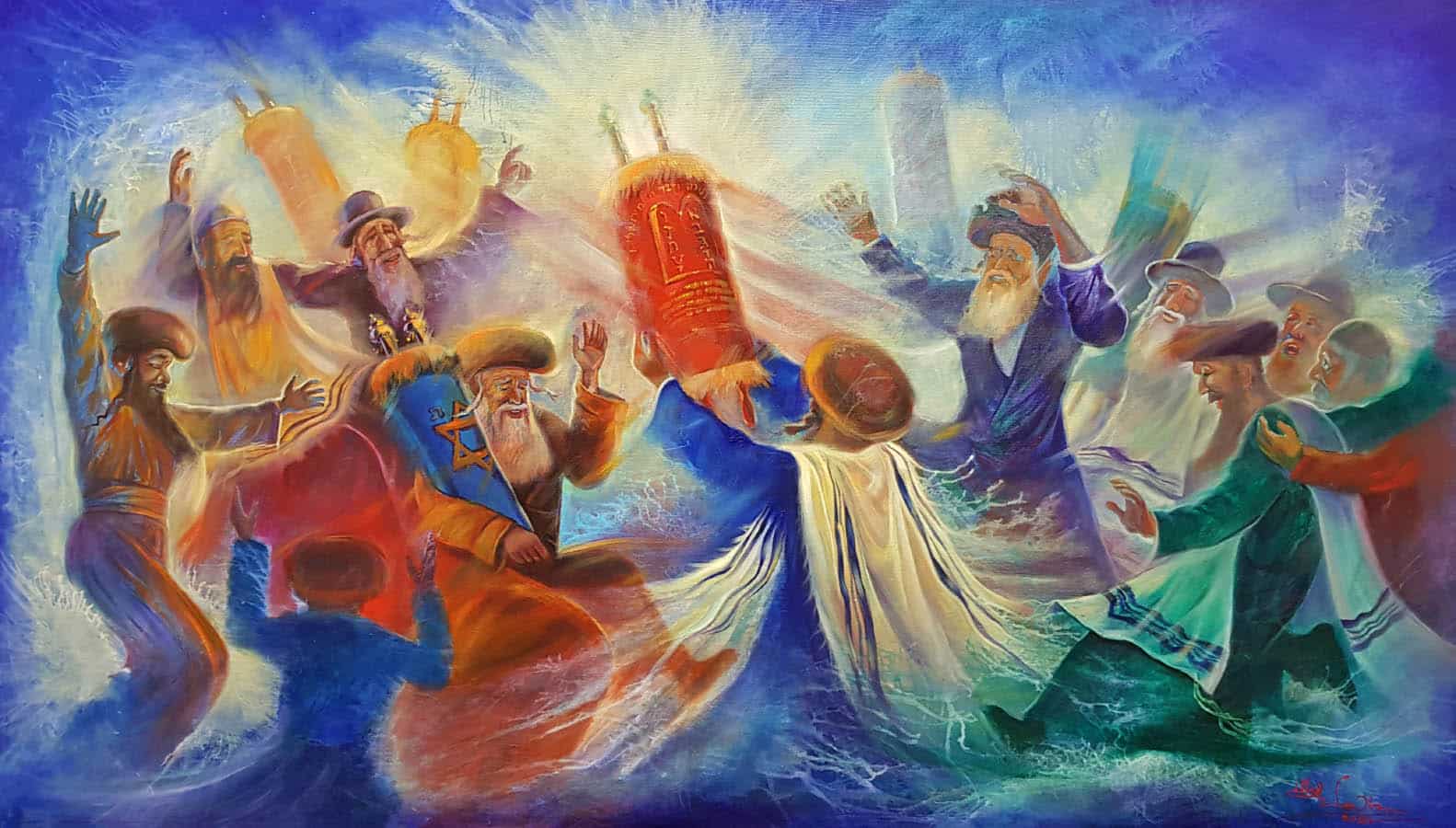
Traditional paintings often show rabbis or students studying Torah or portray a Torah scroll being carried in synagogue.
Modern Jewish artists can approach the subject differently.
The scroll may emerge from abstract color. Hebrew letters may flow from the Torah into the surrounding composition. Biblical text can be combined with contemporary architecture or symbolic imagery.
The result connects a sacred text thousands of years old with modern artistic expression.
Explore Alex Levin’s Torah paintings.
Shabbat in Modern Jewish Art
Shabbat gives artists a different range of visual possibilities.
Candle lighting, challah, wine, prayer and family gatherings can be portrayed realistically or symbolically.
Light is especially important in Shabbat art.
Artists may allow the candles to illuminate an entire composition or use light itself as a symbol of peace, spirituality and separation from the ordinary week.
Modern interpretations can simplify the figures and objects while preserving the emotional atmosphere of Shabbat.
Explore Alex Levin’s Shabbat paintings.
Jewish Holidays in Modern Art
Jewish holidays provide artists with familiar symbols that can be continuously reinterpreted.
A shofar immediately suggests Rosh Hashanah. A menorah evokes Hanukkah. Matzah and the Seder table connect with Passover. A sukkah brings Sukkot into visual form.
Modern Jewish art may retain these recognizable symbols while changing everything around them.
A menorah may become a series of glowing abstract lines. A shofar may dominate a surreal landscape. Pomegranates can become oversized symbols of abundance.
This allows artists to preserve the identity of a holiday without simply reproducing traditional imagery.
Marc Chagall and Modern Jewish Art
Marc Chagall is one of the artists most frequently associated with modern Jewish visual culture.
His paintings often incorporated memories of Jewish life in Eastern Europe alongside dreamlike figures, musicians, animals, villages and biblical subjects.
Chagall did not simply document Jewish life realistically.
He transformed memory into a highly personal artistic language where people could float through the air and time could appear to collapse within a single composition.
His work demonstrated that Jewish themes could become part of modern European art without losing their cultural identity.
Jewish Artists and Modernism
Many Jewish artists participated in broader modernist movements without making explicitly Jewish subjects the center of every artwork.
Artists associated with abstraction, expressionism, sculpture and other modern movements often had complex relationships with Jewish identity.
This is important because Jewish art should not be defined only by visible religious symbols.
An artist’s Jewish background, experiences of migration, family history or historical circumstances may influence a body of work even when no menorah, Hebrew letter or synagogue appears on the canvas.
Jewish Artists in the 20th Century
The 20th century produced many internationally recognized artists of Jewish background.
They worked across vastly different styles and movements.
Among them were:
- Marc Chagall
- Amedeo Modigliani
- Chaim Soutine
- Mark Rothko
- Louise Nevelson
- Lee Krasner
- Eva Hesse
- Judy Chicago
Their work demonstrates why there is no single visual definition of Jewish modern art.
Some explored recognizably Jewish subjects. Others became major figures in broader international movements.
Read our guide to the most famous Jewish artists and painters.
Modern Jewish Art and the Shtetl
The Eastern European shtetl became another important subject for modern Jewish artists.
For artists who remembered these communities personally, the shtetl could represent childhood, family, religion and daily Jewish life.
After the Holocaust, such imagery acquired an additional meaning.
Paintings of rabbis, musicians, Jewish weddings, Torah study and village streets could preserve memories of communities that had largely disappeared.
Modern Jewish art therefore sometimes serves simultaneously as personal memory and historical preservation.
Explore Alex Levin’s Shtetl paintings.
Jewish Memory and the Holocaust in Modern Art
The Holocaust profoundly changed Jewish visual culture.
Artists confronted questions that were difficult to express through conventional imagery.
Some created documentary works depicting persecution and survival.
Others approached memory through abstraction, absence, fragmentation and symbolic objects.
Later generations of artists have also explored inherited memory – events they did not personally experience but which shaped their families and identities.
This makes memory one of the recurring subjects of modern and contemporary Jewish art.
Israel and the Development of Modern Jewish Art
The growth of Jewish artistic culture in the Land of Israel created another major direction in modern Jewish art.
The Bezalel School of Arts and Crafts was established in Jerusalem in 1906.
Early Bezalel artists attempted to combine biblical imagery, Jewish symbols, local landscapes, Hebrew letters and decorative traditions into a new visual language.
Later Israeli artists moved in many different directions, including landscape painting, abstraction, conceptual art, photography and contemporary media.
Modern Israeli art and modern Jewish art therefore overlap, but they are not identical categories.
What Is the Difference Between Jewish Art and Israeli Art?
Jewish art can be created anywhere in the world and may focus on Jewish religion, history, identity, culture or experience.
Israeli art generally refers to art created in Israel or connected with Israeli artistic culture.
An Israeli artist may create completely secular artwork without an explicitly Jewish theme.
A Jewish artist in New York, Paris or Buenos Aires may create deeply Jewish work without being Israeli.
The categories often overlap, but neither should be treated as a synonym for the other.
Read more in our guide to Israeli paintings and art of Israel.
Abstract Jewish Art
Abstraction opened new possibilities for Jewish artists.
Instead of depicting a synagogue or Torah scroll literally, an artist could use color, line, shape and texture to communicate spirituality or memory.
A composition may contain only fragments of Hebrew letters or hints of recognizable Jewish symbols.
Another work might use completely abstract forms while being inspired by prayer, biblical text or personal Jewish experience.
This approach allows viewers to discover meaning gradually rather than immediately recognizing a narrative scene.
Jewish Surrealism
Surreal and dreamlike imagery can also be particularly effective in Jewish art.
Different historical periods can exist together within one image.
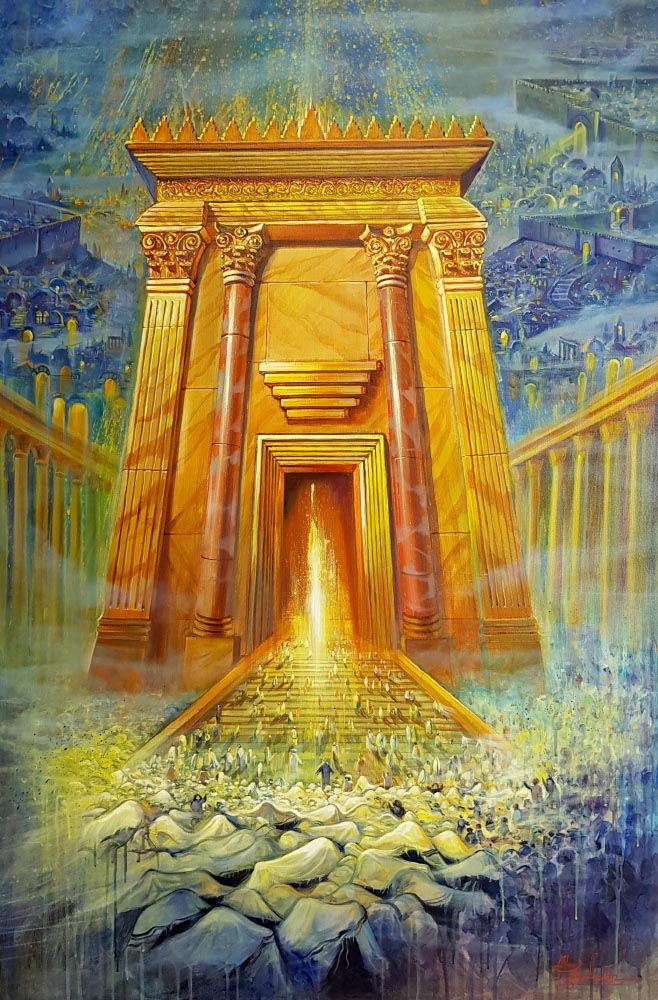
A figure from the biblical world may appear beside modern Jerusalem. Hebrew letters can float through architecture. Ancient Temple imagery can be combined with the modern city.
This makes surrealism useful for artists interested in Jewish memory, where ancient history and contemporary experience frequently overlap.
Modern Jewish Portraits
Portraiture remains another important element of Jewish art.
Artists portray rabbis, Jewish leaders, biblical personalities, family members and contemporary figures.
A traditional portrait may concentrate on physical likeness.
A modern Jewish portrait can incorporate Hebrew text, symbolic colors or abstract elements to communicate something about the subject’s spiritual or historical importance.
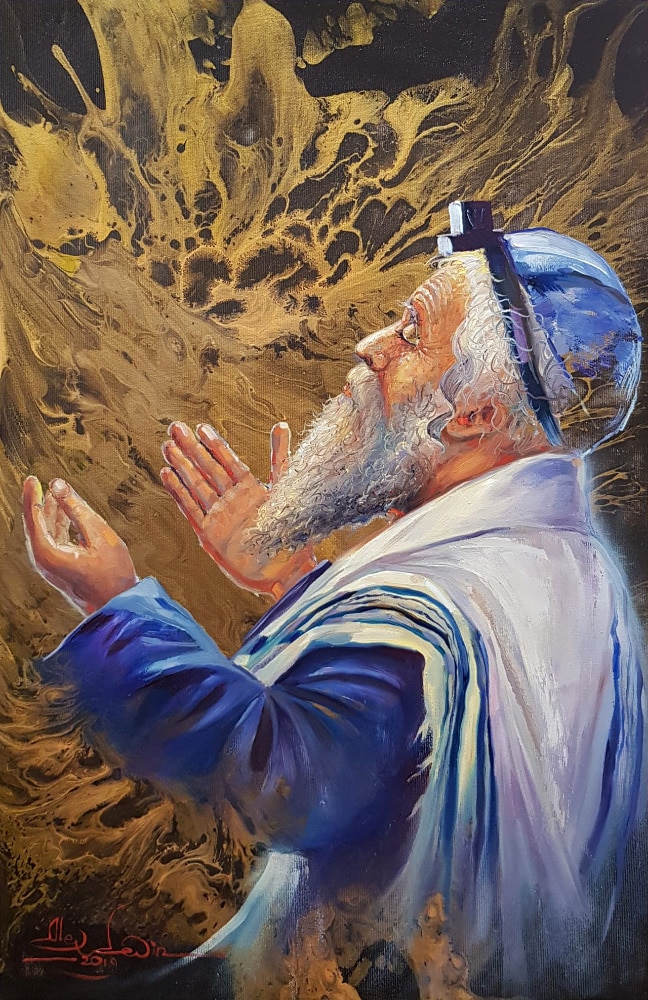
Explore Alex Levin’s Jewish portraits.
The Lubavitcher Rebbe in Modern Jewish Art
Rabbi Menachem Mendel Schneerson, the Lubavitcher Rebbe, has become one of the most recognizable modern Jewish figures in portrait art.
Traditional portraits focus on his recognizable face, beard and expression.
Contemporary artists may surround the portrait with Hebrew letters, spiritual light, abstract color or imagery associated with Chabad teachings.
The same subject can therefore move from realistic portraiture into contemporary Jewish symbolism.
Explore Alex Levin’s collection of Lubavitcher Rebbe paintings.
Women in Modern Jewish Art
Modern Jewish art has also expanded the visual representation of Jewish women’s experiences.
Artists portray Shabbat candle lighting, family life, prayer, holidays, biblical women and contemporary Jewish identity.
Women artists have also become major voices in modern and contemporary Jewish visual culture.
The result is a broader range of perspectives than existed in many earlier forms of Jewish representation.
Jewish Family Life in Modern Art
Not all modern Jewish artwork focuses on major historical events.
Ordinary family life can be equally important.
A Shabbat table, a child studying Torah, a wedding beneath a chuppah or a family preparing for a holiday can express continuity more quietly than monumental biblical paintings.
These scenes preserve the rituals through which Jewish identity is lived from day to day.
Explore Alex Levin’s Jewish Life paintings.
Modern Judaica
The modernization of Jewish visual culture is not limited to painting.
Artists and designers have transformed traditional Judaica as well.
Menorahs, mezuzah cases, seder plates, candlesticks, ketubot and blessings for the home can now be created in minimalist, sculptural or highly abstract styles.
The religious or ceremonial purpose may remain familiar while the design changes completely.
This illustrates the broader principle behind modern Jewish art: tradition does not have to remain visually frozen in the past.
Modern Jewish Art for the Home
Collectors increasingly choose Jewish artwork that reflects both heritage and contemporary interior design.
A highly traditional painting may suit one home, while another collector may prefer abstraction, monochrome art or a contemporary interpretation of Jerusalem.
Popular subjects include:
- Jerusalem
- Kotel
- Hebrew letters
- Torah
- Shabbat
- Jewish portraits
- Biblical scenes
- Abstract Judaica
The strongest choice is usually a work that has personal meaning rather than simply matching a room’s colors.
Modern Jewish Art by Alex Levin
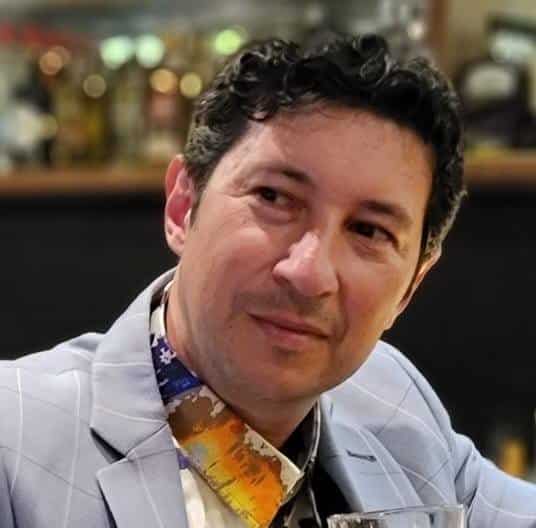
Israeli artist Alex Levin works across both traditional and modern Jewish imagery.
His paintings include realistic Jerusalem streets and Jewish Life scenes as well as contemporary compositions combining Hebrew letters, biblical subjects, abstract forms, Jerusalem architecture and symbolic imagery.
Several works deliberately bring different periods of Jewish history together within one composition.
An ancient Temple, a modern Jerusalem skyline and Hebrew text may exist side by side.
This approach reflects a central idea in Levin’s contemporary work: Jewish history is not separate from the present. It continues to shape the way the present is experienced.
Explore Modern Jewish Artwork by Alex Levin
For collectors looking specifically for artwork with a modern visual language, explore Alex Levin’s Contemporary Jewish Art collection.
The collection includes modern interpretations of Jerusalem, Judaism, Torah, Hebrew letters, biblical subjects and Jewish identity.
You can also explore Jewish Life paintings for more traditional subject matter and Jerusalem paintings for both traditional and contemporary views of the Holy City.
Modern Jewish Art vs. Contemporary Jewish Art
The two terms are often used interchangeably, but they can have slightly different meanings.
Modern Jewish art can refer broadly to Jewish artwork created within the modern era and influenced by modern artistic movements.
Contemporary Jewish art generally refers more specifically to work being produced in the present or relatively recent period.
In everyday searches, however, people frequently use both phrases simply to describe Jewish artwork that looks modern rather than traditional.
Why Modern Jewish Art Matters
Jewish culture has survived for thousands of years partly because traditions have been preserved while also being interpreted by each new generation.
Art follows the same pattern.
A modern artist can work with a Torah scroll, menorah, Jerusalem skyline or Hebrew verse without copying the way an artist from an earlier century would have represented it.
The visual language changes while the underlying conversation continues.
This ability to connect past and present is one of the qualities that makes modern Jewish art particularly meaningful.
Frequently Asked Questions About Modern Jewish Art
What is modern Jewish art?
Modern Jewish art is visual art connected with Jewish culture, history, religion or identity and expressed through modern artistic styles. It can include realism, abstraction, surrealism, sculpture, photography, mixed media and contemporary Judaica.
Is modern Jewish art always religious?
No. Some modern Jewish artwork portrays explicitly religious subjects such as Torah, Shabbat and prayer. Other works explore Jewish identity, history, Israel, migration, memory or family without being religious artworks.
Who are some famous modern Jewish artists?
Well-known artists of Jewish background include Marc Chagall, Amedeo Modigliani, Chaim Soutine, Mark Rothko, Louise Nevelson, Lee Krasner, Eva Hesse and Judy Chicago, among many others.
What subjects are common in modern Jewish art?
Common subjects include Jerusalem, Hebrew letters, Torah, Shabbat, Jewish holidays, shtetl life, the Holocaust, Israel, Jewish portraits, family traditions and contemporary Jewish identity.
What is the difference between Jewish art and Israeli art?
Jewish art refers broadly to artwork connected with Jewish religion, culture, history or identity anywhere in the world. Israeli art refers primarily to the artistic culture of Israel. The two frequently overlap but are not identical.
What is abstract Jewish art?
Abstract Jewish art uses color, shapes, texture, Hebrew letters or symbolic forms rather than relying entirely on realistic representation. An abstract work may still be inspired by Torah, Jerusalem, prayer or other Jewish themes.
What is modern Judaica?
Modern Judaica applies contemporary design to traditional Jewish ritual and decorative objects such as menorahs, mezuzah cases, Seder plates, ketubot, Shabbat candlesticks and home blessings.
Can modern Jewish art include traditional subjects?
Yes. Jerusalem, Torah, menorahs, rabbis and Jewish holidays can all be traditional subjects while being interpreted through modern color, abstraction, surrealism or contemporary composition.
Where can I buy modern Jewish art?
ArtLevin.com offers original paintings and fine-art reproductions by Israeli artist Alex Levin, including modern interpretations of Jerusalem, Jewish identity, Hebrew letters, Torah and biblical themes.
Explore Contemporary Jewish Art by Alex Levin
Abstract Jerusalem Painting