Shabbat is one of the most intimate and visually meaningful subjects in Jewish art.
Unlike paintings centered on monumental architecture or major historical events, Shabbat art often focuses on quieter moments: a woman lighting candles, a family gathered together, people walking to prayer, or the warm glow of Friday evening.
These scenes can communicate something larger than the moment being depicted.
They can represent peace, family, holiness, continuity, memory, and the transition from the ordinary week into sacred time.
For Israeli artist Alex Levin, Shabbat appears in both traditional and contemporary forms – from familiar scenes of candle lighting to colorful interpretations connecting Shabbat with Jerusalem and Jewish identity.
Explore Alex Levin’s Shabbat Paintings
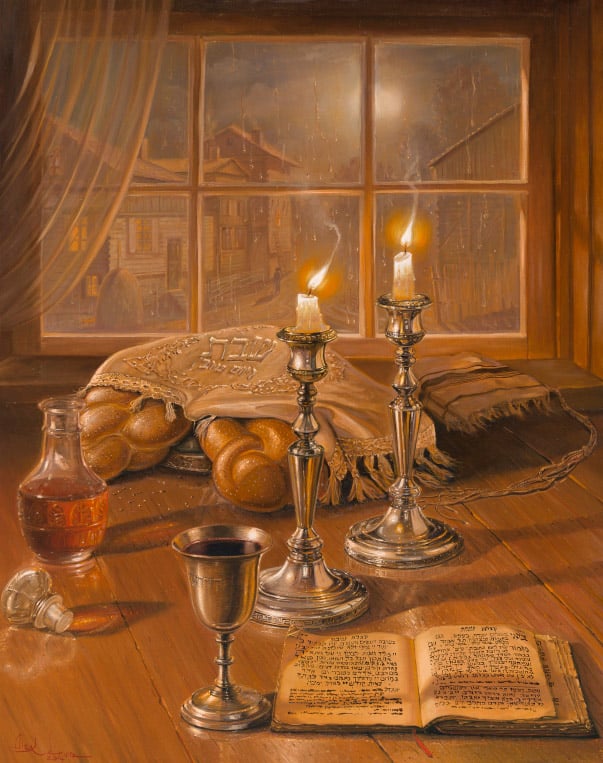
What Is Shabbat?
Shabbat is the Jewish day of rest, observed from Friday evening through Saturday night.
It creates a weekly pause from ordinary work and activity and traditionally centers on prayer, family, meals, study, community, and rest.
Many of the visual traditions associated with Shabbat are immediately recognizable.
Candles are lit before the beginning of Shabbat.
Families gather around the table.
Wine and challah become part of the meal.
People attend synagogue and spend time together.
For an artist, these traditions provide a rich visual language.
But Shabbat art is not simply about illustrating rituals.
Its deeper challenge is to portray the atmosphere those rituals create.
Shabbat Candles in Jewish Art
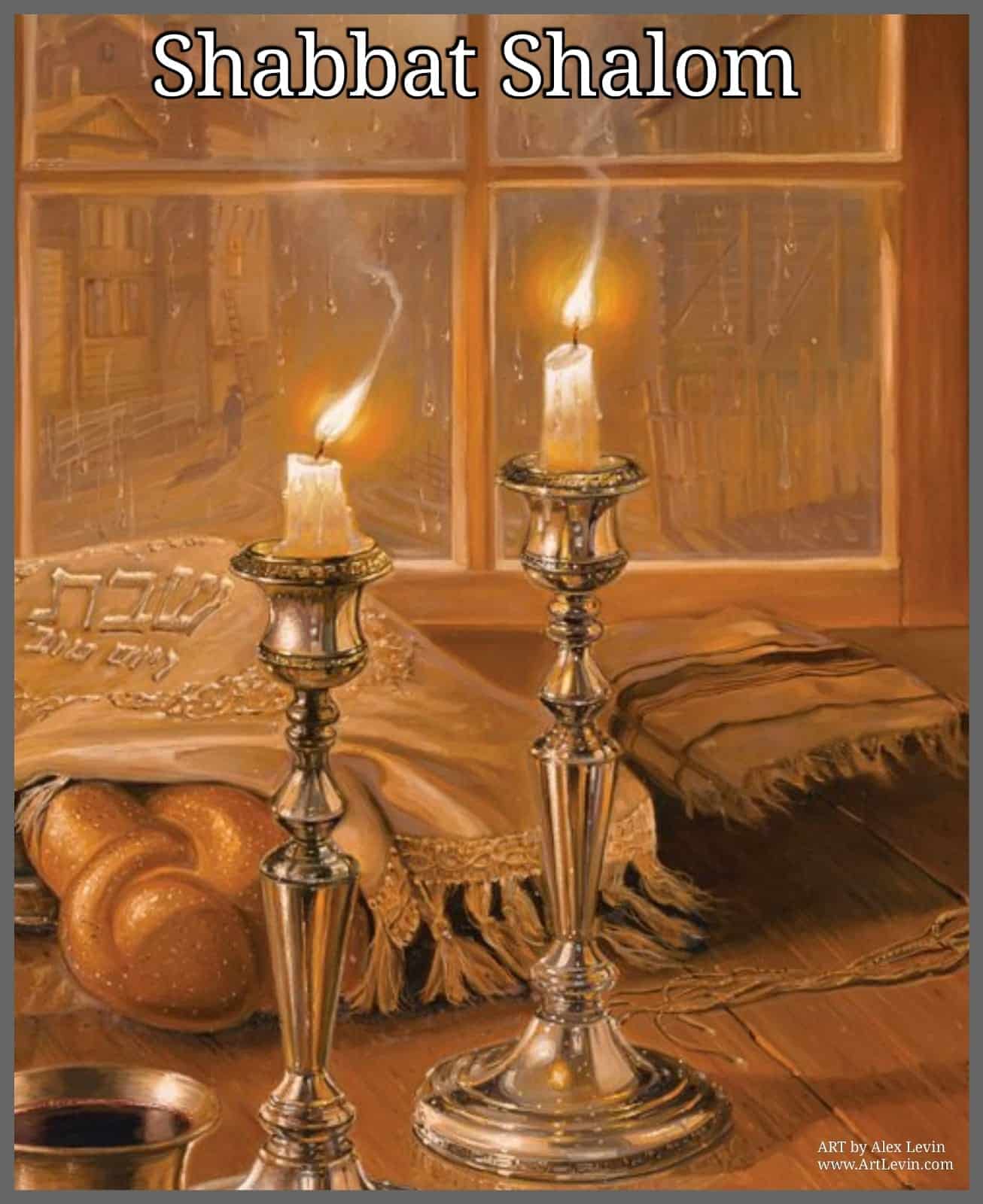
Few images are more closely associated with Shabbat than candle lighting.
The subject is visually simple: a person, candles, flame, and surrounding darkness or interior light.
Yet it carries enormous emotional possibilities.
The candles can illuminate a face.
Their light can spread across the room.
Hands may be raised near the eyes during the blessing.
Everything outside that small area of light can become secondary.
This allows the artist to make the flame itself part of the meaning of the painting.
Shabbat candle art can communicate peace, warmth, family, faith, and the beginning of sacred time.
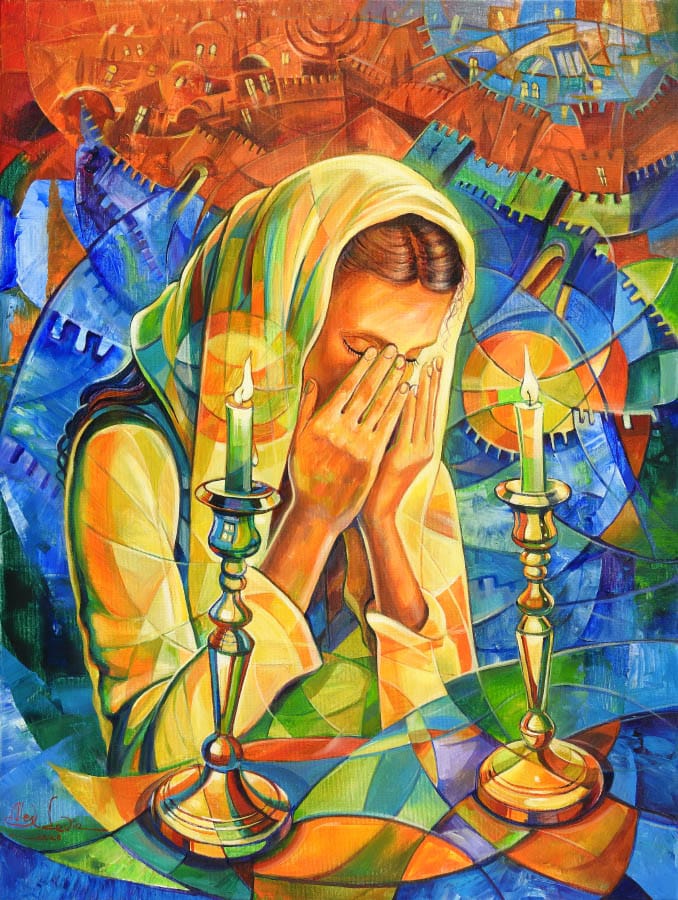
Alex Levin’s Shabbat collection includes several works centered on women lighting candles, including contemporary interpretations that connect Shabbat with Jerusalem.
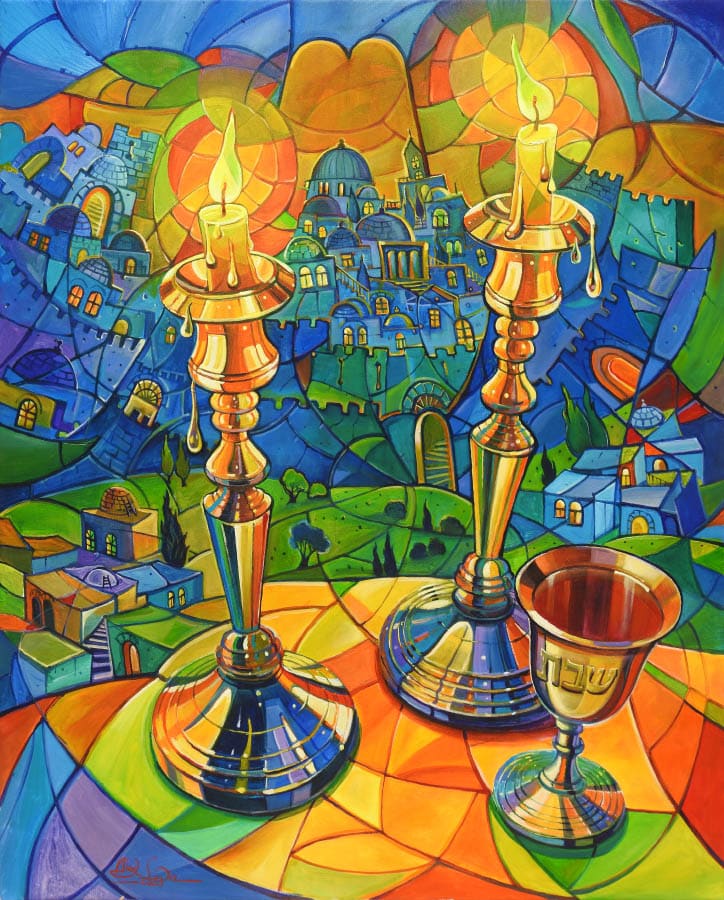
Why Light Is So Important in Shabbat Art
Light plays an especially important role in Jewish art because it can function both realistically and symbolically.
In a realistic scene, candles illuminate the room.
In a more symbolic painting, that same light can represent holiness, hope, peace, memory, or spiritual connection.
An artist can therefore use the physical candle flame as the starting point for something larger.
The light may become warmer or brighter than it would appear naturally.
It may seem to surround the figure.
It may merge into an abstract background or illuminate Jerusalem.
In contemporary Jewish art, the difference between literal light and symbolic light can almost disappear.
The candle remains recognizable, but the atmosphere becomes the true subject.
Women and the Tradition of Shabbat Candle Lighting
The image of a woman lighting Shabbat candles has become an important subject in Jewish visual culture.
The scene can be portrayed in many ways.
A traditional work may focus on the details of the room, clothing, candlesticks, table, and surrounding family.
A contemporary work may simplify almost everything except the woman’s gesture and the light.
In both cases, the moment is immediately recognizable.
The artistic strength of the subject comes partly from its intimacy.
There is no need for a large crowd or dramatic landscape.
A single figure and two candles can tell a complete story about faith, family, and continuity.
Shabbat and the Jewish Family
Shabbat is also closely connected with family life.
The weekly gathering creates a natural subject for Jewish artists because it brings generations together.
Parents, children, grandparents, and guests may share the same table.
A painting can therefore communicate Jewish tradition without relying on religious symbols alone.
The relationships between the people become part of the subject.
A child watching a parent.
A grandparent seated at the table.
A family listening to Kiddush.
These moments visually express how traditions are learned.
They also connect Shabbat art with one of the central themes found throughout Alex Levin’s Jewish life paintings: the transmission of Jewish identity from one generation to another.
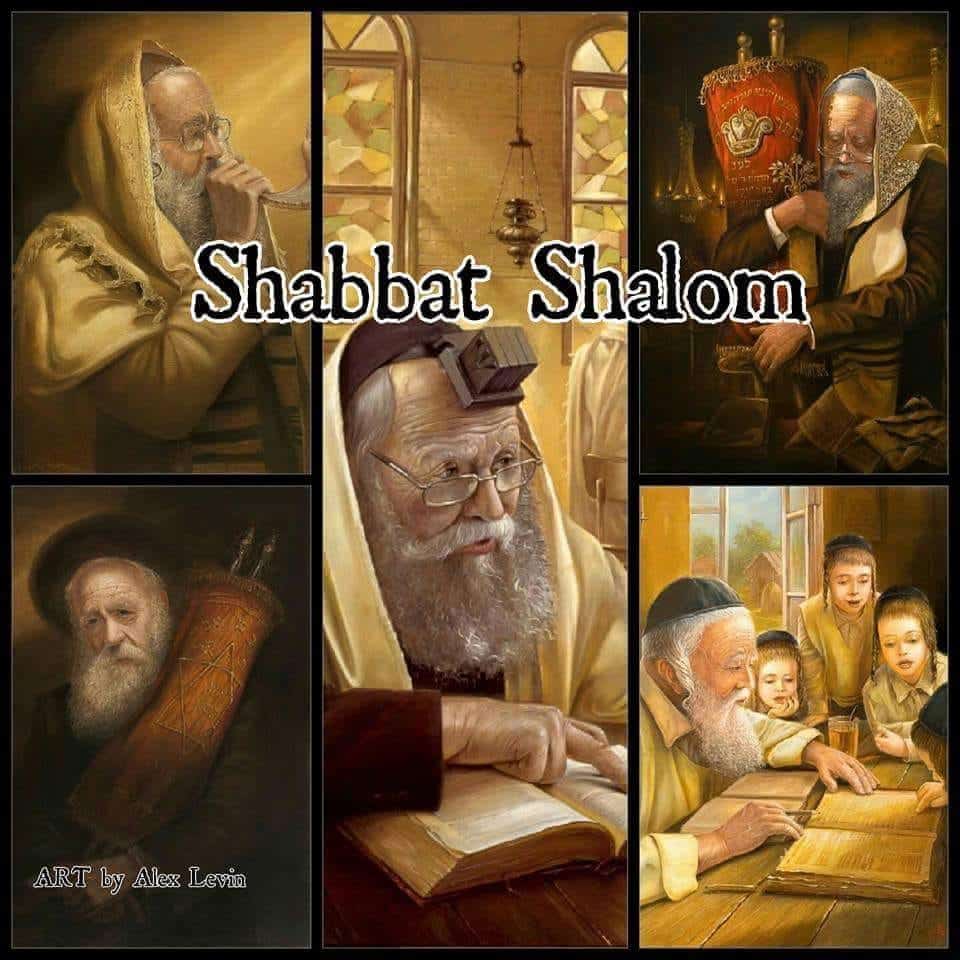
The Shabbat Table in Jewish Art
The Shabbat table gives artists another recognizable group of visual elements.
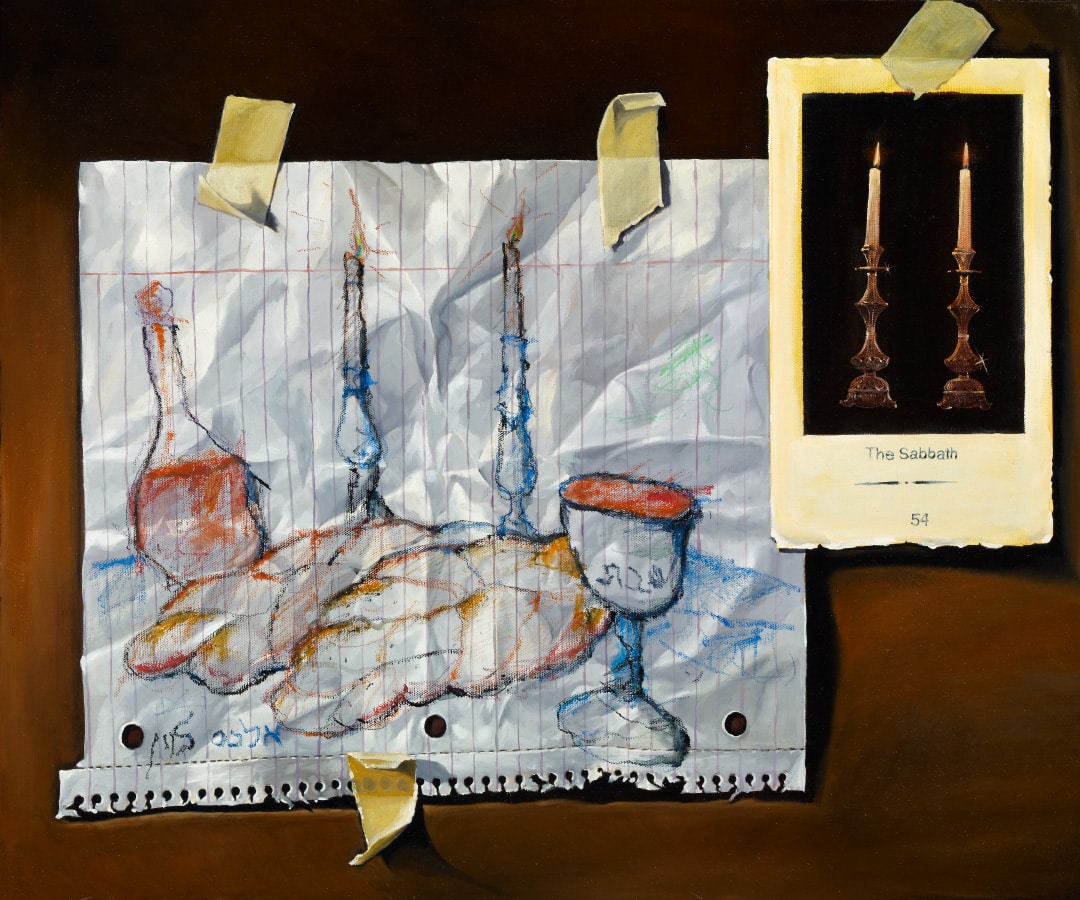
Candlesticks, challah, wine, a white tablecloth, books, and family members can immediately establish the setting.
But the strongest Shabbat paintings do more than document these objects.
They communicate atmosphere.
The table can feel warm and welcoming.
The surrounding room can become quieter.
Figures may be engaged in prayer, conversation, or simply being together.
This makes the Shabbat table particularly suited to paintings concerned with home and family.
Rather than depicting Judaism through a distant historical event, the artist portrays Jewish tradition as something practiced within everyday life.
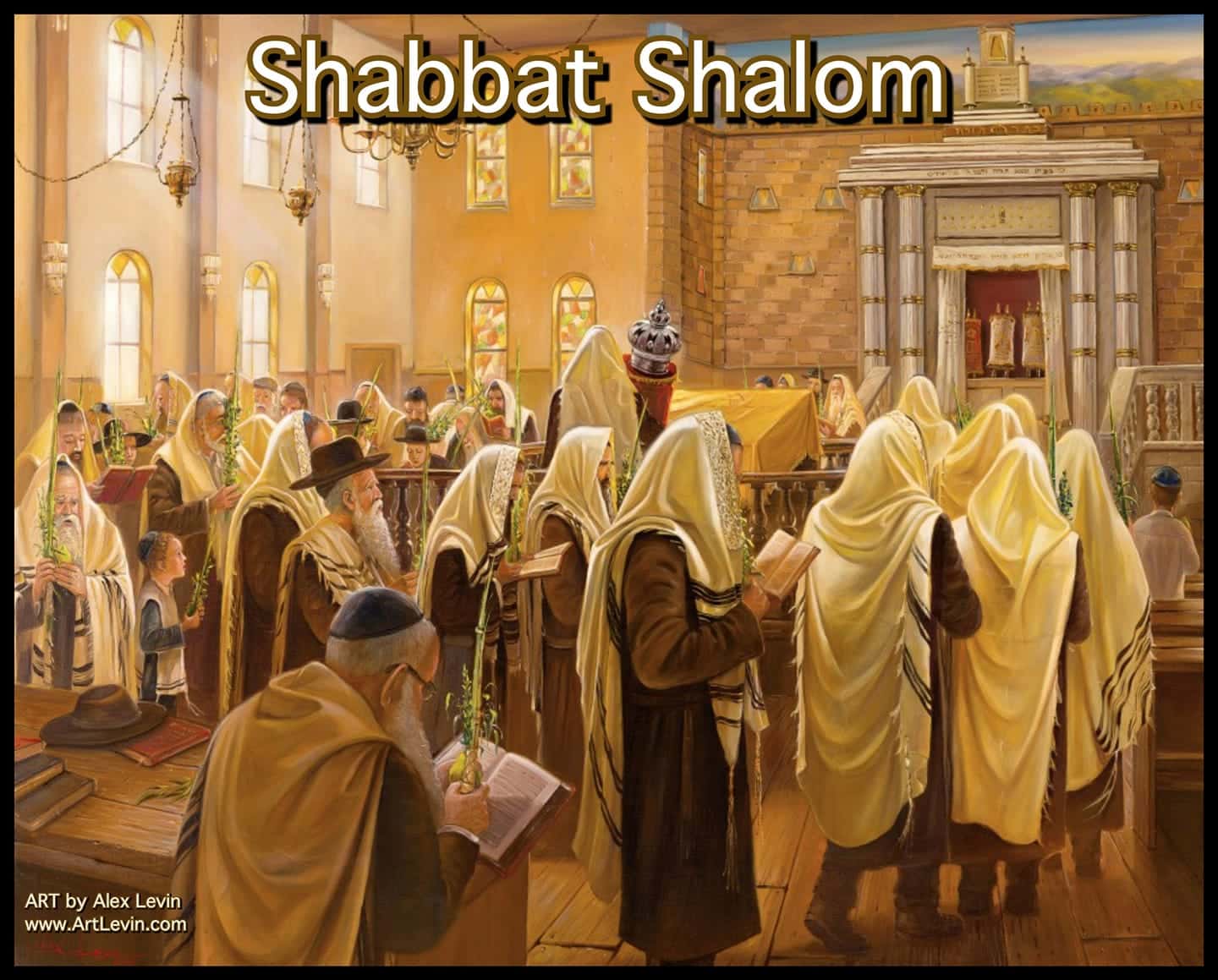
Shabbat Prayer and the Synagogue
Shabbat is experienced not only at home but also within the synagogue and community.
Prayer scenes give artists a very different visual environment.
Instead of candlelight and the family table, the composition may include Torah scrolls, tallitot, prayer books, synagogue architecture, and groups of worshippers.
These elements naturally connect Shabbat art with Torah art.
The same painting can communicate prayer, community, study, and sacred time.
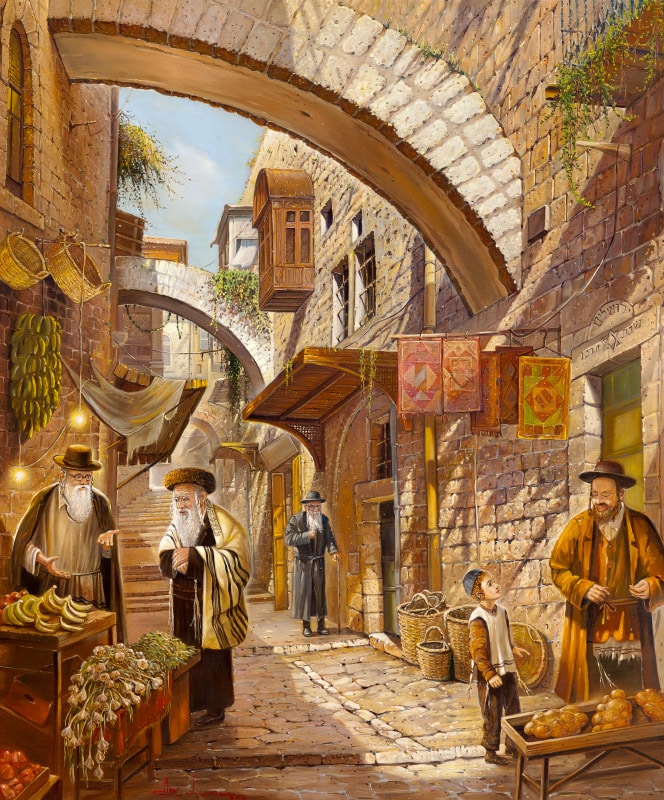
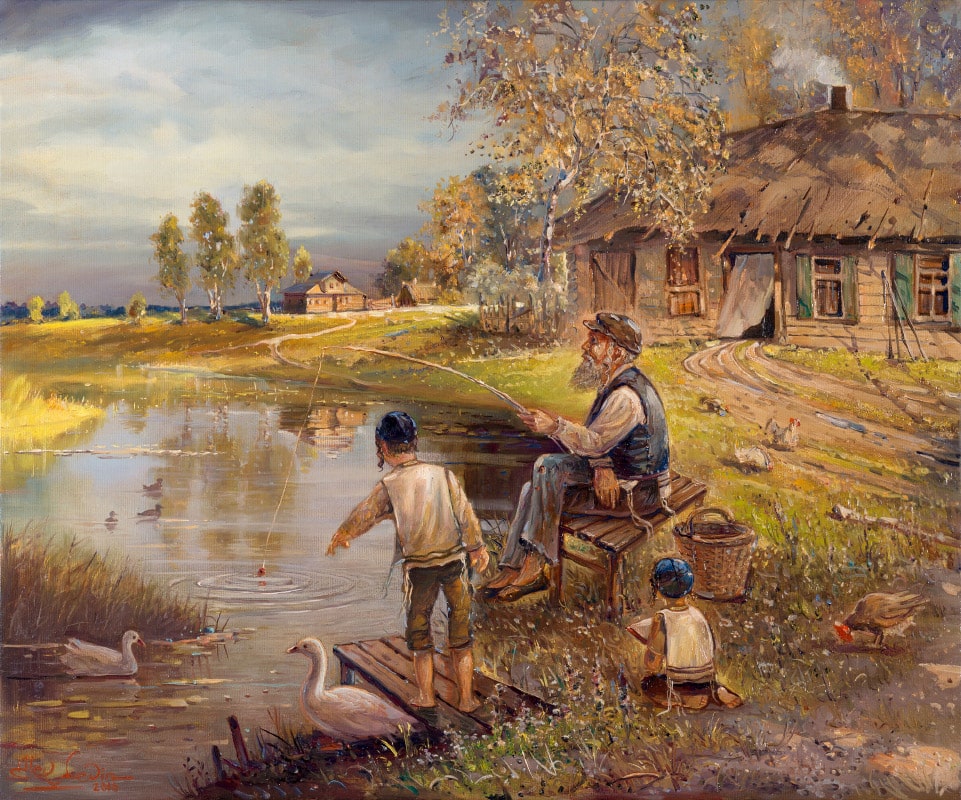
Shabbat in the Shtetl
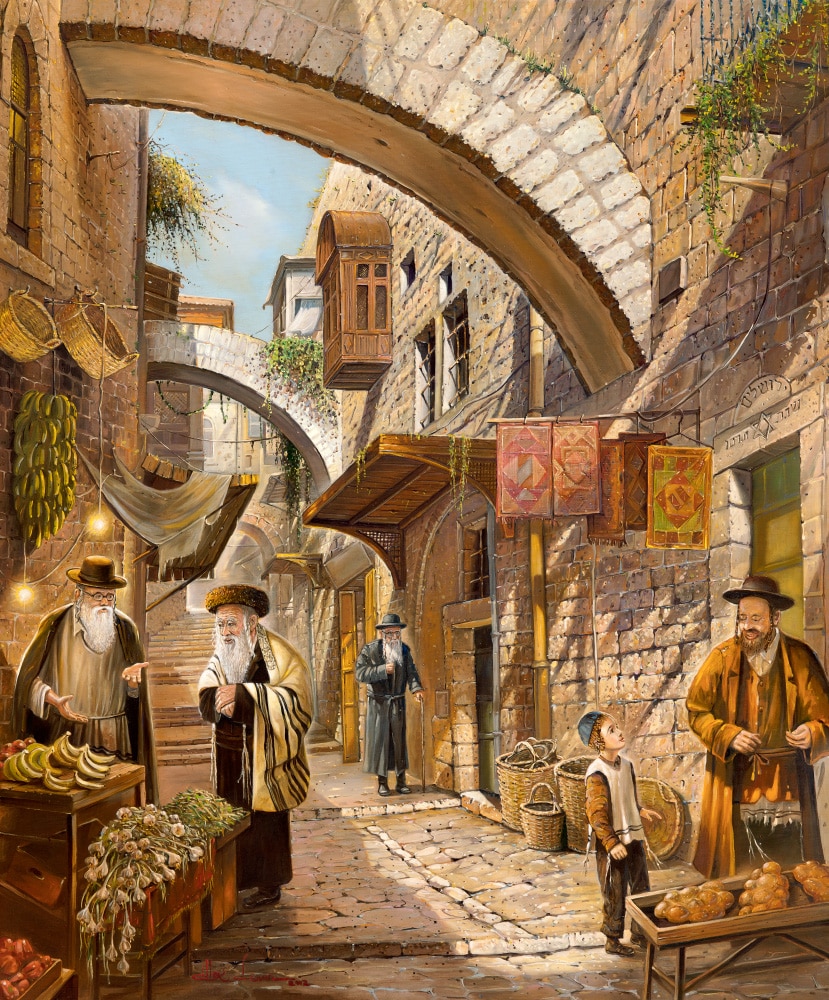
Shabbat takes on another dimension when portrayed within historical shtetl life.
For Jewish communities in Eastern Europe, Shabbat changed the rhythm of the entire town.
Weekday work slowed or stopped.
Workshops closed.
Families prepared their homes.
People attended synagogue and gathered for meals.
For an artist, this creates a powerful contrast between weekday and Shabbat scenes.
A weekday shtetl painting may show a tailor, shoemaker, market, classroom, or craftsman at work.
A Shabbat scene can become quieter and more reflective.
The clothing may change.
The light may become warmer.
Families and community replace the activity of work.
Alex Levin’s broader shtetl collection includes scenes connected with Sabbath preparations and Shabbat life, making Shabbat part of the larger story of Jewish community and family tradition.
Shabbat in Jerusalem
Jerusalem gives Shabbat art a completely different setting.
As Friday evening approaches, the ancient city becomes connected visually with one of Judaism’s oldest weekly traditions.
An artist can combine familiar Shabbat imagery with Jerusalem stone, the Kotel, Old City walls, or the city skyline.
The combination is powerful because both subjects already carry strong associations with Jewish history and spirituality.
Shabbat provides the element of time.
Jerusalem provides the element of place.
Together, they can create artwork that connects Jewish ritual with the Holy City.
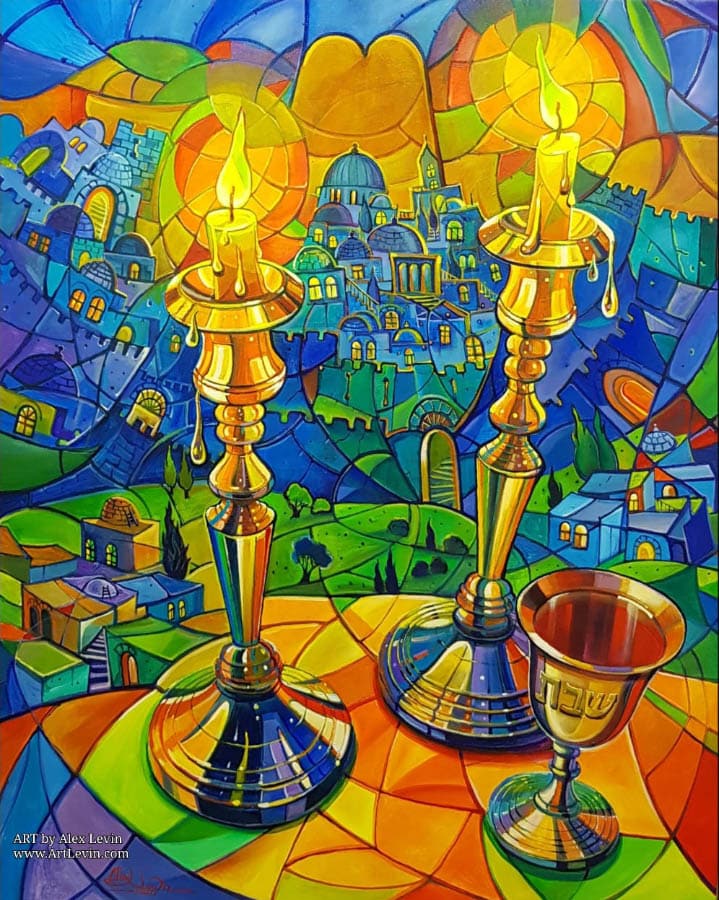
Alex Levin has explored this relationship directly in contemporary works such as Shabbat in Jerusalem and other Shabbat-themed Jerusalem paintings.
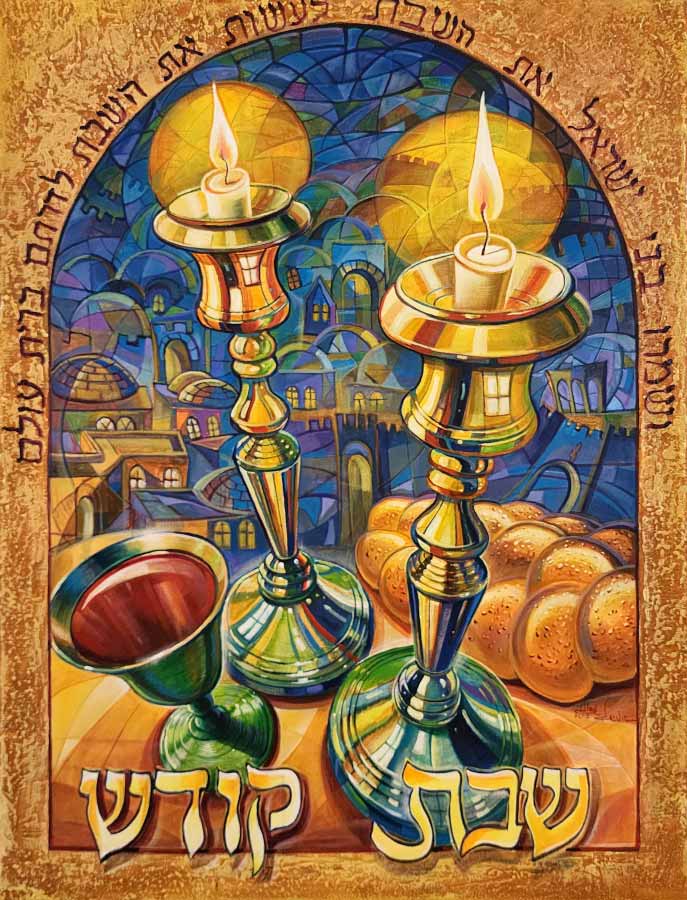
Shabbat in Contemporary Jewish Art
Shabbat art does not need to look traditional.
A contemporary artist can preserve the meaning of Shabbat while completely changing the visual language.
Figures may become simplified.
Jerusalem may appear as abstract forms.
Candles may produce exaggerated areas of light and color.
Recognizable objects can merge with symbolic imagery.
This freedom allows artists to communicate the feeling of Shabbat rather than documenting every detail of a traditional scene.
Alex Levin’s current Shabbat collection includes both representational and abstract Jewish works, giving the same subject different visual interpretations.
Explore Contemporary Jewish Art
Shabbat, Memory and Jewish Identity
Shabbat paintings can become especially meaningful because many viewers already have personal memories connected with the subject.
The image of candle lighting may recall a mother or grandmother.
A Shabbat table may resemble a childhood home.
A synagogue scene may recall a particular community.
For someone whose family came from Eastern Europe, a shtetl Shabbat painting may connect with stories about earlier generations.
This personal recognition changes the way the artwork is experienced.
The viewer is not necessarily looking only at someone else’s Shabbat.
The painting may activate memories of their own.
That is one reason Jewish life art can have an emotional role beyond decoration.
Alex Levin’s Approach to Shabbat
Alex Levin’s Shabbat paintings move between realism and contemporary interpretation.
Some scenes depend on recognizable gestures and Jewish traditions.
Others use stronger abstraction, color, and symbolic light.
Yet the underlying themes remain similar.
Shabbat becomes a moment of connection – between family members, between Jewish tradition and modern life, between one generation and the next, and sometimes between Shabbat and Jerusalem itself.
Light is particularly important.
A candle may begin as a small element of the composition but become the source around which the entire painting is organized.
This makes Shabbat especially suited to Levin’s broader interest in illumination and atmosphere.
Shabbat Art in the Jewish Home
Shabbat artwork can work naturally in many areas of a Jewish home.
A candle-lighting scene may be especially appropriate near a dining room or family gathering space.
A quieter composition may work in a bedroom, study, or hallway.
A contemporary Shabbat painting can fit naturally into a modern living room without losing its Jewish meaning.
For collectors, the most important question is often not whether a painting matches the furniture.
It is which aspect of Shabbat creates the strongest personal connection.
For one person, that may be candle lighting.
For another, it may be Jerusalem.
For someone else, it may be the memory of a family table.
A meaningful Shabbat painting can bring that connection into the home throughout the entire week.
Explore Related Jewish Art
- Shabbat Paintings
- Jewish Life Paintings
- Shtetl Paintings
- Torah Paintings
- Contemporary Jewish Art
- Jerusalem Paintings
Frequently Asked Questions About Shabbat in Jewish Art
What does Shabbat symbolize in Jewish art?
Shabbat art can symbolize rest, holiness, peace, family, faith, continuity, community, and the separation between ordinary time and sacred time.
Why are Shabbat candles common in Jewish art?
Candle lighting is one of the most recognizable visual traditions associated with the beginning of Shabbat. The flame also gives artists a natural way to explore themes of light, warmth, spirituality, and family.
What is Shabbat candle art?
Shabbat candle art portrays or interprets the lighting of candles before Shabbat. It may be realistic, traditional, contemporary, or abstract.
What is the difference between Shabbat and Shabbos?
They refer to the same Jewish Sabbath. Shabbat is the Hebrew pronunciation, while Shabbos reflects a traditional Ashkenazi/Yiddish pronunciation.
What subjects commonly appear in Shabbat paintings?
Common subjects include candle lighting, the Shabbat table, challah and wine, family gatherings, synagogue prayer, Torah reading, Jerusalem, and historical scenes of Jewish community life.
Why is light important in Shabbat paintings?
Candlelight is physically part of the Shabbat setting, but artists can also use it symbolically to express holiness, peace, warmth, hope, faith, and continuity.
Can Shabbat art be contemporary or abstract?
Yes. Contemporary Jewish artists may simplify figures, intensify colors, combine Shabbat with Jerusalem imagery, or use candlelight and symbolic forms rather than portraying a completely realistic scene.
Can Shabbat paintings work in a modern home?
Yes. Traditional paintings can suit classic interiors, while contemporary or abstract Shabbat artwork can integrate easily into modern spaces.
Where should Shabbat artwork be displayed?
There is no required location. Many collectors choose dining rooms, living rooms, kitchens, family areas, studies, or other places associated with gathering and Jewish life.