A painting can connect a contemporary home to Jewish memory without making the room feel formal. Sometimes that connection comes through a recognizable Jerusalem skyline. Sometimes it is a wash of gold, a suggestion of stone, or a small figure moving toward the Kotel. Choosing well starts with noticing what holds your attention before considering how neatly it matches the sofa.
Begin with the feeling you want
Think about where the artwork will live and what you want to experience there. A dining room may suit a lively composition that invites conversation. A bedroom might benefit from quieter colors and open space. In an entrance hall, one confident painting can establish a welcoming atmosphere before a visitor reaches the rest of the home.
When searching for modern jewish art sale options, distinguish artwork offered for purchase from an advertised discount. The phrase alone tells you nothing about price reductions. Look instead at the artist, the subject, the medium, and what the purchase includes. A strong choice should make sense after the excitement of browsing has passed.






Look beyond familiar outlines
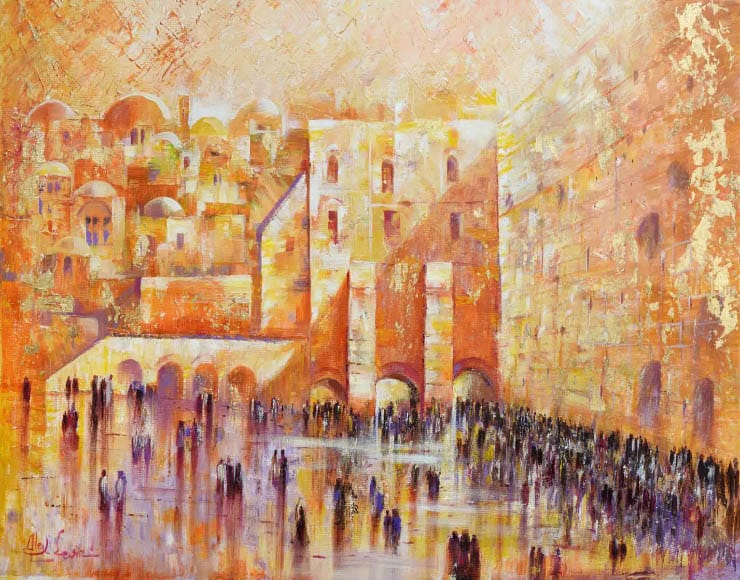
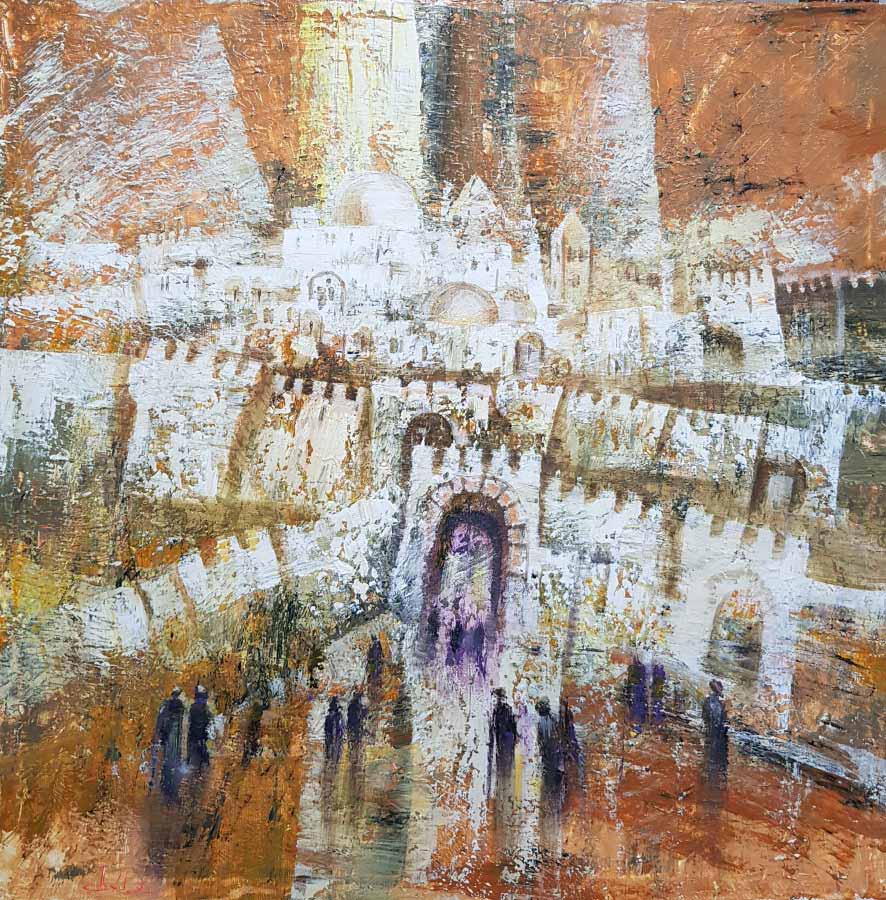
Abstract jerusalem paintings offer a way to bring the city into a room through rhythm and color. Buildings may become overlapping planes, while light takes on as much importance as architecture. View the work from a distance, then examine the details. Does the composition still feel balanced when you stop identifying individual landmarks?
Contemporary Jerusalem paintings can also retain recognizable streets and sacred places while presenting them through a personal visual language. Alex Levin’s work is one starting point for exploring that relationship between Jewish subjects and contemporary expression. Compare several compositions before deciding which interpretation feels closest to your own connection with the city.






Buy with the room in mind
Measure the available wall and mark the proposed outside dimensions with removable tape. Include the frame in your measurements. A painting that looks substantial on a screen may feel small above a wide sideboard, while an oversized piece can overwhelm a narrow passage. View the wall from the place where you will usually sit or stand.
Read the product description carefully. An original painting and a reproduction offer different ownership experiences, and neither should be confused with the other. Confirm the surface, dimensions, framing, hanging requirements, and delivery arrangements. If anything is unclear, ask before ordering. Good practical information lets you concentrate on the artwork itself rather than resolving surprises afterward.
Frequently Asked Questions
Where can I find modern Jewish art for sale? Browse artists’ websites, established galleries, and specialist Judaica collections. Art Levin’s contemporary Jewish art collection is one place to begin. Check the description of each individual work before purchasing.
What makes contemporary Jewish art different from traditional Judaica art? Contemporary work often explores Jewish subjects through abstraction, unusual color, or personal interpretation. Traditional Judaica frequently uses familiar imagery and established forms, although the two approaches can overlap.
How do I choose abstract Jerusalem paintings for my home? Start with the mood and scale of the room. Look for a composition that interests you independently of its colors, then confirm that its dimensions and framing suit your wall.
What should I look for when buying contemporary Jerusalem paintings? Review the artist’s identity, medium, size, and whether the item is an original or reproduction. Study detail images and clarify framing, delivery, and return terms before ordering.
Are contemporary Jewish paintings suitable for modern home décor? Yes. Their color, geometry, and expressive treatment can work well with contemporary furniture. Give the painting enough visual space so its meaning and composition remain easy to appreciate.