For centuries, the shtetl was home to Jewish communities throughout Eastern Europe.
These small towns and villages were places of family, work, study, prayer, celebration, hardship, and deeply rooted traditions. Much of that world disappeared during the twentieth century, but its stories remain part of Jewish memory.
Art offers one way to bring those stories back into view.
For Israeli artist Alex Levin, paintings of shtetl life are not simply images of old streets or historic clothing. They are stories about people – grandparents and grandchildren, students and teachers, craftsmen, musicians, families preparing for Shabbat, and communities passing Jewish traditions from one generation to the next.
Explore Alex Levin’s Shtetl Paintings

What Was a Shtetl?
The word shtetl comes from Yiddish and refers to a small town.
The term became especially associated with Jewish towns and communities in Eastern Europe, where generations of Jewish families developed distinctive religious, cultural, and communal ways of life.
A shtetl was not one single type of place.
Some communities were very small. Others were active commercial towns filled with shops, workshops, synagogues, schools, markets, and tradespeople.
Jewish life centered around family, religious observance, education, work, and community.
The shtetl therefore became much more than a geographical location.
In Jewish memory, it represents an entire way of life.
Why Shtetl Life Became an Important Subject in Jewish Art
Artists are often drawn to subjects that preserve something vulnerable to being forgotten.
Shtetl art does exactly that.
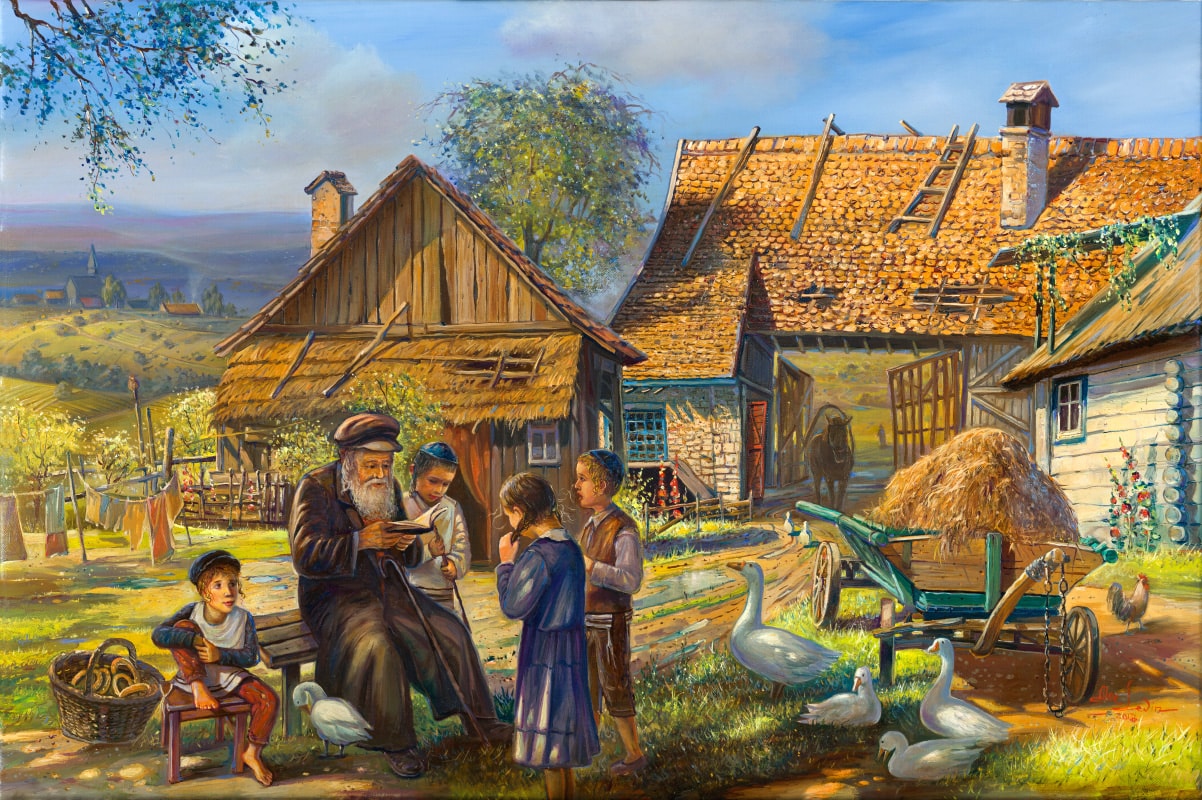
A painting can show details that historical descriptions alone cannot fully communicate – the intimacy of a small room, children gathered around a teacher, an elderly craftsman at work, musicians playing at a celebration, or a grandfather walking through the village with his grandchildren.
These everyday moments help transform history from an abstract idea into something human.
Rather than focusing only on major historical events, shtetl paintings can show how people actually lived.
Family and the Connection Between Generations
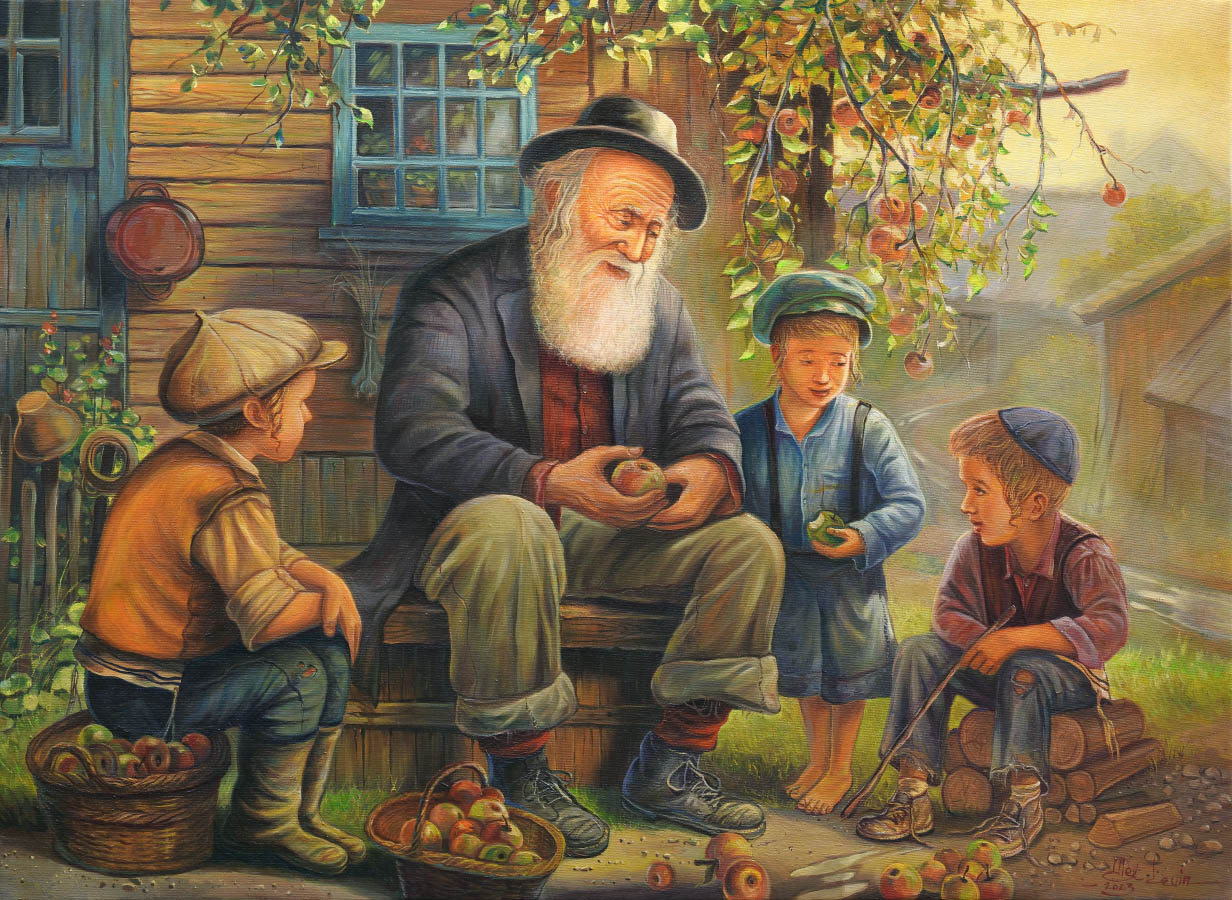
One of the strongest themes in Alex Levin’s shtetl paintings is the relationship between generations.
Grandparents appear with grandchildren.
Older craftsmen teach younger family members.
Adults tell stories.
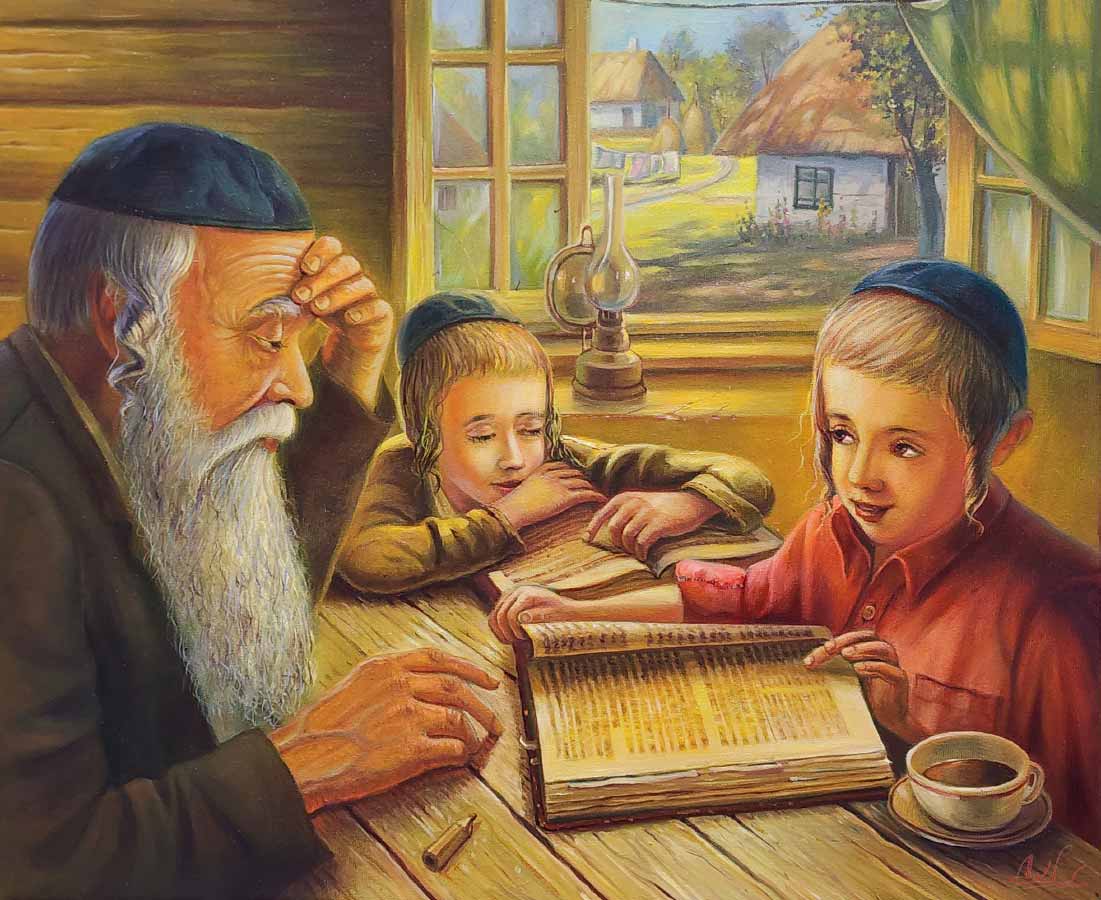
Children study while parents or grandparents watch.
These scenes reflect an essential part of Jewish continuity: traditions survive because someone teaches them to the next generation.
The act itself may appear ordinary.
A grandfather showing a child how to work with wood or repair a clock does not initially look like a religious scene.
Yet it can represent something much larger.
Skills, stories, values, family memories, and Jewish identity are all being passed forward.
This makes the relationship between young and old one of the most meaningful subjects in shtetl art.
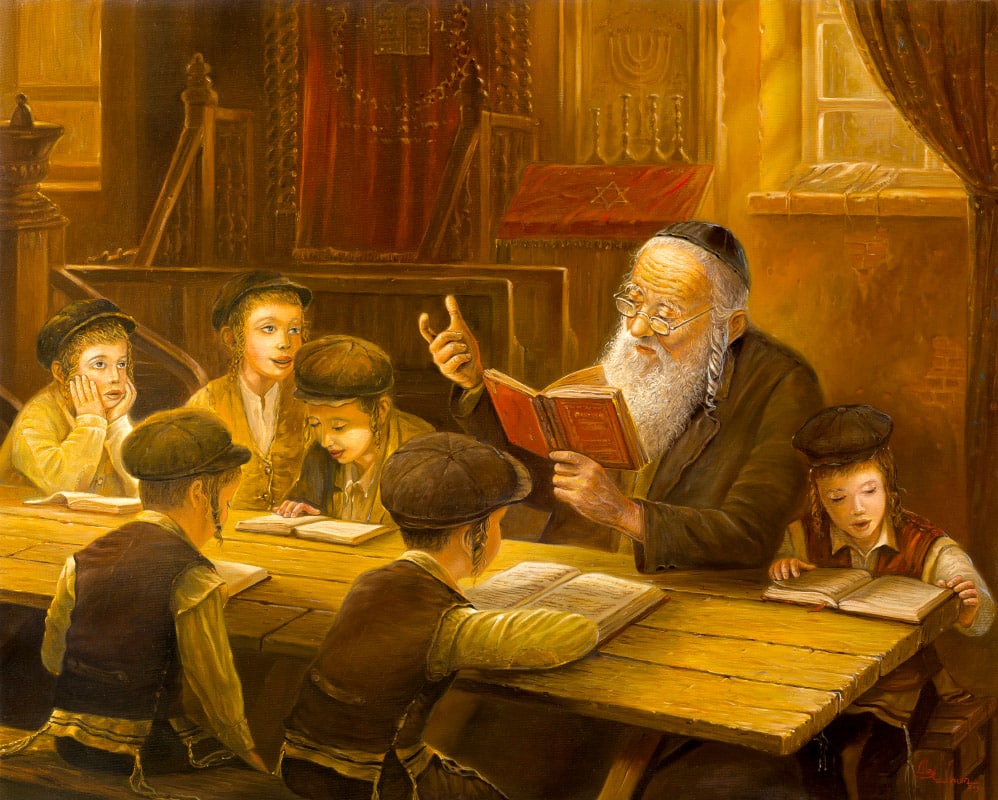
Torah Study and the Cheder
Education occupied an important place in traditional Jewish community life.
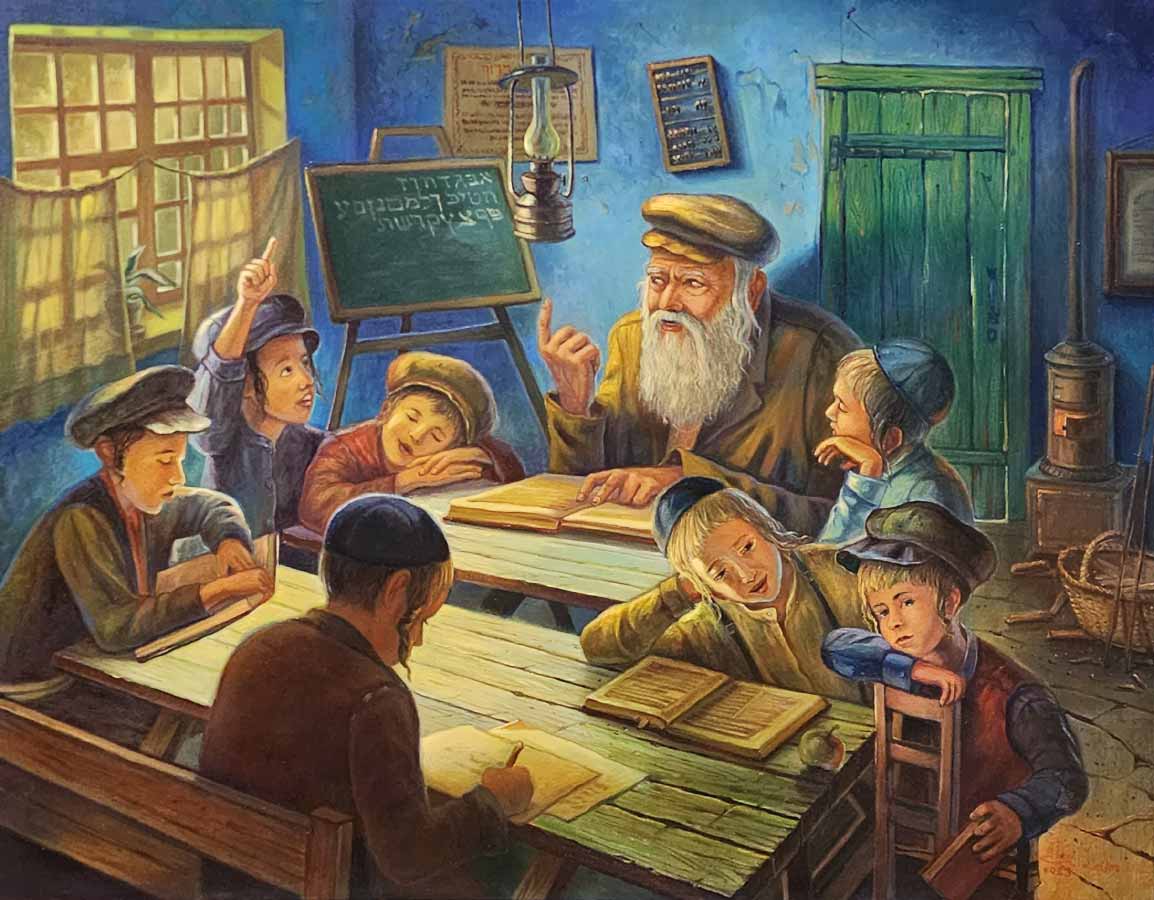
The cheder was associated with the education of Jewish boys, particularly the study of Hebrew and religious texts.
For an artist, the cheder provides a powerful setting.
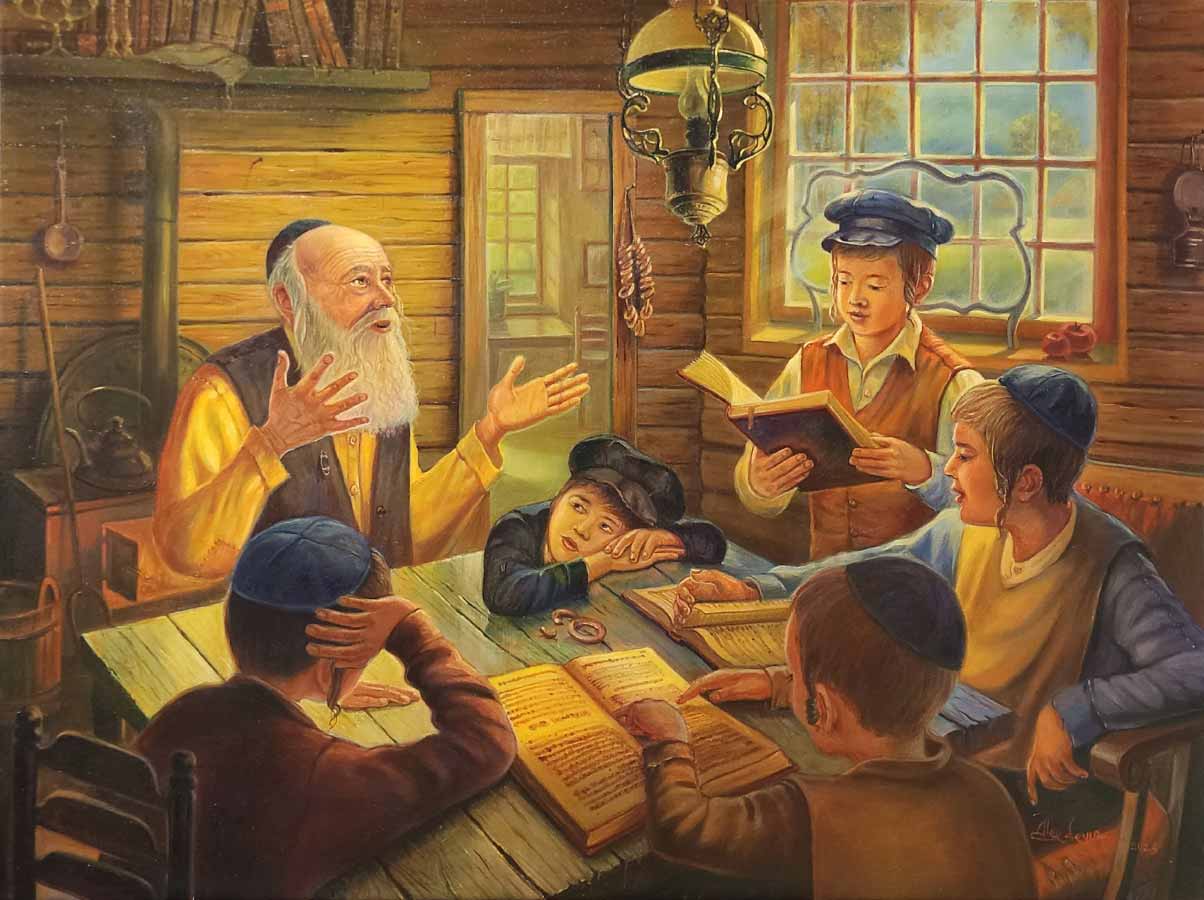
Students gathered around books, a teacher explaining a lesson, wooden tables, modest interiors, and natural light create scenes that are visually intimate while also representing the importance placed on learning.
In Alex Levin’s paintings, Jewish study is often portrayed as something shared.
A teacher and students, or grandparents and grandchildren studying together, visually express the transmission of knowledge across generations.
Jewish Craftsmen and Everyday Work
Shtetl life was not defined only by prayer and study.
People worked.
Tailors, shoemakers, carpenters, clockmakers, merchants, and other craftsmen were part of everyday community life.
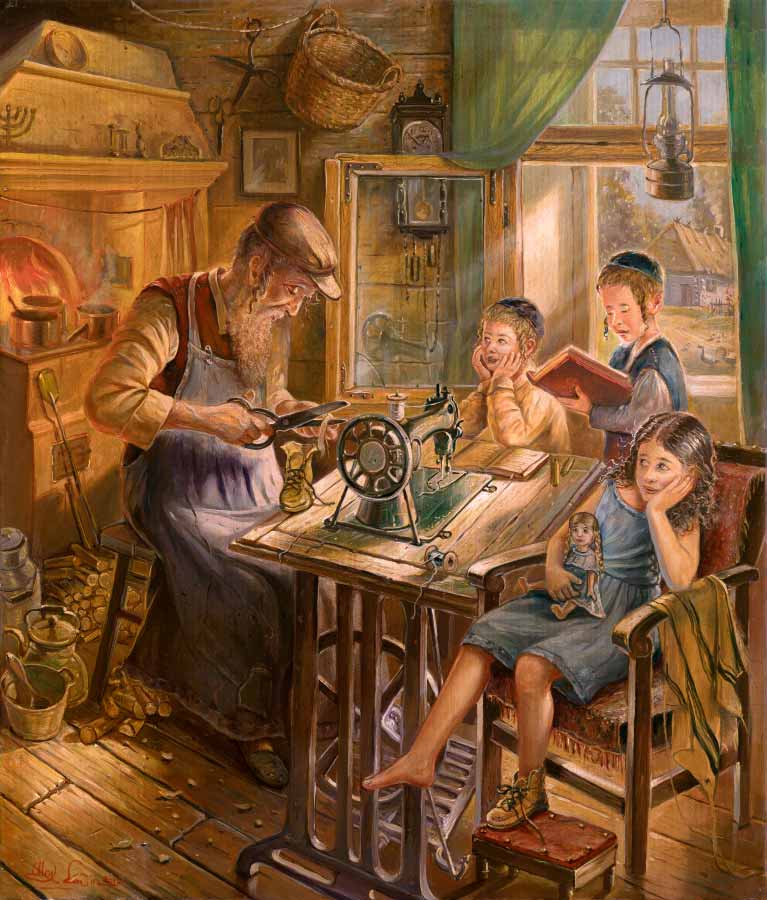
These trades provide especially rich subjects for painting because the workshop itself tells a story.
Tools hang from walls.
Fabric, wood, leather, clocks, or other materials surround the worker.
Children may watch and learn.
Light enters a modest room while someone concentrates on work that may have been practiced within the family for generations.
By painting these moments, the artist preserves another part of Jewish history – not only how people worshipped, but how they lived and earned a livelihood.
Shabbat in the Shtetl
Shabbat changed the rhythm of Jewish community life.
Work stopped.
Families gathered.
Candles were lit.
People went to synagogue, shared meals, prayed, and spent time together.
For an artist, the contrast between weekday life and Shabbat provides an opportunity to create a different atmosphere.
A workshop scene may emphasize activity and labor.
A Shabbat scene can emphasize quiet, family, warmth, and light.
The glow of candles or the softer atmosphere of a Shabbat morning can become part of the emotional meaning of the painting.
Music, Weddings and Celebration
Shtetl life also included celebration.
Weddings, holidays, birthdays, dancing, and music brought communities together.
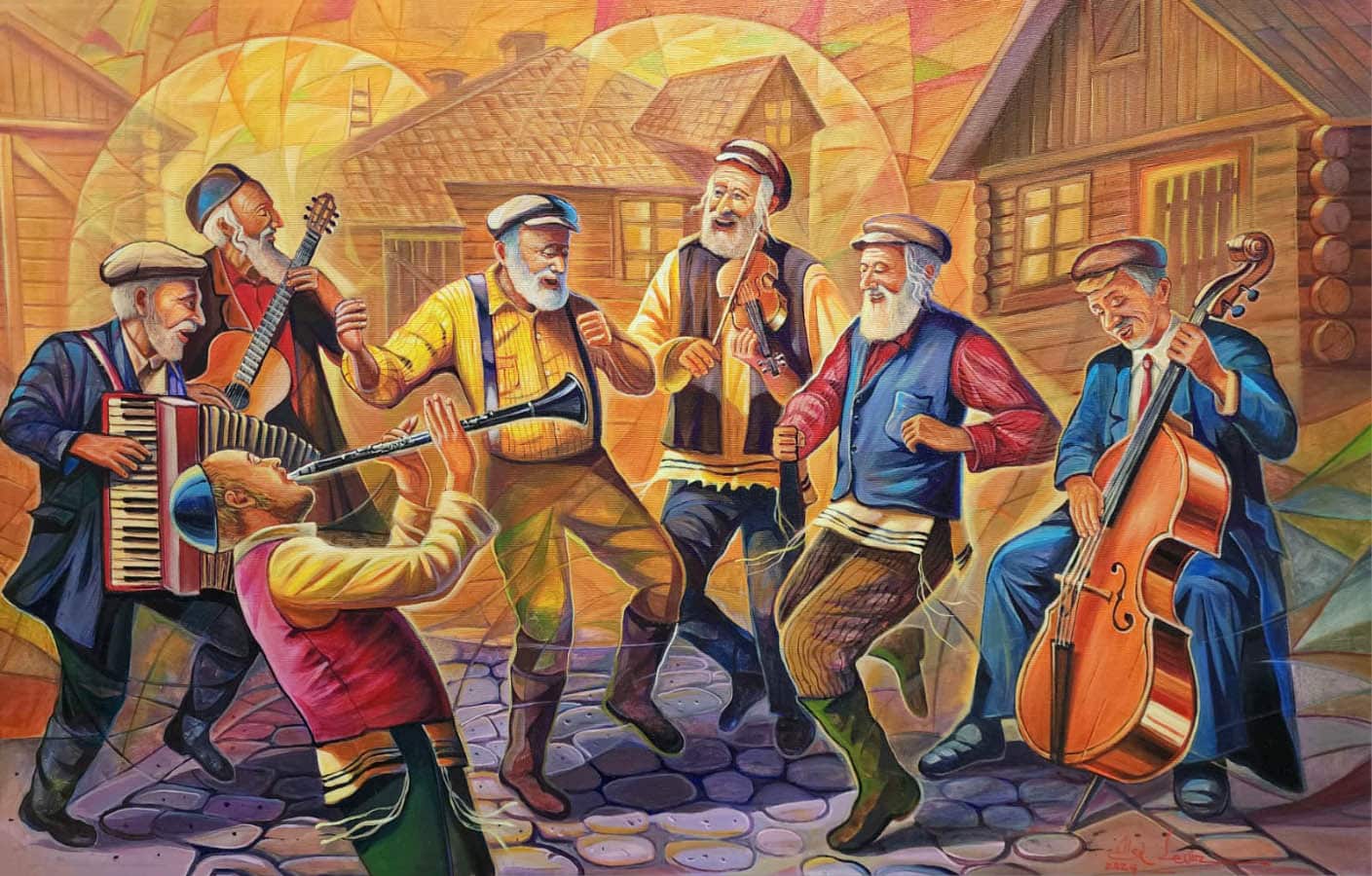
Klezmer musicians became particularly associated with Jewish celebrations in Eastern Europe.
In paintings, musicians bring movement to the scene.
The position of the instruments, the expressions of the musicians, dancing figures, and surrounding community can make the viewer almost imagine the sound.
Wedding scenes offer another opportunity to portray Jewish tradition through people rather than symbols alone.
The chuppah, dancing, family, and gathered community transform the painting into a story about joy and Jewish continuity.
Children in Shtetl Art
Children appear frequently in Alex Levin’s shtetl paintings.
That is significant.
If shtetl paintings showed only elderly people and vanished buildings, they could easily become images concerned only with the past.
Children change the meaning.
A child studying, listening to a grandfather, learning a trade, singing, playing, or participating in Shabbat introduces the idea of a future.
The painting becomes not simply:
This is how Jewish people once lived.
It becomes:
This is how traditions were carried forward.
That difference is central to many of Alex Levin’s Jewish life paintings.
Memory and the Lost World of Eastern European Jewry
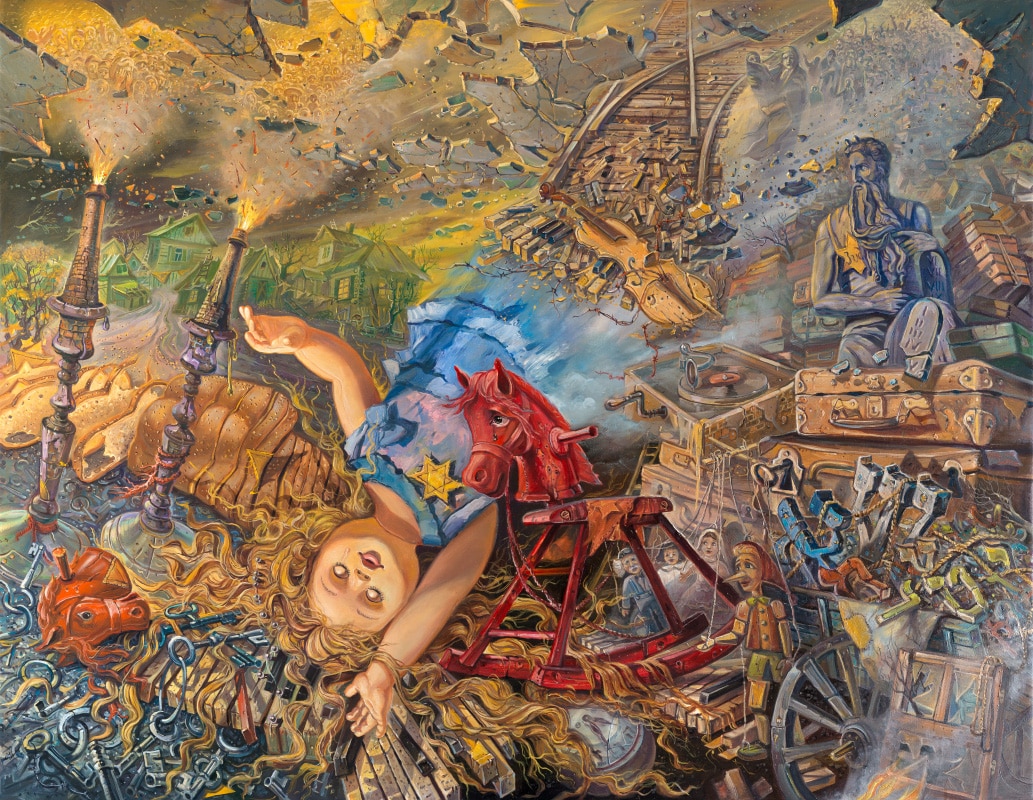
It is impossible to discuss shtetl life without acknowledging what happened to the Jewish communities of Eastern Europe.
The Holocaust destroyed countless communities and murdered millions of Jewish people.
Towns that had supported Jewish life for generations were emptied or fundamentally changed.
As a result, paintings of shtetl life inevitably exist alongside historical memory.
But remembrance does not need to portray only destruction.
Showing people studying, working, laughing, celebrating, playing music, and spending time with family can itself be an important form of remembrance.
It preserves a Jewish world through the lives people lived rather than only through the way that world ended.
Shtetl Art and Nostalgia
Shtetl imagery can create powerful nostalgia.
For some viewers, these scenes recall stories told by parents or grandparents.
Others may recognize family traditions, clothing, occupations, religious practices, or environments connected to their ancestors.
But nostalgia should not mean imagining that shtetl life was always easy.
Jewish communities experienced poverty, discrimination, political instability, and periods of violence.
A meaningful artistic interpretation can acknowledge that reality while still portraying warmth, humor, community, faith, and family.
That balance gives shtetl art emotional depth.

Alex Levin’s Shtetl Paintings
Alex Levin approaches shtetl life primarily through people.
Buildings and interiors create the setting, but the human relationships usually carry the story.
A grandfather supports a child.
A teacher explains a lesson.
A craftsman shares his knowledge.
Musicians perform.
Families celebrate.
Children learn.
These scenes turn Jewish history into personal moments.
Levin’s use of detailed figures, period settings, warm light, and expressive color helps create the feeling that the viewer is looking through a window into another time.
Some newer works also bring contemporary artistic elements into traditional shtetl subjects, demonstrating that Jewish historical memory can continue to be interpreted through different visual styles.
Explore the complete Shtetl Paintings collection
From Shtetl Life to Jewish Life Today
The physical world of the European shtetl largely belongs to history, but many of the themes represented in shtetl art remain familiar.
Parents still teach children.
Grandparents still tell stories.
Families still gather for Shabbat.
Jewish children still study Torah.
Weddings still bring families and communities together.
Traditions continue to move between generations.
That continuity is one reason shtetl art remains meaningful.
The clothes, houses, and streets may belong to another time, but many of the relationships do not.
Shtetl Paintings in a Jewish Home
For many collectors, a shtetl painting has a more personal meaning than a conventional landscape.
It may represent family origins in Poland, Ukraine, Lithuania, Belarus, Romania, Hungary, or another part of Eastern Europe.
It may recall stories about grandparents or great-grandparents.
Or the collector may simply connect with the values represented in the scene – family, learning, tradition, faith, craftsmanship, or community.
Different scenes also create very different moods.
A cheder painting can work naturally in a study, library, school, or office.
A warm family scene may suit a living or dining room.
A klezmer or wedding painting can bring movement and joy to a larger social space.
The best choice is usually the scene whose story feels familiar.
Explore Related Jewish Art
- Shtetl Paintings
- Jewish Life Paintings
- Torah Paintings
- Shabbat Paintings
- Jewish Portraits
- Contemporary Jewish Art
Frequently Asked Questions About Shtetl Life and Art
What does shtetl mean?
Shtetl is a Yiddish word meaning a small town. The term is especially associated with towns and villages in Eastern Europe that had significant Jewish populations and distinctive Jewish communal life.
Where were Jewish shtetls located?
Shtetls were found across many parts of Eastern and Central Europe, particularly in territories that today include Poland, Ukraine, Belarus, Lithuania, Romania, and surrounding regions.
What was everyday life like in a shtetl?
Shtetl life varied considerably, but communities commonly included synagogues, Jewish schools, shops, workshops, markets, craftsmen, merchants, families, religious observance, and communal organizations.
Why are shtetls important in Jewish history?
For generations, shtetls were home to large parts of Eastern European Jewish life. They played an important role in Jewish religious practice, education, culture, language, family life, and community.
Why are shtetl paintings popular in Jewish art?
Shtetl paintings can preserve visual memories of a world that has largely disappeared. They also portray universal themes such as family, learning, work, music, faith, and relationships between generations.
What subjects commonly appear in shtetl paintings?
Common subjects include Torah study, cheder classrooms, rabbis, grandparents and grandchildren, craftsmen, markets, Jewish weddings, klezmer musicians, Shabbat, holidays, and scenes of everyday village life.
What is a cheder?
A cheder was a traditional Jewish school, particularly associated with elementary religious education and the study of Hebrew and Jewish texts.
Why do grandparents and children appear frequently in Jewish shtetl art?
The relationship visually represents the transmission of knowledge, traditions, values, stories, and Jewish identity from one generation to another.
Is shtetl art only about the Holocaust?
No.
The Holocaust is inseparable from the history of Eastern European Jewry, but shtetl art can also preserve memories of Jewish life before the destruction – education, family, work, faith, music, celebrations, and everyday community life.