A portrait can show what a person looks like.
A meaningful portrait tries to show something more.
Expression, posture, hands, clothing, light, and surroundings can suggest character, memory, faith, wisdom, vulnerability, or strength.
In Jewish art, portraiture can also connect an individual person with a much larger story.
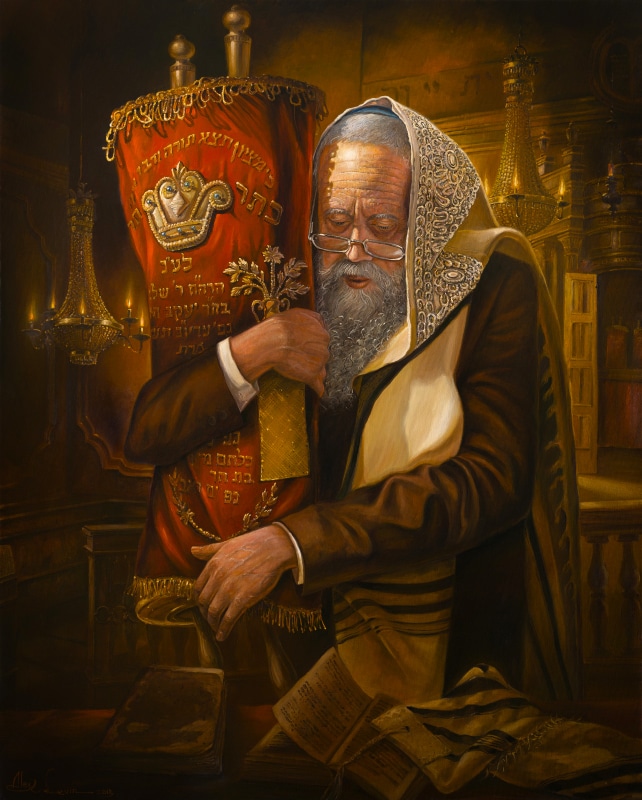
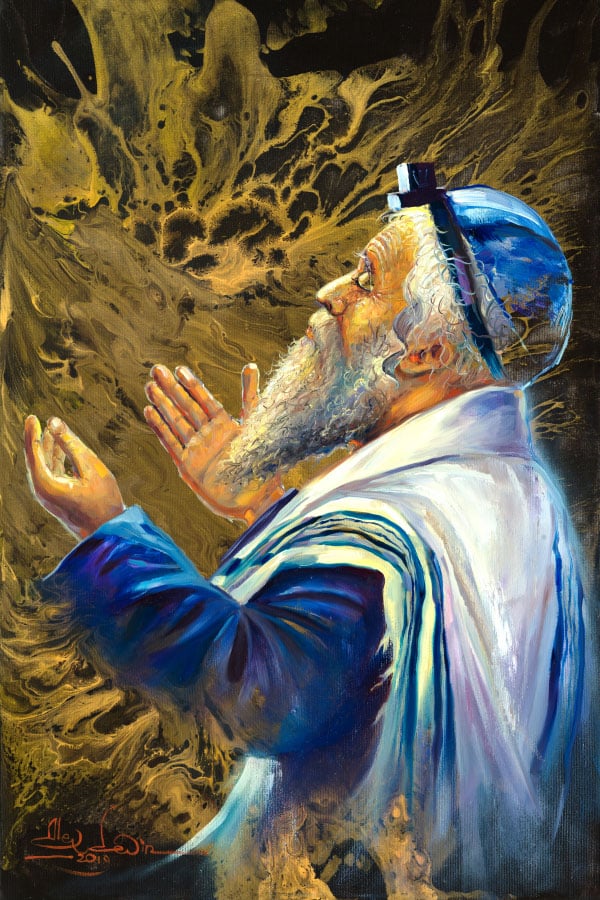
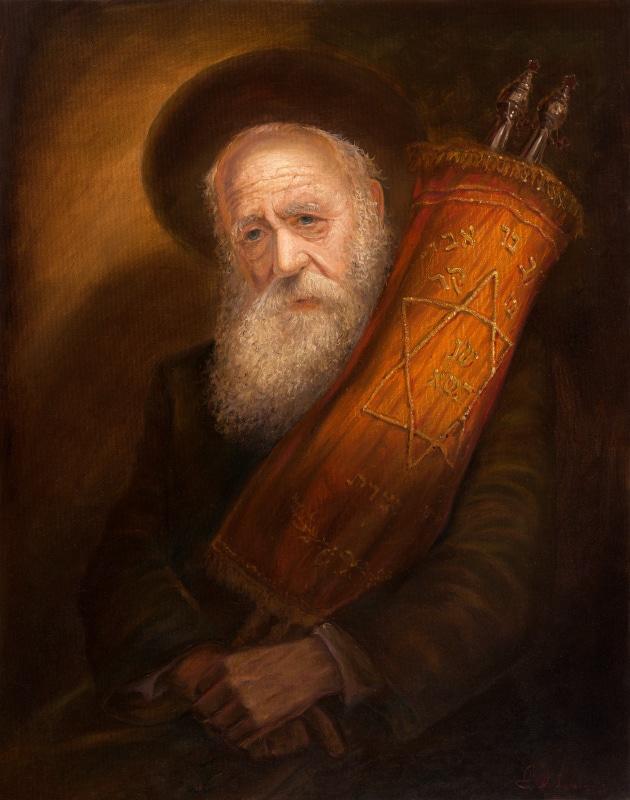
A man holding a Torah may represent one person, but the painting can also speak about devotion and Jewish continuity. A person absorbed in prayer may become an image of faith. A rabbi’s portrait may communicate leadership, learning, and the influence of a Jewish teacher.
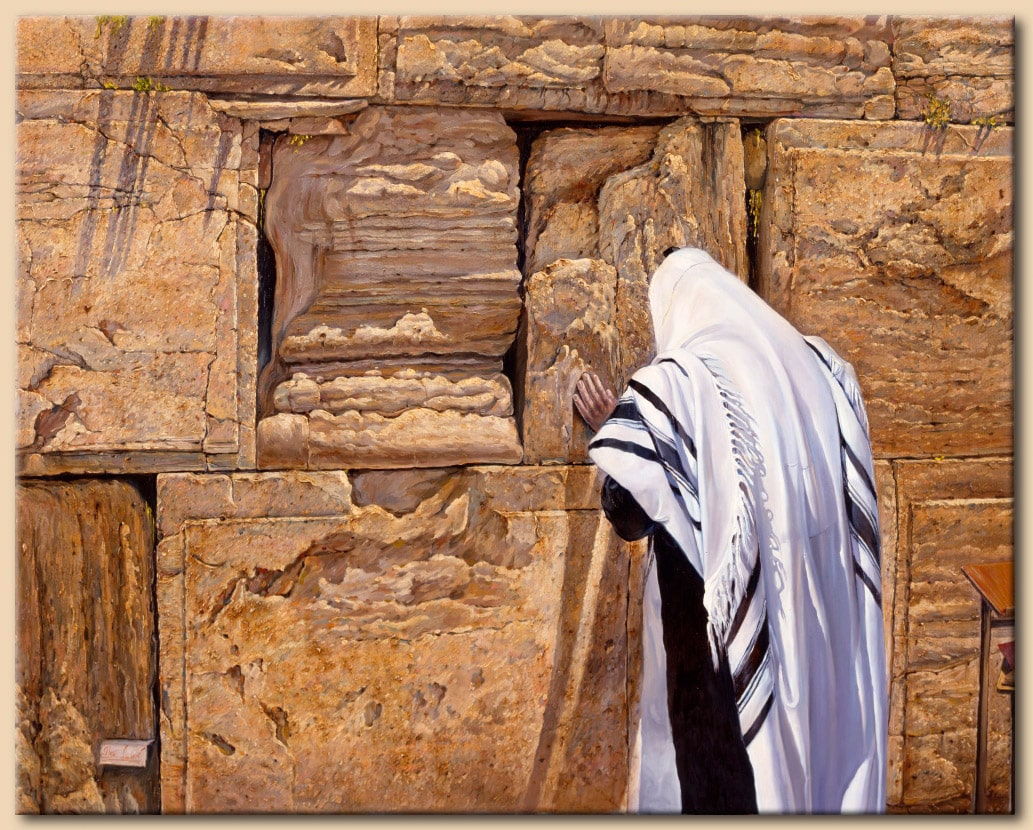
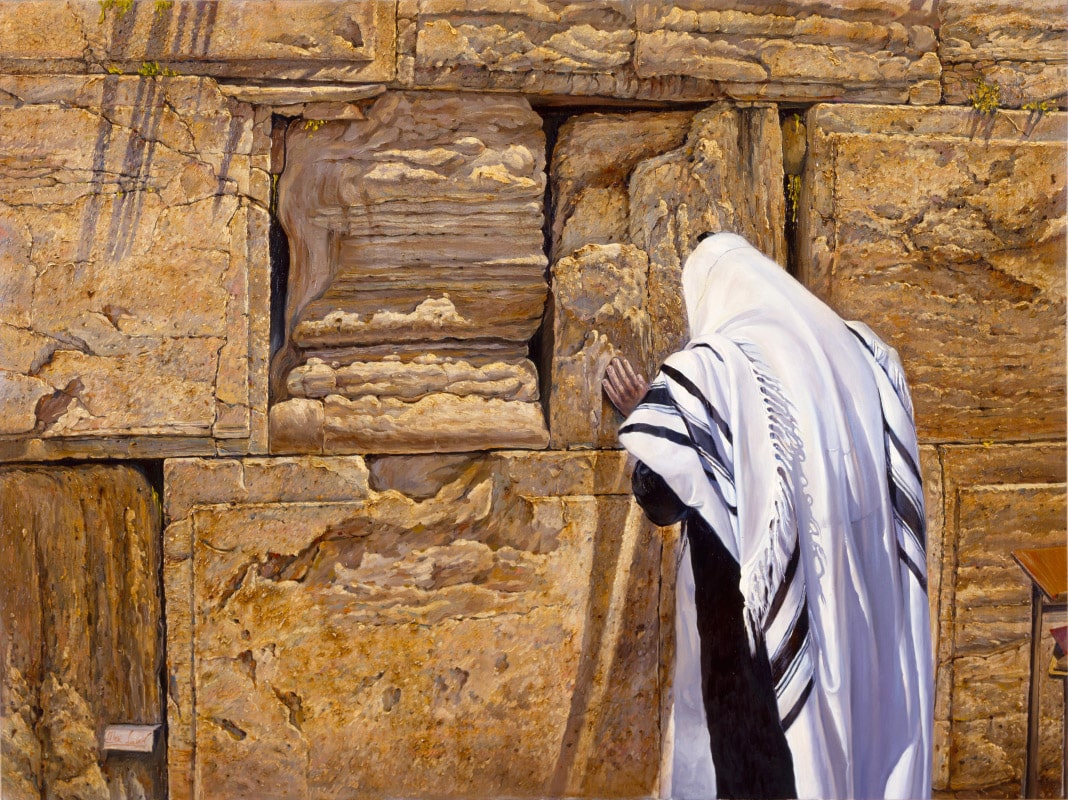
For Israeli artist Alex Levin, Jewish portraiture moves between realistic likeness and contemporary interpretation. Some paintings focus closely on the face and personality of the individual. Others combine the figure with Torah, Jerusalem, light, and symbolic color.
Explore Alex Levin’s Jewish Portraits
What Makes a Portrait Jewish?
There is no single visual formula that makes a portrait Jewish.
A Jewish portrait may depict a recognizable rabbi or historical figure.
It may show an anonymous person studying Torah.
It may portray someone wearing a tallit or traditional clothing.
Or it may contain almost no obvious religious objects at all.
What matters is the relationship between the individual and the story being told.
Jewish identity can be communicated through prayer, learning, family, community, historical setting, religious practice, or the character of the person represented.
This gives artists considerable freedom.
The portrait can be historical or contemporary, realistic or abstract, quiet or highly expressive.
More Than Physical Likeness
Good portraiture does not depend only on reproducing facial features accurately.
Two paintings can show the same person and communicate completely different impressions.
One may emphasize strength.
Another may emphasize kindness.
Another may focus on concentration, age, wisdom, or spiritual intensity.
Artists make these decisions through composition.
The direction of the eyes matters.
The position of the hands matters.
The amount of surrounding space matters.
Light can make a face appear intimate or dramatic.
Color can create calm, energy, warmth, or tension.
A portrait therefore becomes an interpretation of the person rather than simply a record of appearance.
Prayer in Jewish Portraiture
Prayer gives portrait artists an especially powerful subject because the figure is often unaware of the viewer.
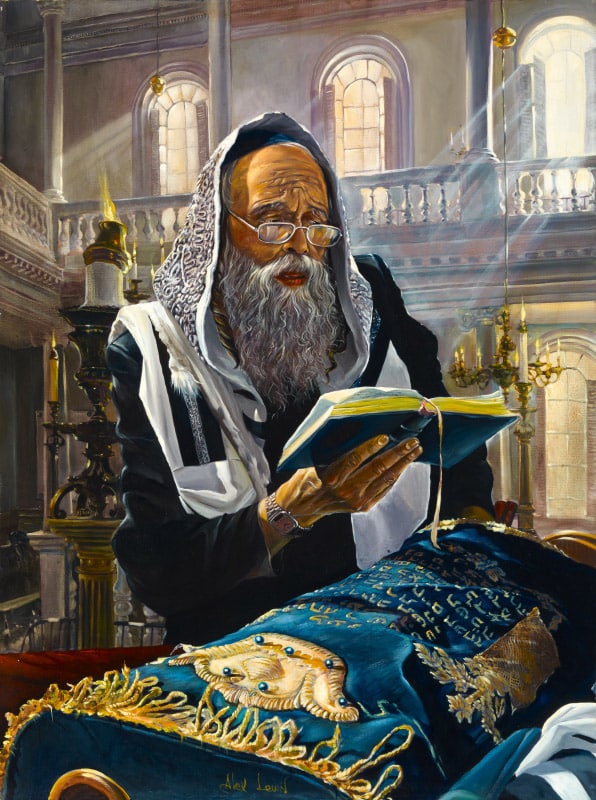
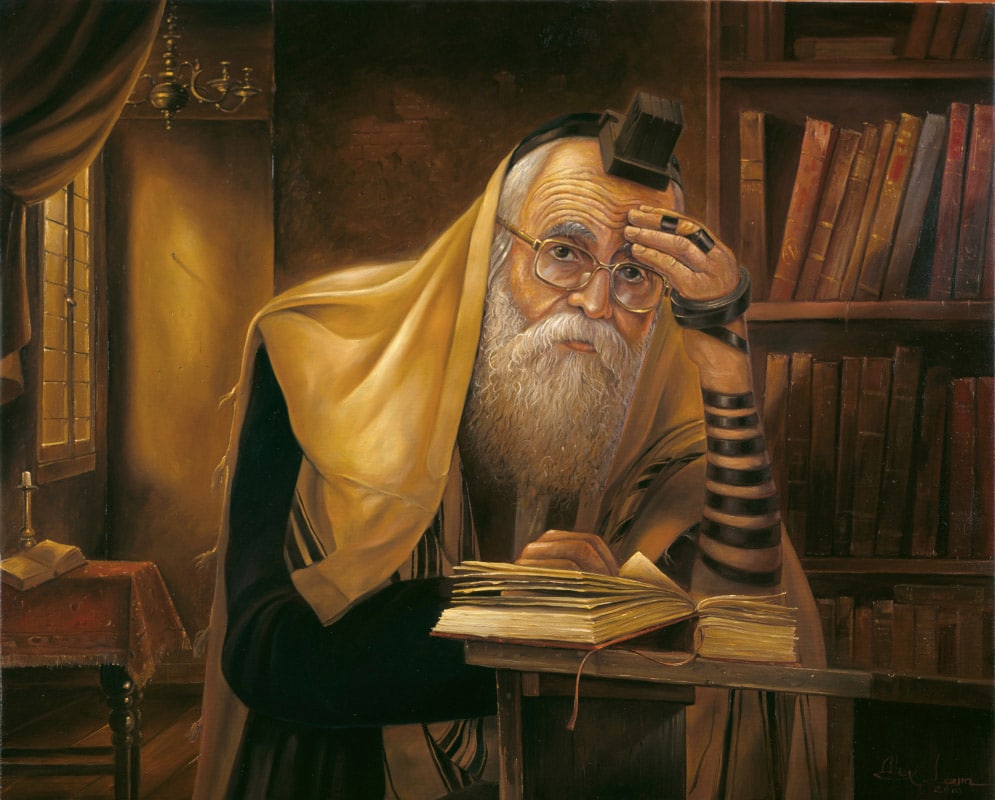
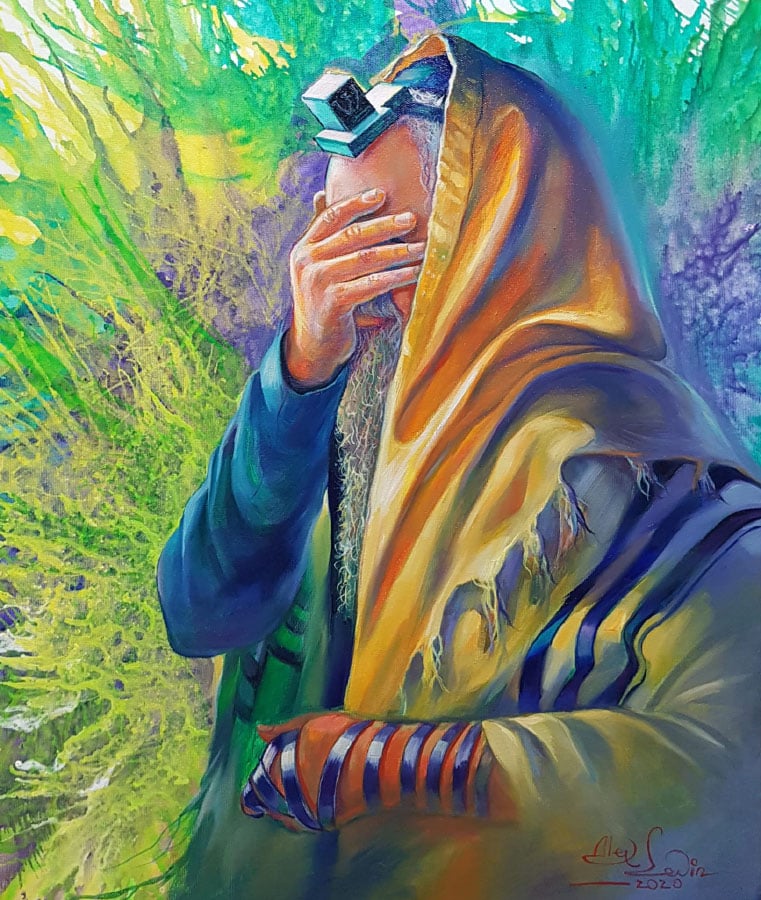
Instead of posing for a portrait, the person may be reading, standing in prayer, holding a siddur, wearing a tallit, or concentrating inwardly.
That changes the relationship between the viewer and the subject.
The painting begins to feel like an observed moment rather than a formal portrait.
Hands, eyes, and posture often become especially important.
A lowered head can communicate concentration.
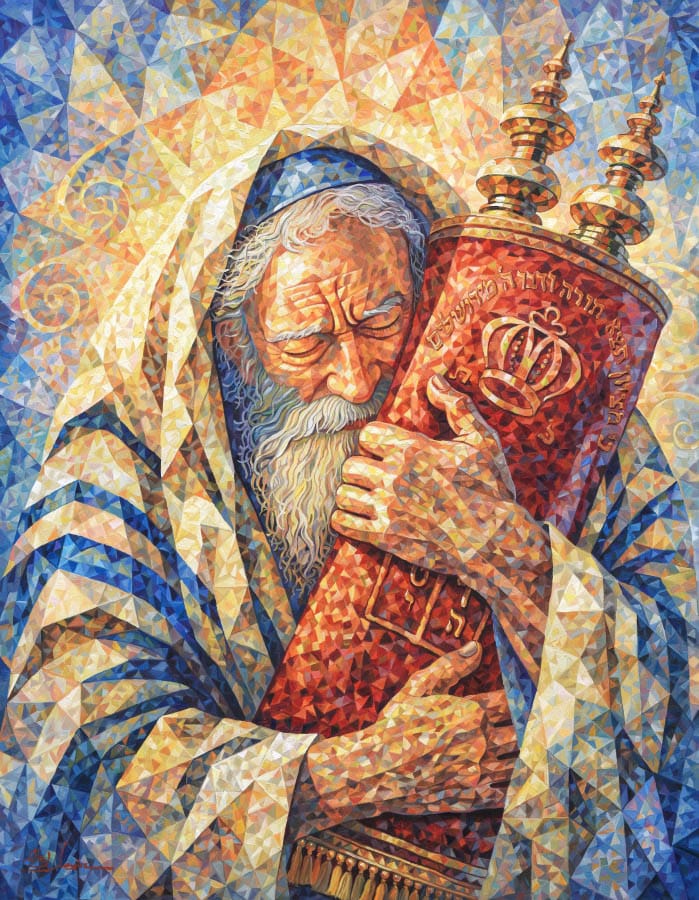
A hand touching a prayer book or Torah can suggest a personal connection with the ritual.
The portrait tells the viewer not only who the person is, but what the person is doing and what that moment may mean.
Torah and the Jewish Portrait
The Torah can transform the meaning of a portrait.
When a figure holds or reads from a Torah scroll, the artwork is no longer concerned only with personality or appearance.
The relationship between the person and the Torah becomes part of the subject.
A Torah can represent study, faith, responsibility, continuity, and the transmission of Jewish tradition.
That is why a relatively simple composition – one person and one Torah scroll – can carry considerable emotional meaning.
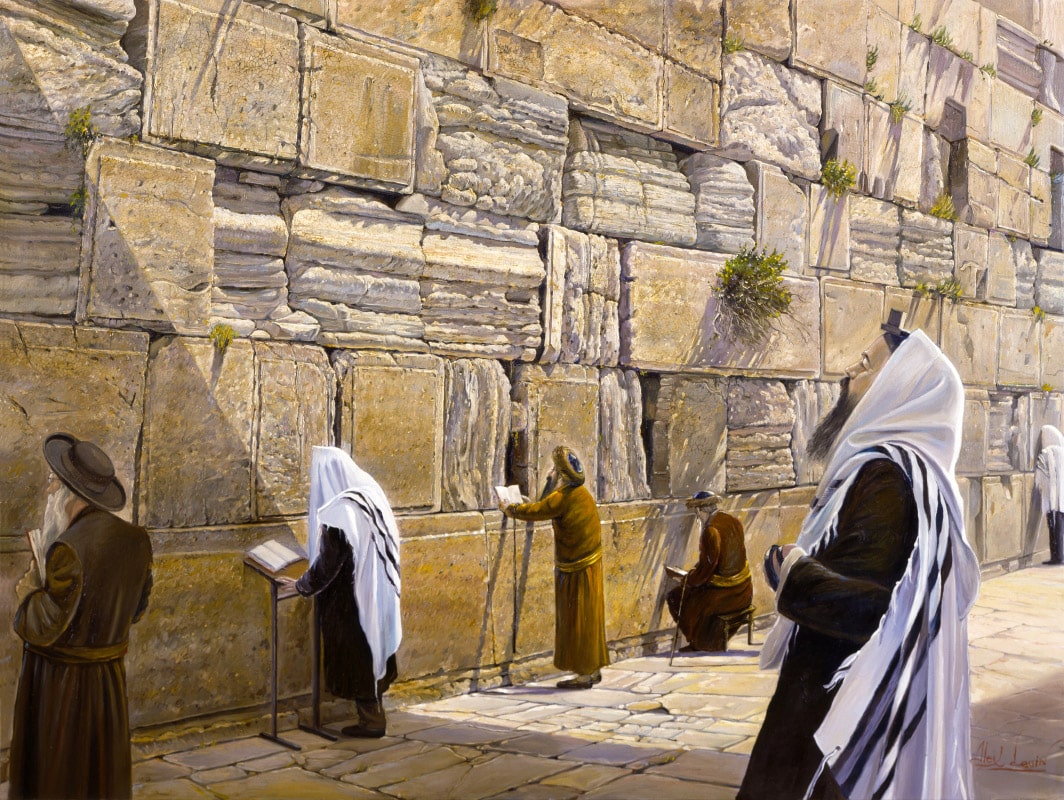
Alex Levin’s Jewish Portraits collection includes works centered on prayer and Torah, including Praying with Torah, alongside portraits connected with other Jewish religious themes.


Jewish Portraits and the Shema
Some Jewish portraits are built around words or prayers that are not physically visible in the painting.
The Shema Yisrael is one example.
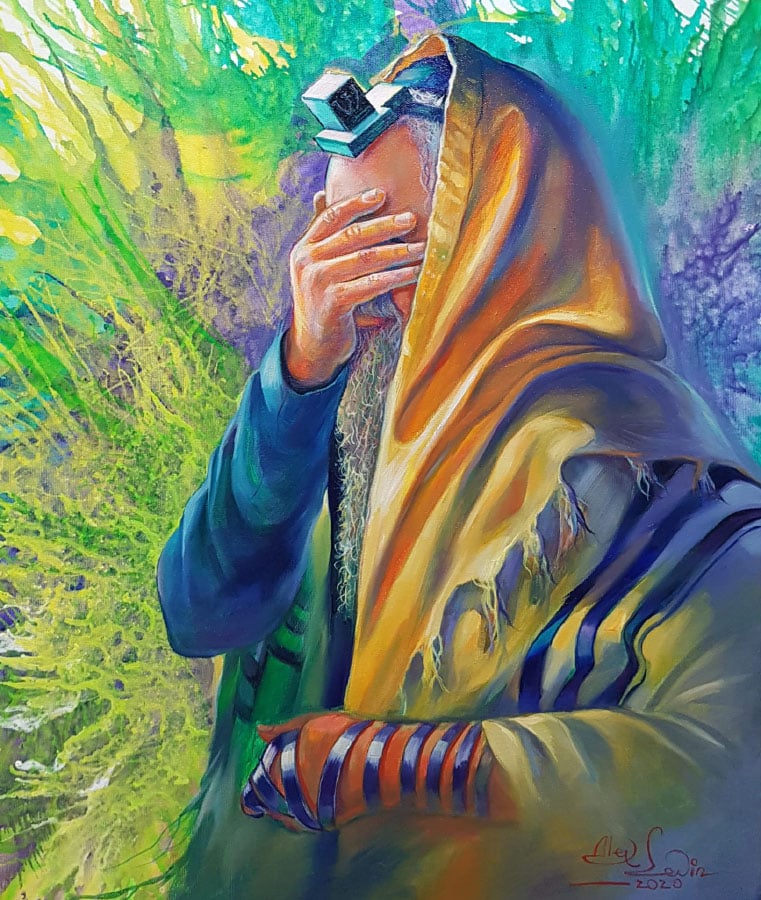
A person reciting the Shema can be portrayed through concentration, gesture, closed eyes, prayer clothing, or the surrounding spiritual atmosphere.
This makes the portrait less about outward action and more about inner experience.
The viewer cannot see prayer itself.
The artist must communicate it through the person.
That challenge is one of the reasons prayer portraiture can be so expressive.
Rabbis and Jewish Religious Leaders in Art
Portraits of rabbis occupy an important place within Jewish visual culture.
The artist may portray a particular rabbi because of his historical importance, teaching, leadership, or influence.
But painting a religious leader creates a difficult artistic challenge.
An accurate likeness alone may not be enough.
The artist may also want to communicate qualities associated with the person – wisdom, compassion, authority, learning, warmth, or spiritual presence.
That can be done subtly through expression and pose.
A contemporary artist may go further by introducing symbolic light, Jerusalem imagery, Torah, or abstract color around the figure.
In that case, the background becomes part of the portrait’s meaning.
The Lubavitcher Rebbe as a Portrait Subject
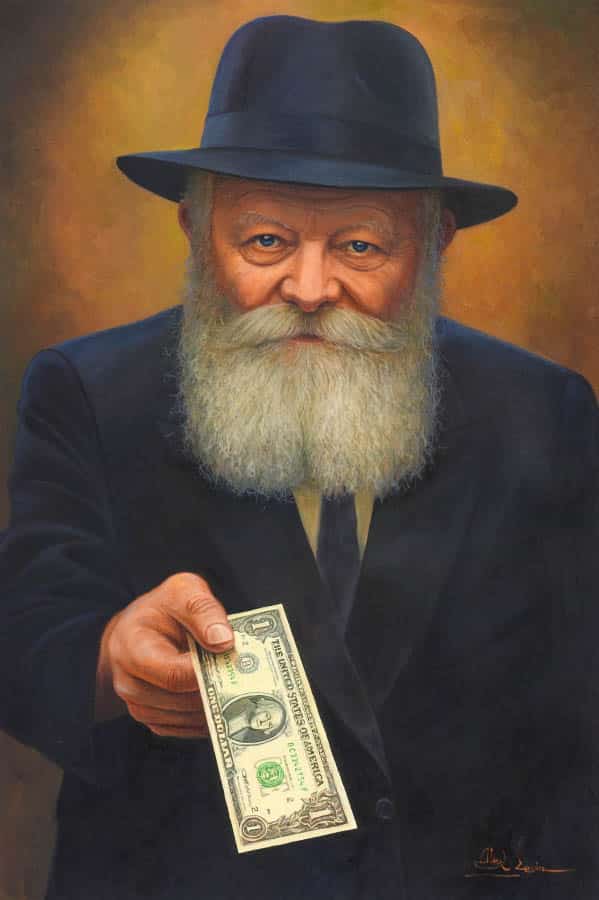
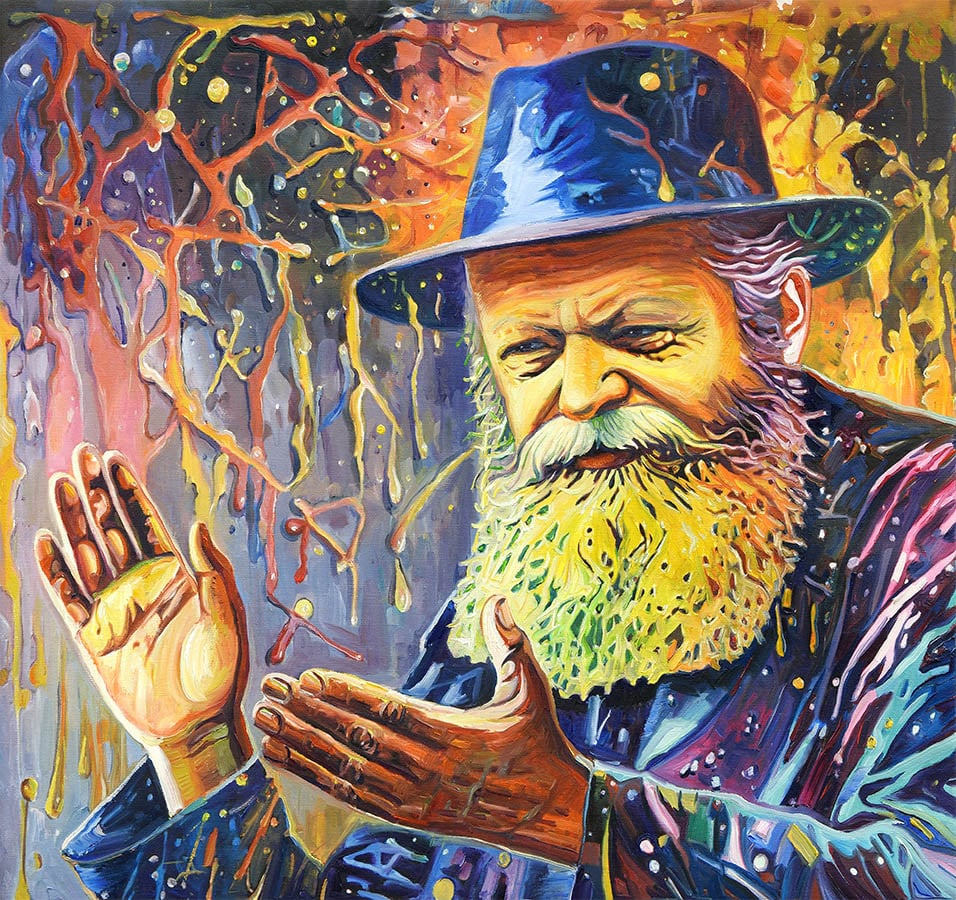
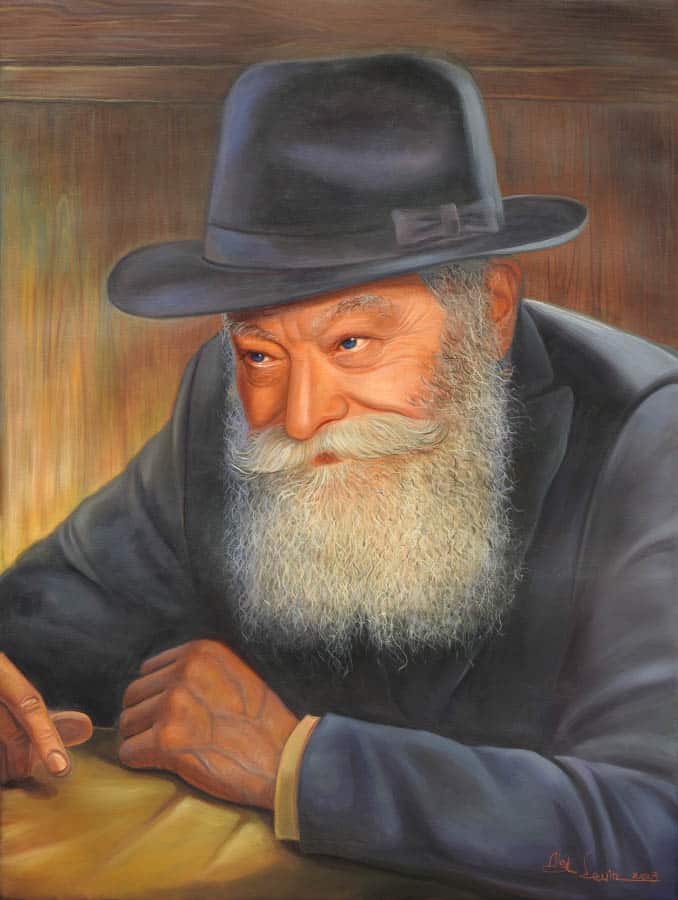
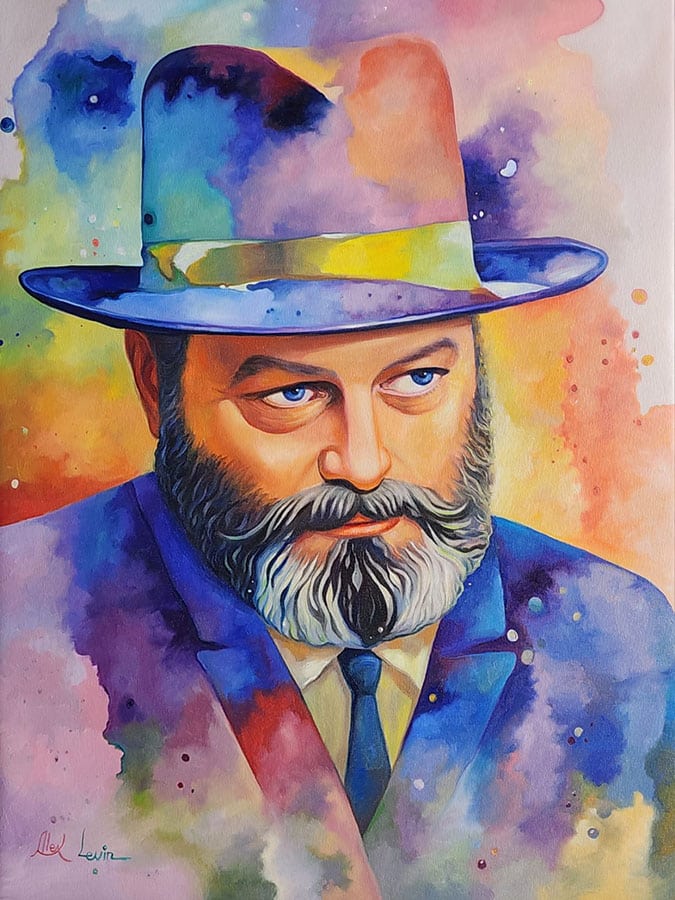
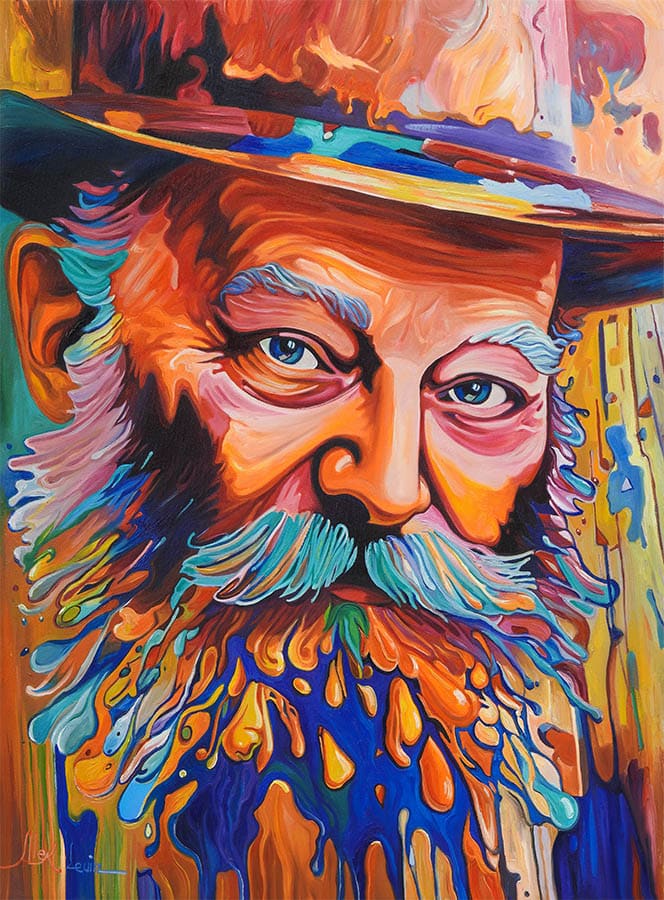
Rabbi Menachem Mendel Schneerson, widely known as the Lubavitcher Rebbe, is one of the recurring figures in Alex Levin’s portrait work.
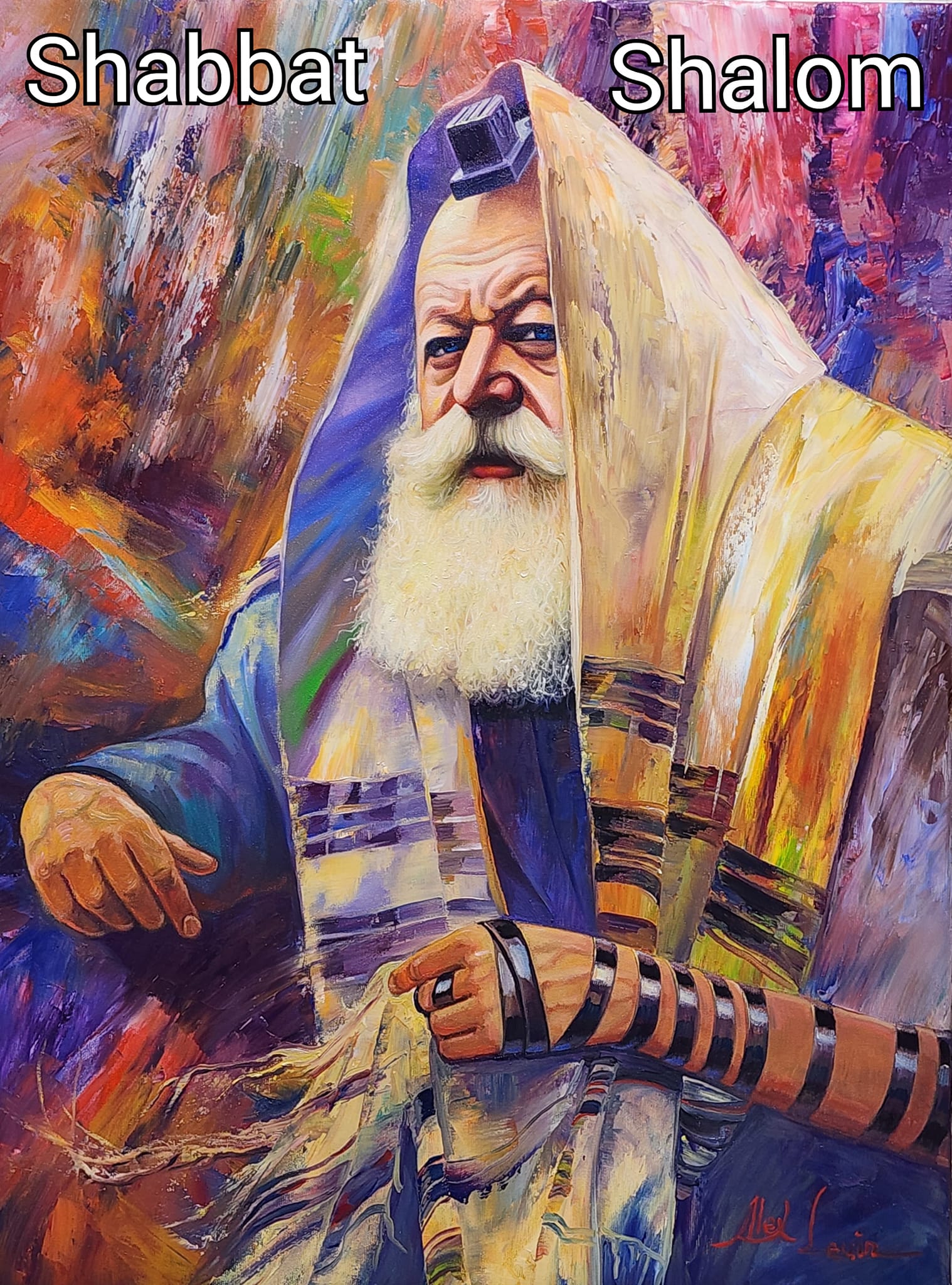
Levin has created both traditional portraits and highly contemporary interpretations of the Rebbe.
Some concentrate on recognizable facial features.
Others surround the figure with intense color, Torah imagery, light, geometric forms, or symbolic elements.
This range is especially interesting because it demonstrates how one person can be interpreted through very different artistic languages.
The realistic portrait asks the viewer to encounter the individual.
The contemporary portrait may try to communicate an idea about the individual’s influence, teaching, or spiritual energy.
Alex Levin’s dedicated Rebbe collection currently includes both realistic and abstract approaches.
Explore Lubavitcher Rebbe Paintings

Anonymous Faces and Jewish Memory
Not every portrait needs to identify the person by name.
An anonymous Jewish figure can sometimes communicate something universal.
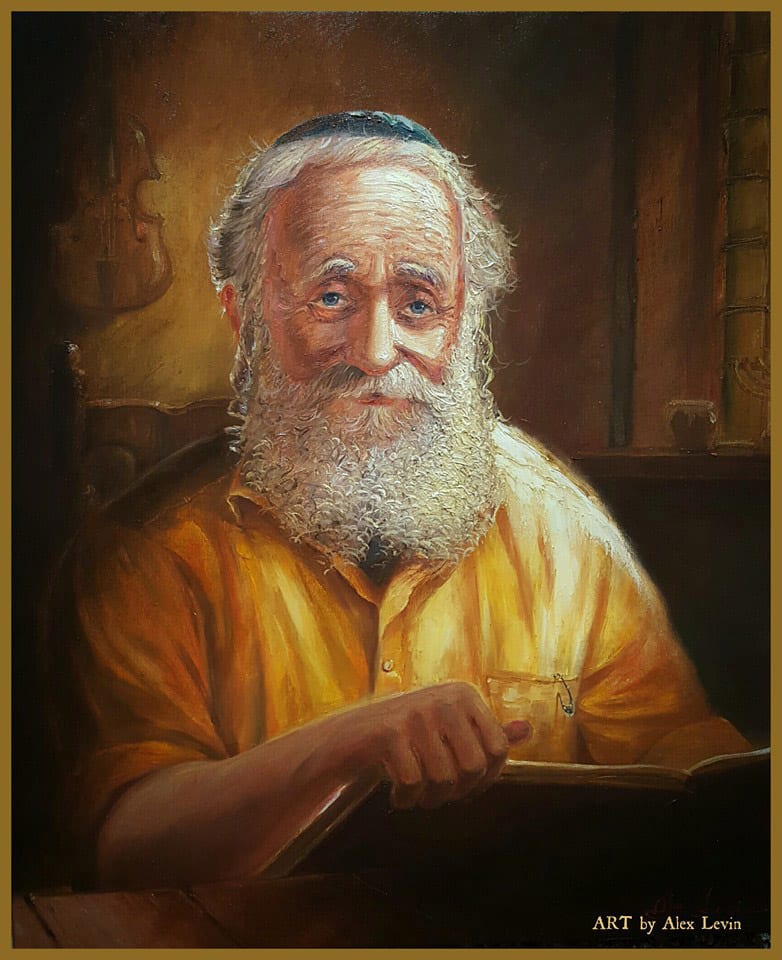
An elderly man may remind the viewer of a grandfather.
A student may recall one’s own childhood or Jewish education.
A figure in a shtetl setting may bring to mind stories about family members who lived in Eastern Europe.
This allows portraiture to operate between the individual and collective memory.
The person in the painting is specific enough to feel real, but open enough for viewers to bring their own experiences to the image.
That can make anonymous portraits surprisingly personal.
Jewish Portraits and Shtetl Life
Shtetl paintings naturally contain many forms of portraiture.
A tailor at work.
A grandfather.
A teacher.
A musician.
A child studying.
A shopkeeper.
These figures may appear within larger scenes, but each individual helps tell the story of Jewish community life.
When the artist brings the figure closer to the viewer, the emphasis changes.
Instead of looking at the shtetl as a historical environment, we encounter one of the people who lived within that world.
Faces make history human.
Clothing and Objects in Jewish Portrait Art
Details surrounding a figure can provide important context.
A tallit can indicate prayer.
A Torah or religious book can suggest study.
Traditional clothing may locate the figure within a particular historical or cultural environment.
Glasses, a chair, a desk, candlesticks, or other ordinary objects can provide clues about personality and daily life.
But these elements should support the person rather than overwhelm the portrait.
Sometimes one carefully chosen detail communicates more than a room filled with symbols.
This is especially important in contemporary portraiture, where the artist may deliberately simplify the background so the viewer focuses on the face.
The Importance of the Eyes
The eyes are often the most expressive part of a portrait.
A direct gaze can create an immediate relationship between the person in the painting and the viewer.
Eyes turned downward can suggest concentration or prayer.
A distant gaze can create a feeling of reflection or memory.
Small changes can completely alter the emotional character of the work.
This is particularly important when portraying spiritual or religious figures.
The artist must decide how much of the person’s character should be communicated directly through expression and how much through the surrounding composition.
In Alex Levin’s portraits of the Lubavitcher Rebbe, the eyes are especially significant. Levin himself describes paying close attention to them in an effort to communicate wisdom and inner light rather than merely physical likeness.
Realistic Jewish Portraiture
Realistic portraiture depends on observation and detail.
Facial structure, expression, skin tones, clothing, hands, and lighting all contribute to the credibility of the image.
But realism does not mean the artist simply copies what is visible.
Choices still have to be made.
Which expression should be portrayed?
How close should the viewer be?
What should appear in the background?
Should the light be soft or dramatic?
Should the figure look directly at the viewer?
These decisions determine how we interpret the person.
A successful realistic portrait can feel immediate even when the subject belongs to another historical period.
Contemporary Jewish Portraiture
Contemporary portraiture gives the artist greater freedom.
The face may remain recognizable while the surroundings become abstract.
Colors may be exaggerated.
Backgrounds can contain Hebrew letters, Jerusalem, Torah imagery, geometric forms, or areas of intense light.
The artist can even allow parts of the figure to merge into the surrounding composition.
This changes the purpose of the portrait.
Instead of simply asking:
What did this person look like?
the artist can explore:
What did this person represent?
How does this person make us feel?
What ideas do we associate with this figure?
This is why contemporary Jewish portraiture can work particularly well for religious leaders and symbolic figures.
Explore Contemporary Jewish Art

Portraits as a Connection Between Generations
Portraits preserve people.
That makes them naturally connected with memory.
Within Jewish families, old photographs and portraits can become important links to grandparents, great-grandparents, communities, and places that younger generations never experienced themselves.
Art can perform a similar role.
A painted face may represent one individual while also recalling an entire generation.
This is especially powerful in artwork connected with Jewish life in Eastern Europe or communities transformed by migration and historical events.
Portraits help ensure that history is remembered through people rather than only dates and places.
Alex Levin’s Approach to Jewish Portraiture
Alex Levin approaches portraiture through both realism and contemporary expression.
His Jewish portraits include people praying, reading sacred texts, interacting with Torah, historical or religious figures, and contemporary symbolic compositions.
The collection also includes multiple portraits of the Lubavitcher Rebbe, alongside works such as Praying with Torah, Reading the Scroll of Esther, and Shema Yisrael.
Across these different subjects, the face and gesture remain important.
But Levin frequently adds another element – light.
Light may fall naturally across the figure in a realistic composition.
In contemporary work, it may become symbolic, surrounding the figure or appearing to emerge from Torah, Jerusalem, or the portrait itself.
That combination allows a portrait to remain recognizable while carrying a larger spiritual or emotional idea.
Jewish Portrait Art in the Home
Portrait art creates a different atmosphere from landscape or abstract artwork.
A face creates presence.
Because of that, choosing a Jewish portrait for the home is often a very personal decision.
A portrait of a rabbi or the Lubavitcher Rebbe may have spiritual or inspirational meaning.
A shtetl portrait may evoke family history.
A Torah or prayer portrait can express Jewish faith and tradition.
Contemporary portraits may offer the same Jewish meaning while working naturally within a modern interior.
The strongest choice is usually the portrait that creates a feeling of connection to the person or story represented.
Explore Related Jewish Art
- Jewish Portraits
- Lubavitcher Rebbe Paintings
- Torah Paintings
- Jewish Life Paintings
- Shtetl Paintings
- Shabbat Paintings
- Contemporary Jewish Art
Frequently Asked Questions About Jewish Portraiture
What is Jewish portrait art?
Jewish portrait art depicts Jewish people, religious figures, historical personalities, or individuals shown within Jewish cultural, religious, or historical settings.
What makes a portrait a Jewish portrait?
There is no single requirement. The subject may be a recognizable Jewish figure, or Jewish identity may be communicated through prayer, Torah, clothing, historical setting, ritual, or cultural context.
Why are rabbis common subjects in Jewish portraiture?
Rabbis may be portrayed because of their role as teachers, scholars, community leaders, or influential religious figures. Artists often try to communicate character and spiritual presence as well as physical likeness.
Can an anonymous person be the subject of Jewish portrait art?
Yes. Anonymous figures can represent broader experiences such as prayer, learning, shtetl life, family history, or Jewish memory.
Why are Torah scrolls often included in Jewish portraits?
The Torah provides religious and symbolic context. It can represent learning, faith, responsibility, tradition, and Jewish continuity.
What is contemporary Jewish portraiture?
Contemporary Jewish portraiture uses modern artistic approaches such as abstraction, expressive color, symbolic imagery, geometric forms, or unconventional composition while retaining a Jewish subject or theme.
What is the difference between a portrait and a Jewish life painting?
A portrait primarily focuses attention on an individual figure. A Jewish life painting may focus more broadly on an event, environment, family, community, or activity.
The two categories often overlap.
Why are eyes important in portrait painting?
Eyes can strongly affect how viewers interpret personality, emotion, attention, and mood. Artists often use the gaze to establish a relationship between the subject and viewer.
Where can Jewish portrait artwork be displayed?
Jewish portraits can work in homes, studies, offices, synagogues, schools, community institutions, libraries, or any space where the individual or subject has personal meaning.