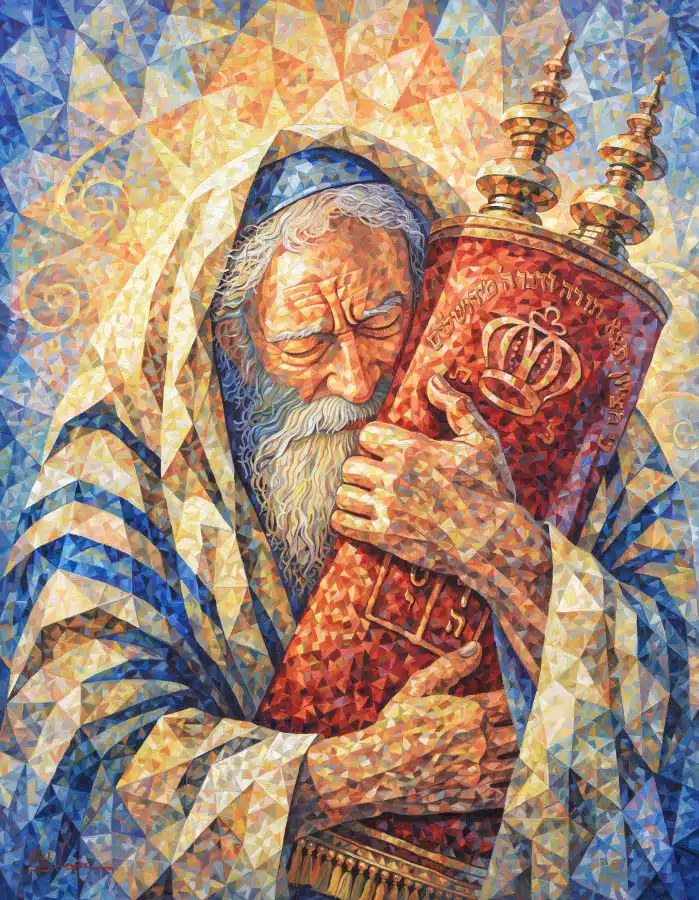
Jewish life has inspired artists for generations because it is expressed not only through major historical events, but through everyday moments – study, prayer, family, Shabbat, celebration, community, and the passing of traditions from one generation to the next.
Jewish art can preserve memories of communities that no longer exist, portray people whose lives influenced Jewish history, and reinterpret ancient traditions through a contemporary visual language.
In the work of Israeli artist Alex Levin, these subjects range from scenes of Eastern European shtetl life and Torah study to Shabbat, Jewish portraits, the Lubavitcher Rebbe, and modern Judaica.
Explore Alex Levin’s Jewish Life Paintings
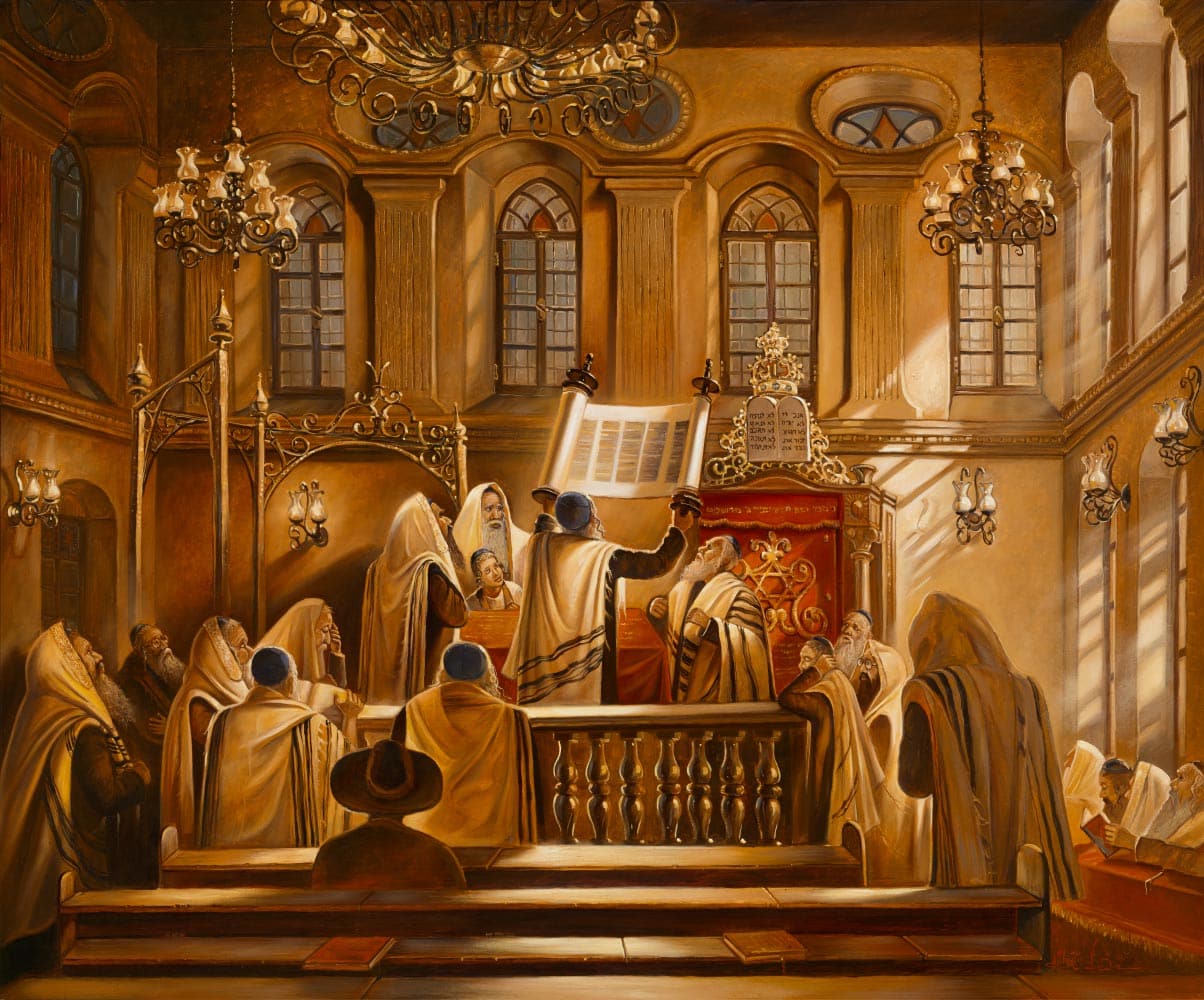
Jewish Life as a Subject in Art
Jewish life is an unusually broad artistic subject.
It can include a child studying in cheder, a grandfather teaching his grandchildren, a person holding a Torah scroll, a family preparing for Shabbat, or a portrait that reveals character through expression, clothing, and gesture.
These scenes may appear simple, but together they document something larger: how Jewish identity is preserved through learning, ritual, family, memory, and community.
For this reason, Jewish life paintings often function on two levels. They can be appreciated as visual art, while also preserving stories and traditions that connect generations.
Shtetl Paintings: Preserving a Lost Jewish World
Before World War II, Jewish communities throughout Eastern Europe developed rich religious, cultural, family, and communal traditions.
The shtetl has therefore become an important subject in Jewish art.
Artists portraying shtetl life often focus not on major historical events, but on ordinary experiences: children studying, families gathering, musicians playing, people walking through village streets, grandparents spending time with grandchildren, or preparations for Shabbat.
These scenes allow art to preserve the human side of a world that was largely destroyed during the Holocaust.
Alex Levin’s shtetl paintings frequently emphasize the relationship between generations. Grandparents, parents, teachers, and children appear together, making the transmission of tradition part of the visual story.
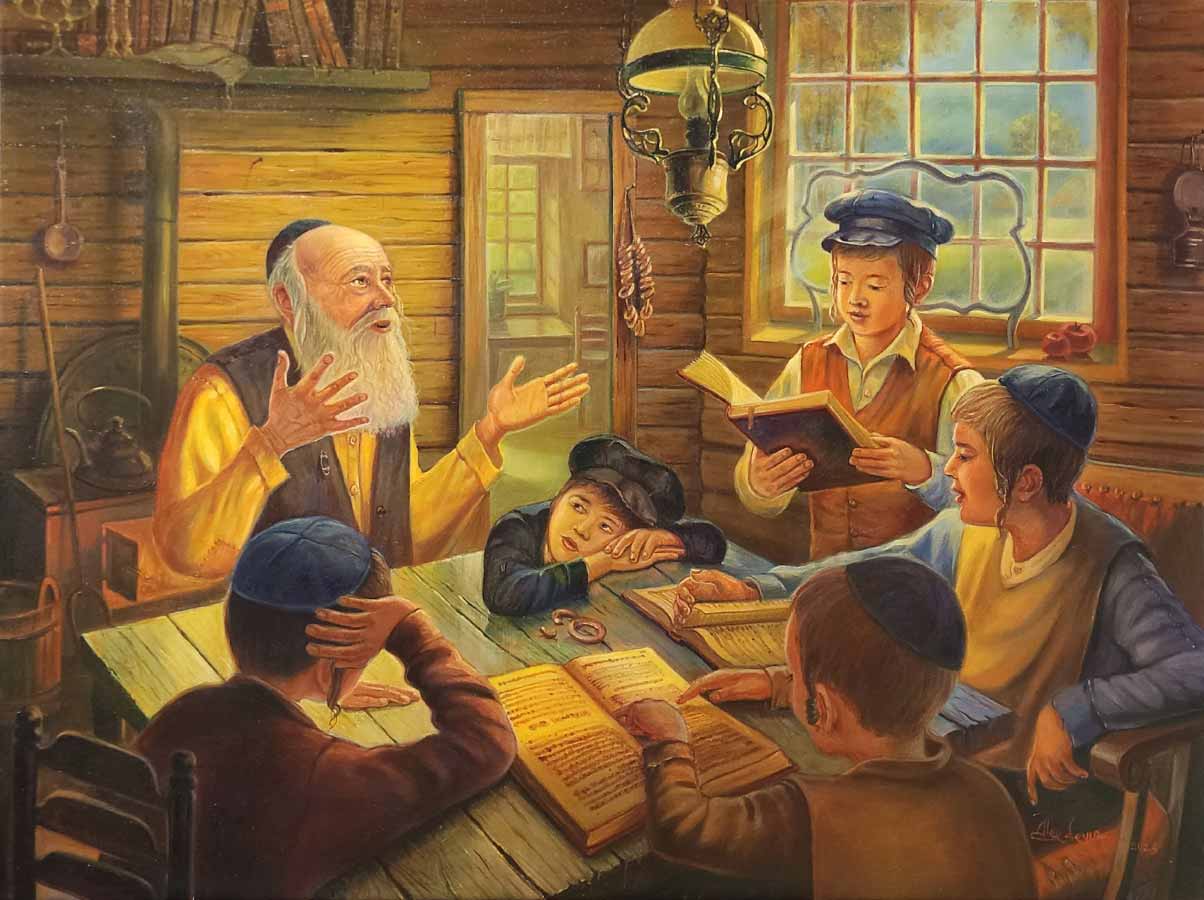
Jewish Portraits: More Than a Likeness
Portraiture has a special role within Jewish art.
A Jewish portrait can depict a specific historical or religious figure, but it can also portray an anonymous person whose face, clothing, expression, or surroundings suggest a much larger story.
A man studying Torah, an elderly figure in prayer, or a child learning may represent an individual while simultaneously expressing themes of faith, memory, wisdom, and continuity.
Alex Levin’s Jewish portraits range from traditional realistic images to contemporary compositions in which color and symbolic elements become part of the portrait itself.

Torah in Jewish Art
Few objects carry greater visual and symbolic importance in Jewish art than the Torah.
Artists may portray the Torah during prayer, study, synagogue services, Simchat Torah celebrations, or quieter moments in which a person holds or embraces a Torah scroll.
The physical form of the scroll is important, but the deeper artistic subject is often the relationship between the person and the Torah.
A painting can communicate respect, learning, responsibility, love, and the transmission of Jewish tradition from one generation to another.
In some contemporary works, the Torah becomes a source of light within the composition, visually connecting sacred text with Jerusalem, Jewish identity, or spiritual continuity.
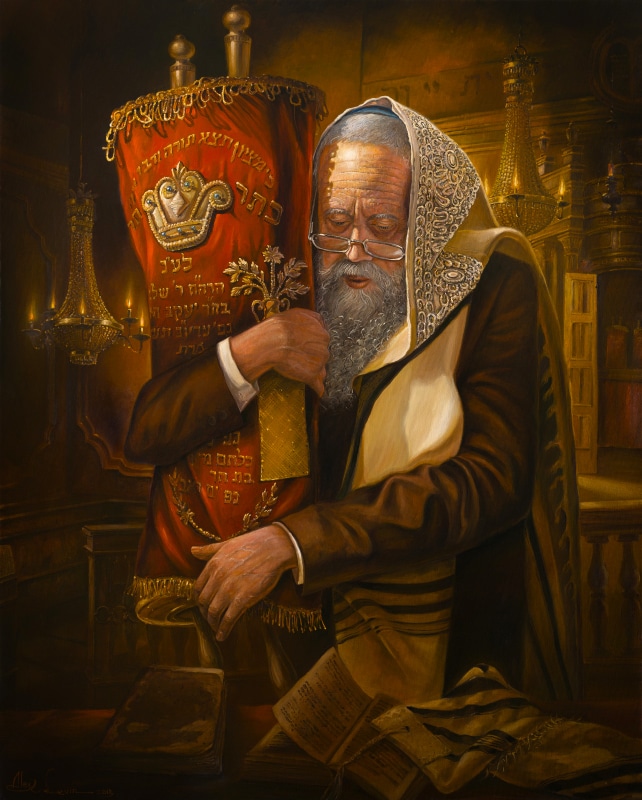
Shabbat in Jewish Art
Shabbat gives artists a very different kind of subject.
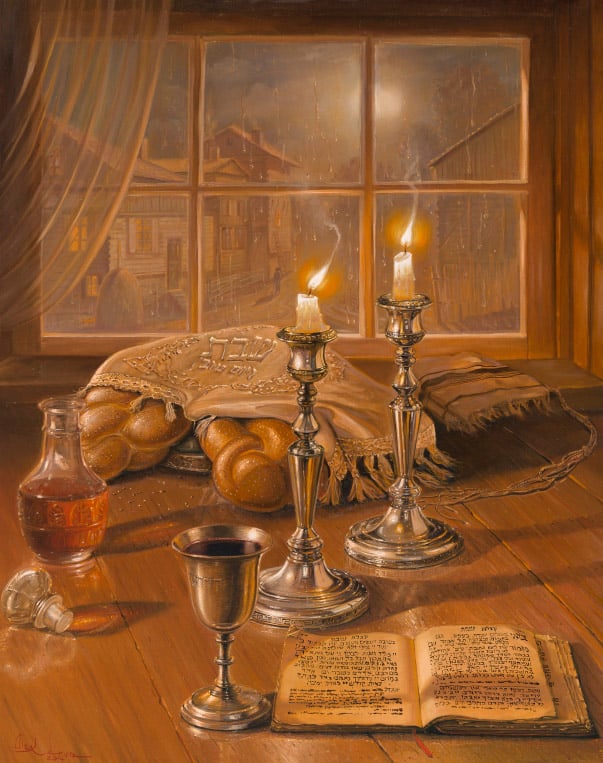
Rather than monumental architecture or dramatic history, Shabbat paintings often focus on intimate moments: candle lighting, prayer, family, the Shabbat table, or the quiet atmosphere that accompanies the beginning of the seventh day.
Light is particularly important in Shabbat art.
The glow of candles can become both a physical source of illumination and a visual symbol of holiness, peace, family, and continuity.
In traditional paintings, the scene may be highly recognizable and detailed. Contemporary artists may use color, abstraction, and symbolic light to communicate the feeling of Shabbat without depicting every ritual literally.
The Lubavitcher Rebbe in Jewish Art
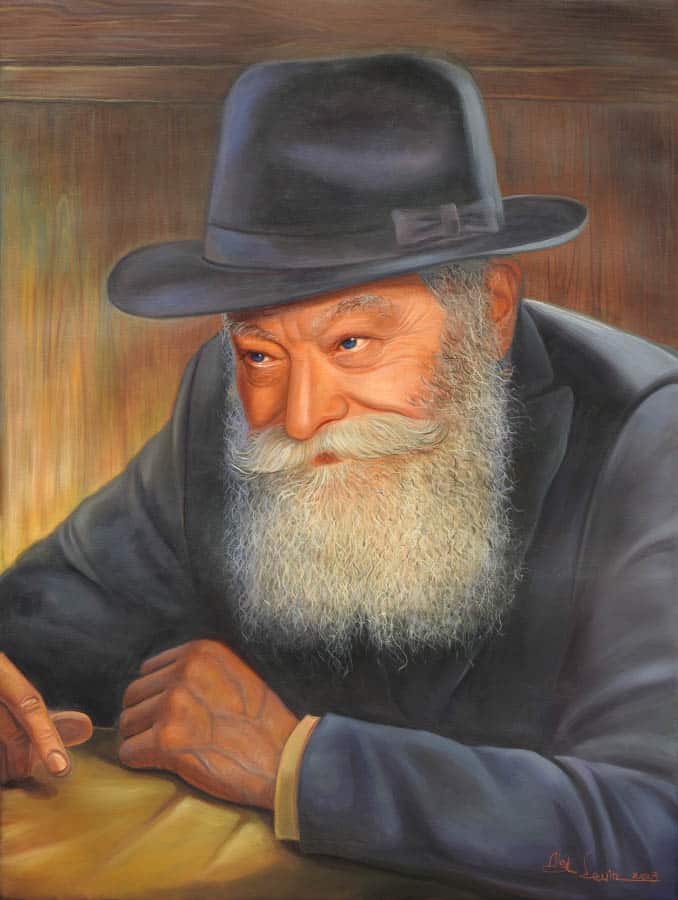
Rabbi Menachem Mendel Schneerson, known widely as the Lubavitcher Rebbe, became one of the most recognized Jewish religious leaders of the twentieth century.
Portraits of the Rebbe can take many forms.
Some artists concentrate on an accurate likeness and familiar expression. Others use light, color, Torah imagery, Jerusalem, or abstract elements to communicate ideas associated with teaching, leadership, faith, and spiritual influence.
Alex Levin works in both approaches. Some of his Rebbe paintings are traditional portraits, while others place the Rebbe within highly contemporary compositions filled with color and symbolic light.
This creates an interesting connection between traditional Jewish portraiture and modern Judaica.
Explore Lubavitcher Rebbe Paintings
Contemporary Jewish Art: Tradition in a Modern Language
Jewish art does not need to look historical in order to remain connected to Jewish tradition.
Contemporary Jewish artists can take familiar subjects – Torah, Shabbat, Jerusalem, rabbis, Jewish families, Hebrew letters, or religious symbols – and reinterpret them through abstraction, geometric forms, expressive color, and modern composition.
The subject may remain ancient while the artistic language becomes entirely contemporary.
This allows Judaica to work naturally within modern interiors without losing its connection to Jewish history and identity.
Alex Levin’s contemporary Jewish paintings frequently combine recognizable Jewish imagery with intense color, movement, and light. In these works, the goal is not simply to document a scene, but to communicate its energy and emotional meaning.
Explore Contemporary Jewish Art

Alex Levin’s Approach to Jewish Life
Alex Levin’s Jewish paintings move between memory and contemporary Jewish experience.
Some paintings recreate scenes associated with shtetl life and traditions of Eastern European Jewry. Others portray Torah study, prayer, Shabbat, Jerusalem, Jewish figures, and contemporary interpretations of Judaica.
A recurring theme is continuity.
Children learn from parents and grandparents. Torah moves from one generation to another. Ancient traditions continue within modern Jewish life.
Levin’s technique also plays an important role in these works. His use of tempera underpainting followed by layers of oil allows him to develop depth, detail, and luminous effects that are especially effective in scenes built around candlelight, prayer, or spiritual symbolism.
Jewish Art, Memory and Generations
One of the strongest themes connecting Jewish life paintings is the relationship between generations.
Jewish traditions survive because they are practiced, taught, remembered, and passed forward.
That idea can be communicated visually without words.
A grandfather studying with a child, a teacher surrounded by students, a Torah held close to the body, or Shabbat candles being lit can all represent the same larger idea: continuity.
This is one reason Jewish life art can carry strong personal meaning for collectors.
A painting may remind someone of grandparents, family traditions, childhood experiences, a synagogue, a community, or stories about earlier generations.
Jewish Art in the Home
Jewish artwork can serve as both fine art and a personal connection to heritage.
The right subject depends on what carries the most meaning for the collector.
Someone interested in family history may connect with shtetl scenes. Torah paintings can work particularly well in a study, synagogue, school, or Jewish institution. Shabbat artwork can create a warm atmosphere in a dining area or family space.
Jewish portraits may offer a quieter, contemplative presence, while contemporary Judaica can bring Jewish imagery into a modern interior.
The most important consideration is not simply whether a painting matches the room.
It is whether the subject creates a connection.
Explore Jewish Art by Subject
- Jewish Life Paintings
- Shtetl Paintings
- Jewish Portraits
- Torah Paintings
- Shabbat Paintings
- Lubavitcher Rebbe Paintings
- Contemporary Jewish Art
Frequently Asked Questions About Jewish Life in Art
What is Jewish life art?
Jewish life art portrays Jewish traditions, culture, faith, history, family, and everyday experiences. Subjects can include Torah study, prayer, Shabbat, holidays, family life, Jewish communities, historical figures, and contemporary Jewish identity.
What is Judaica art?
Judaica art is a broad term for artwork inspired by Jewish religion, culture, history, symbols, traditions, and identity. It can include traditional paintings as well as contemporary and abstract Jewish art.
Why are shtetl scenes important in Jewish art?
Shtetl paintings preserve visual memories of Jewish communities that once existed throughout Eastern Europe. They often focus on family, education, religious life, work, music, and everyday community traditions.
Why is the Torah common in Jewish paintings?
The Torah is central to Jewish religious tradition and learning. In art, it can represent faith, study, continuity, responsibility, and the transmission of Jewish values between generations.
What does Shabbat represent in Jewish art?
Shabbat art often emphasizes peace, family, holiness, tradition, and light. Common subjects include candle lighting, prayer, the Shabbat table, and family gatherings.
What are Jewish portrait paintings?
Jewish portraits can depict rabbis, historical figures, religious leaders, or ordinary people. Beyond physical likeness, artists often use portraiture to explore character, faith, wisdom, history, and Jewish identity.
What is contemporary Jewish art?
Contemporary Jewish art uses modern artistic styles to explore Jewish subjects. Artists may combine traditional imagery with abstraction, vivid color, symbolic forms, geometric compositions, or modern materials.
Can Jewish art work in a modern home?
Yes. Jewish artwork ranges from traditional realism to highly contemporary Judaica. Canvas can provide a classic fine-art appearance, while metal and acrylic-glass presentations can complement modern interiors.