The walls of a synagogue are different from the walls of an ordinary building.
They surround people during prayer, Torah study, celebrations, memorials, children’s programs and some of the most meaningful moments of Jewish life.
So what kind of Jewish art is appropriate for a synagogue?
Should synagogue walls feature Jerusalem? The Torah? Jewish history? Contemporary Judaica? Portraits of rabbis? Or should the sanctuary remain as visually simple as possible?
There is no single answer for every congregation.
A synagogue sanctuary, Chabad House, Jewish school and Jewish community center each serve somewhat different purposes. The most successful Jewish artwork respects the function of the space while strengthening its connection to Jewish faith, history, memory and identity.
Why Art Matters in a Jewish Communal Space
A synagogue is not simply a building in which services happen.
The Hebrew term beit knesset means a “house of gathering.” Synagogues have traditionally served not only as places of prayer but also as centers of Torah study and Jewish communal life.
That gives their visual environment special importance.
Jewish artwork can help a space communicate its identity before anyone says a word.
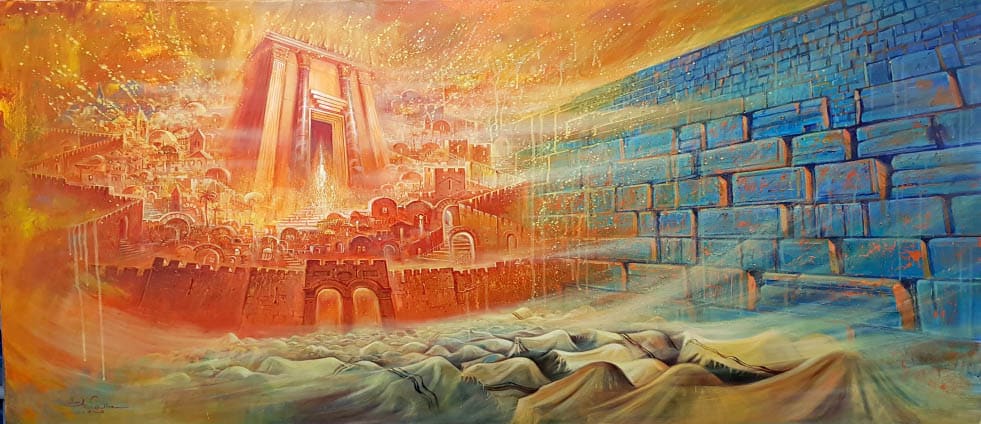
A painting of Jerusalem may remind worshippers where Jewish prayer has been directed for generations.
An image centered around a Torah scroll can emphasize learning and continuity.
A depiction of Jewish families can communicate community.
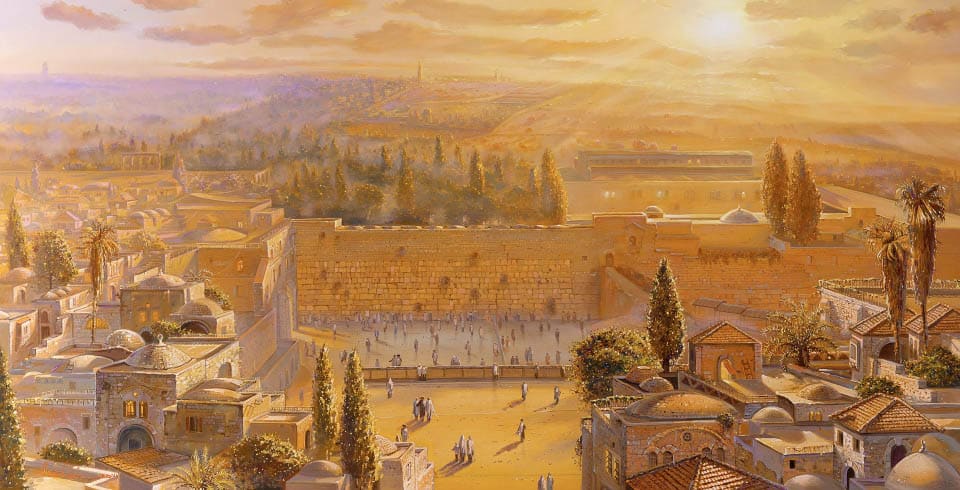
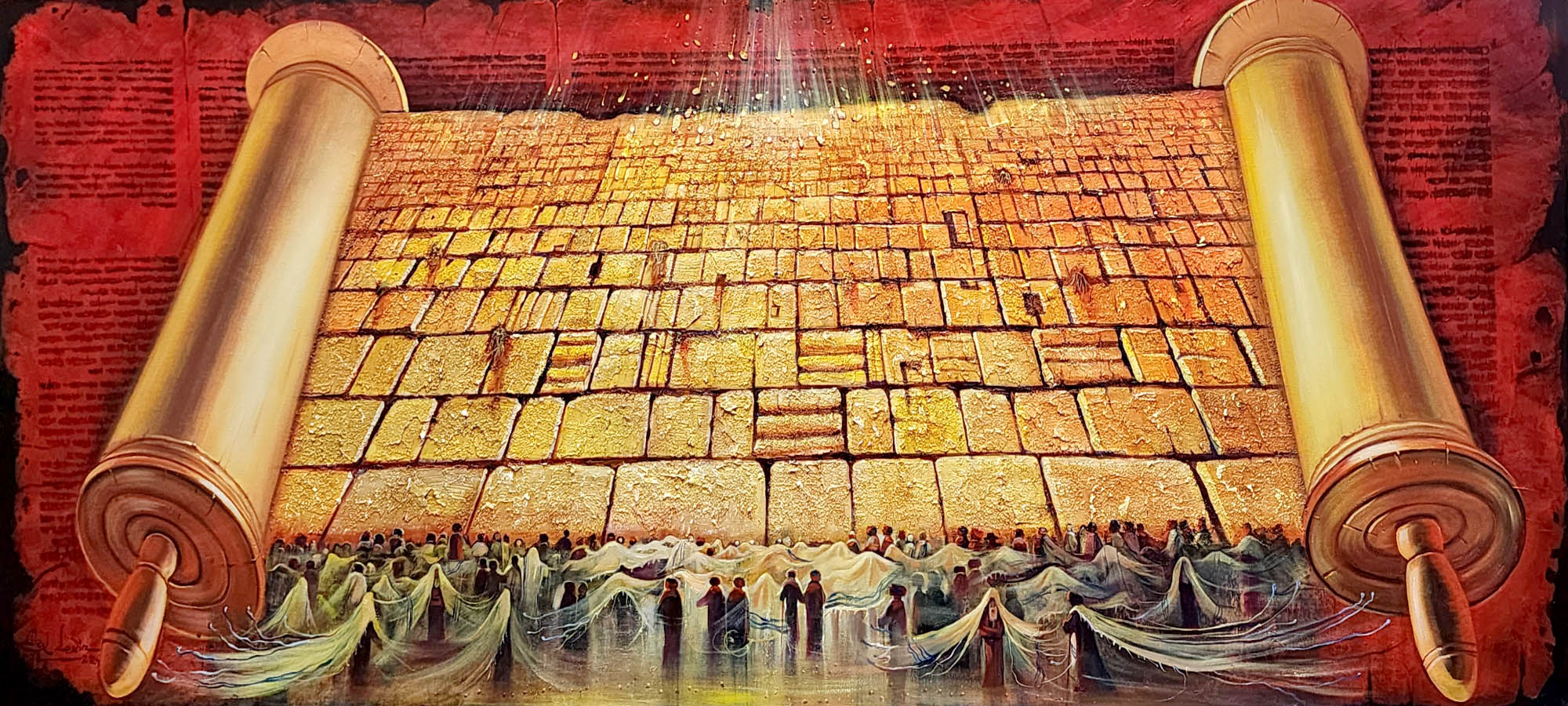
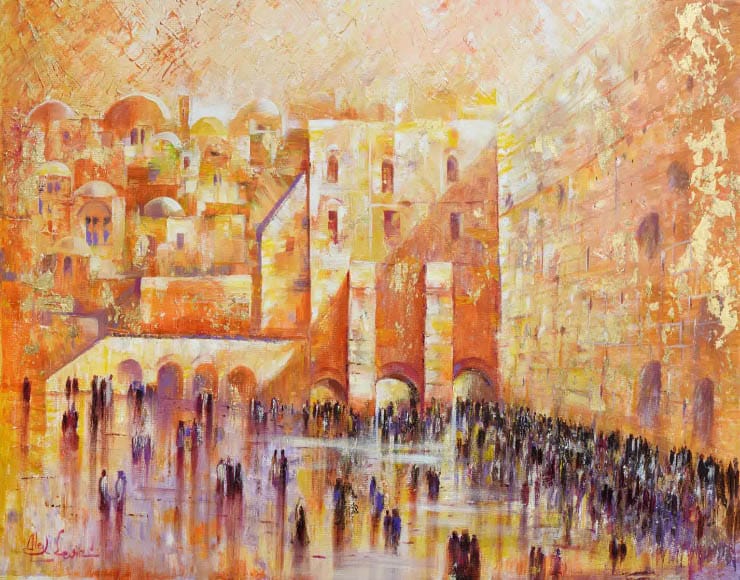
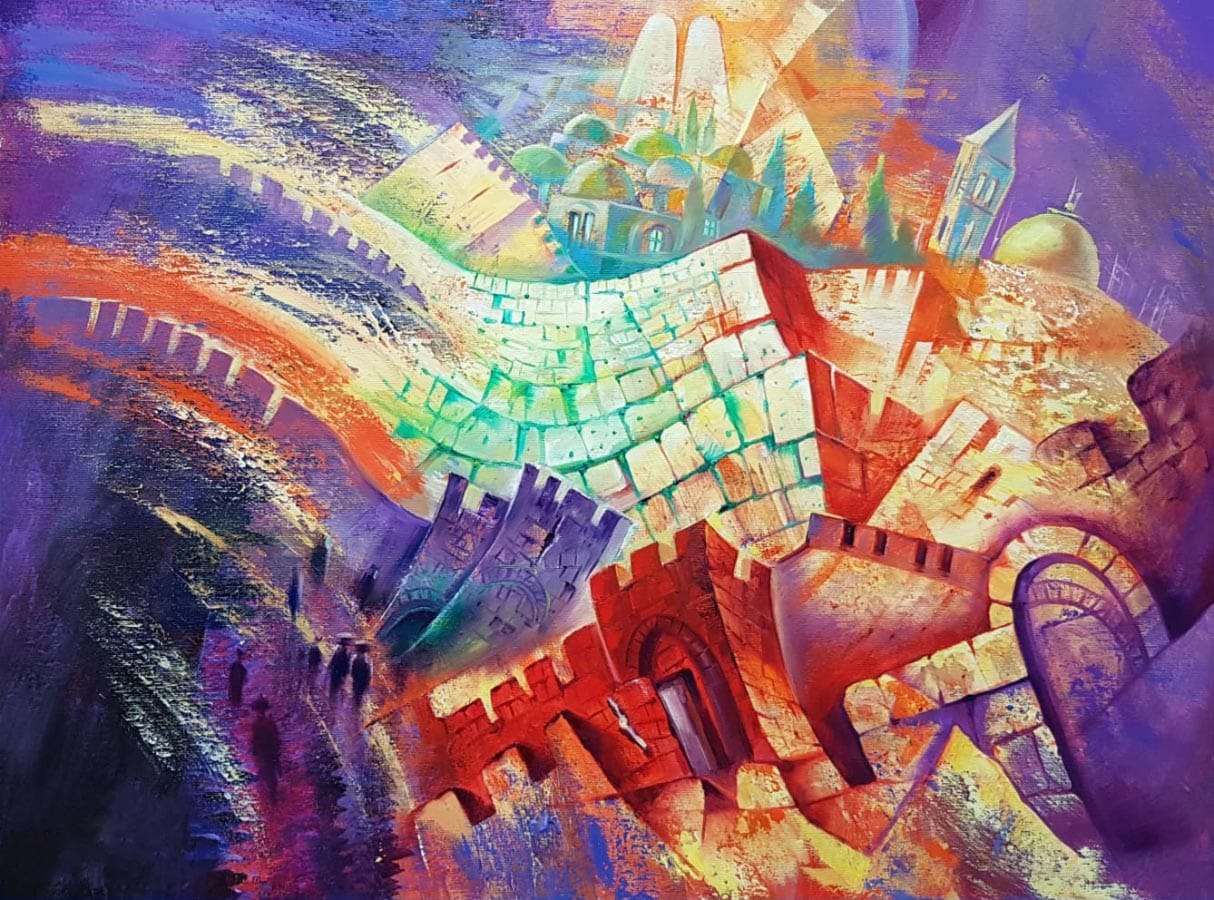
Artwork depicting the Western Wall can create an immediate connection with Jerusalem and Israel.
The goal is not simply to fill an empty wall.
The artwork should contribute something meaningful to the space.
Jerusalem Art for Synagogues
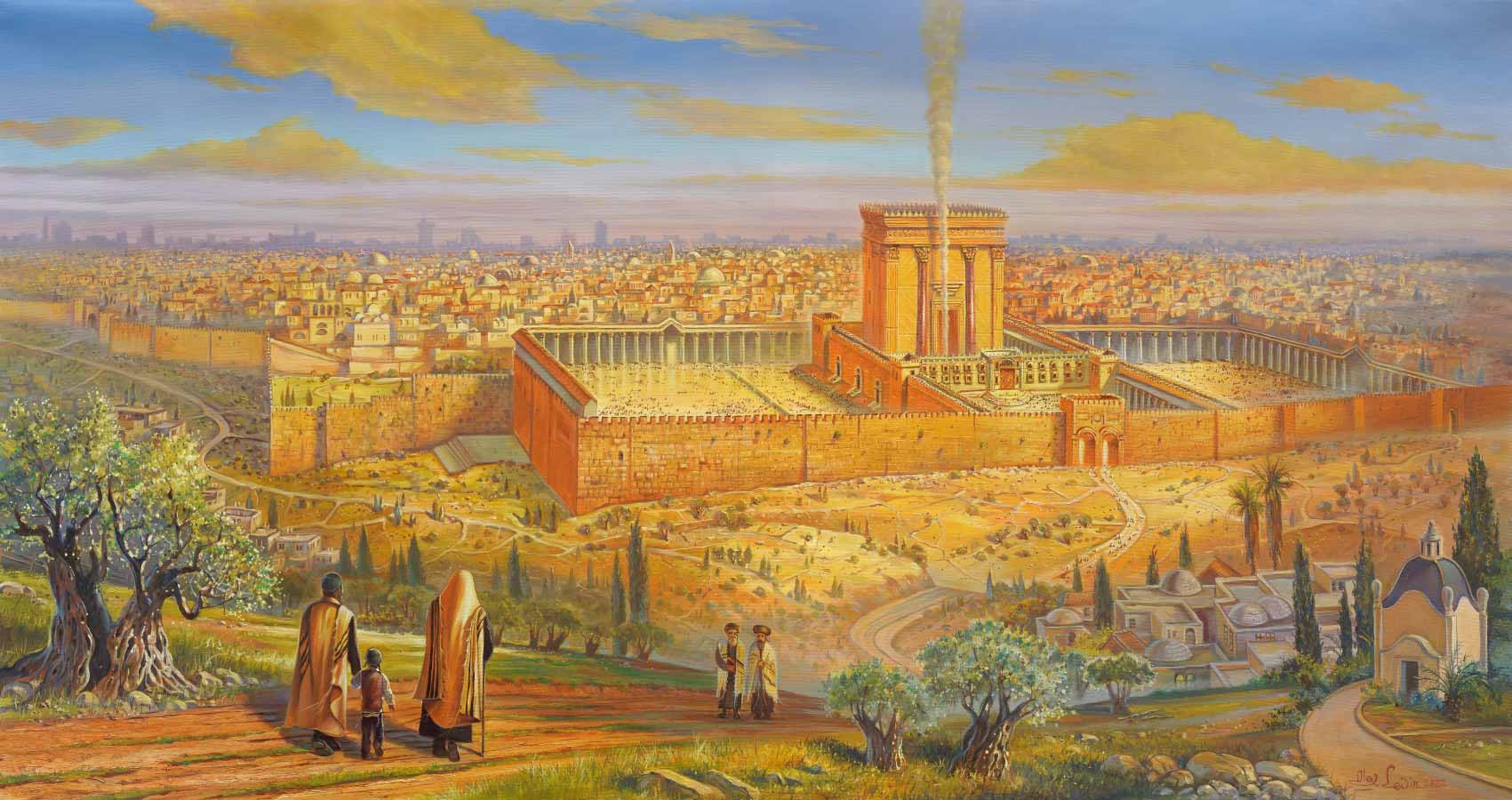
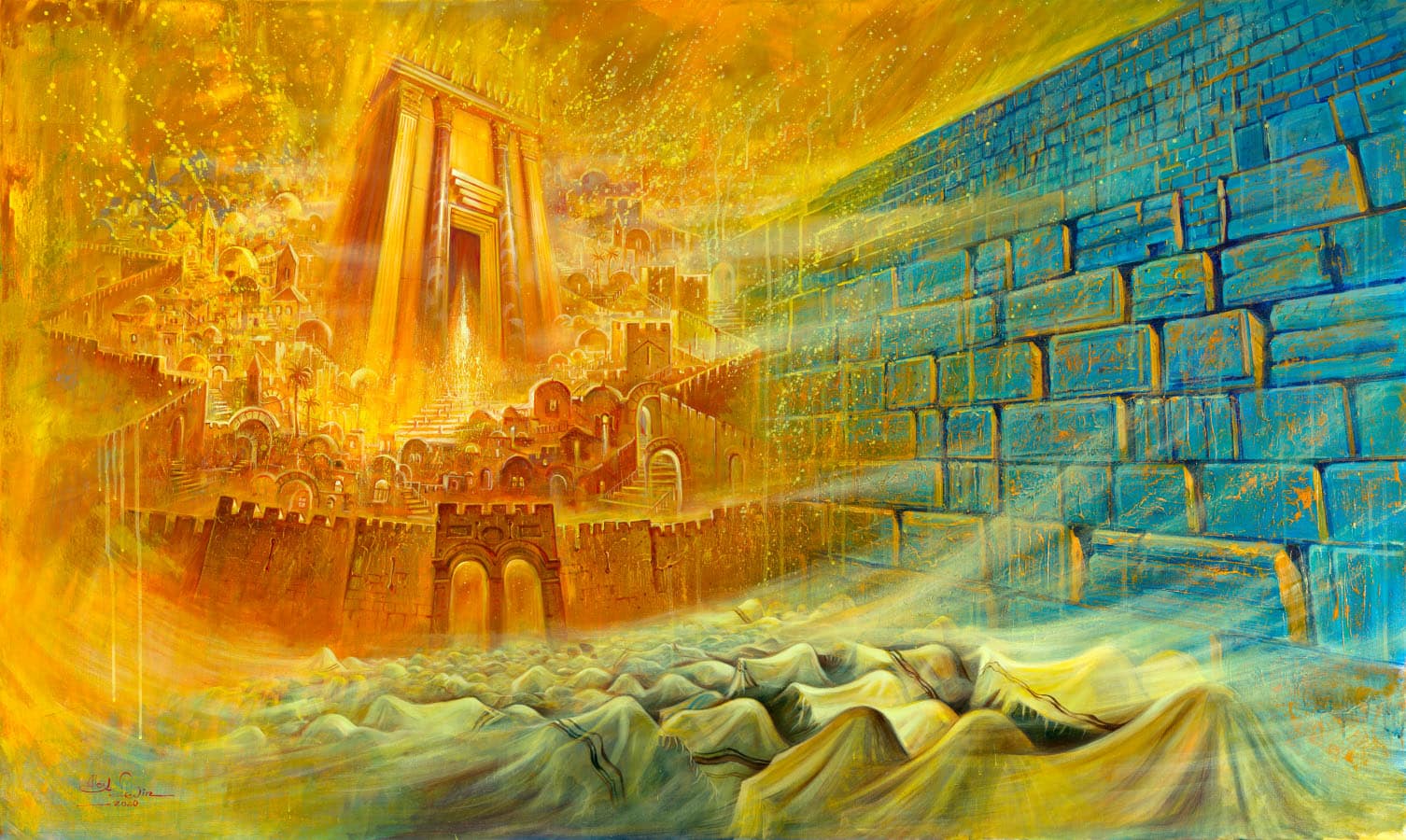
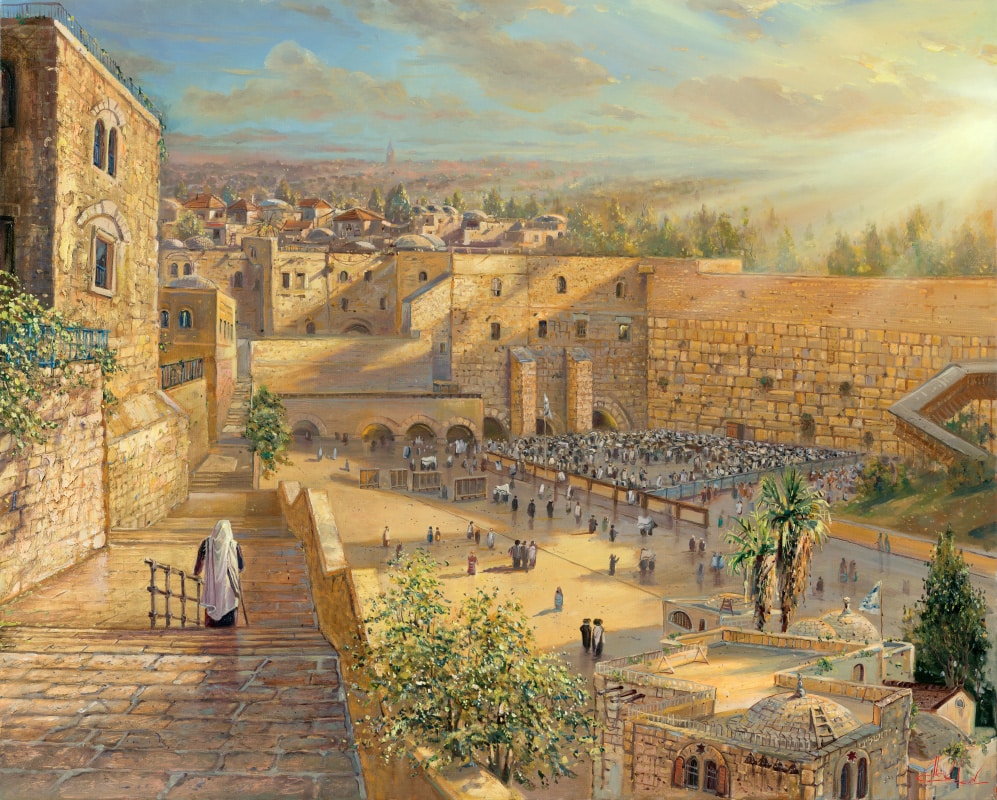
For many synagogues, Jerusalem is one of the most natural subjects for Jewish wall art.
Jewish prayer has a profound connection to Jerusalem. Synagogues themselves are traditionally arranged so that worshippers face toward Jerusalem during prayer.
This makes Jerusalem artwork particularly appropriate for synagogue entrances, social halls, offices, classrooms and other communal spaces.
The subject also offers tremendous artistic variety.
A synagogue might choose:
- a traditional Old City landscape;
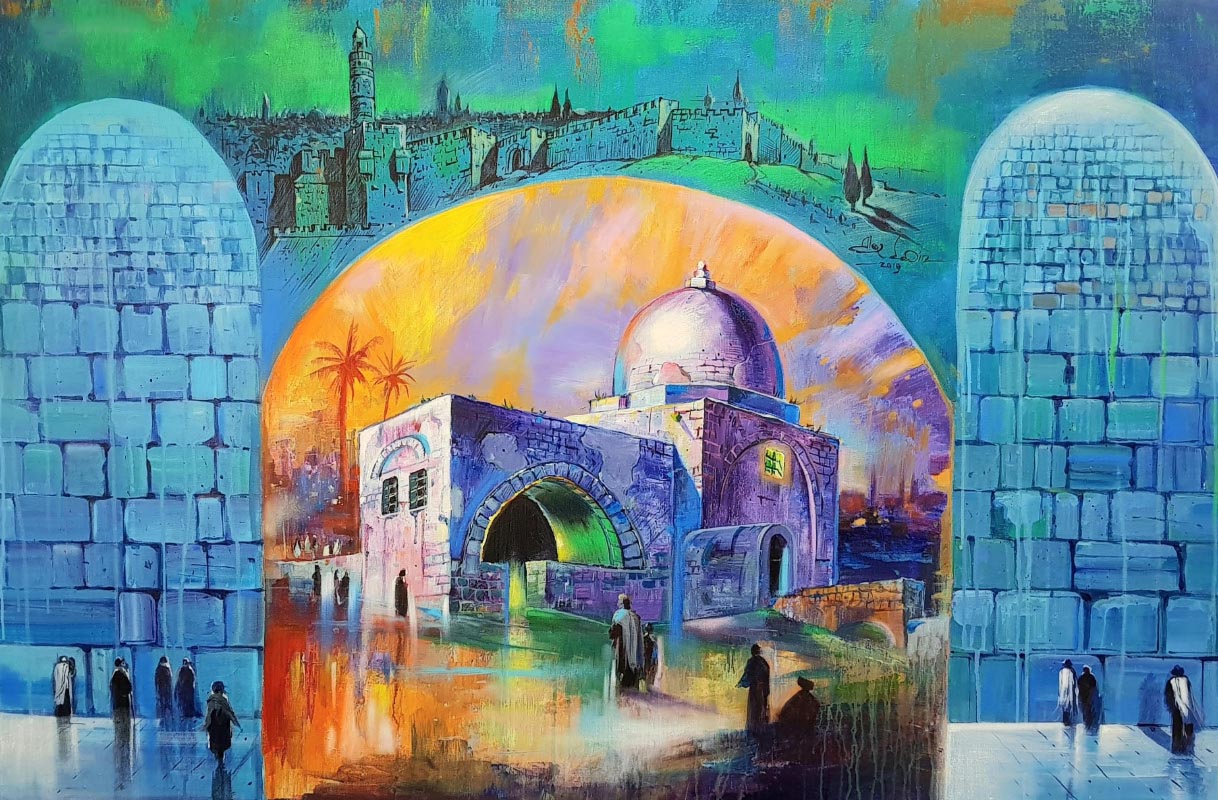
- a painting of the Western Wall;
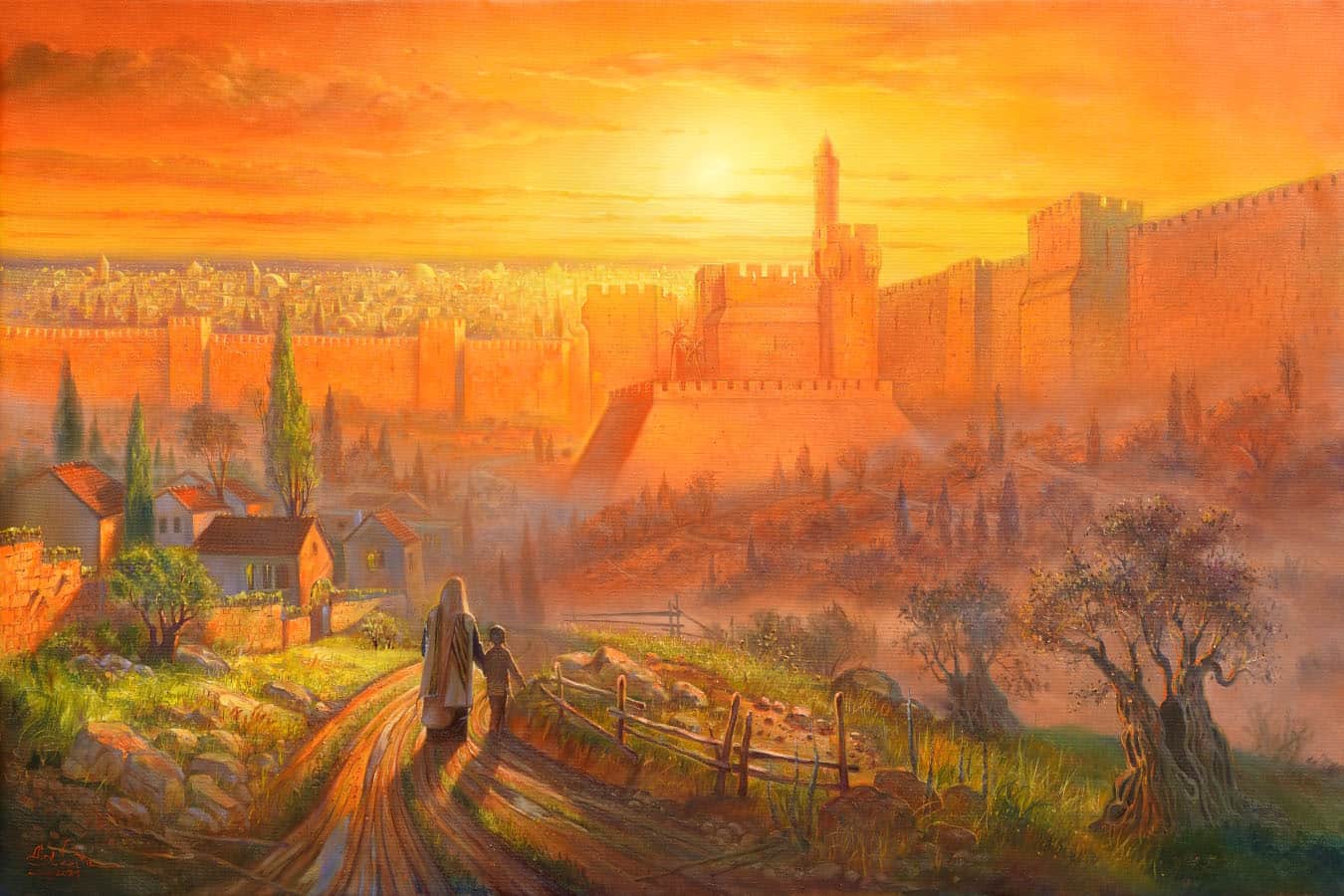
- Jerusalem at sunrise;
- Jerusalem of Gold;
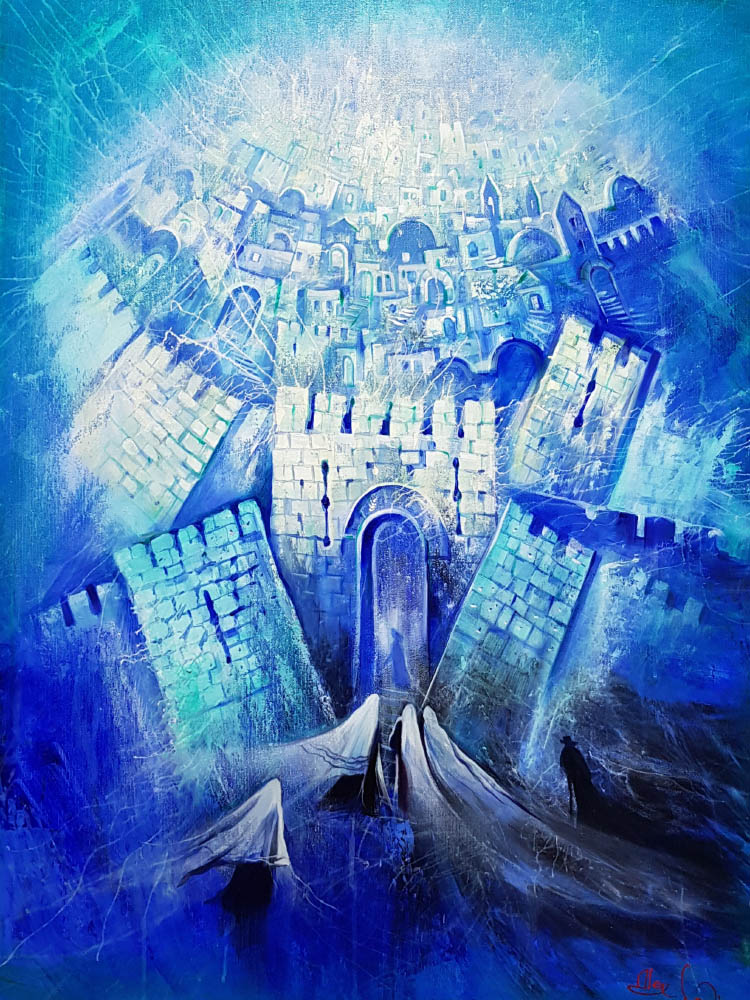
- the gates and walls of the Old City;
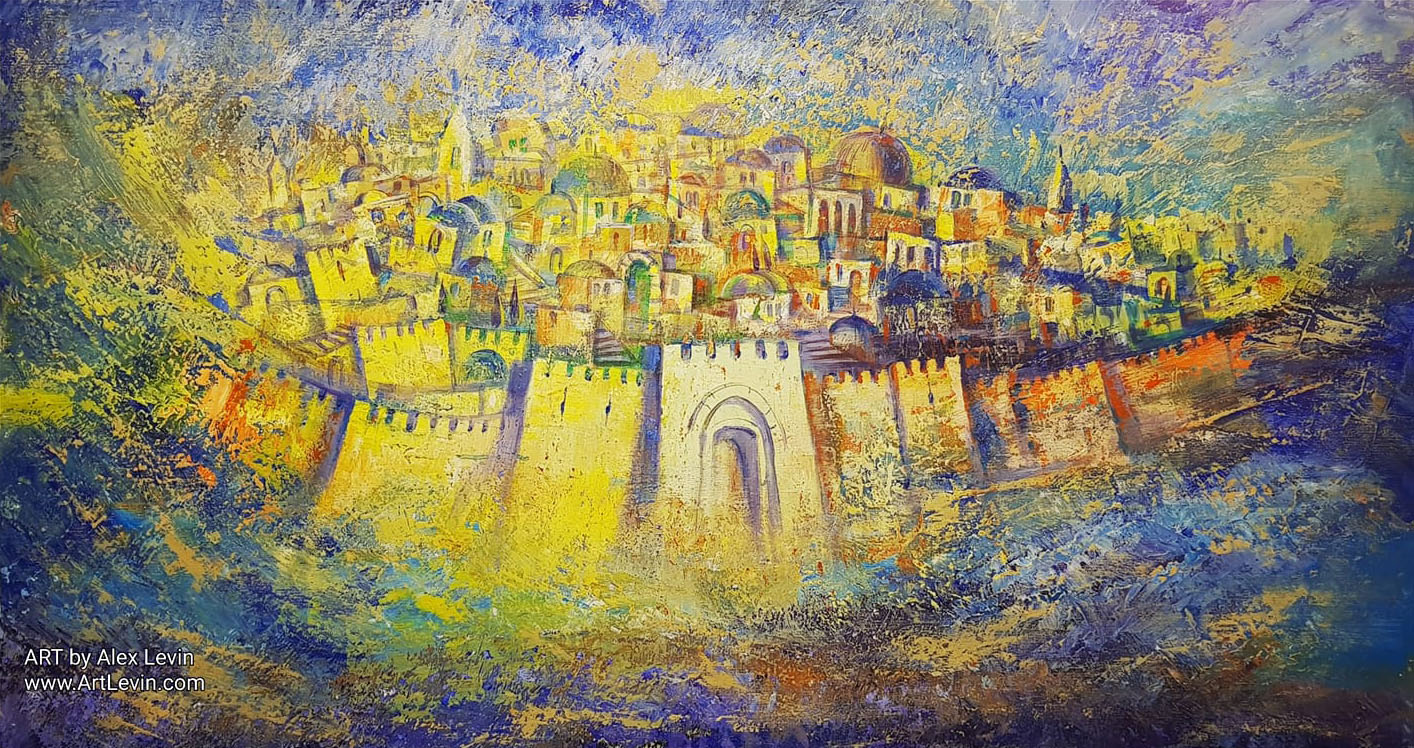
- an abstract interpretation of Jerusalem;
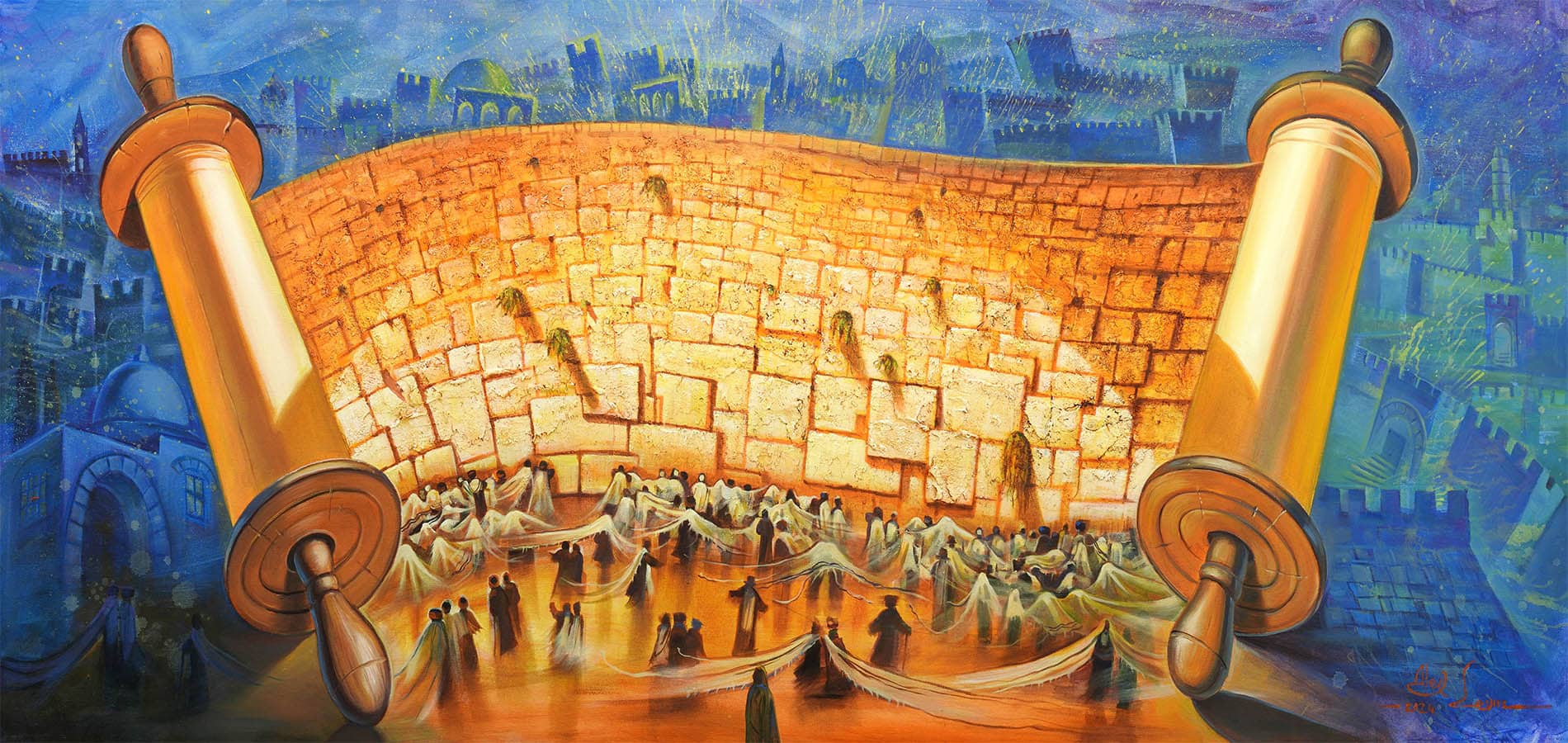
- an image combining Jerusalem with Jewish symbols or the Torah.
A traditional congregation may prefer a realistic painting.
A newly designed synagogue with contemporary architecture may look completely different with a large modern Jerusalem composition.
The subject remains timeless even when the artistic style changes.
Explore Jerusalem Paintings by Alex Levin


Western Wall Paintings and the Connection to Jerusalem
Within Jerusalem art, the Western Wall – the Kotel – has a particularly powerful visual presence.
The ancient stones are immediately recognizable to Jews throughout the world.
But different paintings of the Kotel can communicate very different emotions.
A quiet early-morning scene can suggest reflection.
A crowded scene filled with worshippers can emphasize Jewish community.
Warm golden light can evoke Jerusalem’s ancient character.
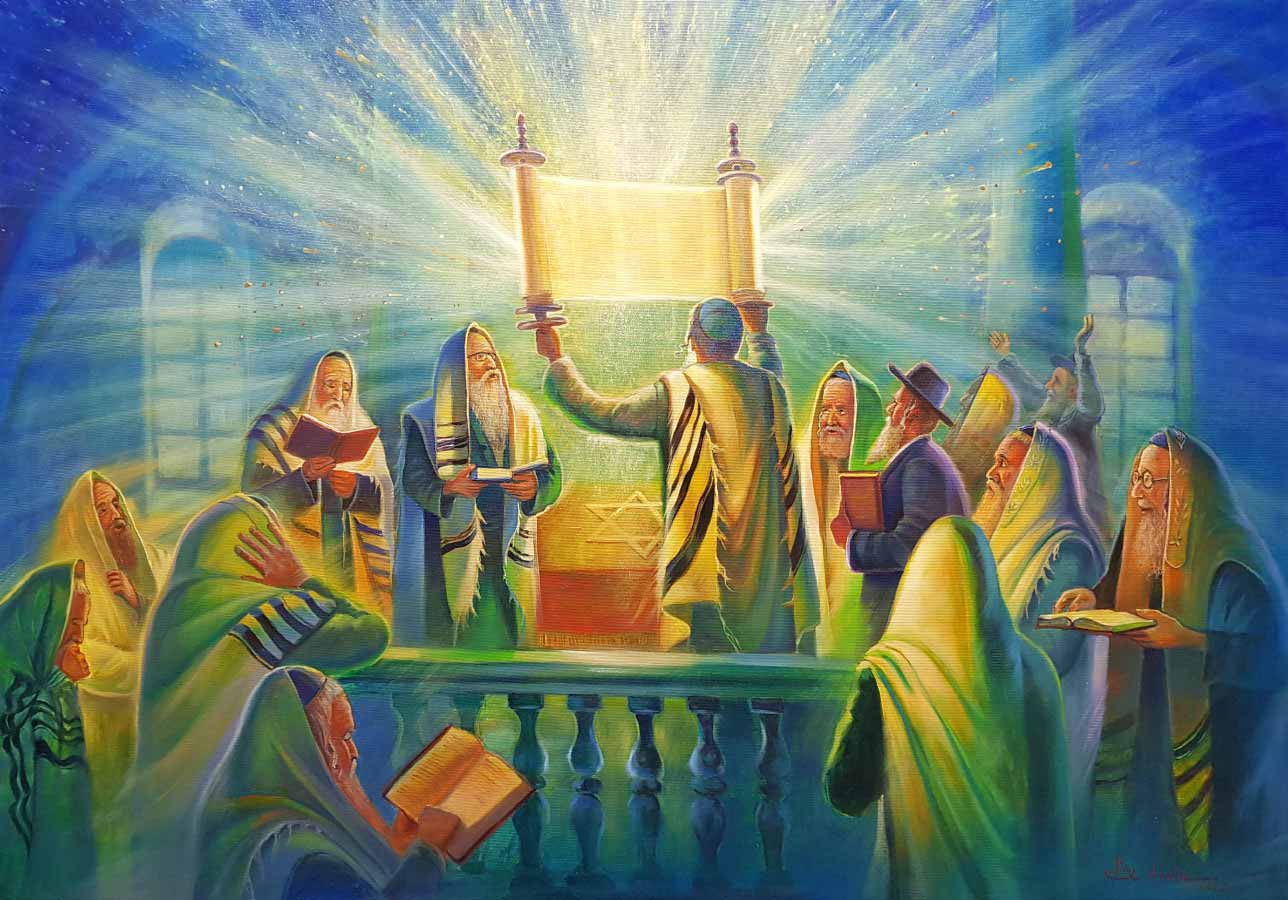
Contemporary interpretations may use abstraction and color to emphasize spiritual rather than architectural qualities.
For a synagogue, Chabad House or Jewish organization, a Kotel painting can create a direct visual connection between the local community and Jerusalem.
Torah Paintings for Synagogues and Jewish Schools
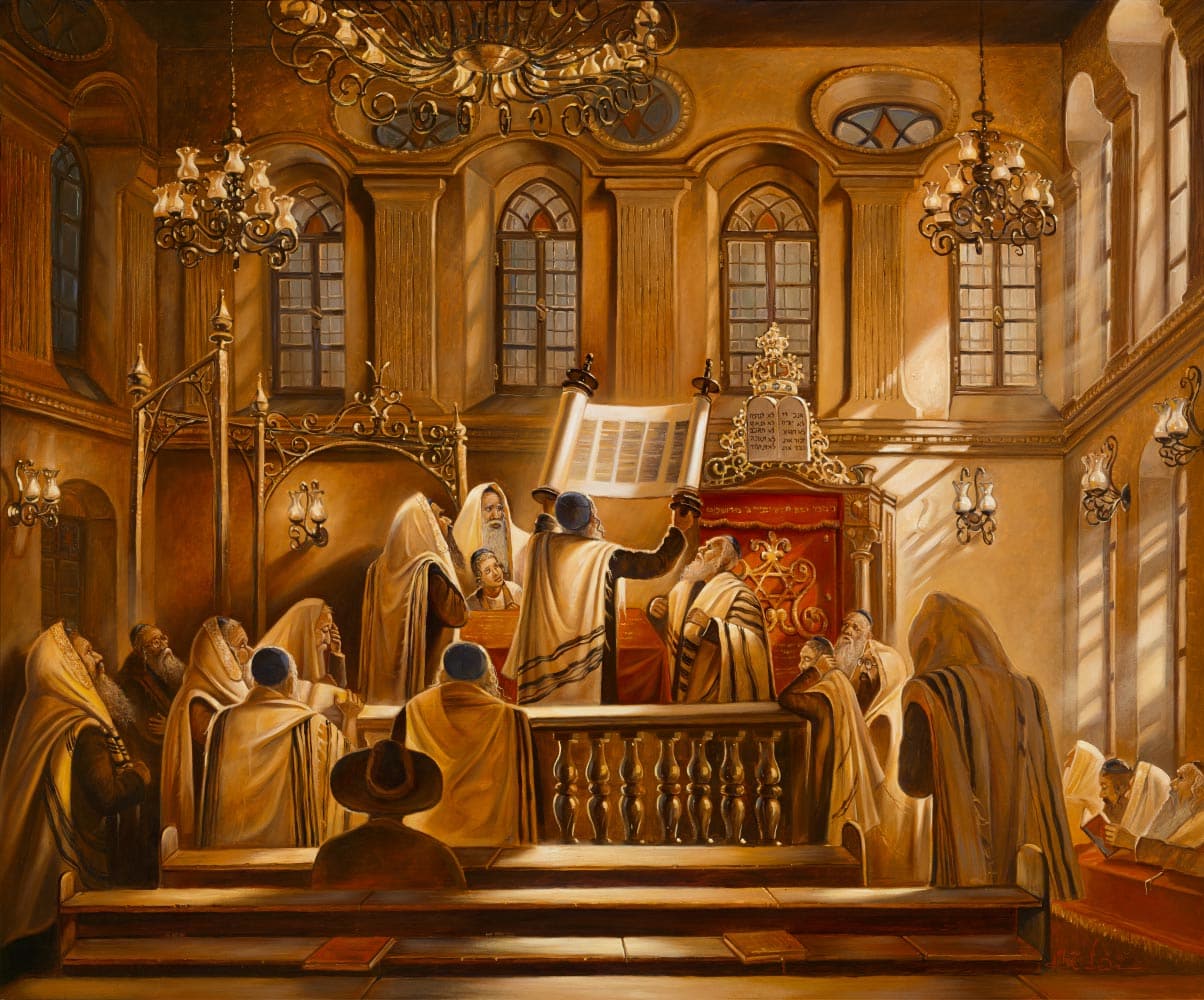
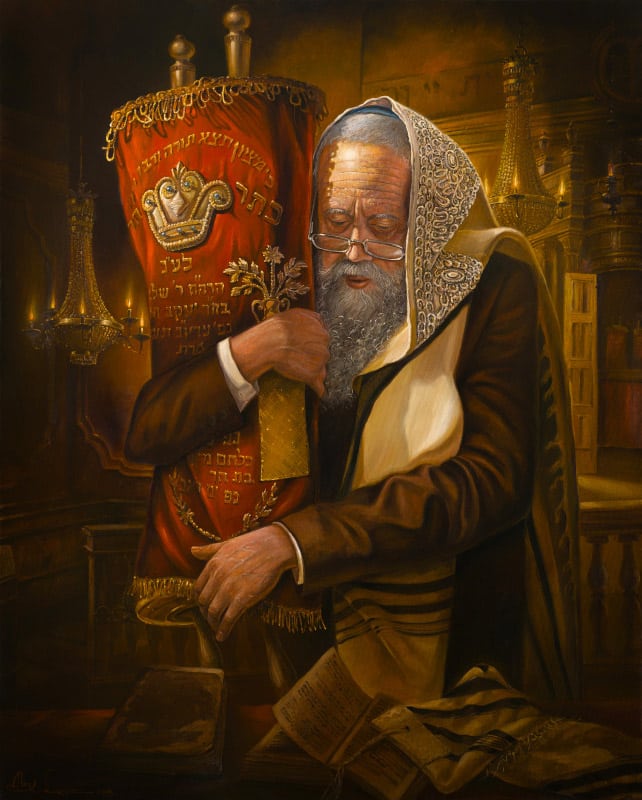
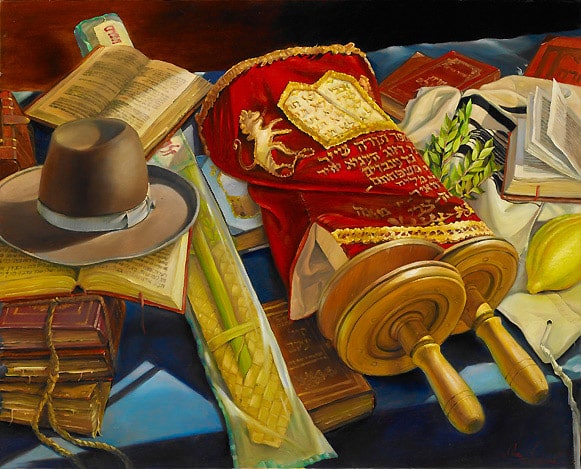
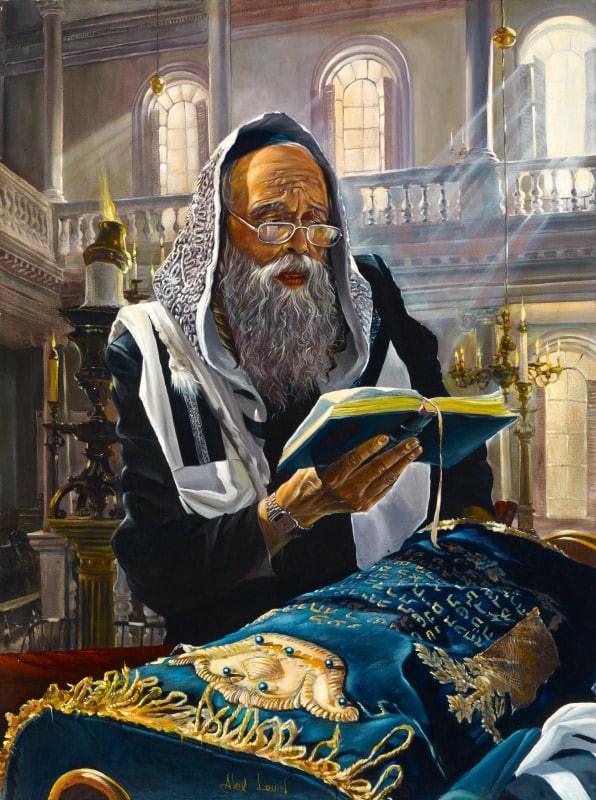
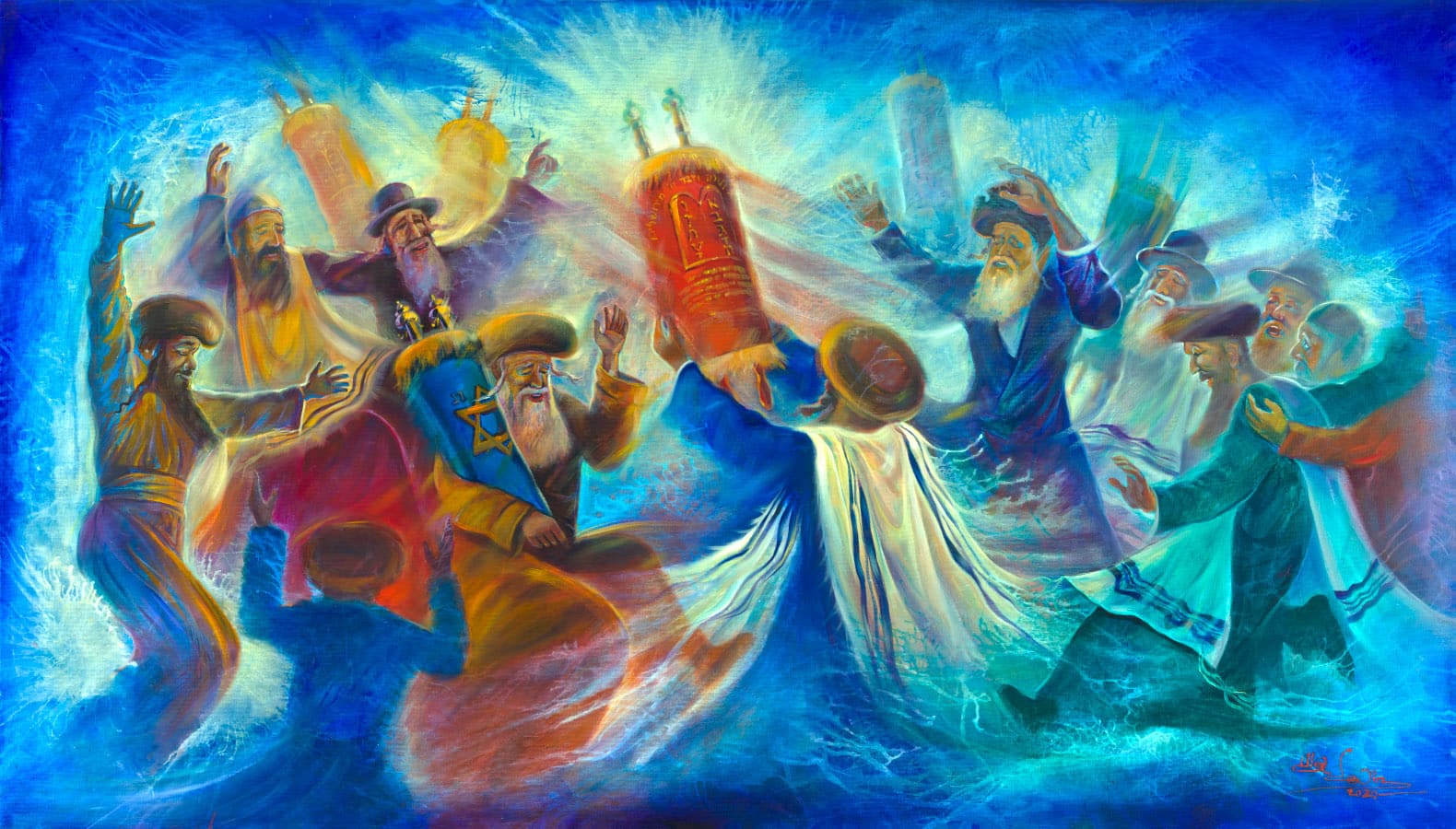
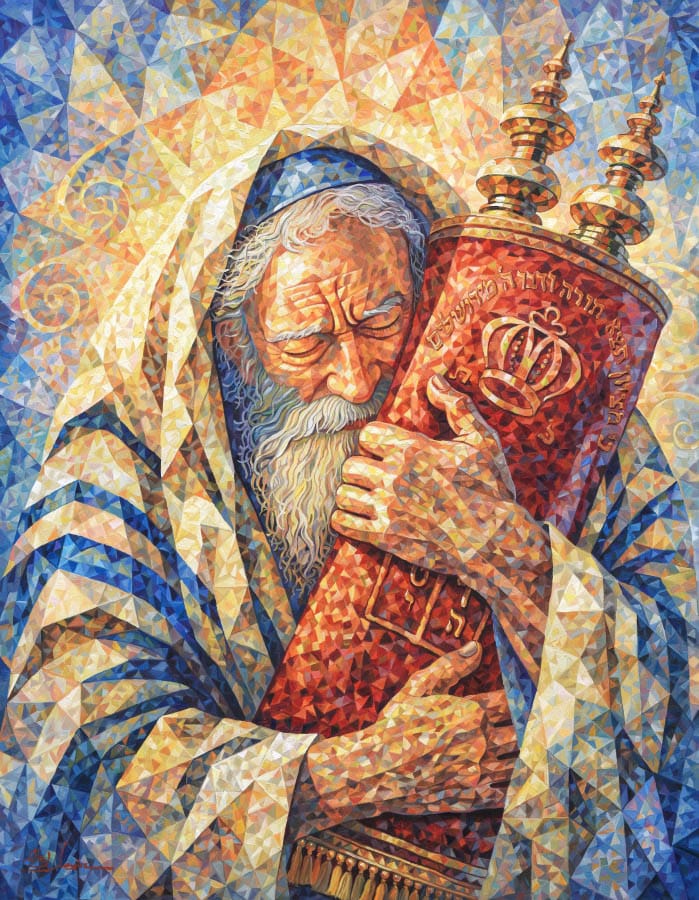
Few artistic subjects are more naturally suited to a Jewish communal institution than the Torah.
The Torah is central to synagogue life.
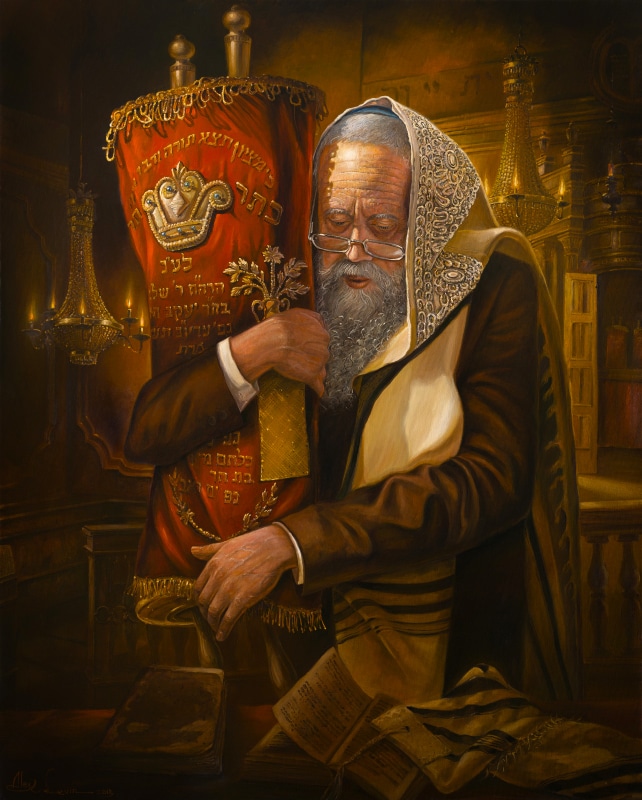
Artwork involving the Torah may depict:
- Torah study;
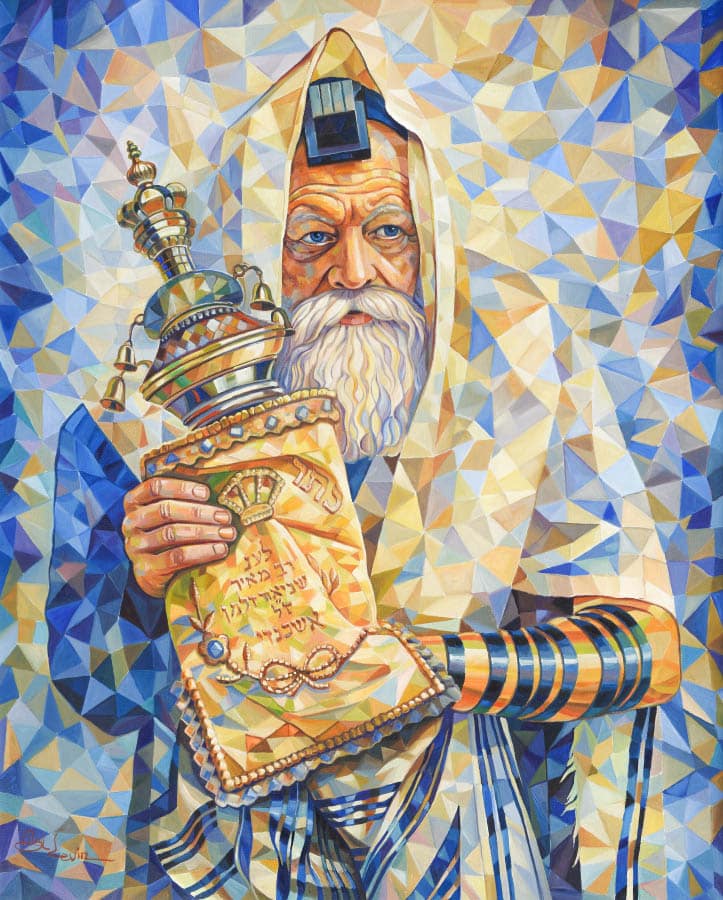
- a person carrying a Torah scroll;
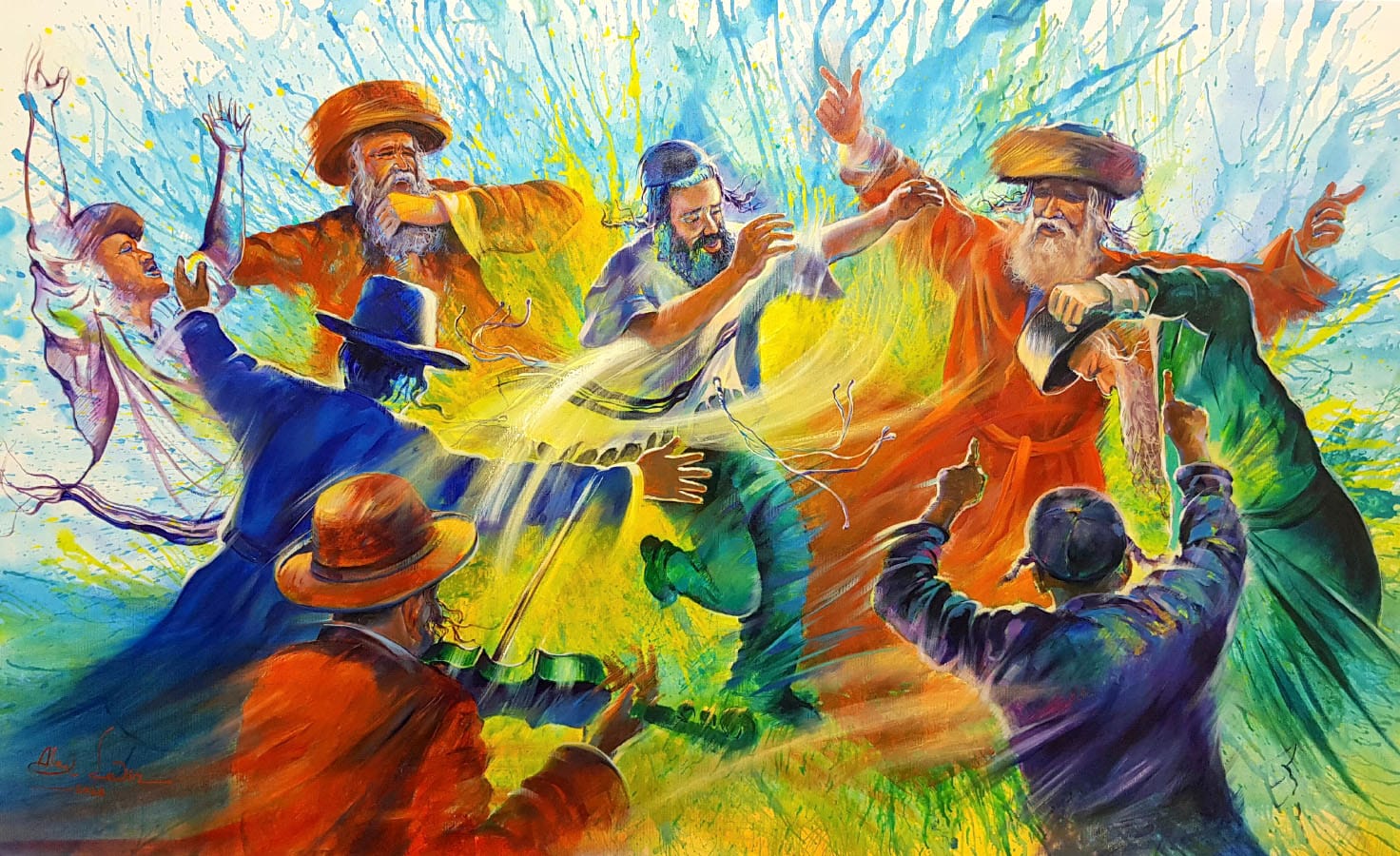
- dancing with the Torah;
- a rabbi teaching a student;
- several generations studying together;
- a Torah scroll surrounded by symbolic light;
- an abstract composition built around the Torah.
These images can work particularly well near a beit midrash, Jewish school classroom, Torah-study area, library or synagogue lobby.
They communicate an important idea without requiring words:
Jewish learning continues from generation to generation.
Art About Jewish Generations and Continuity
Jewish communal institutions exist not only for the people who use them today.
They are built for the future.
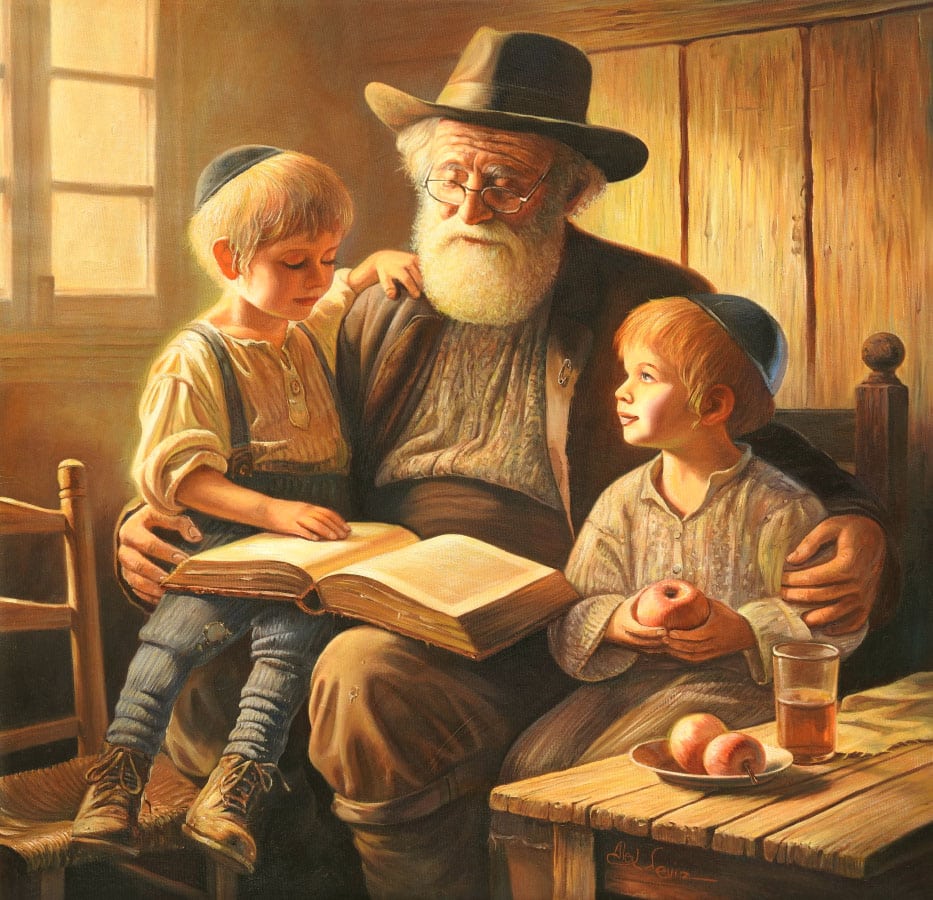
That makes L’Dor V’Dor – from generation to generation – an especially meaningful theme for synagogue artwork.
A painting of a grandfather studying with grandchildren, a parent teaching a child or generations gathered around the Torah can express Jewish continuity visually.
This type of Jewish art works especially well in:
- synagogue entrance halls;
- Jewish schools;
- family-programming areas;
- donor walls;
- community centers;
- libraries;
- educational buildings.
The artwork becomes a reminder that Jewish tradition survives because one generation passes it to the next.
Shabbat Art for Jewish Community Spaces
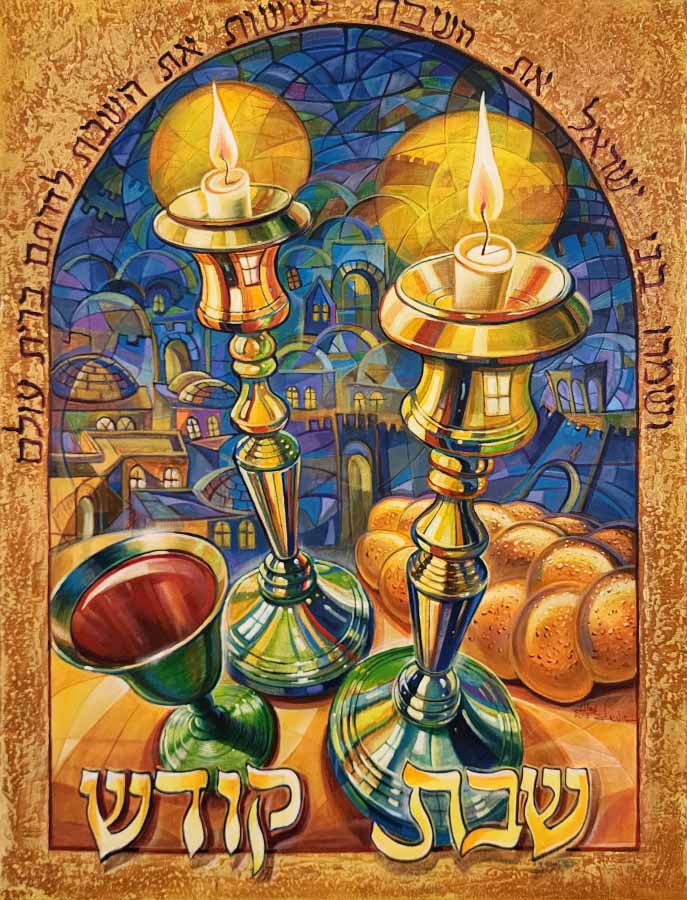
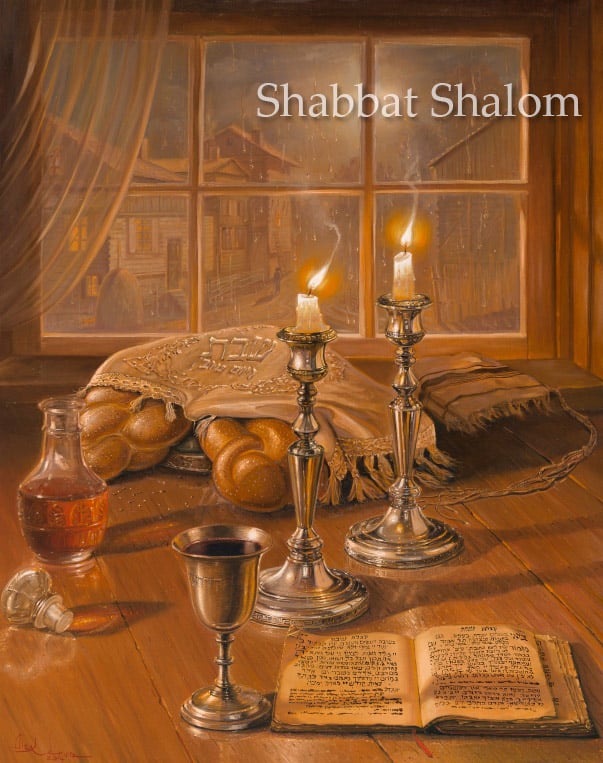
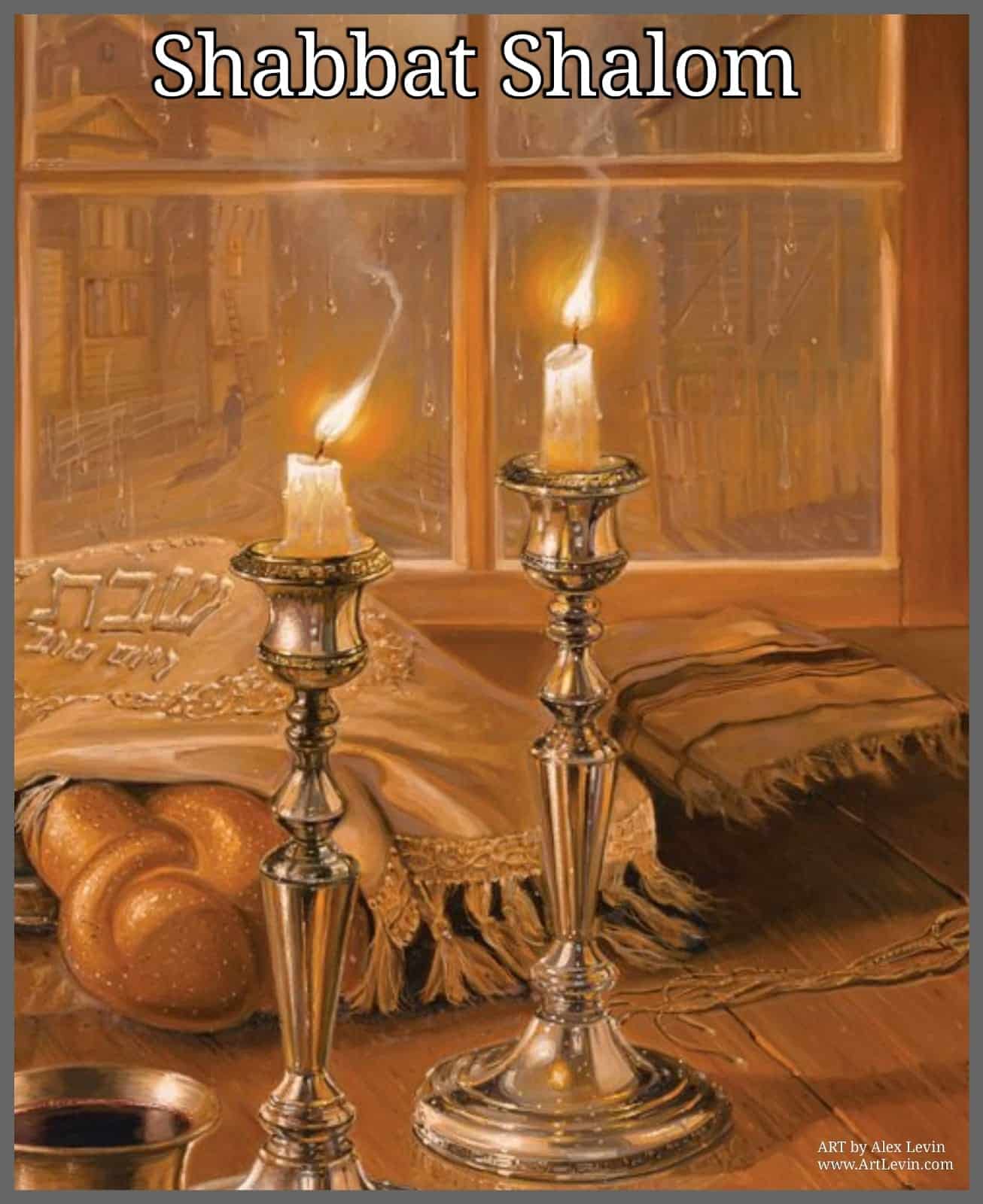
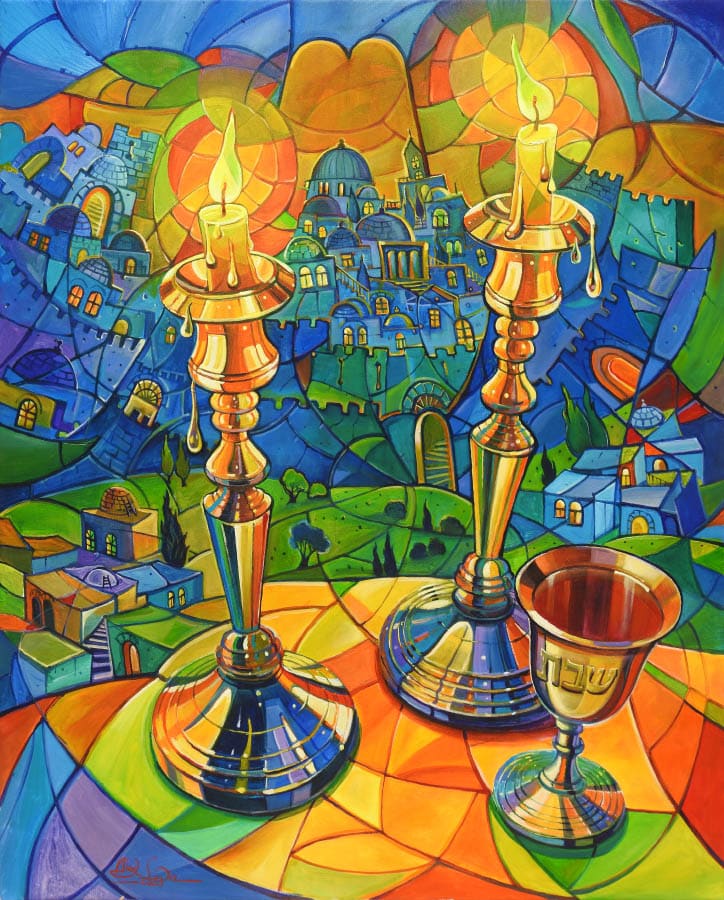
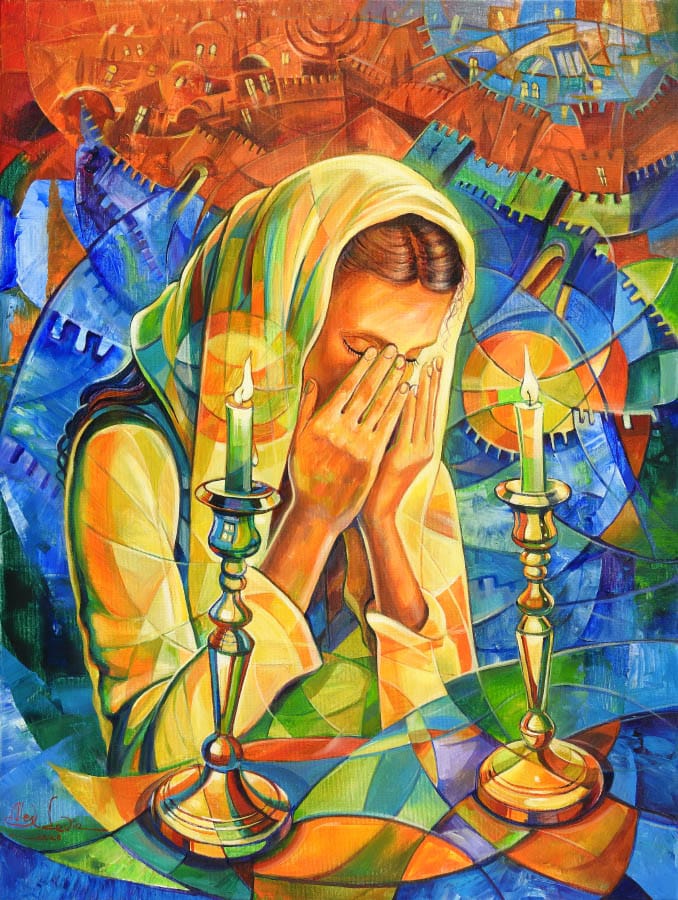
Shabbat paintings create a different atmosphere.
Instead of monumental architecture or public prayer, they often focus on warmth, family and light.
Common subjects include:
- Shabbat candles;
- a family around the Shabbat table;
- Jerusalem on Friday evening;
- people walking to synagogue;
- Kiddush;
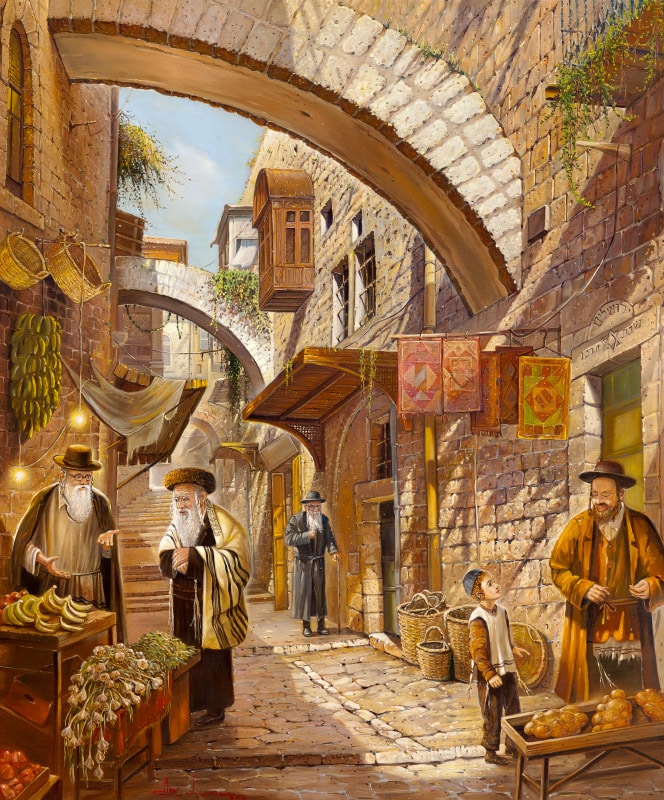
- the quiet atmosphere of the Jewish Quarter on Shabbat.
These subjects can work especially well in a synagogue social hall, dining room, community center or gathering area.


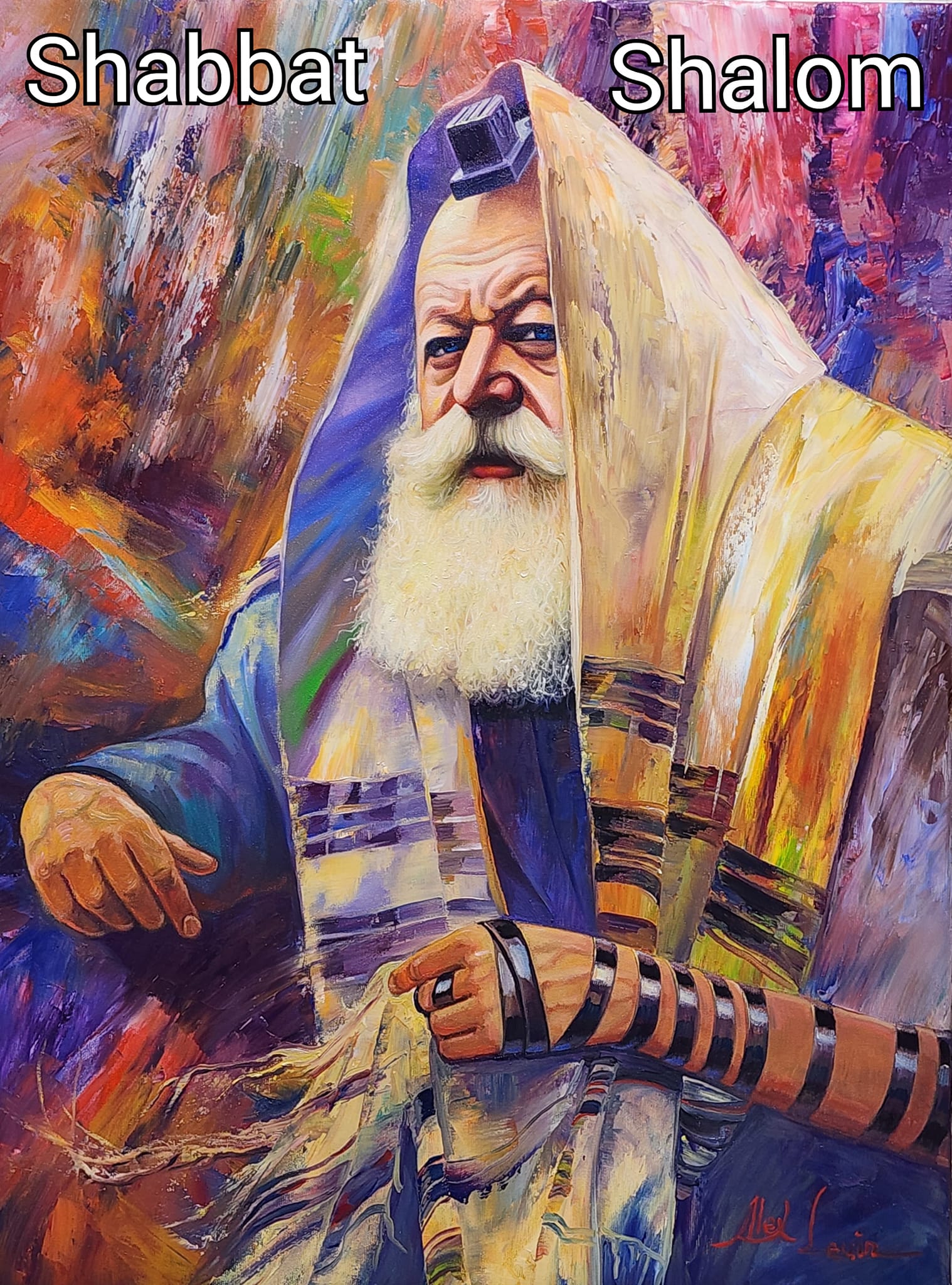
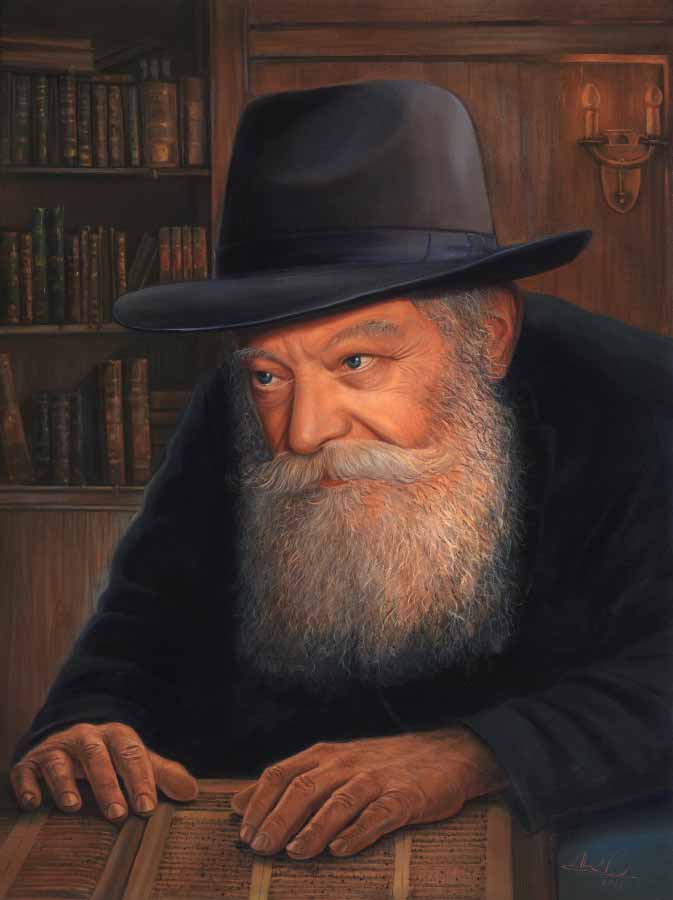
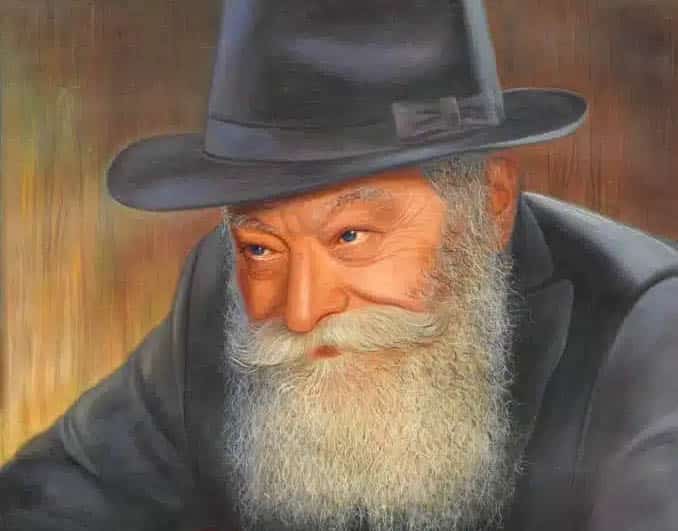
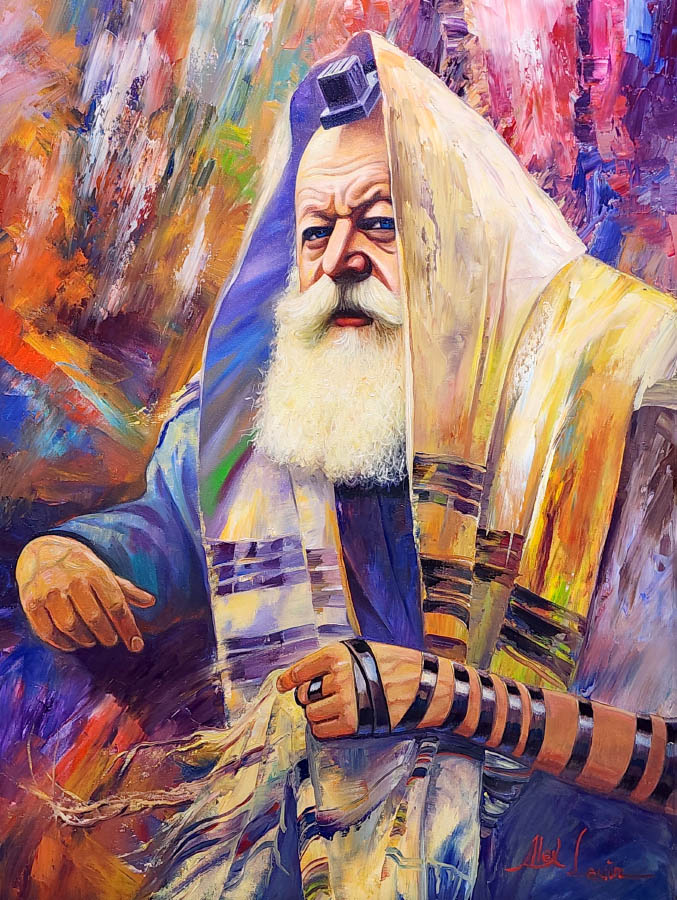
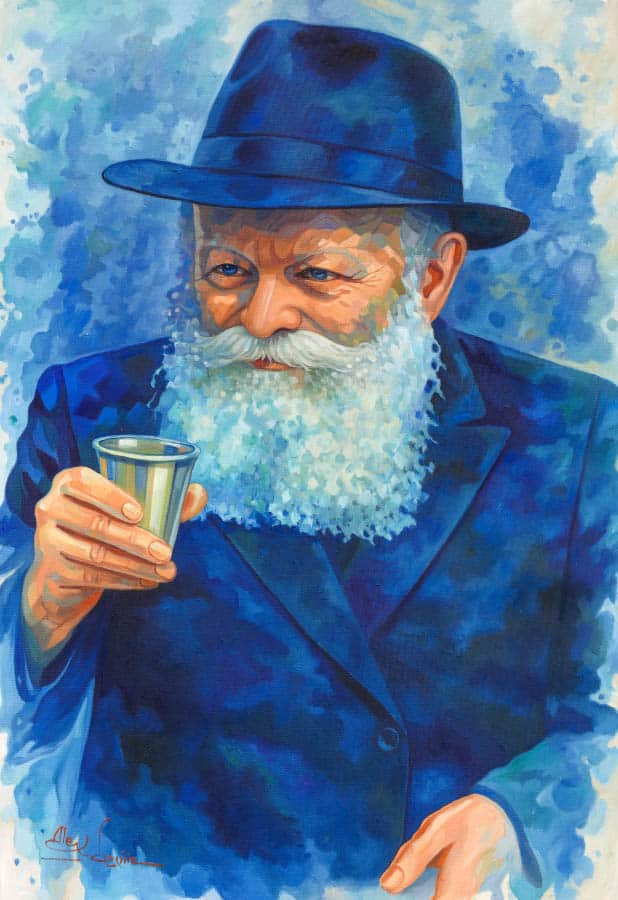
Paintings of the Lubavitcher Rebbe in a Chabad House
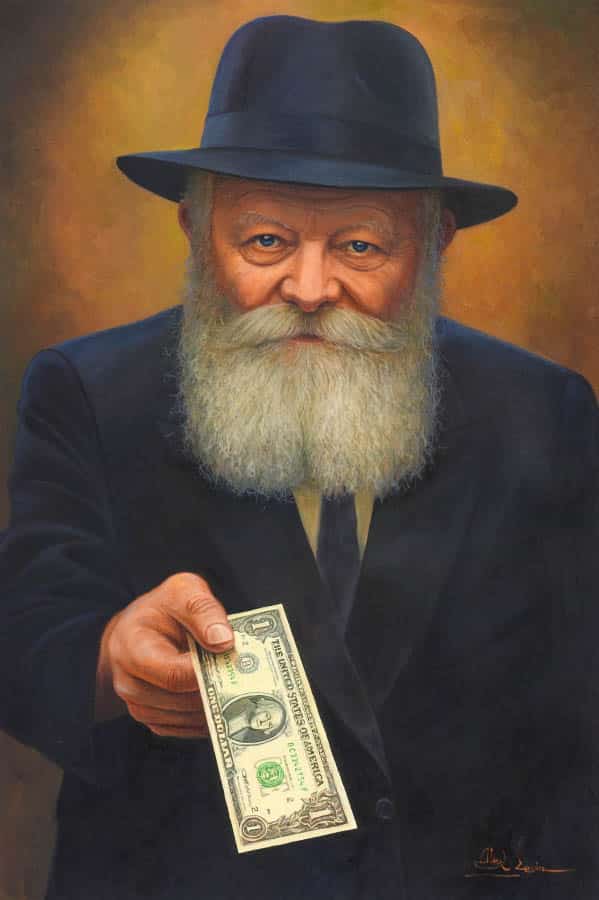
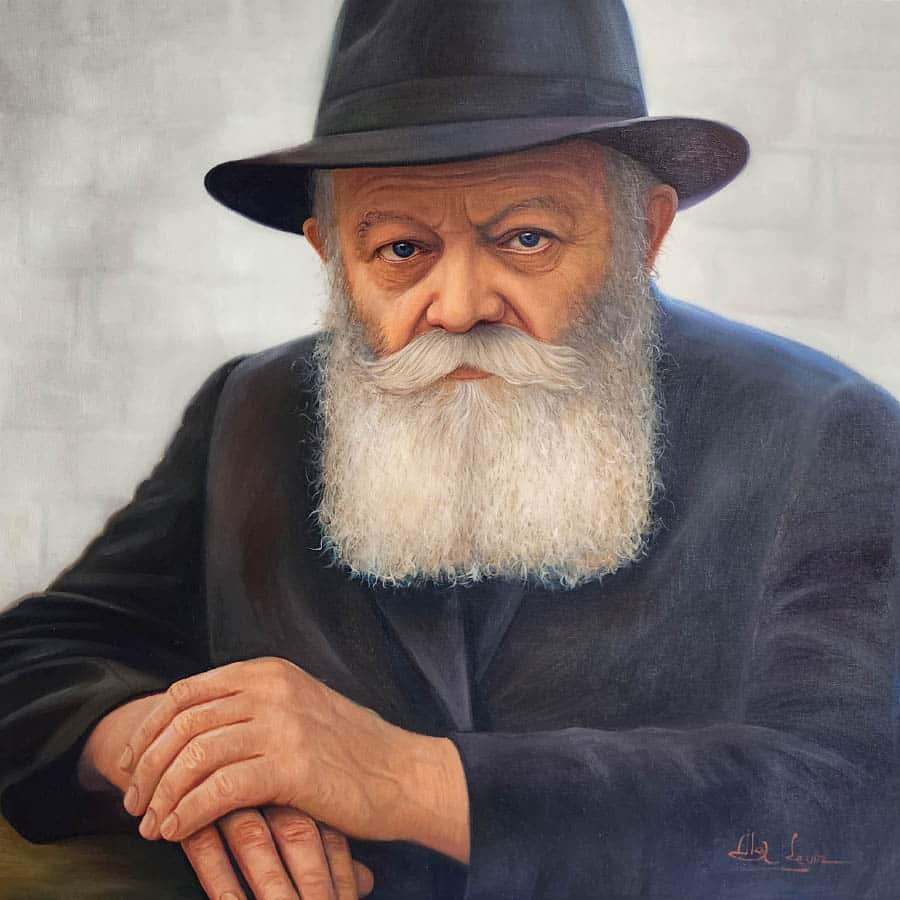
For a Chabad House, portraits of Rabbi Menachem Mendel Schneerson, the Lubavitcher Rebbe, have a particular meaning.
The worldwide network of Chabad emissaries expanded dramatically under the Rebbe’s leadership. His photograph or portrait is therefore familiar in Chabad institutions throughout the world.
A Rebbe portrait can serve as a visual connection to his teachings, leadership and the mission that inspired Chabad emissaries to establish Jewish communities around the world.
There are several artistic approaches available.
A traditional portrait emphasizes the Rebbe himself.
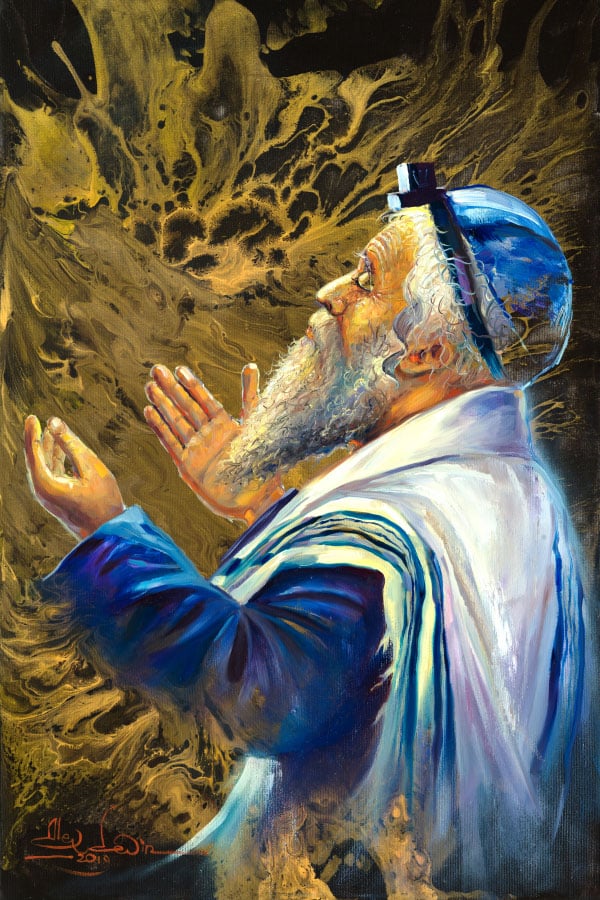
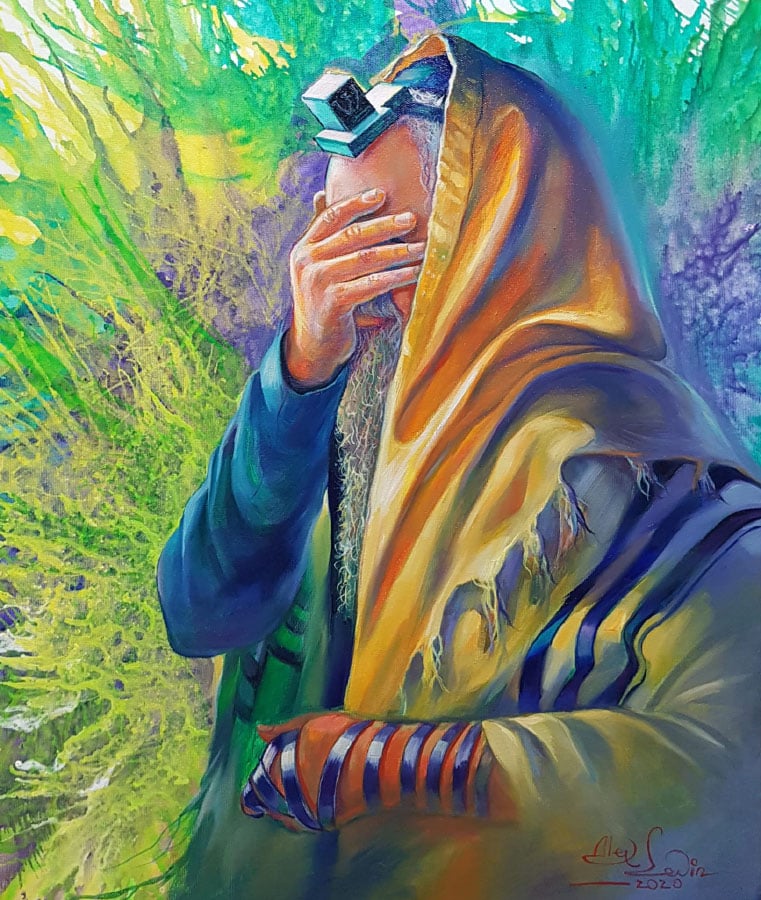
A painting of the Rebbe praying creates a contemplative atmosphere.
An image of the Rebbe with a Torah connects his portrait directly with Jewish learning.
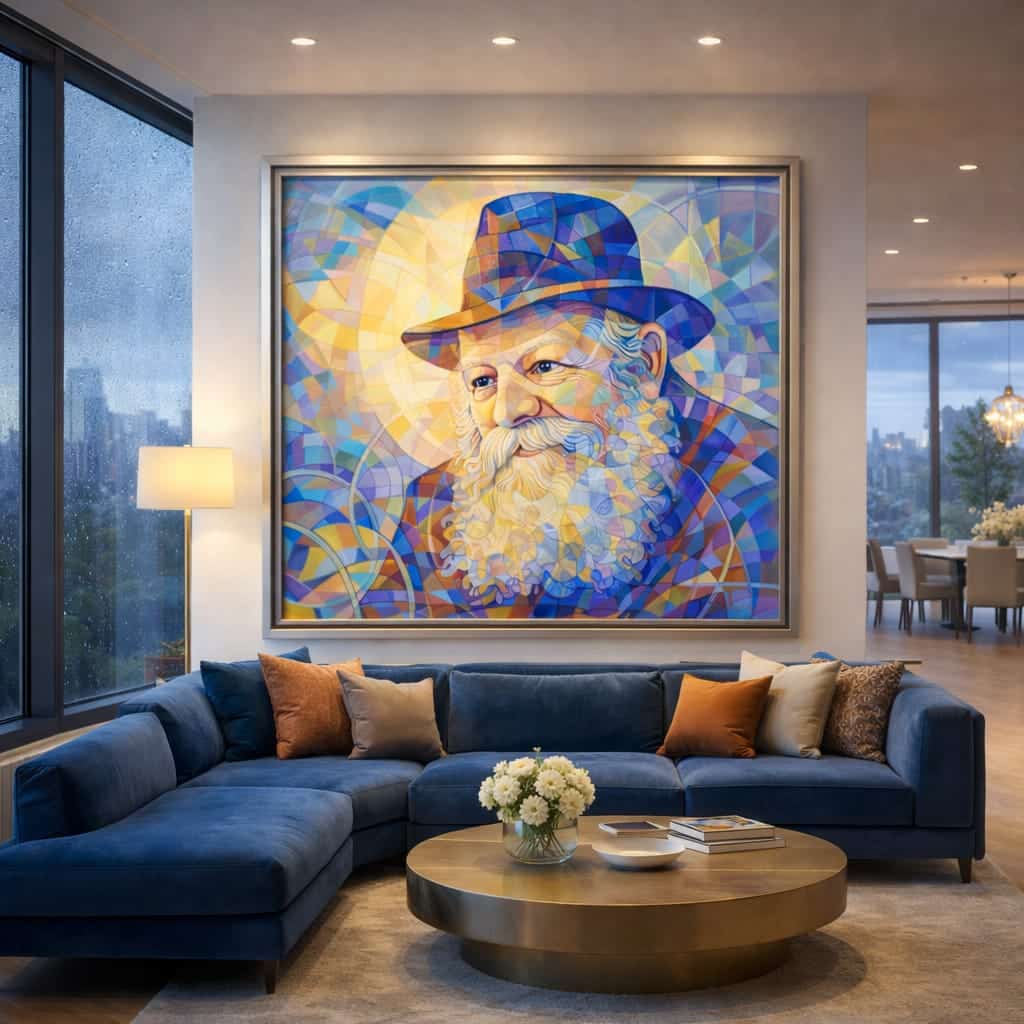
A contemporary interpretation using light and abstraction may be particularly suitable for a modern Chabad House interior.
Explore Paintings of the Lubavitcher Rebbe


Can Contemporary Jewish Art Work in a Synagogue?
Absolutely – depending on the space and the community.
Jewish art does not have to look historic in order to express Jewish ideas.
Contemporary Jewish art can incorporate:
- Jerusalem;
- Hebrew letters;
- the Torah;
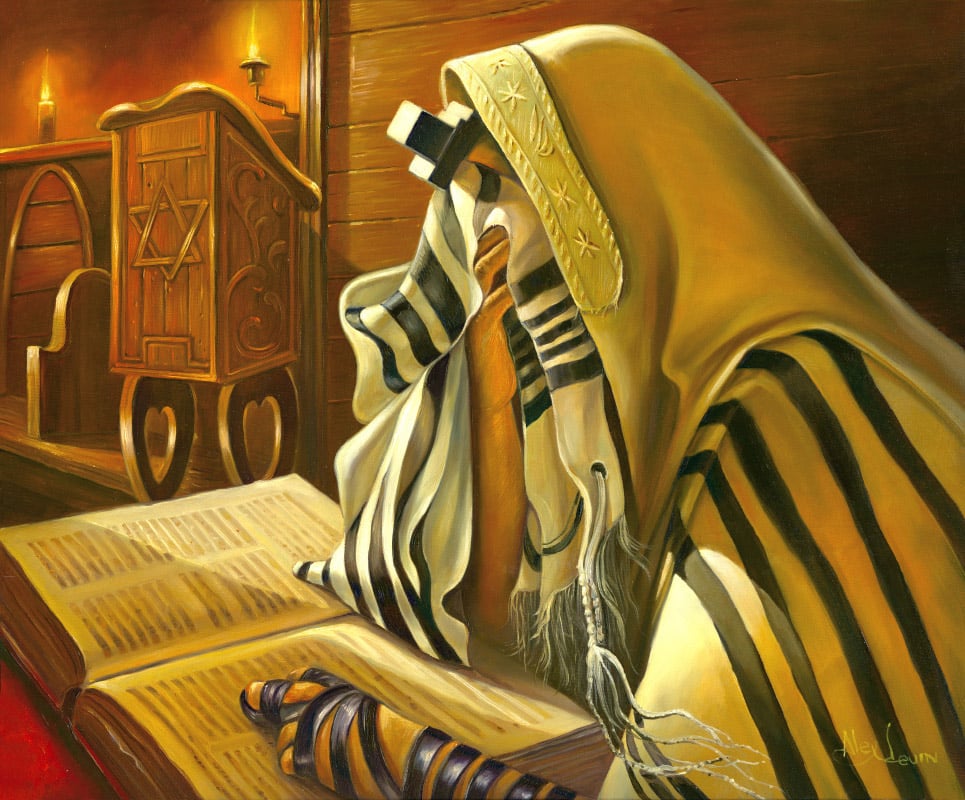
- Jewish prayer;
- Shabbat;
- Jewish historical figures;
- symbolic light;
- the Twelve Tribes of Israel;
- abstract representations of Jewish continuity.
This can be especially effective in recently renovated synagogues, modern Jewish centers and contemporary Chabad Houses.
Abstract artwork also allows designers to coordinate the colors and scale of the painting with the architecture while preserving meaningful Jewish content.
Explore Contemporary Jewish Art


Are Paintings of People Appropriate in a Synagogue?
This requires more care.
Jewish history contains many examples of figurative synagogue art. The famous third-century synagogue at Dura-Europos contained extensive paintings of people and biblical scenes.
At the same time, Jewish communities and rabbinic authorities have differed over the use and placement of figurative images in synagogues.
There is also a practical concern: artwork should not distract people during prayer.
Jewish law discussed in the Shulchan Aruch cautions against placing decorative drawings where they could draw a person’s attention while praying and specifically recommends that synagogue wall decorations not be positioned at eye level in a way that interferes with concentration.
For this reason, the question is not merely:
“Is this painting Jewish?”
It is also:
“Where will the painting be displayed?”
Artwork suitable for a lobby, hallway, social hall, classroom or office may not necessarily be the best choice directly in front of someone praying in the sanctuary.
For artwork intended for the prayer sanctuary itself, particularly figurative art, a congregation should consult its rabbi regarding its own traditions and halachic standards.
Where Should Artwork Be Placed in a Synagogue?
Placement can be as important as the artwork itself.
The Entrance or Lobby
The lobby is an excellent location for visually powerful Jewish art.
Visitors have time to stop and look.
A large Jerusalem painting, Jewish historical scene or contemporary Judaica work can immediately establish the identity of the institution.
Social Hall
Social halls are ideal for artwork relating to Jewish celebrations, Shabbat, Jerusalem and Jewish family life.
Because people gather there for meals, celebrations and communal events, warmer and more narrative artwork works especially well.
Hallways
Long hallways are useful for creating a series.
For example:
Jerusalem series: Old City gates, the Kotel, Jerusalem streets and the Temple.
Jewish life series: Shabbat, Torah study, Jewish holidays and family.
Historical series: shtetl life and Jewish memory.
Displaying several related works can turn an otherwise ordinary corridor into a visual journey.
Classrooms and Educational Areas
Artwork involving Torah study, Jewish history and the connection between generations is particularly appropriate in educational spaces.
Offices and Meeting Rooms
These spaces allow considerably more flexibility.
A rabbi’s office or conference room can accommodate portraits, Jerusalem landscapes or contemporary Jewish artwork that may not be appropriate directly within the prayer area.
The Sanctuary
The sanctuary requires the most thoughtful approach.
Artwork should support the dignity and concentration of prayer rather than compete with it.
The Aron Kodesh – the Holy Ark containing the Torah scrolls – naturally remains the visual and spiritual center of the sanctuary.
Art should complement that focus rather than overwhelm it.
Choosing the Right Size of Jewish Wall Art
Large institutional walls require a different approach than residential spaces.
One common mistake is choosing a painting that looks substantial online but appears too small after it is installed on a large synagogue wall.
Before ordering artwork, measure:
Wall width × wall height
Then consider the distance from which people will normally see the painting.
A large lobby viewed from 20 or 30 feet away can support a much larger artwork than a small office.
Very large walls may work better with:
- one oversized statement piece;
- a triptych or coordinated group;
- several paintings from the same collection;
- a custom-sized reproduction.
The artwork should feel intentional rather than lost on the wall.
Traditional or Contemporary Jewish Art?
Neither style is automatically better for a Jewish institution.
The architecture should help determine the direction.
A synagogue with carved wood, traditional chandeliers and classical furnishings may look beautiful with realistic Jerusalem paintings or traditional Judaica scenes.
A building with glass, stone, open spaces and modern lighting may be an ideal setting for contemporary Jerusalem or abstract Jewish artwork.
Some institutions combine both.
A realistic Kotel painting can hang in one area while contemporary Jewish artwork appears in another.
The common connection is the subject and meaning rather than a single artistic style.
Creating a Jewish Art Collection for an Institution
A synagogue does not necessarily need to purchase unrelated paintings one at a time.
A stronger approach can be to create an intentional collection.
For example:
Jerusalem Collection
The Western Wall
Jerusalem of Gold
Old City streets
Jerusalem Gates
Tower of David
Torah and Jewish Life Collection
Torah study
Shabbat
Jewish prayer
Jewish families
L’Dor V’Dor
Chabad Collection
Traditional Rebbe portrait
Rebbe in prayer
Rebbe with Torah
Contemporary Rebbe art
Jewish life and Chassidic scenes
Jewish Memory Collection
Shtetl life
Jewish musicians
Torah study
Grandparents and grandchildren
Scenes of traditional Jewish communities
A coordinated collection creates a much stronger visual identity for the institution.
Explore Jewish Paintings and Judaica Art
Donating Jewish Art to a Synagogue
Artwork can also be a meaningful synagogue donation.
Families often make gifts in honor or memory of someone important.
Instead of another purely functional object, a painting can remain visible to the community for many years.
A Jerusalem painting might be donated:
- in memory of parents or grandparents;
- in honor of a wedding;
- to recognize a rabbi or community leader;
- in celebration of a synagogue anniversary;
- in honor of a Bar or Bat Mitzvah;
- to commemorate a donor or founding family.
Before purchasing artwork as a donation, however, speak with the synagogue.
Confirm the subject, size, installation location and whether the institution has an art or building committee that must approve it.
That simple step prevents a meaningful gift from becoming difficult for the synagogue to display.
Jewish Art by Alex Levin for Synagogues and Jewish Institutions
Israeli artist Alex Levin has created Jewish and Jerusalem paintings in both traditional and contemporary styles.
His subjects include Jerusalem, the Western Wall, the Torah, Shabbat, Jewish families, shtetl life, Jewish portraits and the Lubavitcher Rebbe.
This range makes it possible for a synagogue or Jewish institution to choose artwork appropriate to its particular community and architecture rather than forcing one artistic style into every space.
Traditional artwork can evoke history and memory.
Contemporary Jewish paintings can connect ancient subjects with modern interiors.
Jerusalem can create a connection to Israel.
Torah paintings can emphasize learning.
Jewish-life paintings can express family and continuity.
The most successful choice is ultimately the painting whose meaning belongs naturally in the place where it will hang.
Frequently Asked Questions About Jewish Art for Synagogues
What type of artwork is appropriate for a synagogue?
Common choices include Jerusalem paintings, Western Wall art, Torah artwork, Jewish historical scenes, Hebrew calligraphy and paintings reflecting Jewish life and traditions. The appropriate choice depends on the congregation and where the artwork will be displayed.
Can you hang paintings of people in a synagogue?
Practices vary among Jewish communities, and historical synagogues provide examples of figurative artwork. Placement is also important because artwork should not distract worshippers during prayer. For figurative artwork inside the sanctuary itself, consult the congregation’s rabbi.
What artwork is appropriate for a Chabad House?
Jerusalem, Torah and Jewish-life artwork can all be appropriate. Portraits and paintings of Rabbi Menachem Mendel Schneerson, the Lubavitcher Rebbe, are also commonly associated with Chabad institutions.
Is contemporary Jewish art appropriate for a synagogue?
Yes. Contemporary artwork can express Jerusalem, Torah, prayer, Jewish identity and other traditional themes through modern colors, abstraction and composition. It can work especially well in contemporary Jewish architecture.
Where is the best place to hang Jewish art in a synagogue?
Entrances, lobbies, hallways, social halls, educational areas and offices generally provide considerable flexibility. Artwork within the sanctuary requires additional consideration so that it does not distract from prayer.
Is Jerusalem artwork appropriate for a synagogue?
Yes. Jerusalem has a central role in Jewish prayer and history, making Jerusalem and Kotel paintings natural choices for many synagogues and Jewish institutions.
Can artwork be donated to a synagogue in someone’s memory?
Yes. Artwork can make a meaningful memorial or commemorative donation. The donor should first confirm the subject, dimensions and intended location with the synagogue or its art/building committee.
Where can a synagogue find Jewish artwork?
Alex Levin’s collection includes traditional and contemporary Jewish art featuring Jerusalem, the Western Wall, Torah, Shabbat, Jewish life and portraits of the Lubavitcher Rebbe.