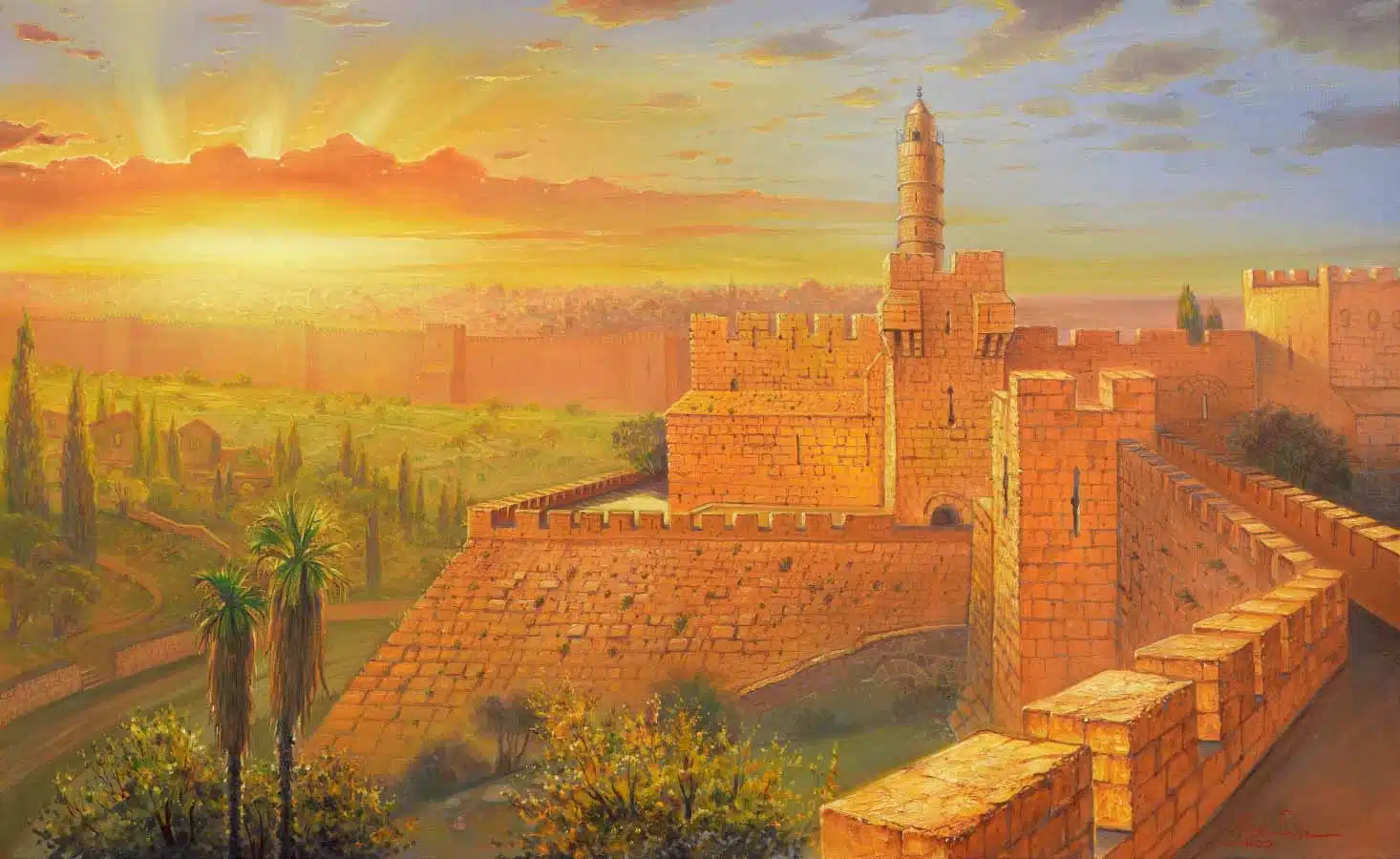
Jerusalem has inspired artists for centuries, but painting remains one of the most powerful ways to express the city’s spirit. Through color, texture, and light, Jerusalem paintings reveal more than architecture or geography. They capture memory, faith, longing, and resilience. Each canvas becomes a visual meditation on a city where history and spirituality are inseparable.
Unlike many historic cities, Jerusalem cannot be reduced to a single narrative. Its complexity is precisely what continues to draw painters back to it, generation after generation.
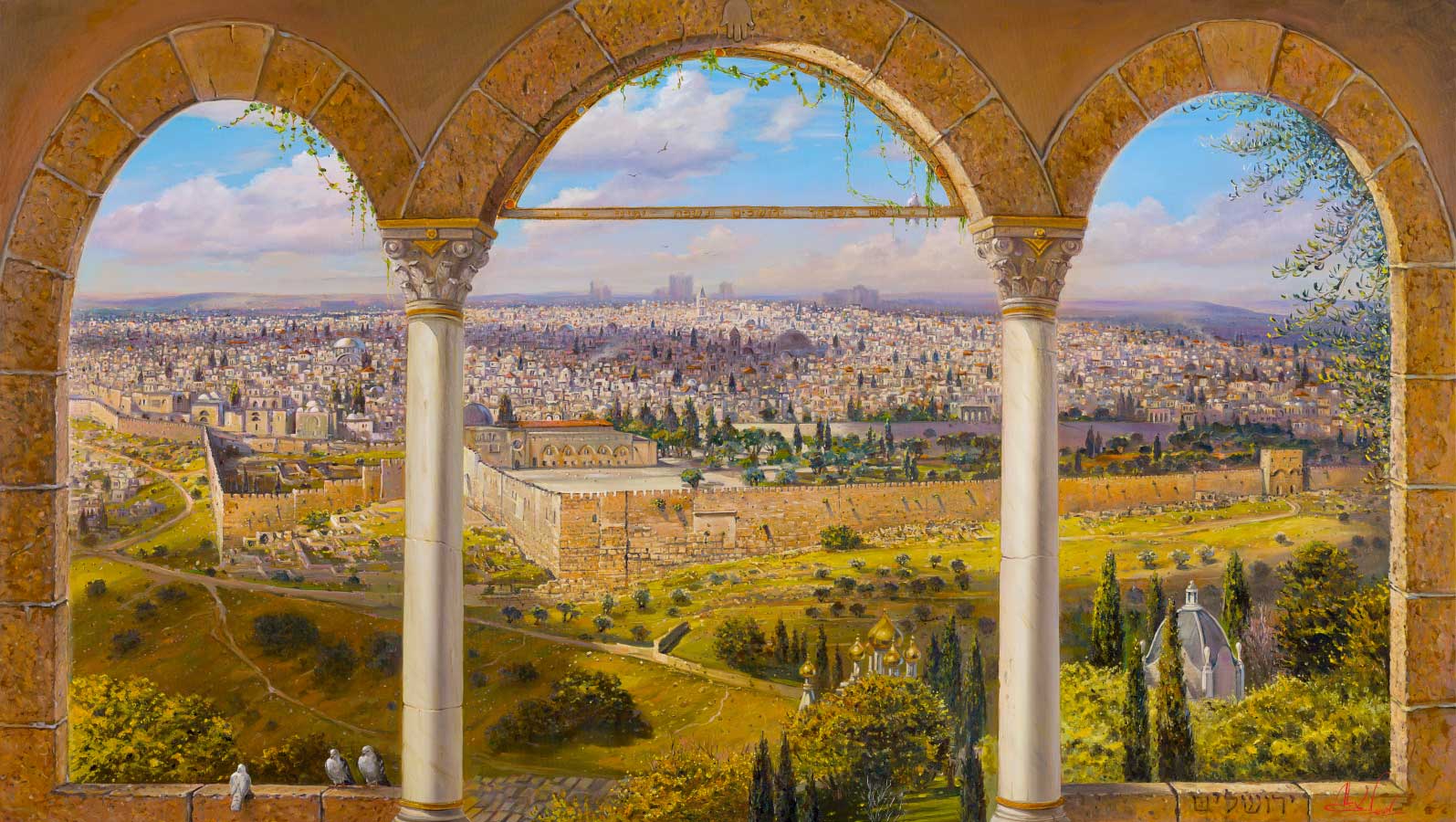
Jerusalem’s Enduring Presence in Art
Jerusalem occupies a unique place in art history. Sacred to Judaism, Christianity, and Islam, the city has long been depicted not only as a physical location, but as a symbol. Painters have portrayed Jerusalem as a destination, a memory, a vision, and sometimes an aspiration rather than a literal scene.
From early religious imagery to modern interpretations, artists have returned to Jerusalem because it resists final definition. The same streets and stones can appear solemn or radiant, timeless or urgently alive. Painting allows artists to explore these contradictions in ways that photography or illustration cannot.
Light, Stone, and Symbolism in Jerusalem Paintings
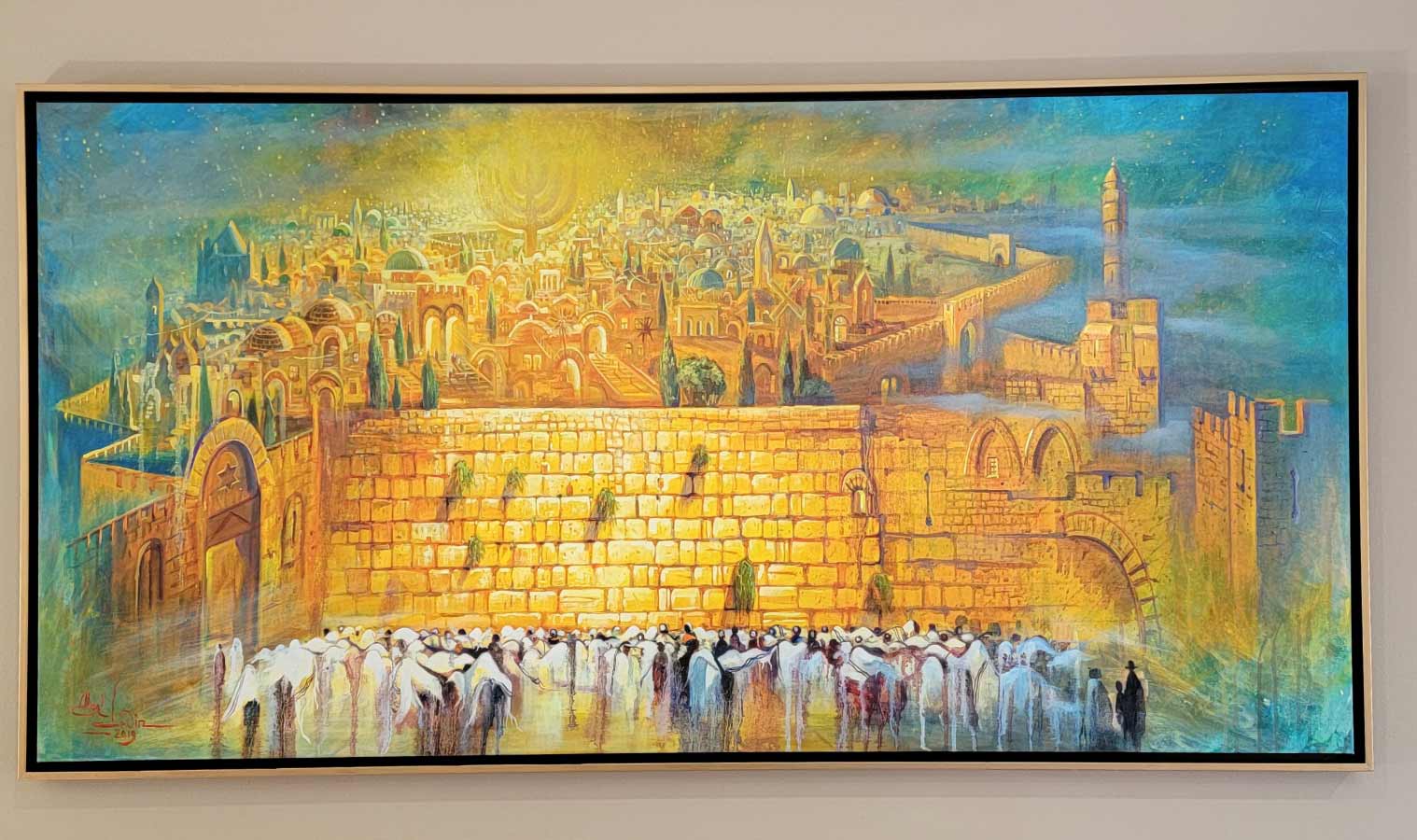
One of the most distinctive elements in Jerusalem painting is light. Artists often describe the city’s light as singular – softened by limestone, shaped by elevation, and constantly shifting throughout the day. In painting, this light becomes symbolic, frequently representing hope, revelation, or spiritual ascent.
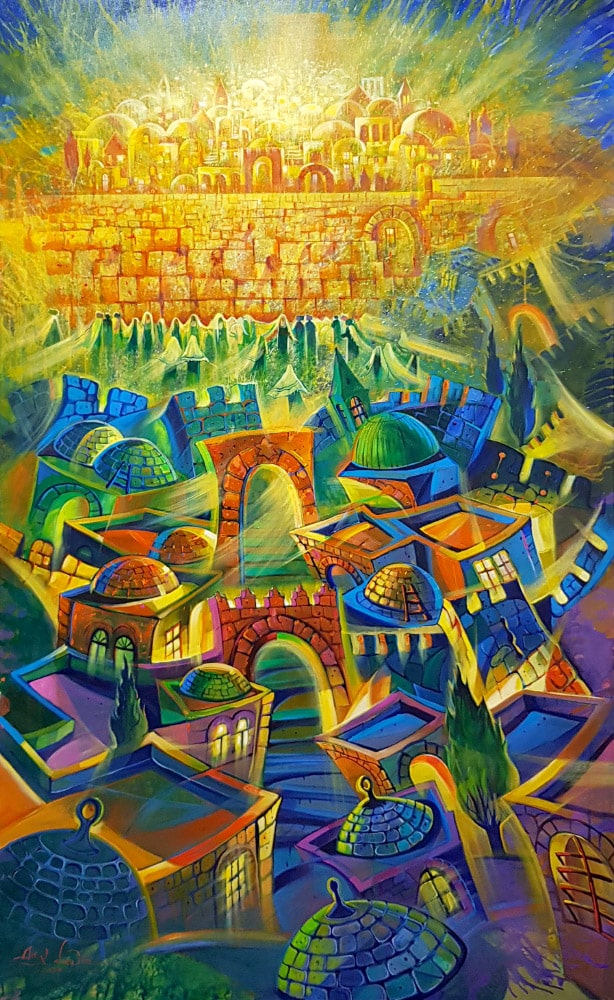
Stone plays an equally important role. Jerusalem’s architecture, built from pale stone, provides a visual language of endurance and continuity. Painters use these surfaces not merely as background, but as structural elements that anchor emotion and meaning. Whether rendered realistically or abstractly, stone and light form the foundation of many Jerusalem artworks.
Artists Drawn to Jerusalem’s Spiritual Depth
Throughout history, painters have approached Jerusalem not simply to document it, but to interpret it. Historical artists often emphasized sacred landmarks and biblical associations, while modern painters explore the city through personal, emotional, and symbolic lenses.
In Jewish art especially, Jerusalem frequently appears as a place of memory and spiritual orientation. Paintings may depict the city as remembered rather than observed, shaped by longing, prayer, and cultural inheritance. This has resulted in a wide range of styles, from detailed cityscapes to expressive and abstract compositions.
Religion and Meaning in Jerusalem Art
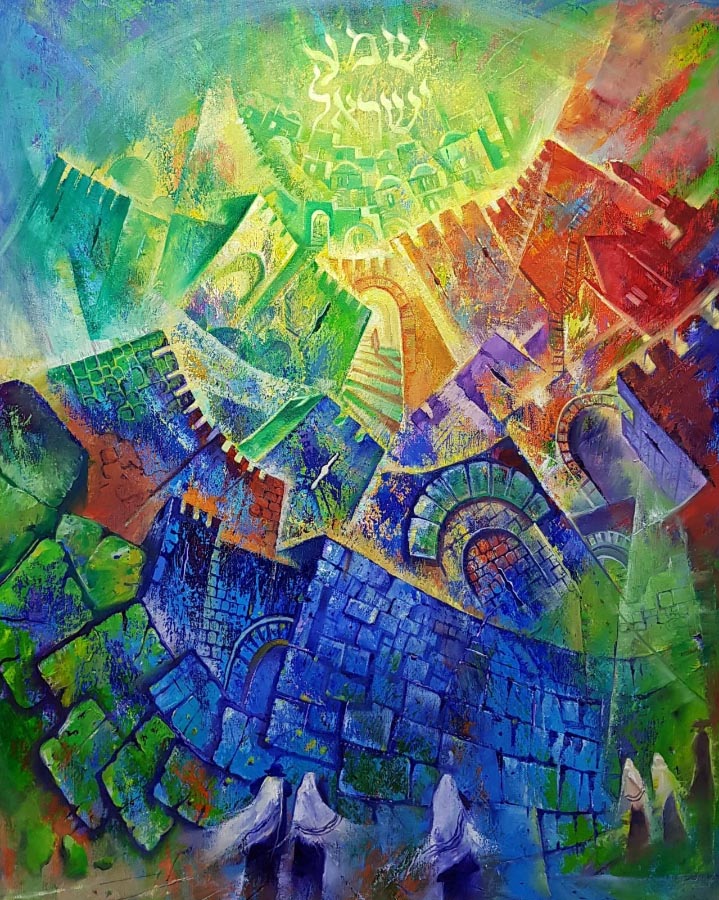
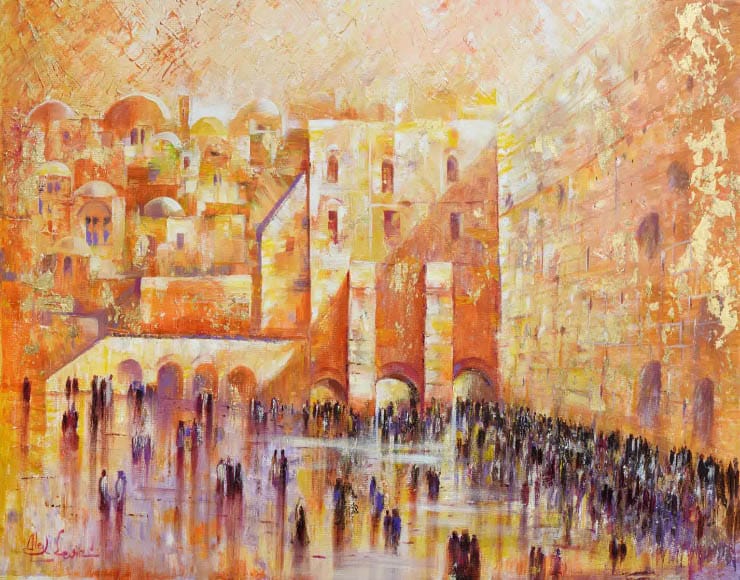
Religion is central to many depictions of Jerusalem, but rarely in a purely literal way. Rather than illustrating specific texts, artists often convey faith through atmosphere, gesture, and symbolism. Sites such as the Western Wall, Temple imagery, and ancient pathways appear repeatedly, serving as visual metaphors for devotion, continuity, and resilience.
Christian and Islamic artistic traditions have also contributed to Jerusalem’s visual legacy, particularly through sacred architecture and symbolic spatial design. In painting, these influences often intersect, reflecting the layered religious identity of the city itself.
From Classical Representation to Contemporary Expression
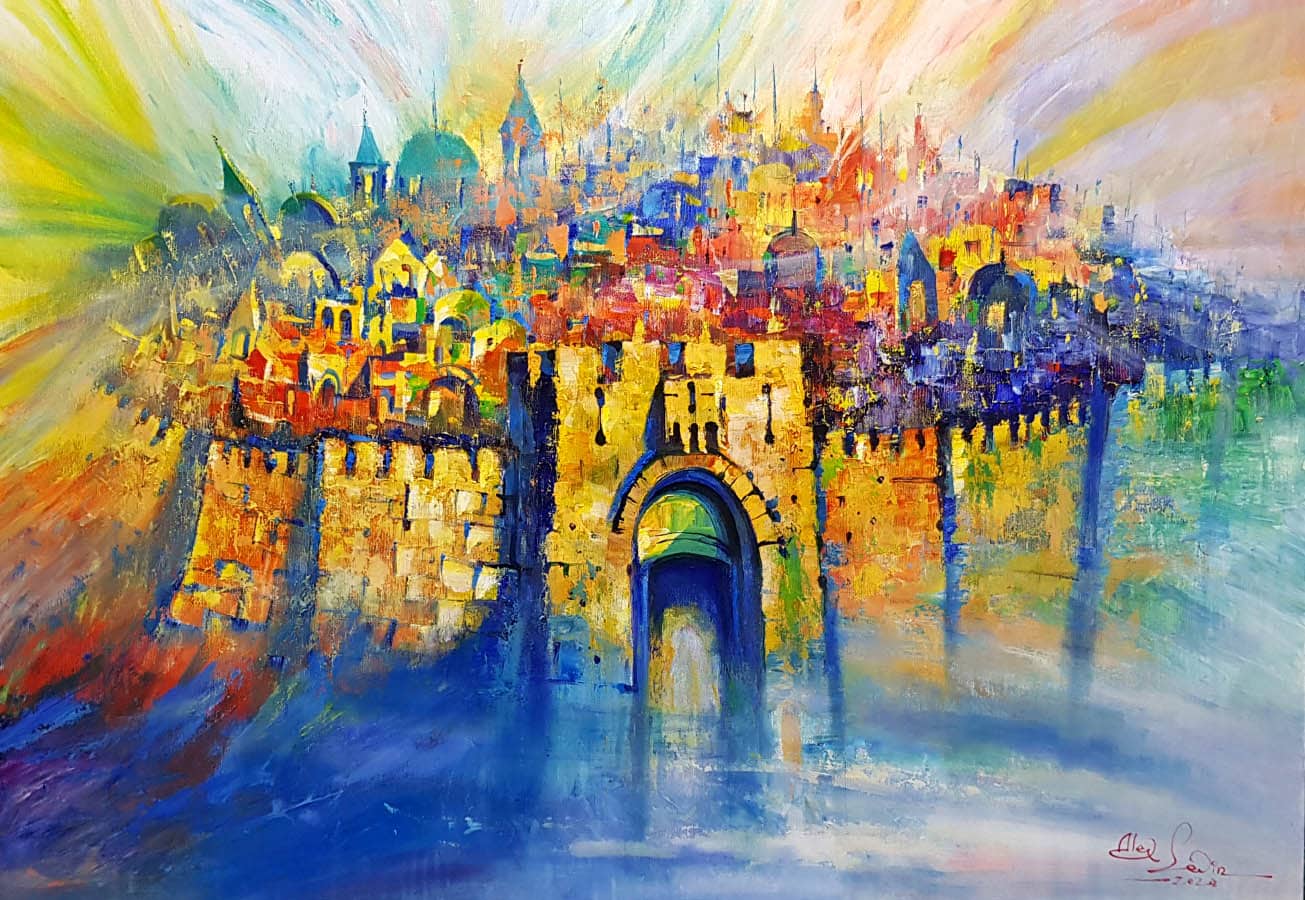
Early Jerusalem paintings often focused on accurate representation of landmarks and daily life. Over time, artists began to move beyond literal depiction, using abstraction, color, and expressive form to convey emotional and spiritual meaning.
Contemporary Jerusalem painting frequently emphasizes mood and interpretation rather than exact geography. Bold color palettes, layered textures, and symbolic forms allow artists to express how Jerusalem feels rather than how it looks. This evolution mirrors broader shifts in fine art, where meaning is communicated as much through emotion as through detail.

Why Jerusalem Continues to Inspire Painters Today
Jerusalem remains a compelling subject because it exists simultaneously as a real city and a symbolic one. It is shaped by history, faith, conflict, and hope, all coexisting within a single place. For painters, this tension offers endless creative depth.
Collectors and art lovers continue to seek Jerusalem paintings because these works offer more than visual beauty. They invite reflection and connection, allowing viewers to engage with the city on a personal level, regardless of physical distance.
A Living Tradition in Contemporary Jerusalem Painting
Jerusalem painting is not confined to the past. Contemporary artists continue to reinterpret the city, adding new layers to a tradition thousands of years old. Artists like Alex Levin approach Jerusalem as a living source of inspiration, translating the city’s light, stone, and symbolism into expressive visual language rooted in personal and cultural experience.
Through these modern interpretations, Jerusalem remains not only preserved in art, but continually rediscovered.
Conclusion: The Soul of Jerusalem Through Painting
The art of Jerusalem reflects the city’s enduring soul. From ancient religious imagery to contemporary abstraction, painters have used the medium to explore Jerusalem’s beauty, complexity, and spiritual gravity. Each painting offers a unique perspective, shaped by the artist’s moment in time and personal connection to the city.
Through painting, Jerusalem continues to speak across cultures and generations. Its story is told not only in stone and scripture, but on canvas – where history, emotion, and faith converge in lasting visual form.