
Jerusalem rarely looks the same in two paintings. In one, its stone streets feel intimate and almost silent. In another, rooftops gather beneath a luminous sky and the whole city seems to move. That variety is part of the appeal: an artist can paint a recognizable place while expressing a deeply individual experience of it.
Notice what draws you into the city
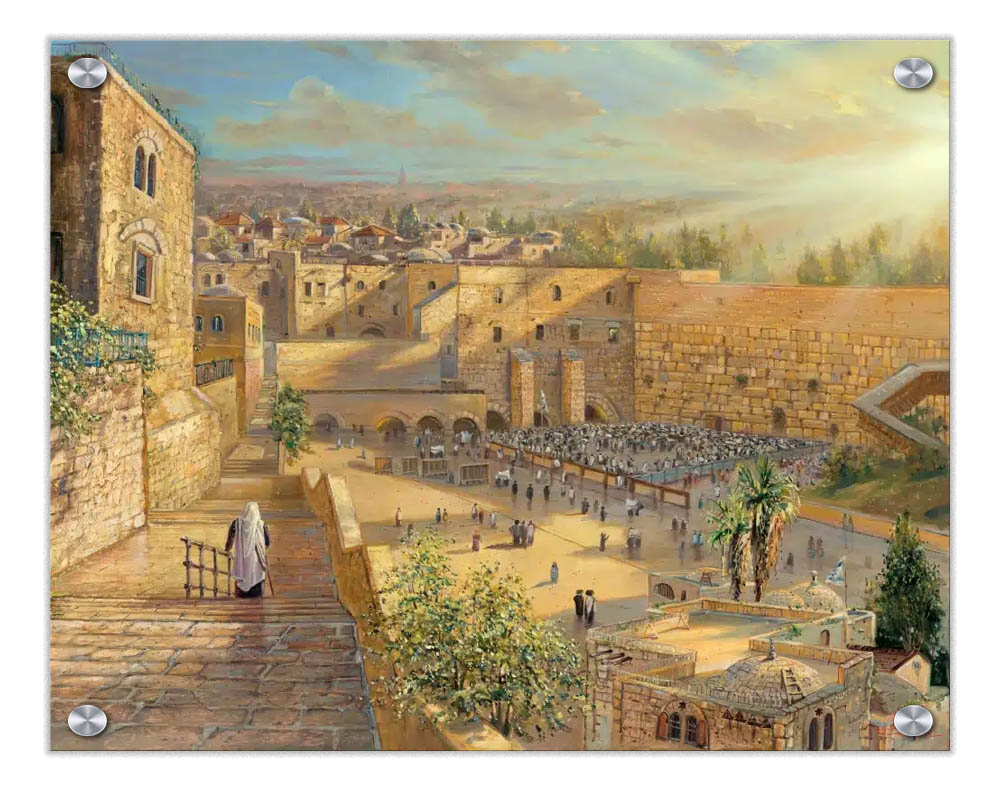
Begin with the part of Jerusalem that stays with you. It may be the Kotel, an archway in the Old City, or sunlight settling across stone buildings. Jerusalem paintings can hold memories of a visit, express spiritual attachment, or create a connection with a place someone hopes to experience in person.
You do not need to recognize every building to respond to the scene. Follow the movement of light and look at how the streets guide your eye. A painting that invites you to linger often has more lasting appeal than one selected only because it contains a famous landmark.
Explore different interpretations
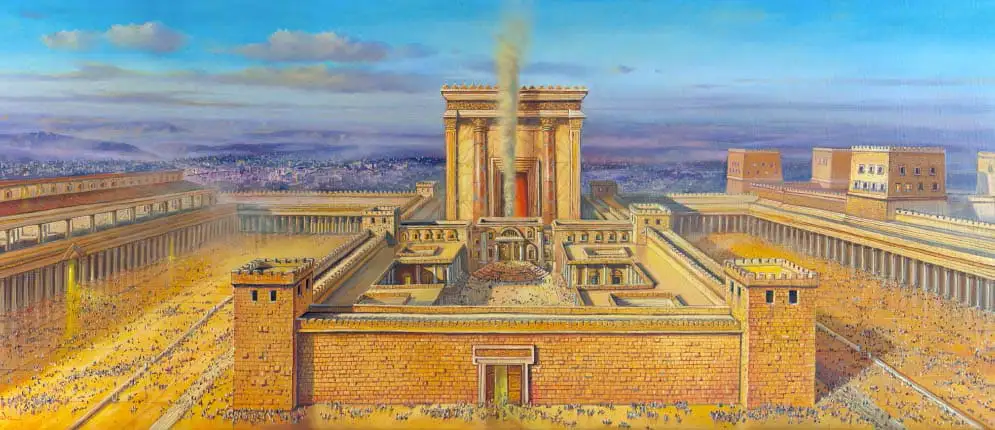
Some paintings of jerusalem emphasize architectural detail. Others simplify walls and rooftops into blocks of color, allowing atmosphere to carry the scene. Neither approach is inherently more meaningful. A detailed view may remind you of walking through a particular neighborhood, while an expressive composition may better capture the feeling you remember.
Alex Levin’s Jerusalem collection provides one place to explore the city through an artist’s perspective. When comparing works, look beyond the thumbnail. Open the larger images and examine the areas around the main subject. The balance between busy detail and quiet space can make a considerable difference when the artwork is displayed at home.





Find the right scale and setting
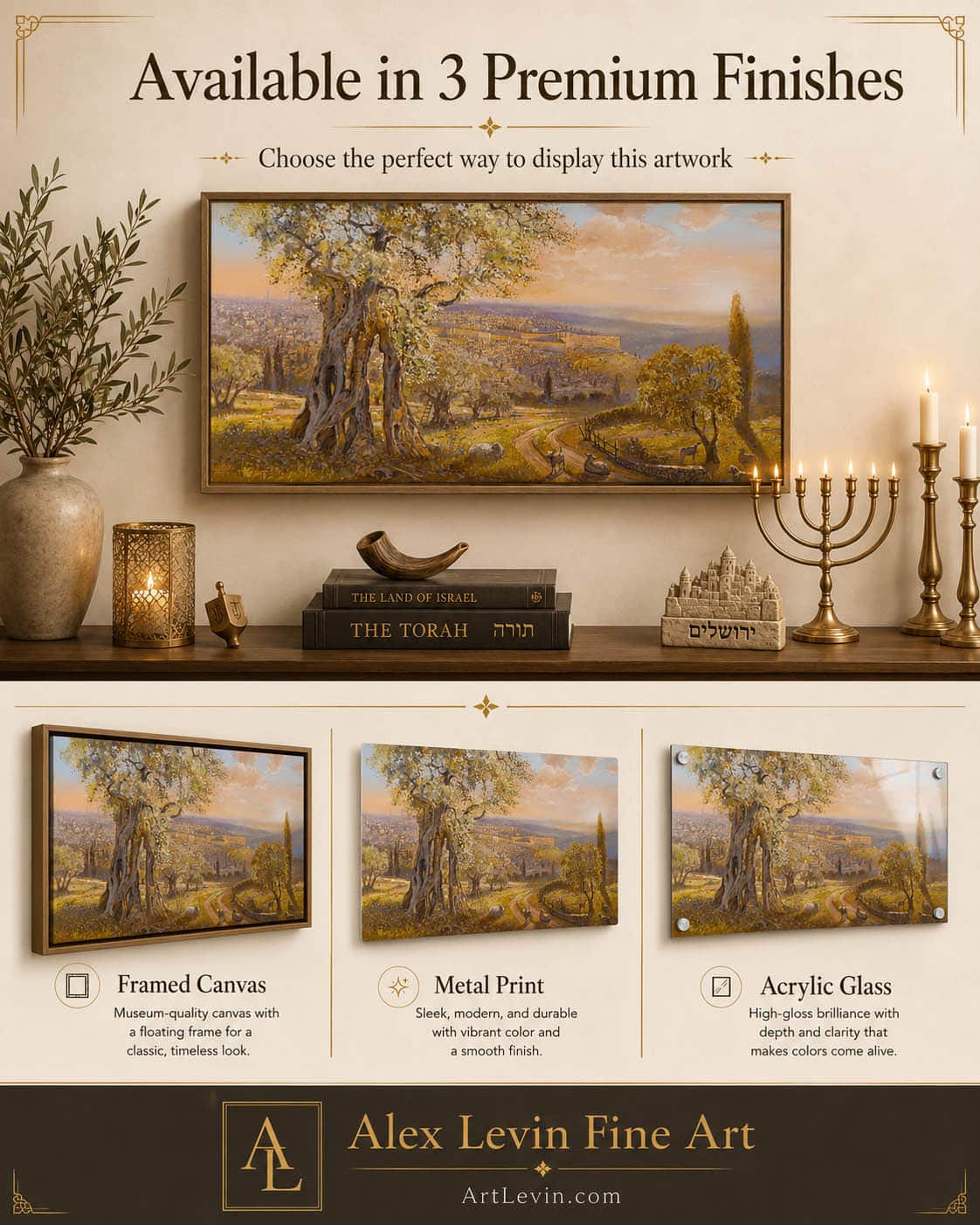
The best paintings of jerusalem for your room should work at the distance from which you will usually view them. A broad skyline can suit a generous wall, while a narrow street scene may create a more intimate focus. Measure the wall and account for the frame before deciding. Online room photographs are helpful illustrations, but they cannot replace dimensions.
Consider how the artwork’s light interacts with your interior. Warm stone colors may complement wood furniture, while cooler tones can bring a quieter feeling to a bright room. Avoid choosing exclusively by color, though. A painting that matches perfectly but leaves you indifferent is unlikely to become a favorite.
Before ordering, establish whether the item is an original or a reproduction, what surface it uses, and whether it arrives framed. Confirm delivery arrangements and the applicable return terms. Once it arrives, place it away from direct sun and follow the seller’s care guidance. Thoughtful placement lets the scene remain part of everyday life without exposing it to unnecessary wear.
Frequently Asked Questions
What makes paintings of Jerusalem special? They bring together a distinctive cityscape and layers of personal, historical, and spiritual meaning. Different viewers may connect with the same painting through travel memories, faith, family, or an appreciation of its atmosphere.
How do I choose the best paintings of Jerusalem for my home? Begin with a scene you want to keep looking at. Then check the artwork’s dimensions, format, and relationship to the room rather than relying on a screen image alone.
What are the most popular subjects in Jerusalem paintings? Frequently depicted subjects include the Kotel, Old City streets, stone arches, rooftops, and panoramic views. Religious gatherings and changing light also give artists ways to interpret the city.
Are Jerusalem paintings a good choice for meaningful gifts? They can be, especially for someone with a personal connection to Israel or Jerusalem. Choose with their taste in mind and check practical details such as framing and wall space.
How can I choose a Jerusalem painting that complements my interior décor? Look at the room’s proportions, lighting, and existing materials. Use a paper template to test size, and choose a frame that supports the artwork without overwhelming the surrounding space.