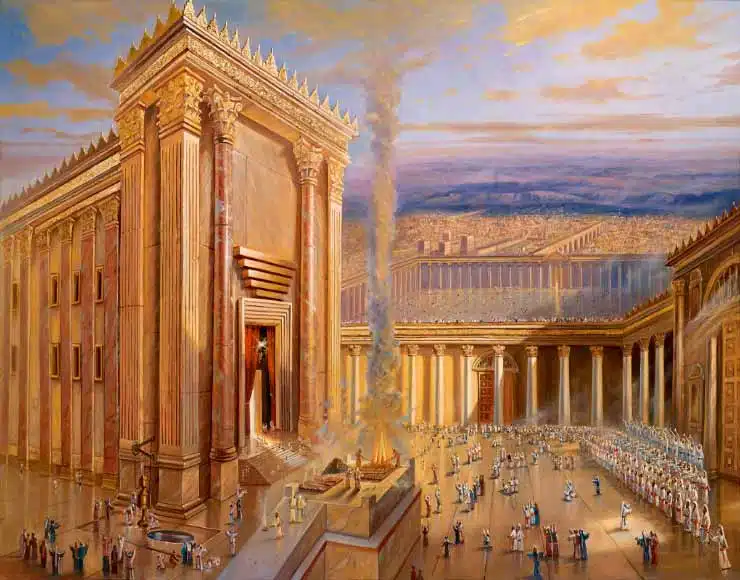
Exploring the spiritual depths of art often leads us to places where the tangible meets the divine. In Alex Levin’s breathtaking painting “Beis Hamikdash,” we are invited to journey into such a realm—a canvas that reveals both the history and the holiness of the sacred Temple. Through vivid hues and intricate details, Levin captures the essence of a spiritual legacy, offering viewers a glimpse into a world of profound meaning and timeless beauty.
Unveiling the Sacred: Alex Levin’s “Beis Hamikdash”
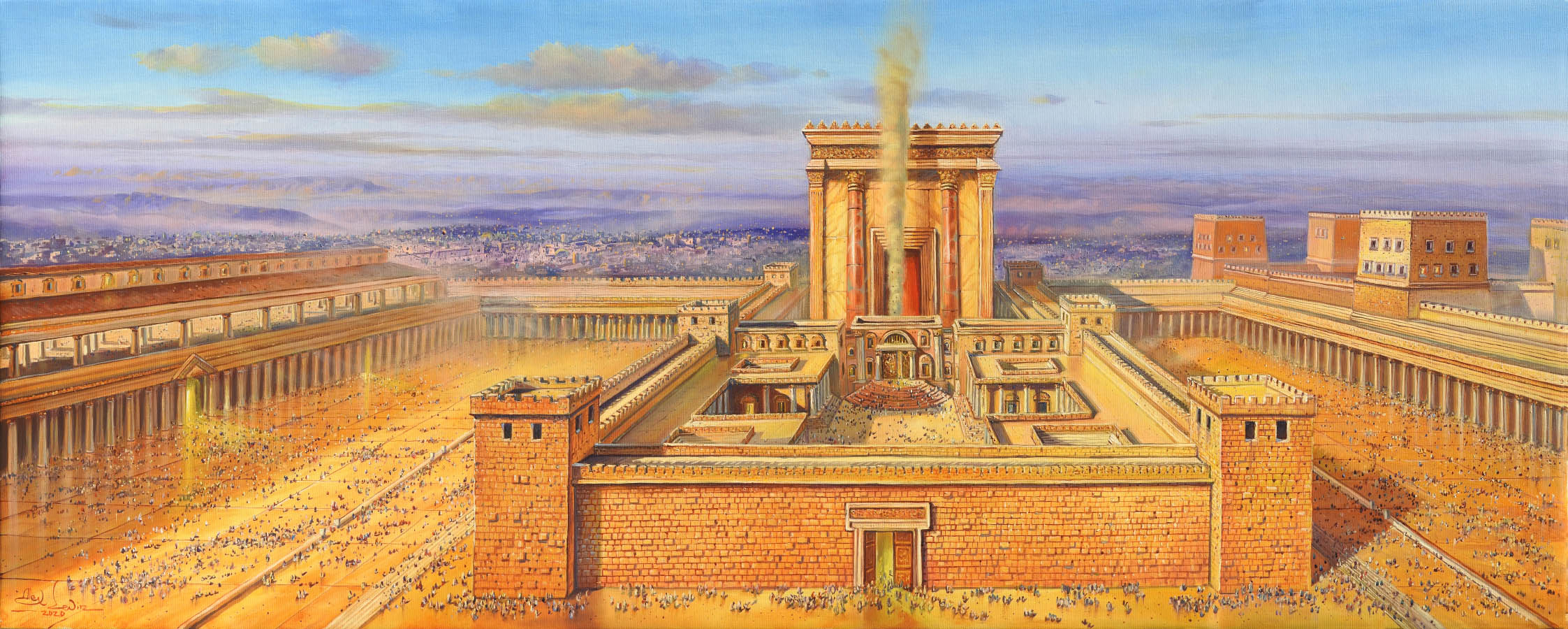
Alex Levin’s “Beis Hamikdash” is more than just a painting; it is a portal to a bygone era, a sacred space brought to life through the artist’s masterful touch. The Beis Hamikdash, or Holy Temple, stands as a symbol of spiritual elevation, and Levin’s depiction reverberates with the whisper of prayers and the echoes of ancient rituals. Each brushstroke is imbued with reverence, inviting the viewer to contemplate the divine presence that once dwelled within its hallowed walls.
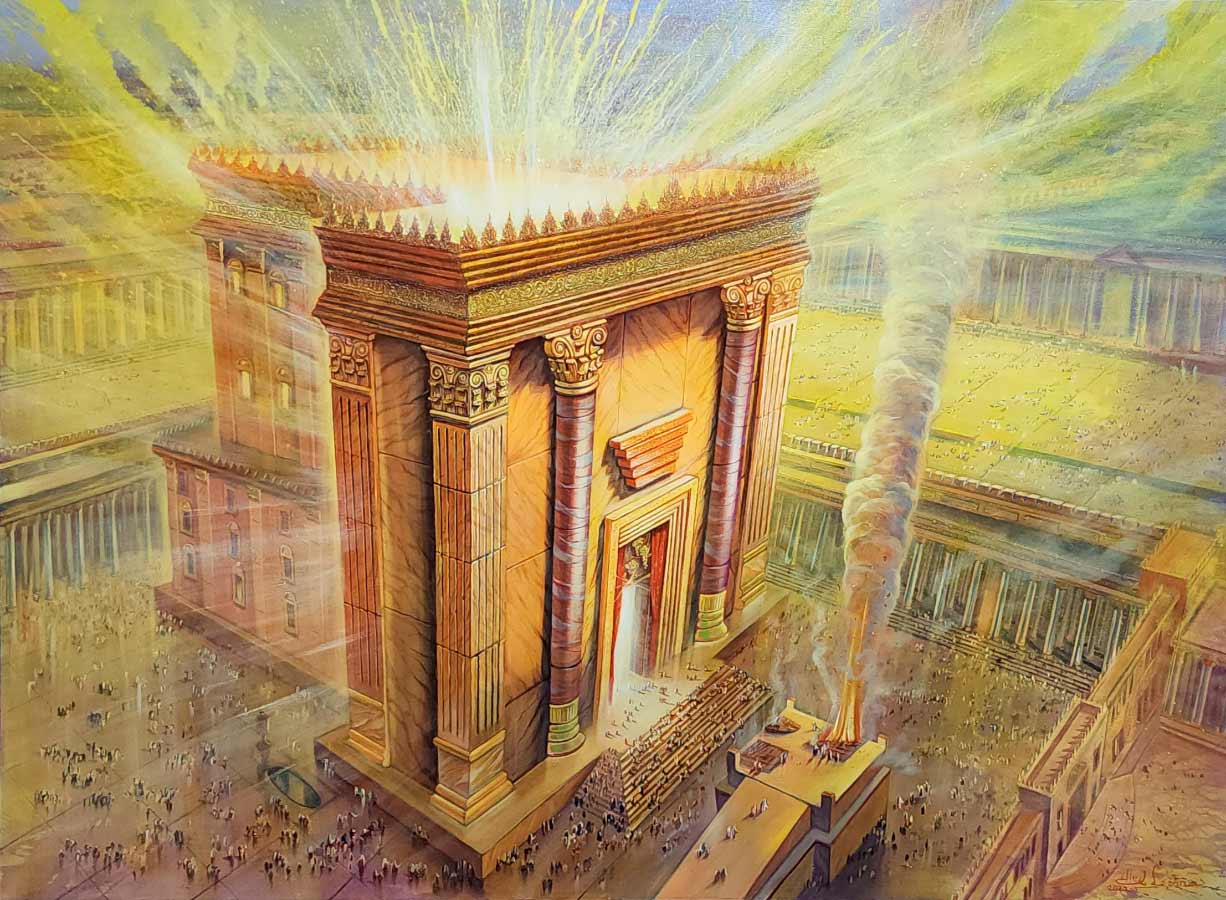
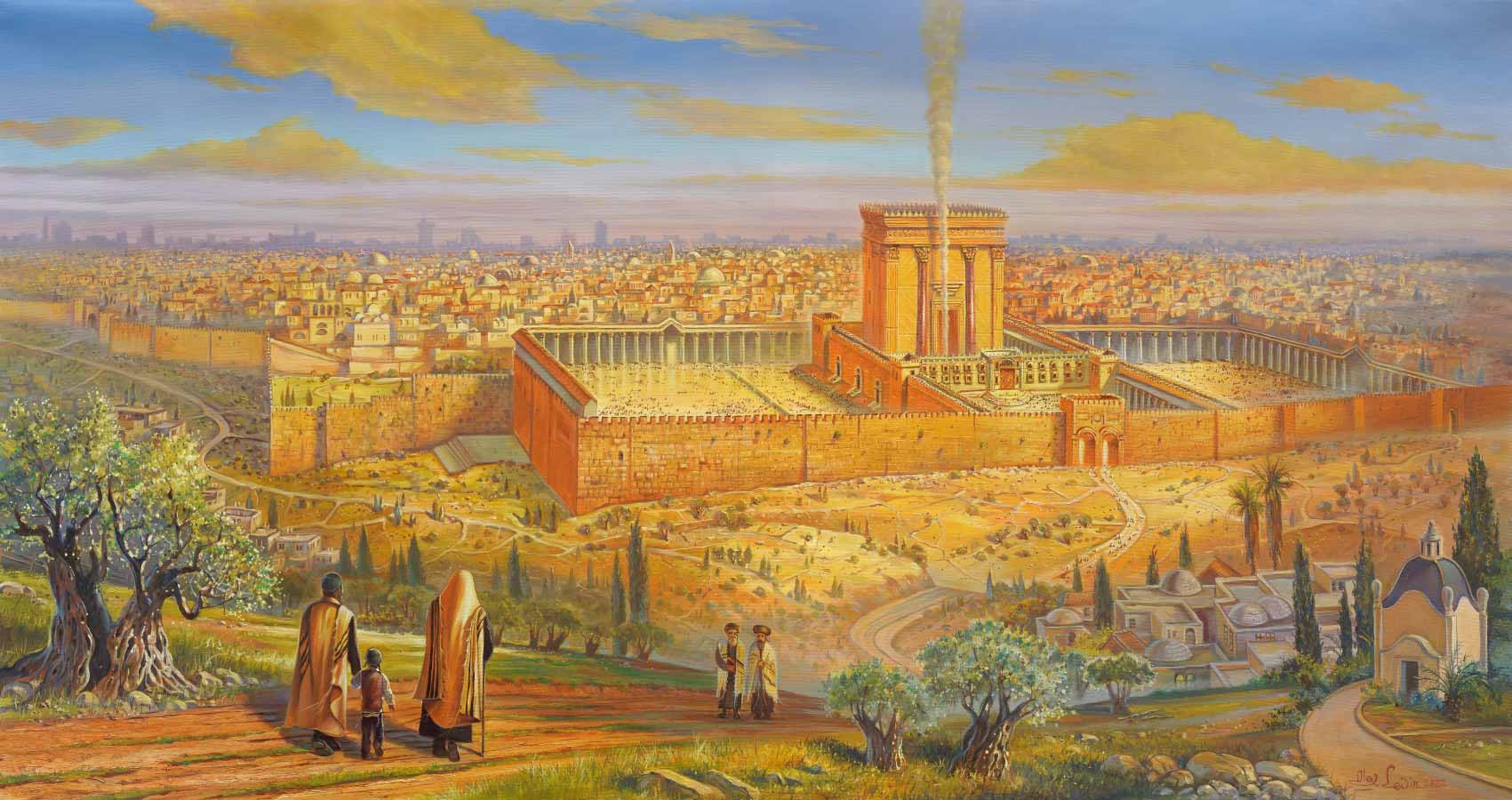
The composition of the painting is both intricate and awe-inspiring. Levin’s use of light is particularly evocative, casting a radiant glow that seems to emanate from within the very stones of the Temple. This interplay of illumination and shadow creates a dynamic sense of depth, drawing the observer into the sacred narrative. The Temple’s towering columns and majestic arches are rendered with such precision that they seem almost tangible, yet remain ethereal, reminding us of their eternal significance.
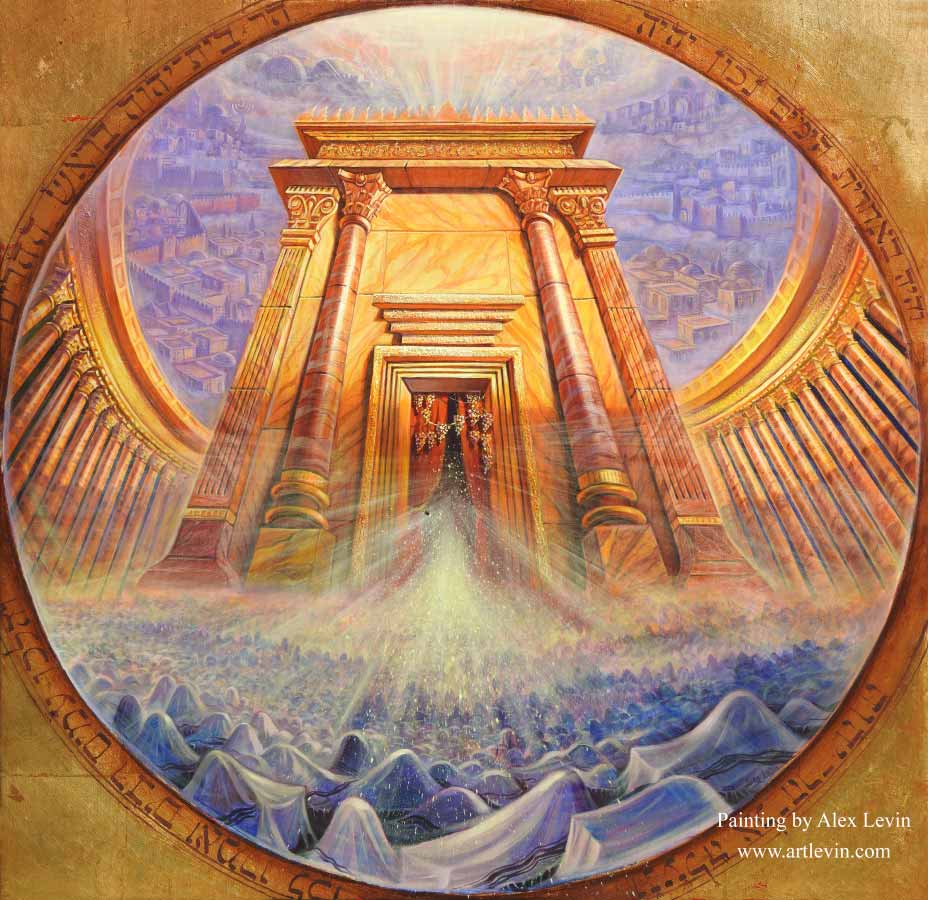
In Levin’s work, color plays a crucial role in conveying the sacred atmosphere of the Beis Hamikdash. The rich golds and deep blues create a tapestry of spiritual resonance, symbolizing both the divine majesty and the human yearning for connection with the sacred. These hues are not merely decorative; they are a visual language that speaks to the heart, painting a picture of a world where heaven and earth converge. To explore more of Levin’s Judaica paintings, visit the Jerusalem Temple Paintings category.



The Spiritual Essence Captured in Vivid Hues
In “Beis Hamikdash,” Levin captures the spiritual essence of the Temple through a symphony of colors and textures. The painting’s surface is alive with a tactile quality, as if the viewer could reach out and feel the cool stone or the warm sunlight filtering through ancient windows. This attention to texture enhances the painting’s realism while also imbuing it with a dreamlike quality, inviting the observer to enter a space where the physical and spiritual worlds entwine.
Levin’s artistic vision is rooted in a deep understanding of the Temple’s symbolic significance. The Beis Hamikdash is not just a historical structure; it is a representation of divine presence and human aspiration. Through his art, Levin explores these themes, offering a visual meditation on the quest for spiritual fulfillment. His portrayal of the Temple’s inner sanctum, with its sacred objects and spaces, encourages introspection and invites the viewer to ponder their own spiritual journey.
The emotional impact of “Beis Hamikdash” is profound, evoking a sense of longing and reverence. Levin’s ability to convey such depth of feeling through color and form is a testament to his skill as an artist and his sensitivity to the spiritual dimensions of his subject matter. His work serves as a reminder of the enduring power of art to connect us with the divine, offering a glimpse into a world where the sacred is always within reach. To delve deeper into Levin’s exploration of Jerusalem and its spiritual heritage, explore more of his Jerusalem Temple Paintings.
Alex Levin’s “Beis Hamikdash” is a masterpiece that transcends the boundaries of time and space, inviting viewers to explore the sacred through the language of art. It is a testament to the power of painting to evoke the spiritual, to capture the essence of a place where heaven and earth meet. As we stand before this work, we are reminded of the enduring legacy of the Temple and the timeless quest for divine connection. Discover more sacred art by Alex Levin at Art Levin.