Jerusalem has always invited artists to do more than copy stone and skyline. In Alex Levin’s Abstract Jerusalem Paintings – Modern and Contemporary Jewish Art collection, the city becomes a living language of prayer, light, memory, and hope. These works do not ask the viewer to stand at a distance. They draw you inward, toward the emotional center of Jerusalem itself.
That is what makes contemporary Jerusalem paintings so compelling. They speak in a modern visual vocabulary – layered color, abstraction, movement, and texture – while remaining rooted in the sacred presence of the city. The result is art that feels current and timeless at once. It can suit a contemporary home, yet it still carries the spiritual gravity that makes Jerusalem unlike any other subject in Jewish art.
What stands out in this collection is the way Jerusalem is never reduced to a postcard image. Instead, it appears through symbols that many Jewish viewers recognize immediately: the Kotel, the ascending light, the path of prayer, the gates, the Temple, and the sense of a city joining earthly life to something higher. The paintings are contemporary, but they remain deeply connected to Jewish memory and aspiration.
For collectors who want art that feels both meaningful and visually fresh, this body of work offers a strong answer. It is not simply about decorating a wall. It is about bringing Jerusalem into the room as atmosphere and presence.
Jerusalem as a modern spiritual composition
One reason these paintings resonate so widely is that they do not rely on literal realism to convey truth. Instead, they build meaning through balance, contrast, and glowing color relationships. Warm golds often suggest holiness, redemption, or the Beit HaMikdash, while cooler blues and silvers can evoke the modern city, distance, and reflection. This contrast gives the collection its emotional range.
Alex Levin’s Jerusalem works often move between the earthly and the heavenly. That is especially important in contemporary Jewish art, where viewers may be looking for something that honors tradition without feeling static. In these paintings, the old city is not frozen in time. It is alive with movement, prayer, and spiritual continuity.
The Kotel appears again and again as a central anchor, but it is handled in ways that feel fresh rather than repetitive. In some works, the wall is luminous and monumental. In others, it seems to emerge from a field of gold, figures, and layered reflections. This allows each painting to express a different mood while remaining part of the same artistic language.
If you are exploring the collection, it can help to think about the feeling you want the room to hold. Some paintings emphasize devotion and collective prayer. Others lean toward radiance, prophecy, or the historical sweep of Jerusalem across generations. That range is part of what gives the collection its strength.
A collection built around light, prayer, and continuity
Jerusalem is not presented here as a single image but as a sequence of spiritual ideas. Light appears as revelation. Gates appear as entry and hope. The Temple appears as memory and future longing. The Jewish figures in prayer connect the city to living devotion today.
This is one of the reasons the collection works so well in contemporary spaces. It is contemporary not only in style, but in sensibility. It respects the reality that many collectors want art with both visual clarity and symbolic depth. These paintings can stand out in a modern interior without overwhelming it. Their abstraction leaves room for contemplation.
They also speak naturally to a wide range of settings: a home study, dining room, synagogue lobby, office, or a space dedicated to Jewish learning and reflection. The imagery remains accessible, but it still rewards close looking. That balance is difficult to achieve, and it is one of the hallmarks of Alex Levin’s approach.
Below are several works that show how varied the collection can be while remaining united by the spirit of Jerusalem.
Featured artwork from the collection
Discover the featured paintings
Radiance at the Wall
This painting captures the Western Wall as a place where devotion becomes light. The pale tones and textured gold create a feeling of reverence without relying on literal detail. Figures gathered below the wall give the work a human center, while the composition lifts the eye upward toward something more transcendent.
It is an especially strong choice for collectors who want contemporary Jerusalem art that feels prayerful, luminous, and elegant in a modern setting.

A Shaft of Heaven
Here the focus is on the vertical movement of light above the Kotel. The contrast between the blue glow and the golden surfaces gives the painting a clear spiritual structure, as if the viewer is witnessing a moment of blessing descending into the city.
This work speaks powerfully to the idea that Jerusalem joins earth and heaven. Its cleaner composition makes it especially effective for a space that needs quiet intensity rather than visual complexity.

Roots of Light
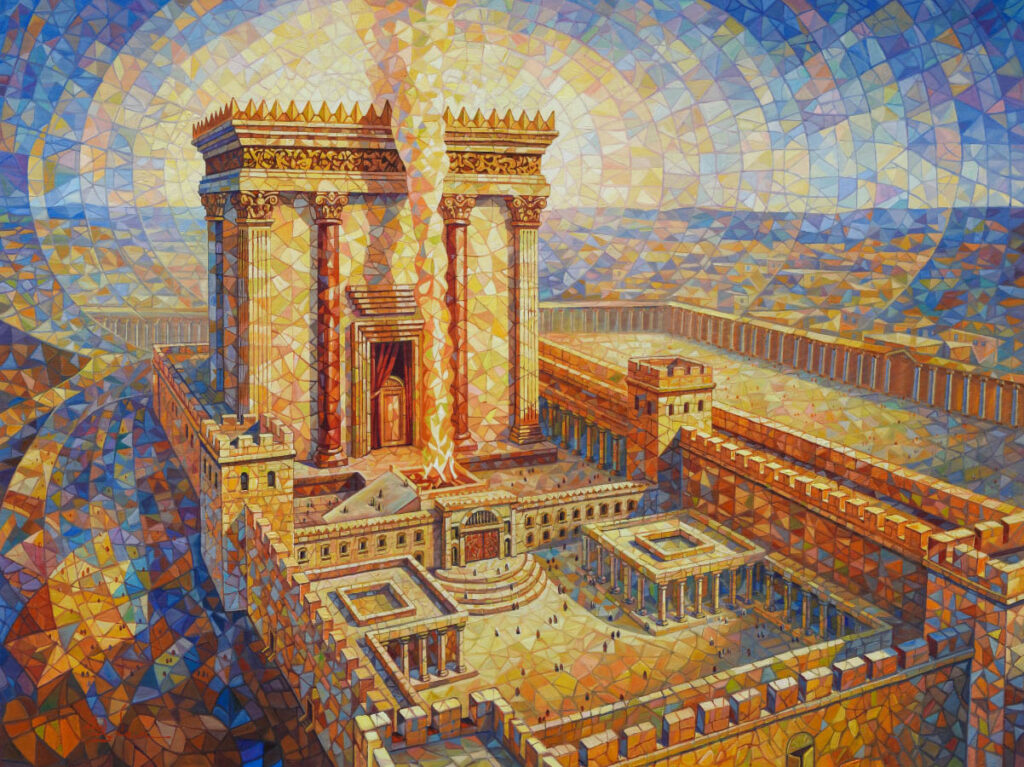
This painting moves beyond the familiar wall motif and toward the symbolic heart of Jerusalem’s history. The layered geometry suggests the Second Temple and the enduring foundations of Jewish memory, while the rising column of fire creates a dramatic sense of renewal.
It is an ideal piece for collectors drawn to the historical depth of Jerusalem in contemporary Jewish art. The work feels both architectural and mystical, which gives it a striking presence.
Ancient Walls, Modern Vision
Silver, white, and gold shape this interpretation of Jerusalem’s ancient walls into something distilled and atmospheric. The arched gate becomes a symbolic threshold, while the darker figures below ground the composition in human experience and prayer.
This painting is a strong example of how the collection uses abstraction to renew a classic subject. It offers a quieter, more reflective mood while still preserving the grandeur of Jerusalem.

Illumination Through Torah
In this work, the Torah scroll becomes inseparable from the city itself. The golden sweep of the scroll and the surrounding Jerusalem forms suggest that sacred text is not separate from the city’s identity but part of its living light.
Collectors who value Torah symbolism will find this painting especially meaningful. It brings together the holiness of the city, the centrality of study, and the continuity of Jewish tradition in one compelling image.

Contemporary Jerusalem paintings have a special power because they let the viewer feel the city rather than simply recognize it. In this collection, Jerusalem appears as prayer, memory, endurance, and hope – always modern in appearance, always rooted in something ancient.
If you are choosing a painting for a home or gift, think about whether you want the energy of the Kotel, the mystery of the Temple, or the quiet majesty of Jerusalem’s walls and gates. Each direction offers a different emotional key, but all remain connected to the same sacred center.
Explore the full Abstract Jerusalem Paintings – Modern and Contemporary Jewish Art collection to discover the work that best speaks to your space and your spirit.