Abstract Jerusalem paintings invite us to experience the city rather than simply recognize it. In Alex Levin’s contemporary Jewish art, Jerusalem becomes movement, radiance, prayer, memory, and hope all at once. Instead of presenting a single architectural view, these works layer symbol and atmosphere so the viewer feels the city’s spiritual pulse. If you would like to explore the collection directly, begin with the Abstract Jerusalem Paintings – Modern and Contemporary Jewish Art collection and see how different images interpret the same holy center through color, texture, and light.
What makes this body of work especially compelling is the way it treats Jerusalem as both earthly and heavenly. The stone, gates, and wall are never only literal landmarks. They also become visual language for longing, continuity, and redemption. Gold suggests holiness, blue suggests distance and spirit, and white often opens the scene into prayerful stillness. In this collection, abstraction does not remove Jerusalem from view. It deepens the experience, allowing the city’s sacred meaning to emerge in a more meditative and modern form.
Collectors often look for art that can live beautifully in a contemporary home while still carrying traditional meaning. That balance is part of the appeal here. These works feel current in their design, but they remain rooted in Jewish memory and devotion. They can complement a refined interior while still speaking clearly to anyone who sees the Kotel, the gates of the Old City, or the suggestion of the Beit HaMikdash within the composition.
Another reason these paintings resonate is that they do not insist on one fixed reading. A single canvas may feel like a prayer on first glance, then reveal a path through history, then open into a vision of Jerusalem bathed in light. That layered quality gives the collection lasting presence. It is art that continues to unfold the longer you live with it.
The spiritual language of abstraction
Abstract Jewish art has a special power when it turns to Jerusalem, because the city itself carries multiple meanings at once. It is ancient and modern, local and universal, broken and whole, remembered and anticipated. An abstract approach can hold those contradictions more naturally than a strictly descriptive image. Instead of showing every detail, it lets tone, geometry, and gesture carry the emotional truth.
In these paintings, the Western Wall often becomes a visual anchor, while surrounding forms suggest upward movement, gathering, or revelation. Some works emphasize golden light, as if the city is emerging from within its own holiness. Others use stronger contrasts between cool and warm tones to evoke the meeting of human prayer and divine response. This is where abstract Jerusalem paintings become more than decoration – they become visual meditation.
The collection also reflects the sacred geography of Jerusalem in a symbolic way. Gates can hint at entry and expectation. Steps and pathways can suggest ascent. A glowing upper field can imply heaven, while grounded lower forms can represent the lived city below. For many viewers, this combination makes the paintings feel emotionally honest, because Jerusalem has always lived in the Jewish imagination as both a real place and a spiritual destination.
Why collectors respond to these works
Many buyers are drawn to Jerusalem art because it connects home, heritage, and identity. Abstract compositions offer a particularly versatile way to bring that connection into a room. They can live in a dining room, study, hallway, or office without feeling overly literal. At the same time, they remain unmistakably Jewish in meaning. The result is artwork that speaks softly but with depth.
These paintings also suit collectors who prefer a modern visual vocabulary. The bold structure, luminous palette, and textural surfaces create a contemporary presence, while the subject remains timeless. That combination makes the collection especially attractive for people furnishing a space that blends tradition with modern design. A single painting can become a focal point without overwhelming the room.
There is also a strong emotional dimension. Jerusalem is not just a city to admire. It is a place of prayer, remembrance, and collective longing. Abstract treatment can express that emotional complexity without reducing it to a single narrative. For some viewers, the gold reflects hope. For others, the composition recalls a journey to the Kotel or a memory of standing in silence near the Wall. This openness is part of the art’s strength.
For those interested in related themes, it is worth comparing these works with other Jerusalem-centered paintings on the site, including Radiance of Jerusalem and The Prayerful Light of Jerusalem, both of which show how the city can be interpreted through a distinct language of light and atmosphere.
Choosing the right abstract Jerusalem painting
When selecting a piece from this collection, many people begin with the mood they want the room to hold. Do you want the energy of prayer, the dignity of ancient stone, or the sense of heaven breaking through the cityscape? Abstract art makes those differences feel immediate. A composition dominated by gold may feel celebratory and radiant, while a cooler arrangement may feel contemplative and serene.
It is also helpful to consider the symbolic emphasis. Some paintings focus more closely on the Kotel and the gathered worshippers, while others bring in the Temple, the Menorah, or upward light that suggests the Beit HaMikdash. In a Jewish home, these details can be deeply meaningful. They do not merely identify Jerusalem. They speak to continuity, sacred memory, and future hope.
Because the collection is modern in style, it can work beautifully with a wide range of interiors. Minimalist spaces often benefit from the richness of layered gold and blue. More traditional spaces can use the same work to add renewed energy without losing reverence. The key is that these paintings do not ask the room to become something else. They bring Jerusalem into the room with dignity.
Below are a few notable works that show the range of the collection, from prayer-filled wall scenes to Temple imagery and symbolic journeys through Jewish history.
Discover the featured paintings
Radiance of Jerusalem
This painting captures the gathered stillness of prayer beneath a luminous Kotel rendered in textured gold and pale light. The composition feels both intimate and expansive, with worshippers drawn into a space that seems to glow from within.
It is an especially strong choice for collectors who want a Jerusalem work that feels devotional yet contemporary, with a balanced palette that brings calm warmth to a room.

Prayerful Light
Here the emphasis falls on prayer and presence, with blue and white tones creating a quieter spiritual atmosphere around the Wall. The abstract treatment softens the literal forms while keeping the emotional focus on devotion and reverence.
This work suits viewers who respond to a more meditative reading of Jerusalem, where the city is felt through atmosphere rather than architectural detail.

Golden Light
This composition brings together Jerusalem stone, sacred symbols, and a radiant upper field that suggests blessing descending toward the city below. The contrast between structured forms and glowing light gives the piece a lifted, hopeful feeling.
It is a compelling choice for anyone who wants an abstract Jerusalem painting with strong visual presence and a sense of spiritual elevation.

Illumination by the Torah
In this work, the Torah scroll becomes part of Jerusalem’s visual story, linking sacred text with the city’s enduring light. The design suggests both the Kotel and the larger memory of holiness that surrounds Jerusalem in Jewish tradition.
Collectors who value the connection between study, prayer, and place will appreciate how the painting joins those themes in one unified image.

Roots of Light
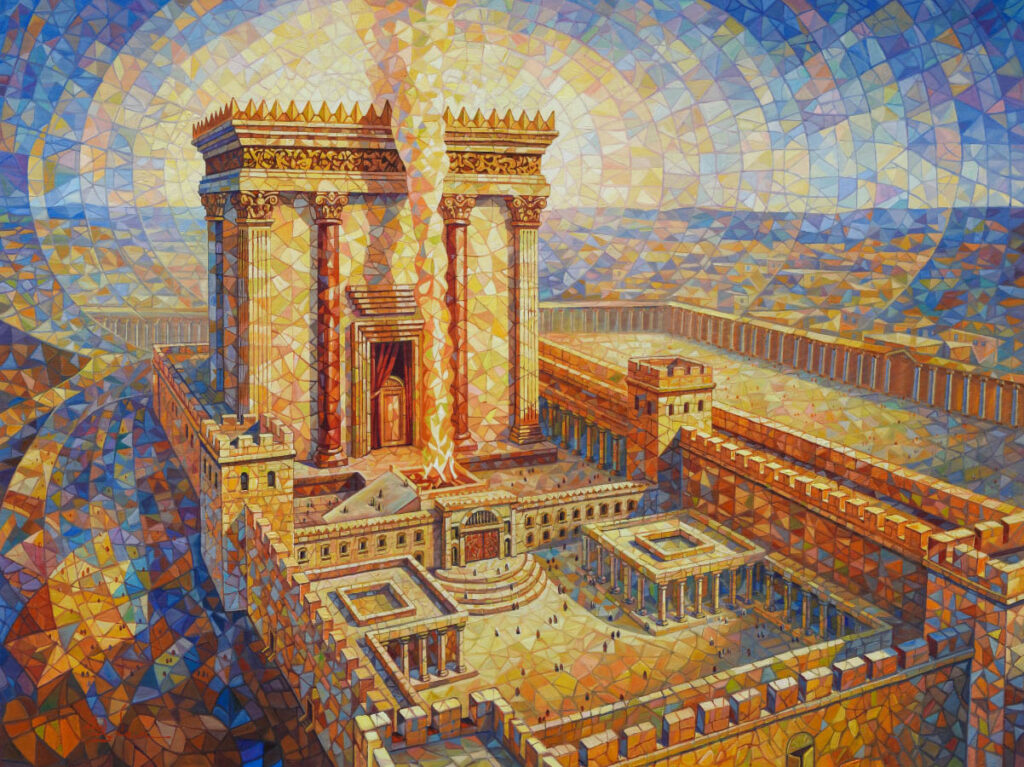
This Temple-centered painting shifts the focus toward Beit HaMikdash imagery, where geometric structure and upward energy evoke the Second Temple in an abstract visual language. The result is bold, symbolic, and richly layered.
It stands out for viewers who want Jerusalem art that reaches beyond the present city and opens toward memory, restoration, and sacred longing.
Abstract Jerusalem paintings have a rare ability to feel both personal and collective. They can remind one viewer of a moment at the Kotel, another of a family tradition, and another of the timeless hope bound up with Jerusalem itself. That emotional reach is what makes the collection so enduring.
If you are looking for a piece that brings spiritual depth into a modern setting, Alex Levin’s contemporary Jewish art offers many ways to connect with the Holy City. Explore the collection, compare the different moods, and choose the work that speaks most clearly to your sense of Jerusalem. The journey begins with light, color, and a living connection to the city that continues to inspire Jewish art today.