There is a special kind of stillness that arrives with Shabbat candles. In Alex Levin’s Abstract Jewish Painting: Woman honoring the Shabbat, that stillness becomes a vivid visual experience – a woman, prayer, and Jerusalem light gathered into one contemplative scene. The painting invites the viewer to pause at the threshold of the sacred day and feel how a simple ritual can transform an entire room.
This work belongs naturally within the wider language of Judaica art, where light is never only decorative. It stands for welcome, holiness, home, and continuity. Here, the act of lighting Shabbat candles becomes both intimate and ceremonial, carrying the emotional weight of generations. The image speaks to anyone who cherishes Friday evening traditions, and it does so with the modern energy and layered symbolism that define Levin’s abstract approach.
The composition also connects this domestic moment to Jerusalem, giving the scene a sense of place that deepens its meaning. The city is not present merely as a backdrop. Instead, it acts as an echo of shared memory, suggesting that the light of Shabbat belongs not only in the home but in the larger spiritual landscape of the Jewish people. That is what makes this painting so compelling: it is personal, yet communal; contemporary, yet rooted in enduring ritual.
Why this Shabbat painting resonates so strongly
Many Shabbat paintings focus on the table, the candles, or the family gathering. This one brings the viewer closer to the inner moment of prayer. The woman covers her eyes, and that gesture creates a powerful sense of concentration. It is a familiar scene for many families, but in abstract form it becomes more spacious and reflective. The viewer can sense devotion, gratitude, and the transition from weekday movement into Sabbath peace.
Because the painting emphasizes light, the image feels especially suited to homes that want art with both beauty and meaning. The candles do more than illuminate the figure. They suggest spiritual return, the kind of inner brightness that Shabbat is meant to awaken. In that way, the painting offers more than a depiction of a ritual. It becomes an atmosphere – a reminder that holiness can enter the ordinary through a single, intentional act.
The theme also pairs well with the artist’s broader Jerusalem works, where sacred light often plays a central role. Viewers who appreciate paintings of the Kotel, the Beit HaMikdash, or other symbolic Jewish subjects will recognize the same sensitivity here: the sense that faith is expressed not only through grand architecture, but through daily devotion. If you enjoy works that honor prayer and tradition, this painting offers a direct and elegant entry point.
Shabbat, light, and the language of Jewish art
Shabbat candle lighting has long been one of the most expressive subjects in Jewish art because it compresses so much meaning into one moment. The candles mark peace after a full week of labor. They prepare the home for rest, blessing, and family presence. They also symbolize the movement from darkness toward light, a theme that remains central in Judaica painting across many styles.
In this work, that symbolism is rendered with an abstract sensibility that avoids literalness without losing clarity. The visual vocabulary remains recognizable, yet the painterly treatment allows the scene to breathe. The result is a work that feels traditional and contemporary at the same time. It can be appreciated by collectors who want a distinctly Jewish subject, as well as by those who prefer modern compositions with spiritual depth.
That balance is one reason the painting stands out as a gift or display piece. It is suitable for a Shabbat-focused home, but it also works beautifully in a study, dining room, or entryway where a meaningful image can set the tone of the space. The painting’s energy is quiet rather than dramatic, and that restraint gives it lasting appeal.
Related paintings that expand the theme
Alongside this featured work, several other pieces in the collection help place its message in a broader context. Some emphasize Jerusalem itself, while others focus on Torah, prayer, or Jewish memory. Together they show how one spiritual language can appear in many forms, from portraiture to landscape to abstraction.
For readers drawn to light and sacred atmosphere, Light Over the Kotel offers a powerful architectural counterpart. Its golden illumination turns the Western Wall into a symbol of endurance and devotion. In a different key, Radiance of Jerusalem presents the city as a living field of prayer and texture, broadening the emotional palette of the same spiritual world.
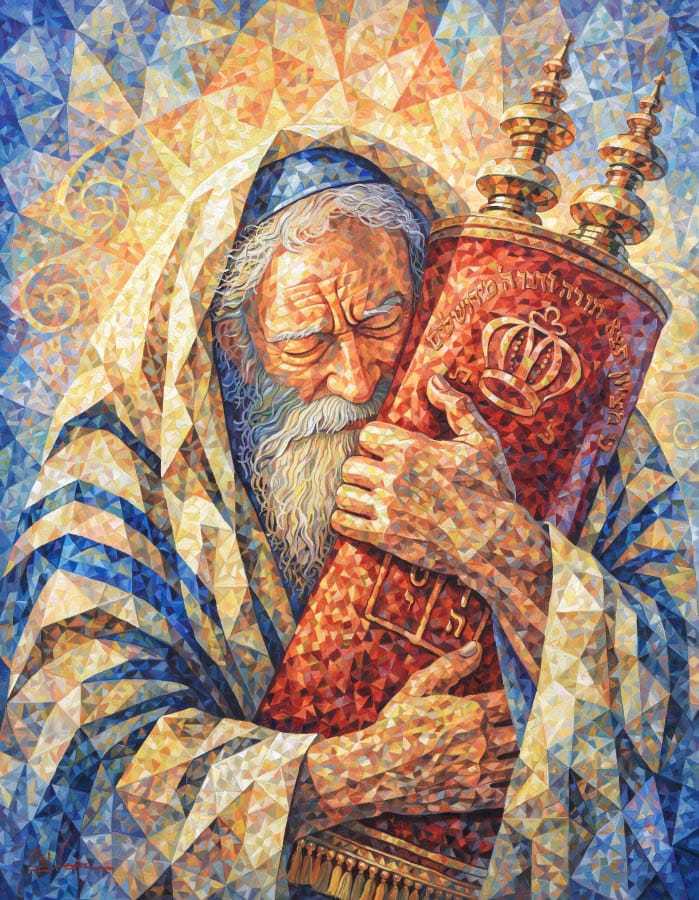
Another compelling companion piece is The Torah That Binds Us Together, which shifts the focus from candlelight to Torah embrace. It underscores a similar truth: Jewish ritual art can be intimate and symbolic without losing its sense of reverence. Together with the featured painting, these works create a harmonious visual conversation about holiness, continuity, and the dignity of tradition.
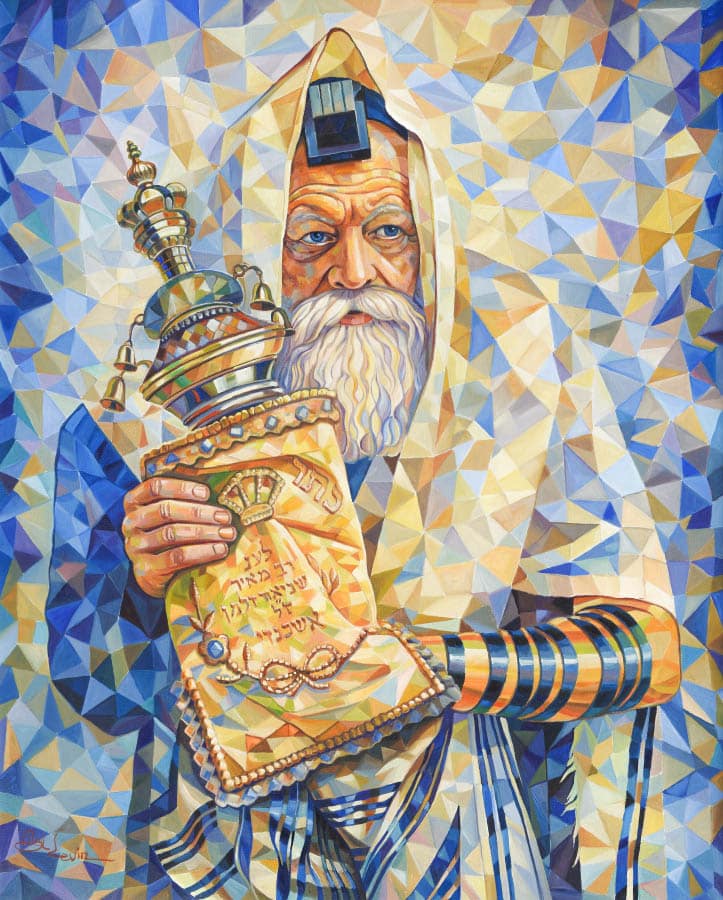
Collectors who prefer portrait-like presence may also appreciate The Lubavitcher Rebbe with the Torah, where spiritual leadership and sacred text become the center of the image. Though the subject differs, the emotional register is related – a focus on faith made visible through color, gesture, and light. That shared sensibility is part of what makes Levin’s Judaica works so coherent as a body of art.
Viewed in this context, Woman honoring the Shabbat becomes more than a single painting. It is part of a larger artistic conversation about Jewish life, Jewish memory, and the beauty of observance. Its strength lies in its ability to hold one private moment and make it feel universal.
Discover the featured paintings
Woman honoring the Shabbat
This painting centers the intimate act of Shabbat candle lighting as a moment of prayer, dignity, and light. The woman’s covered eyes and the warm glow of the candles create a feeling of devotion that is both personal and timeless.
Jerusalem details in the composition deepen the spiritual meaning, connecting the home ritual to the broader landscape of Jewish memory and faith. It is a strong focal work for anyone who wants a contemporary Judaica image with reverence and warmth.

Light Over the Kotel
This companion work places sacred light over the Western Wall, turning Jerusalem’s stones into a radiant symbol of continuity and prayer. The composition emphasizes atmosphere and illumination rather than architectural detail alone.
It pairs naturally with the featured Shabbat painting because both works use light as a spiritual language. One highlights the home, while the other expands that feeling outward toward the heart of Jerusalem.

Radiance of Jerusalem
Here Jerusalem appears as an abstract field of worshippers, texture, and gold-toned presence. The painting feels expansive and ceremonial, with the city presented as a living place of devotion.
It supports the featured piece by showing how the same sacred light can move from an individual ritual to a larger communal vision. For collectors, it offers a broader Jerusalem setting with the same emotional brightness.

The Torah That Binds Us Together
This abstract Jewish painting turns attention to the Torah as a source of unity and spiritual connection. The figure and scroll are rendered with a calm, embracing energy that reflects reverence and belonging.
It serves as a meaningful companion to the Shabbat candle scene because both works emphasize sacred practice as something that gathers people inward. The result is a balanced pairing of light, prayer, and tradition.
The Lubavitcher Rebbe with the Torah
This portrait-style Judaica work presents spiritual leadership through the powerful image of the Rebbe holding the Torah. The composition is direct and dignified, with a strong sense of presence.
Included alongside the featured painting, it widens the collection’s focus from private ritual to communal inspiration. It is especially resonant for viewers who value paintings that honor Jewish devotion through recognizable figures and sacred symbols.
If you are looking for a painting that brings Shabbat meaning into the home with elegance and depth, Woman honoring the Shabbat offers a beautiful choice. Its candlelight, prayerful mood, and Jerusalem connection make it especially well suited to collectors who want art that feels both contemporary and rooted in tradition.
Explore this painting and the surrounding Judaica works to find the image that speaks most clearly to your space, your family, and your sense of sacred light. The collection invites you to bring home a visual reminder of peace, blessing, and the beauty of Friday evening.