The Torah is one of the most powerful and enduring subjects in Jewish art.
Artists have portrayed Torah scrolls in synagogues, during prayer, in moments of study, at celebrations, and in intimate scenes where a person holds or embraces the scroll.
But in Jewish art, the Torah is rarely just an object within the composition.
It can represent learning, faith, continuity, responsibility, memory, and the transmission of Jewish tradition from one generation to the next.
For Israeli artist Alex Levin, the Torah appears across realistic and contemporary works, sometimes as part of a traditional synagogue scene and sometimes as a symbolic source of light connecting Jewish life with Jerusalem and faith.
Explore Alex Levin’s Torah Paintings
Why the Torah Is Such an Important Subject in Jewish Art
The Torah occupies a central place in Jewish religious and communal life.
Because of that importance, artists can use the Torah to communicate meaning immediately.
A closed Torah scroll held carefully in someone’s arms creates one kind of image.
An open scroll being read during synagogue services creates another.
A Torah surrounded by dancing during Simchat Torah expresses celebration.
A quiet still life with books, a tallit, or a Torah can suggest study, contemplation, and memory.
The same sacred object can therefore support many different artistic stories.
The Sefer Torah as a Visual Symbol
A Sefer Torah has a distinctive visual presence.
Its scroll form, handles, mantle, ornaments, and the way it is carried give artists recognizable shapes and gestures to work with.
But the symbolic meaning is even more important.
In art, the Torah can represent the continuity of Jewish learning and tradition.
It can also symbolize the relationship between sacred text and everyday Jewish life.
When an artist places the Torah at the center of a painting, the viewer naturally understands that the subject is not simply the scroll itself, but what it represents.
Torah Reading in the Synagogue
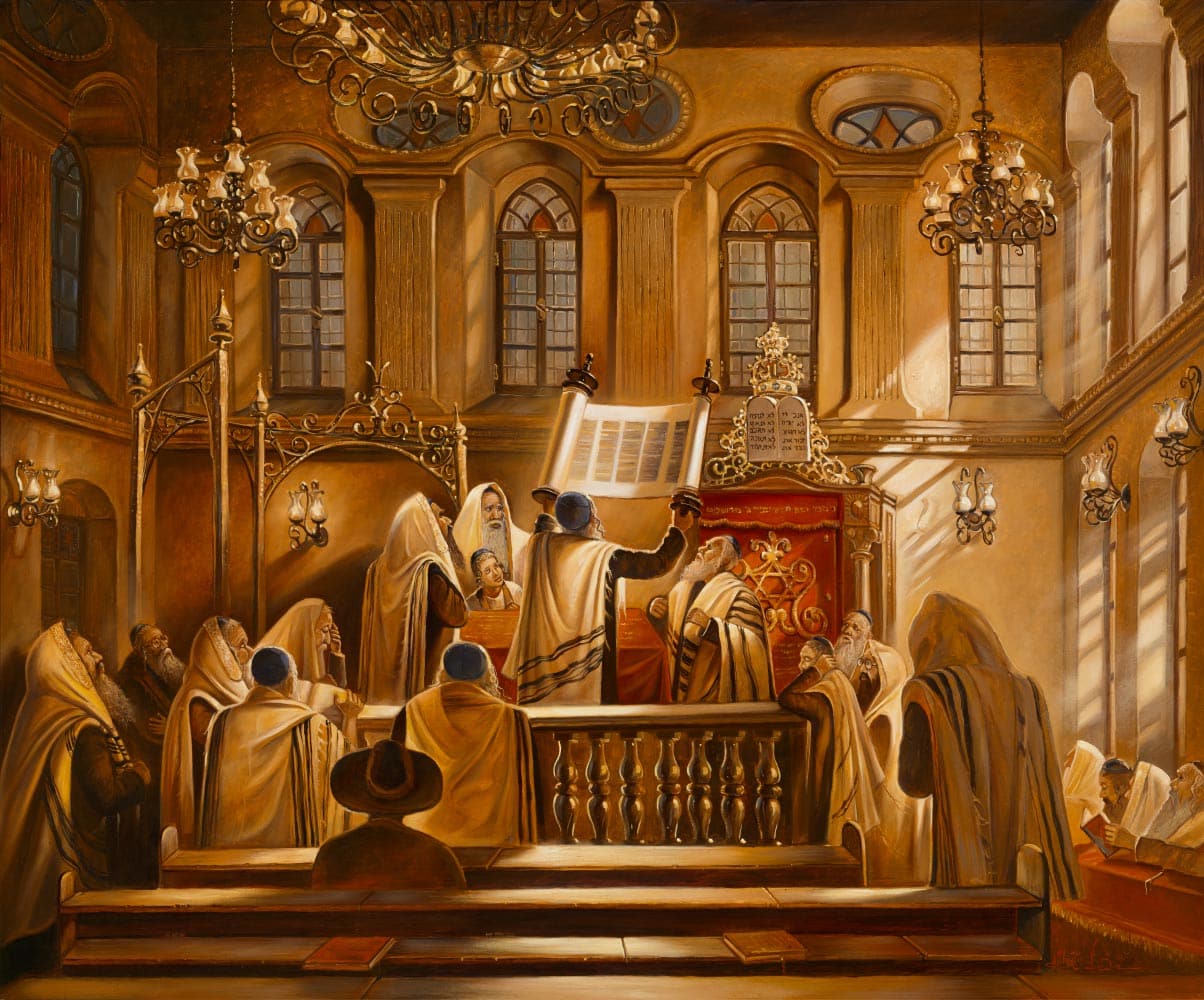
Torah reading is one of the most natural settings for Torah art.
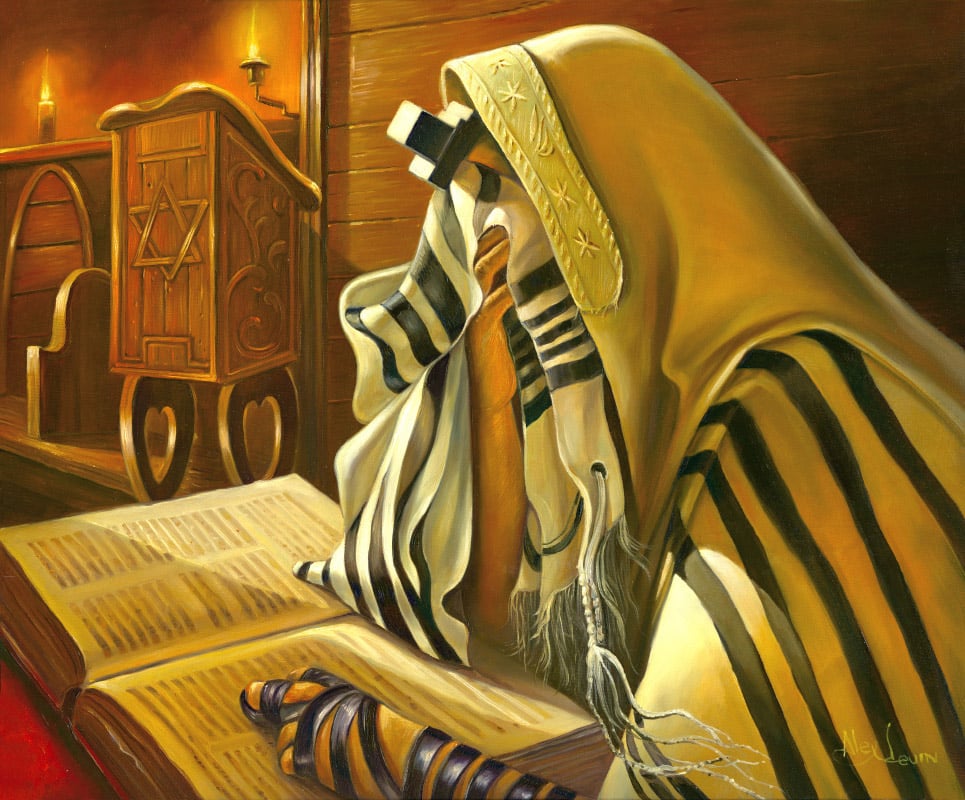
The synagogue gives the artist several visual elements at once: the scroll, reader, surrounding worshippers, tallitot, books, architecture, and light.
These scenes can emphasize community as much as individual prayer.
The Torah may be physically at the center of the composition while people gather around it.
That arrangement visually reflects the central place of Torah within communal Jewish worship.
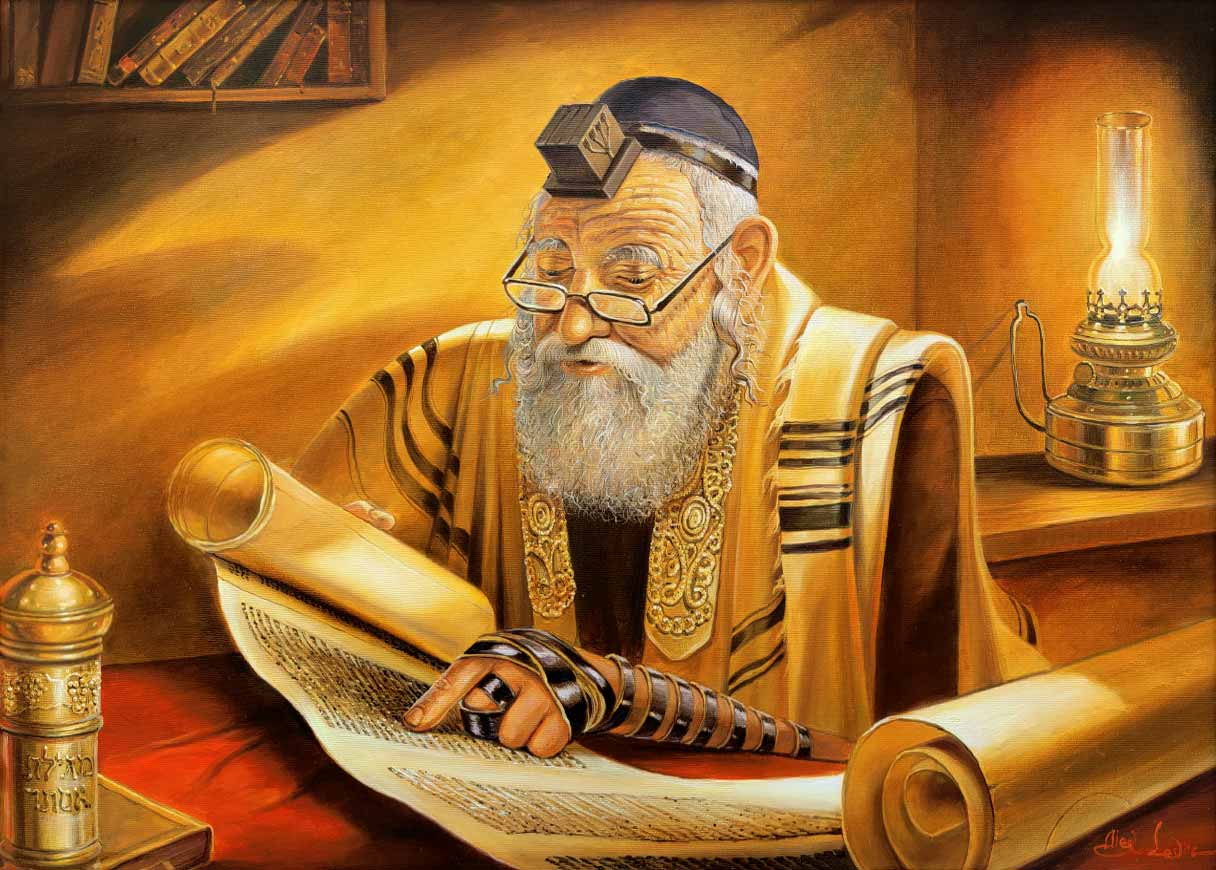
Alex Levin’s Torah collection includes several works based on synagogue prayer and Torah reading.
Holding and Embracing the Torah
Some of the most emotional Torah paintings are much simpler.
Instead of showing an entire synagogue, the artist may focus on one person holding a Torah.
The physical gesture can carry much of the meaning.
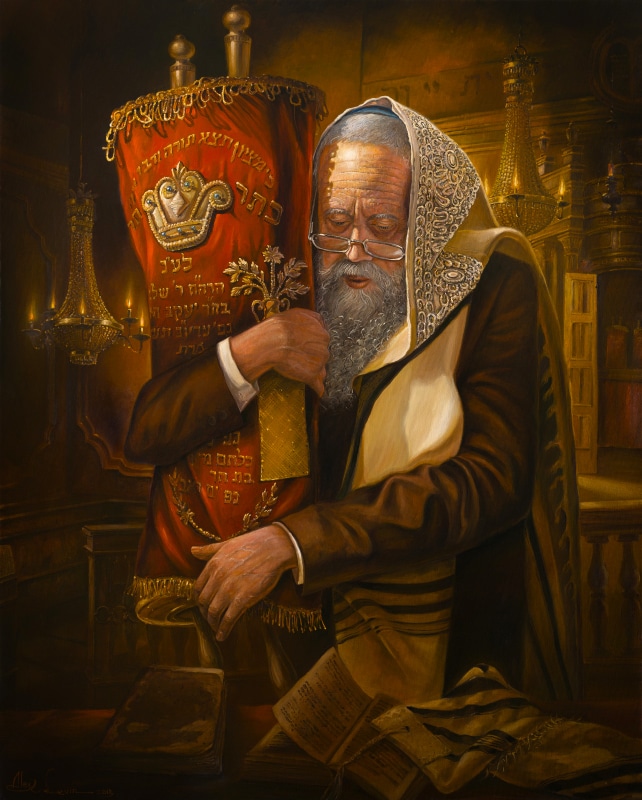
Holding the Torah close to the body can suggest love, responsibility, protection, devotion, and personal connection.
In a painting such as Alex Levin’s Embracing the Torah, the relationship between the person and the scroll becomes the central idea rather than the surrounding environment. (artlevin.com)
This kind of composition makes an ancient religious symbol feel deeply personal.

Torah Study in Jewish Art
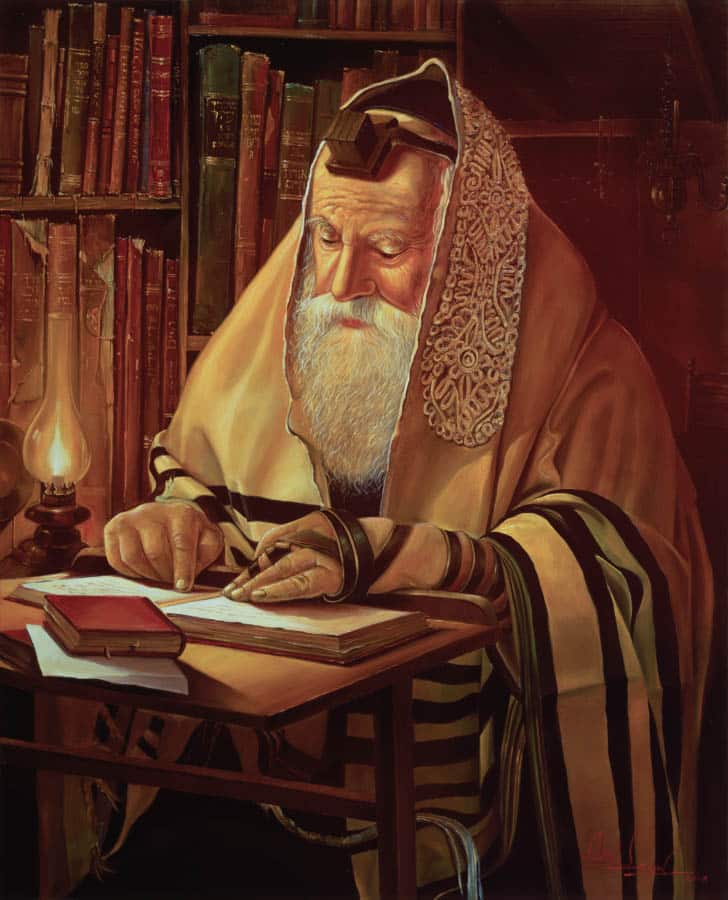
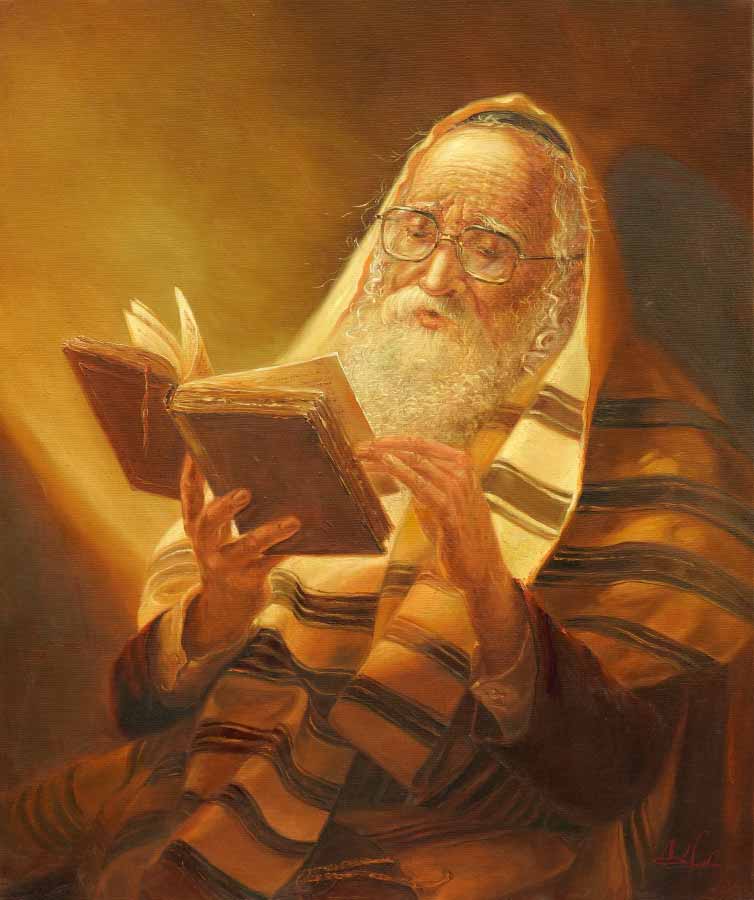
Torah is not only read publicly in synagogue.
It is studied.
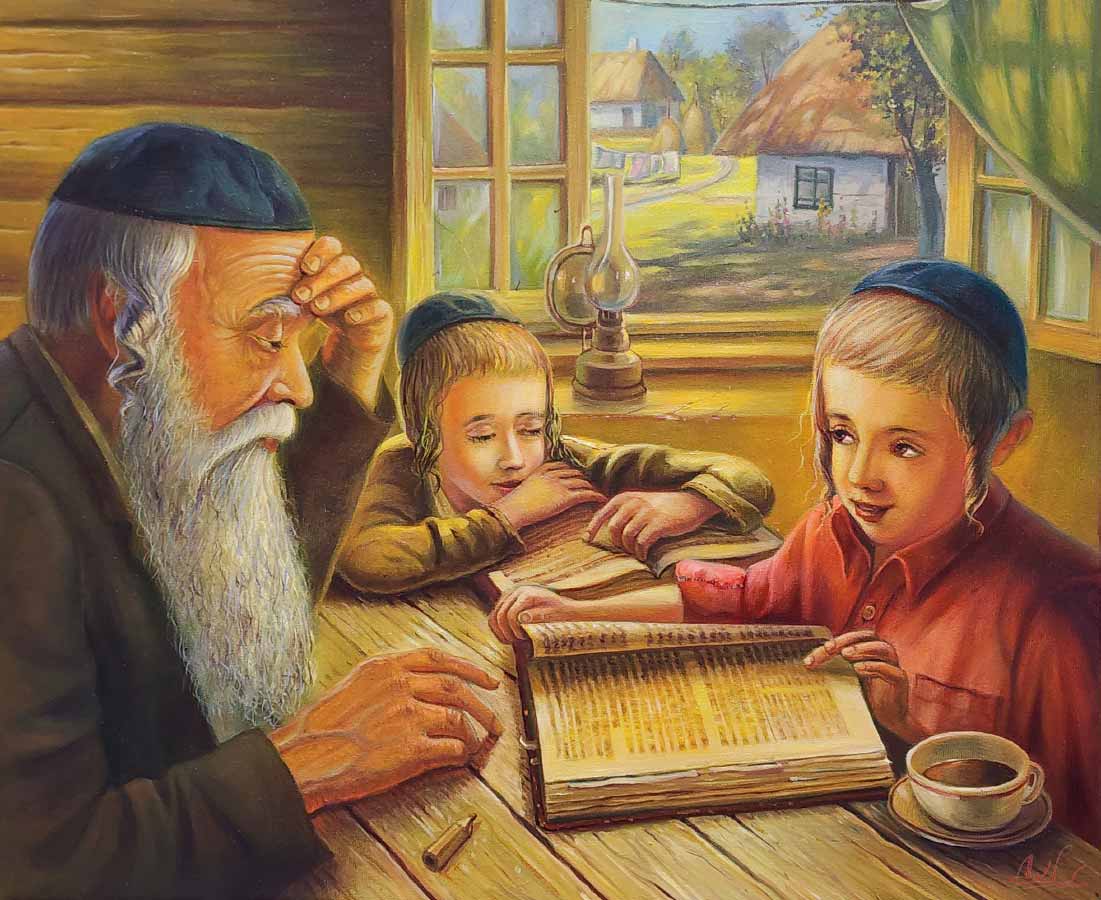
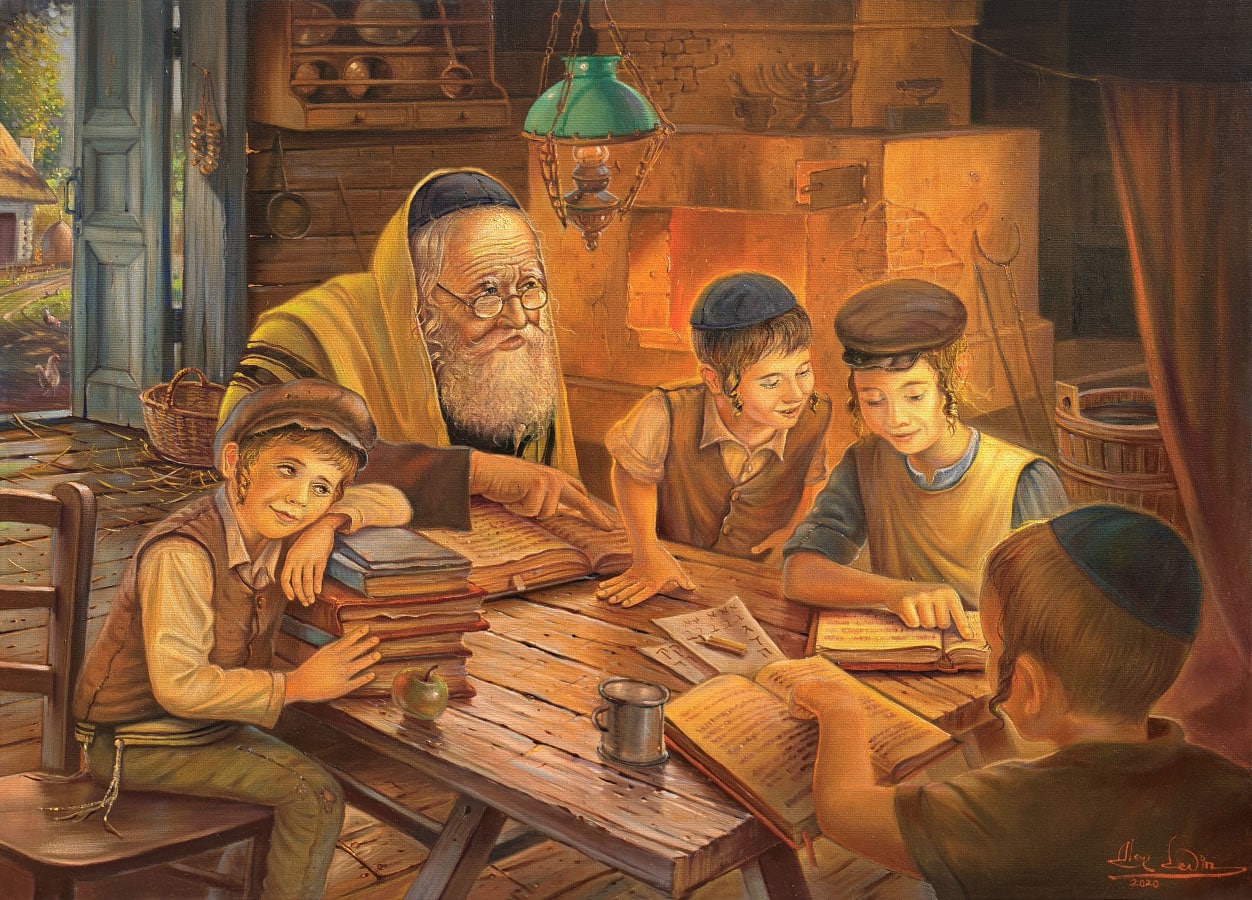
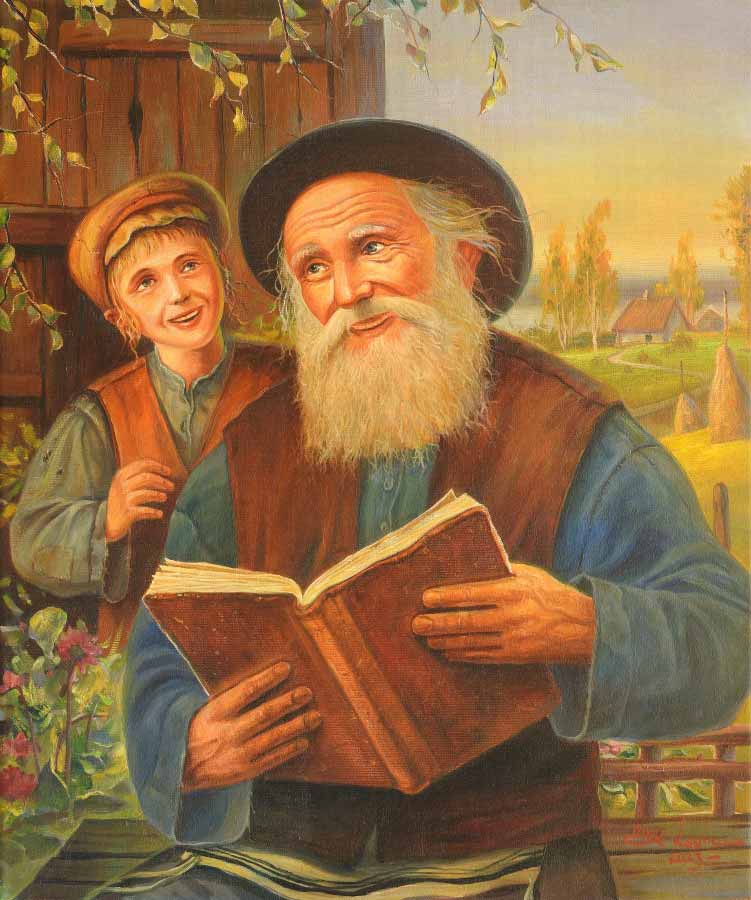
That gives artists another important group of subjects: students, teachers, rabbis, fathers and children, grandparents and grandchildren, and individuals absorbed in books.
These scenes often communicate patience and continuity rather than ceremony.
A student leaning over a text can represent an individual moment of learning.
Two generations studying together can express how Jewish knowledge is transmitted across time.
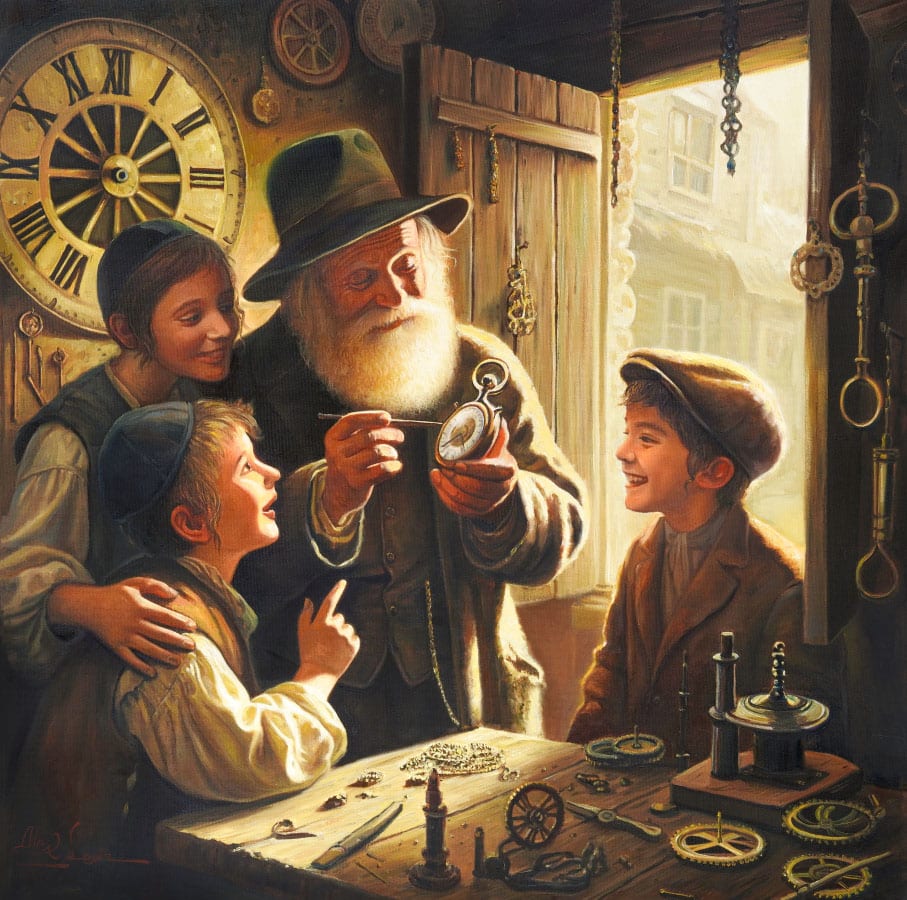
This theme also connects naturally with Alex Levin’s paintings of shtetl life, where education and Jewish study frequently appear as part of family and community life.
Explore Jewish Shtetl Paintings
Simchat Torah: Torah as Celebration
Not every Torah painting is quiet or contemplative.
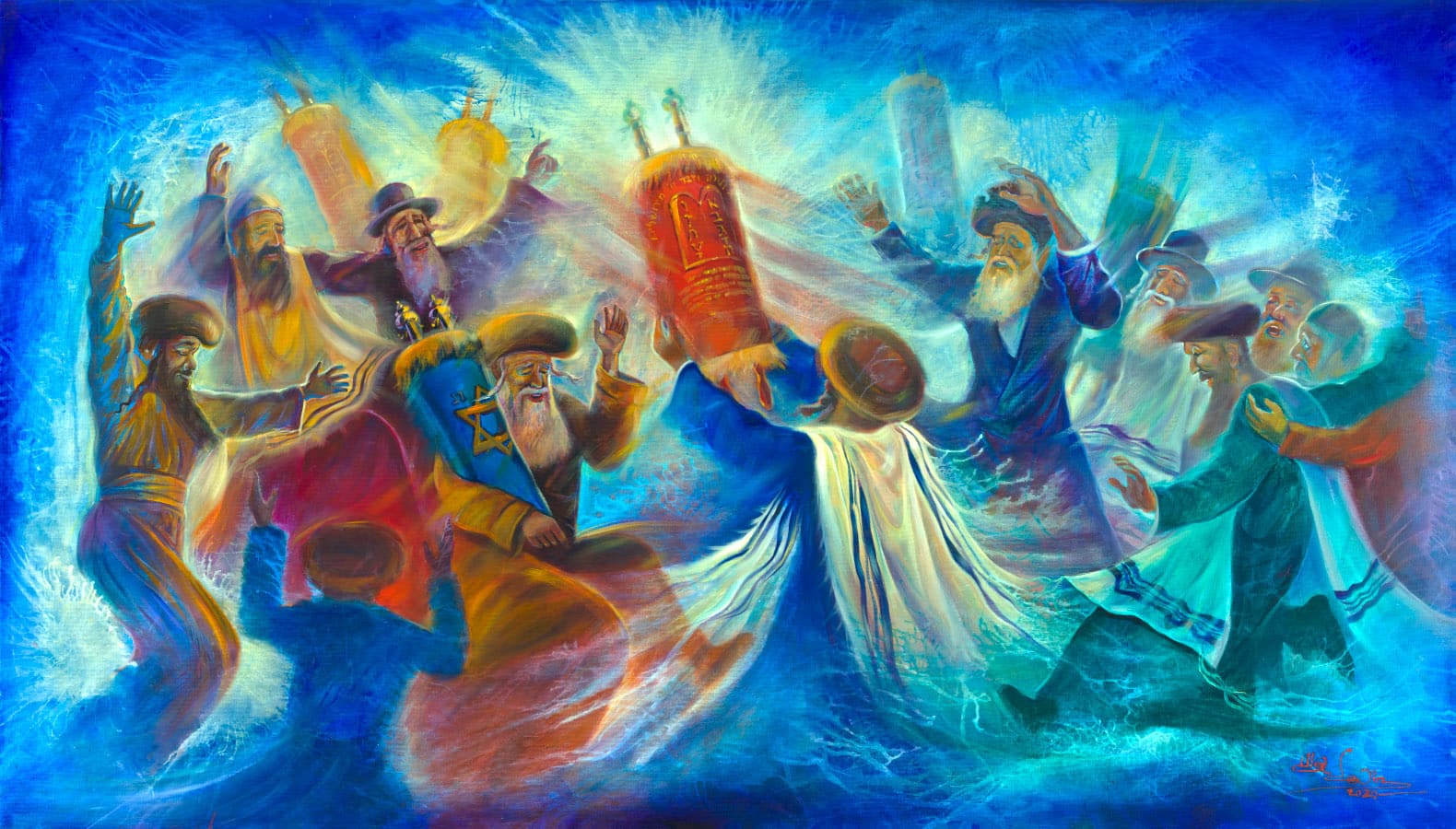
Simchat Torah gives artists an opportunity to portray the Torah through movement, music, dancing, and celebration.
The scroll is carried rather than placed on a reading table.
People gather around it.
Bodies move through the composition.
Color can become more intense.
The result is a very different visual interpretation of the same sacred object.
Instead of focusing primarily on study or prayer, Simchat Torah art expresses joy in the Torah itself.
Alex Levin’s current Torah collection includes a Simchat Torah Celebration painting among its subjects.
The Torah and Jerusalem
Torah imagery can also be connected visually with Jerusalem.
The Kotel, Jerusalem skyline, Temple imagery, and Torah can appear together even though they represent different aspects of Jewish history and religious life.
In contemporary art, an artist does not need to place these elements together in a strictly realistic scene.
Instead, they can be combined symbolically.
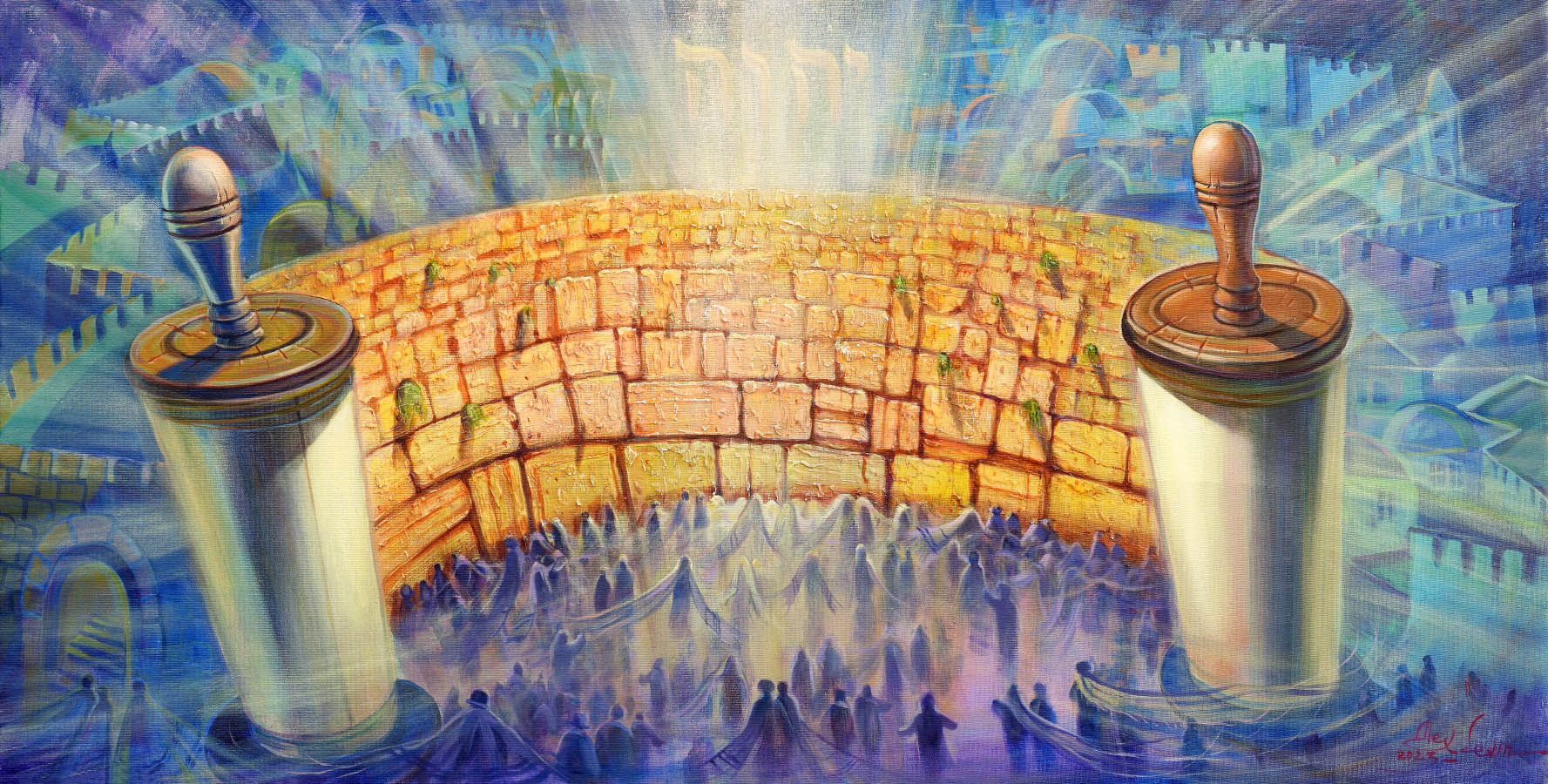
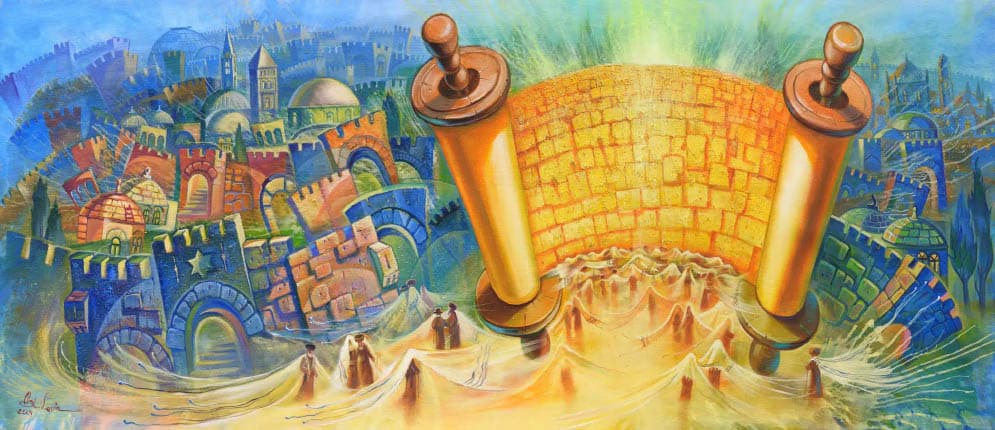
A Torah scroll may appear to illuminate Jerusalem.
Light may connect the Torah with the Western Wall.
The city may surround or emerge from the scroll.
Several works in Alex Levin’s Torah collection use exactly this kind of connection between Torah and Jerusalem.
Light as a Symbol in Torah Art
Light appears frequently in religious art because it can communicate ideas that are difficult to represent physically.
In Torah art, light may suggest wisdom, revelation, faith, hope, or spiritual understanding.
A realistic painting might show actual synagogue lighting or daylight falling across the Torah.
A contemporary painting can go much further.
The scroll itself may appear luminous.
Light may radiate outward into the surrounding composition.
Color can become symbolic rather than naturalistic.
This allows the artist to transform an ordinary visual effect into part of the spiritual meaning of the work.
Torah Still Life Paintings
A Torah painting does not always need people.
Still life provides another way to approach Jewish religious art.
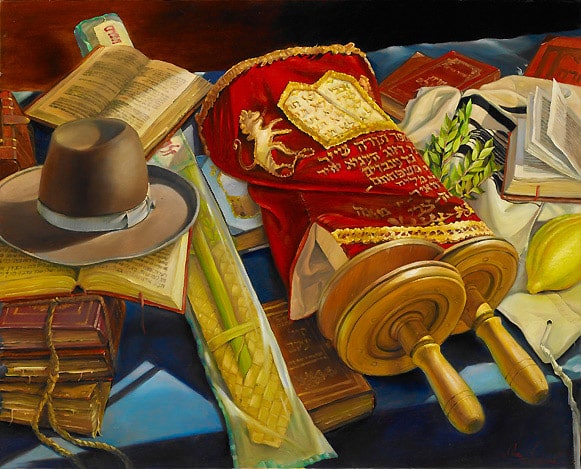
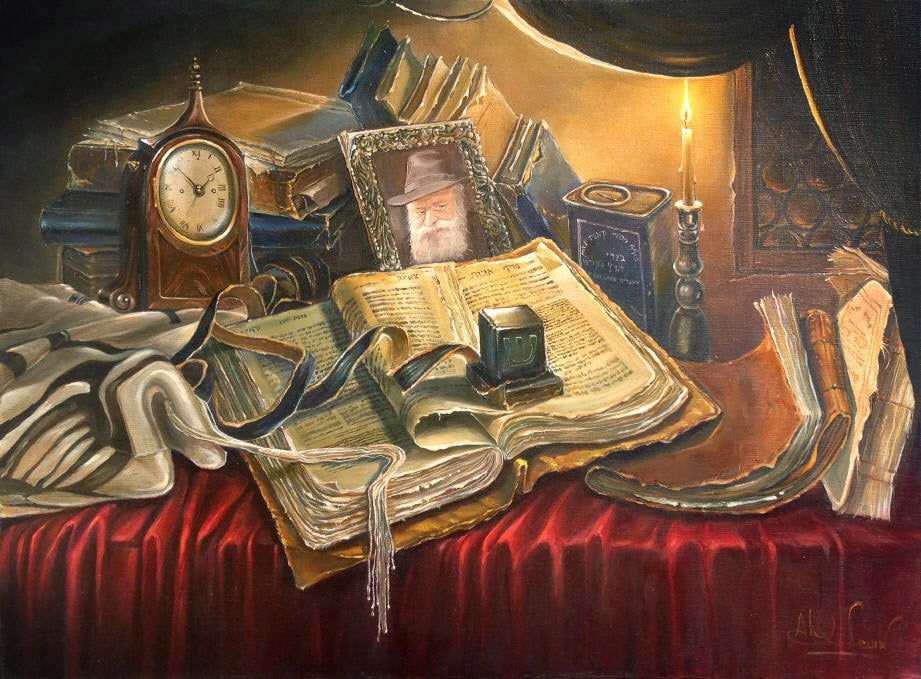
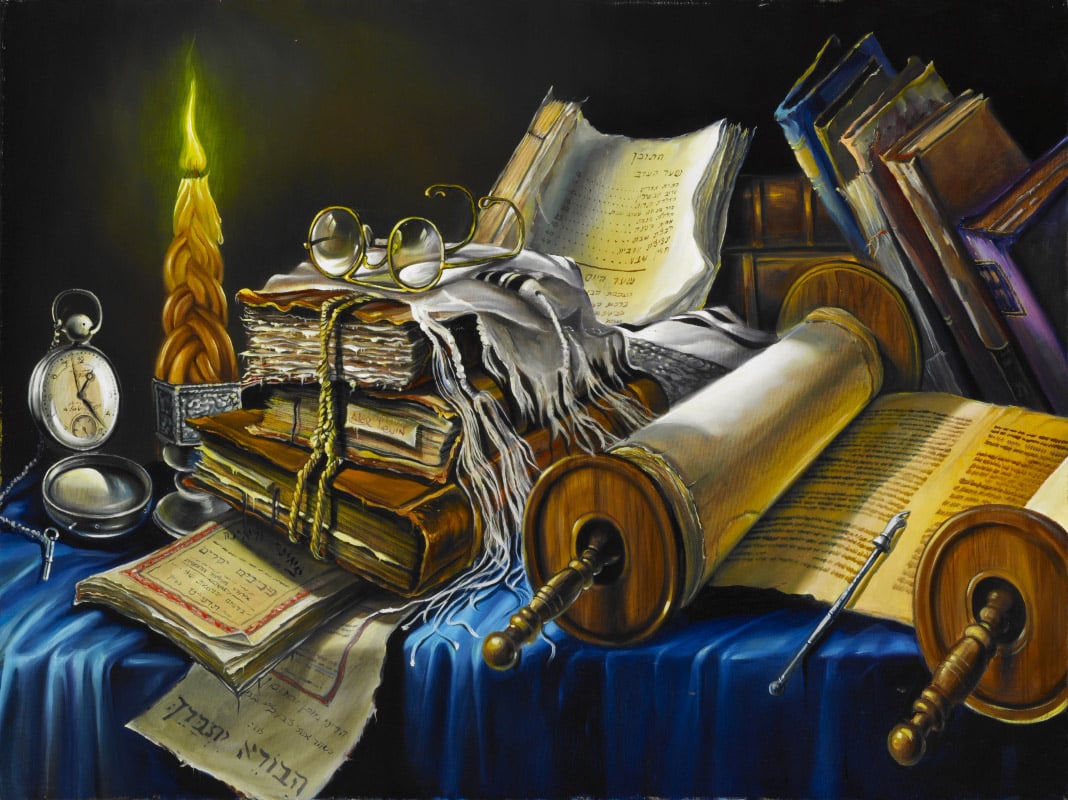
A Torah scroll placed beside books, a hat, glasses, a tallit, or other familiar objects can create the feeling that someone has just stepped away from the scene.
That absence can make the painting feel surprisingly personal.
The viewer begins to imagine the person who studies there, prays there, or uses those objects.
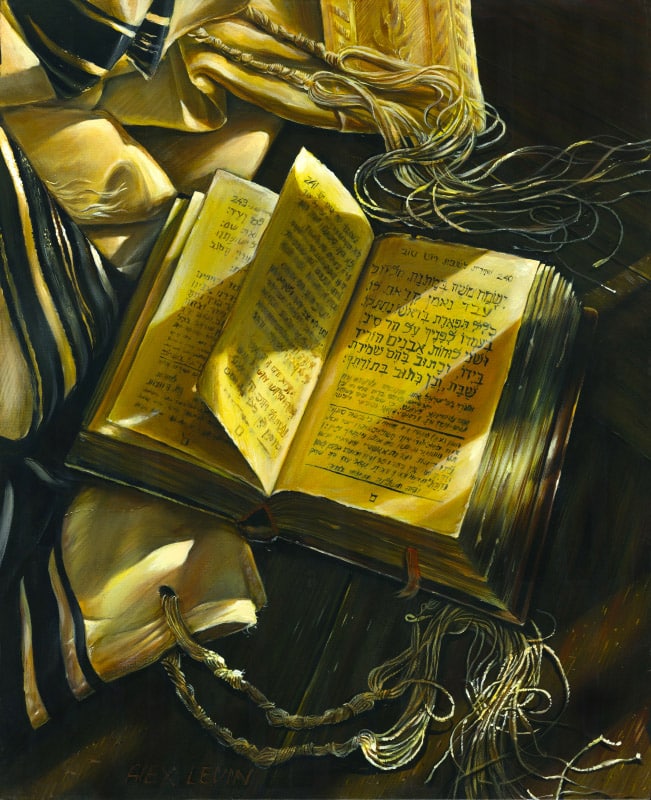
Alex Levin’s collection includes several Torah still lifes, including works with an open Torah and compositions combining the Torah with books and personal objects.
These quieter paintings can communicate Jewish life without showing a figure at all.
Torah Portion Paintings: Turning Sacred Text Into Visual Stories
There is another form of Torah art that does not necessarily show a Torah scroll.
Instead, the painting illustrates the stories found within the Torah itself.
Alex Levin has developed a Torah Portions in Art series based on weekly parashot.
The current series includes subjects such as Moses and the Burning Bush, Jacob’s ladder, Isaac blessing Jacob, Abraham’s journey, and other biblical narratives. (artlevin.com)
These works approach Torah from a different direction.
Rather than showing the sacred scroll, they transform its stories into visual scenes.
Explore Torah Portion Paintings
Traditional and Contemporary Torah Art
Torah art can be traditional or contemporary.
A traditional painting may show recognizable figures, synagogue interiors, religious clothing, and carefully rendered Torah scrolls.
Contemporary Torah art may simplify figures, use unusual color, introduce abstraction, or combine the Torah with symbolic imagery.
Both approaches can communicate the same fundamental themes.
The difference is how the artist chooses to express them.
A realistic painting may emphasize a moment of prayer.
An abstract Torah painting may emphasize the emotional or spiritual energy of that moment.
Alex Levin works in both approaches, which allows Torah to appear across very different visual styles.
Explore Contemporary Jewish Art
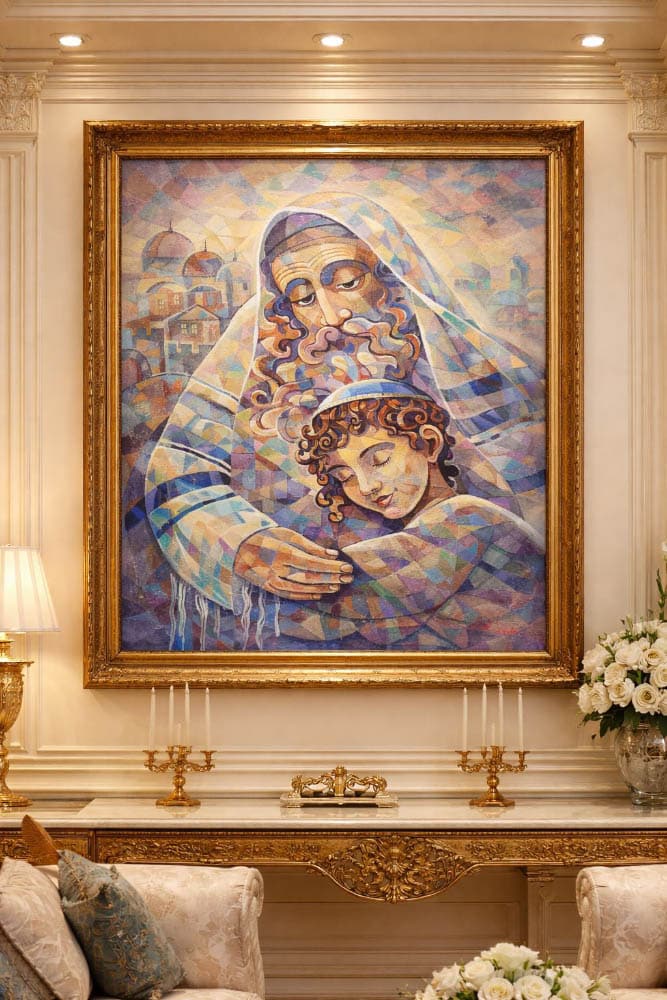
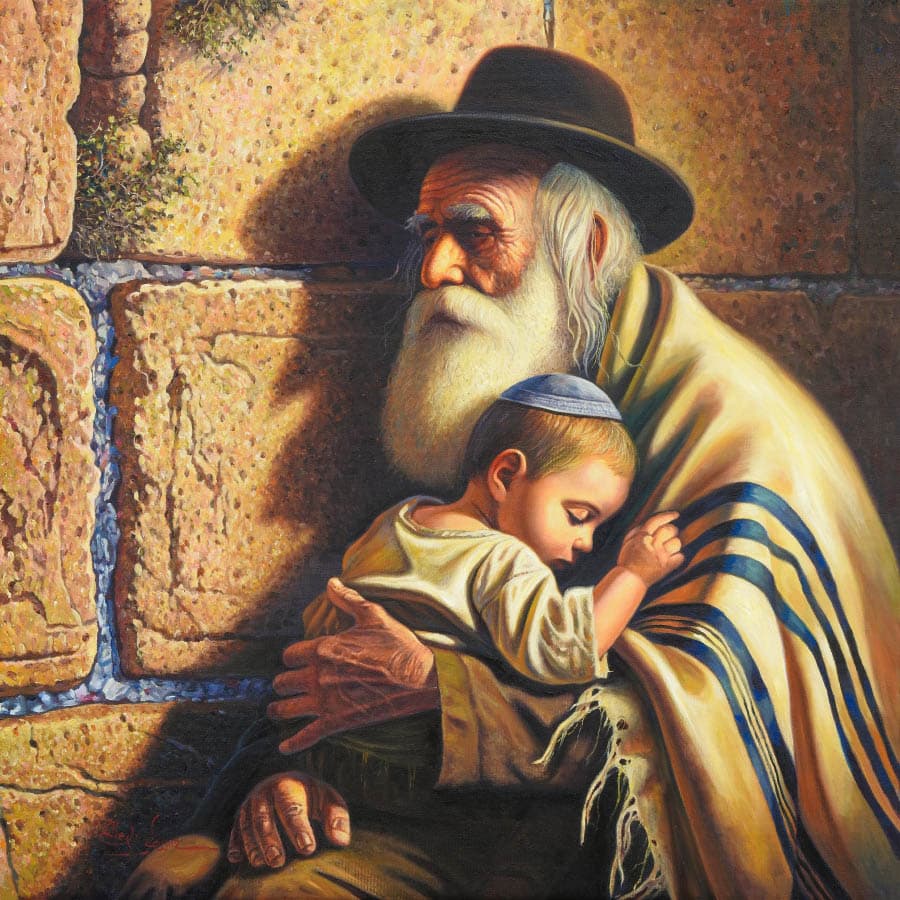
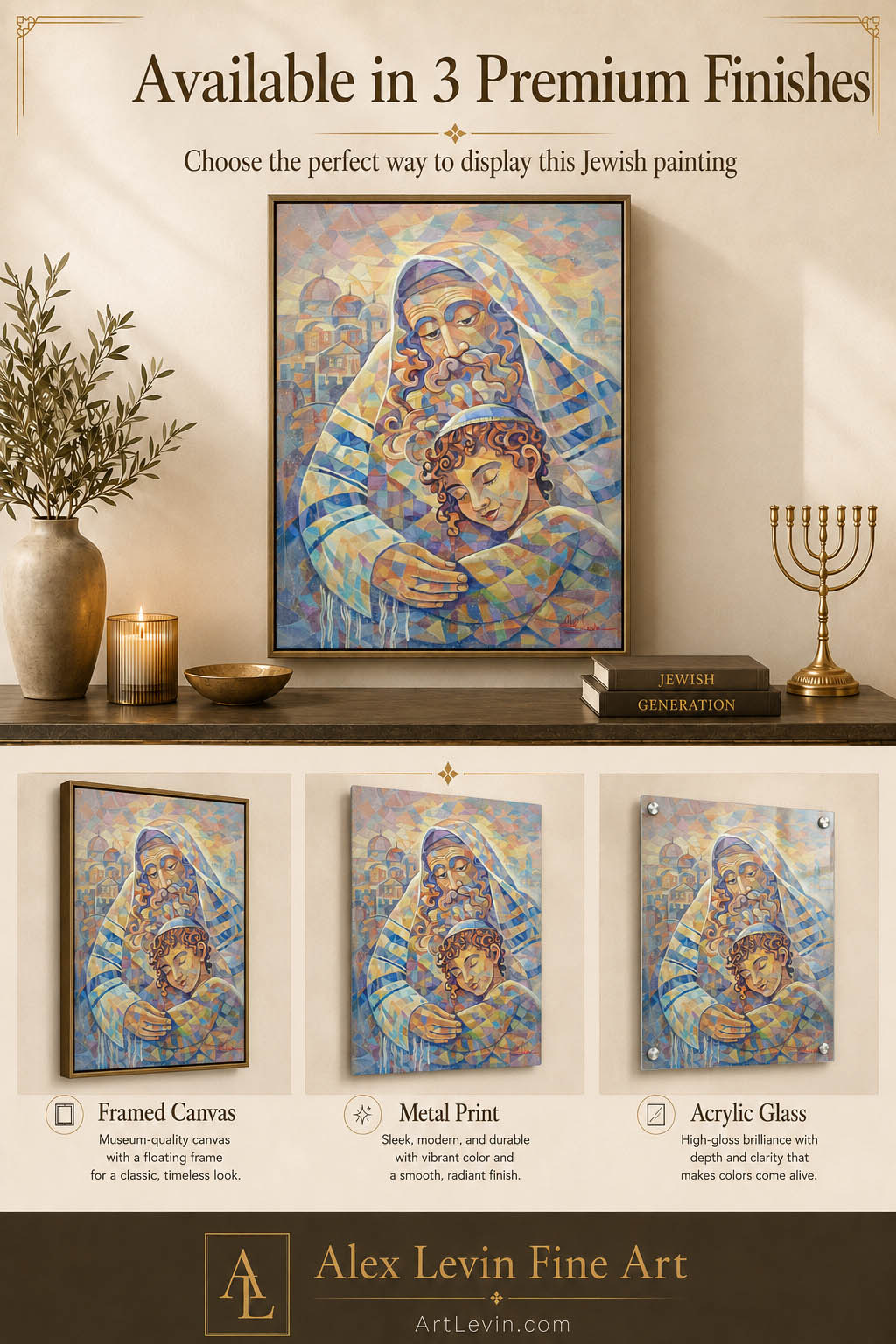
Torah and the Connection Between Generations
One of the deepest themes in Torah art is continuity.
A Torah scroll has been copied, read, studied, and passed through Jewish communities for generations.
That history can be represented visually through people.
An older person studying with a child.
A parent guiding a son or daughter.
A teacher surrounded by students.
A person holding the Torah with care.
Each image can communicate the same broader idea: Jewish tradition continues because each generation receives something and then passes it forward.
This theme connects Torah art naturally with Jewish life paintings, shtetl scenes, Shabbat paintings, and Jewish portraiture.


Torah Art in the Jewish Home
Torah artwork can carry strong personal meaning in a home.
A synagogue scene may remind someone of prayer or community.
A Torah study painting can work naturally in a library, office, school, or study.
A contemporary Torah work may provide Jewish symbolism while fitting into a modern interior.
A painting centered on family or generations can have particular meaning as a gift.
Torah art is also frequently appropriate for synagogues, Jewish schools, community centers, and other spaces where Jewish learning is part of the environment.
The best choice depends less on whether the painting is traditional or contemporary and more on the connection the viewer feels with the subject.
Explore Related Jewish Art
- Torah Paintings
- Torah Portion Paintings
- Jewish Life Paintings
- Shtetl Paintings
- Shabbat Paintings
- Jewish Portraits
- Contemporary Jewish Art
- Jerusalem Paintings
Frequently Asked Questions About Torah in Jewish Art
What does the Torah symbolize in Jewish art?
The Torah can symbolize Jewish faith, learning, tradition, responsibility, continuity, and the transmission of sacred teachings from one generation to another.
What is Torah art?
Torah art includes artwork depicting Torah scrolls, Torah reading, study, synagogue life, Simchat Torah, biblical narratives, or symbolic interpretations of Torah and Jewish learning.
Why do Jewish artists paint Torah scrolls?
The Torah is central to Jewish religious and communal life. Its recognizable form also gives artists a powerful visual symbol through which they can explore prayer, learning, identity, and tradition.
What is a Sefer Torah?
A Sefer Torah is a handwritten Torah scroll containing the Five Books of Moses and used for public Torah reading in Jewish communal worship.
What is the difference between Torah art and Torah Portion art?
Torah art may depict the scroll itself, Torah reading, study, or related symbolism. Torah Portion art illustrates stories, people, or themes from specific weekly Torah readings.
Why is light often used in Torah paintings?
Artists may use light symbolically to represent wisdom, revelation, spiritual understanding, hope, or the idea of Torah illuminating Jewish life.
What is Simchat Torah art?
Simchat Torah art portrays the celebration associated with completing and beginning the annual Torah-reading cycle, often showing Torah scrolls, dancing, music, and communal joy.
Can Torah art be contemporary or abstract?
Yes. Contemporary artists can use abstraction, expressive color, symbolic light, geometric forms, and unusual compositions while keeping the Torah clearly connected to the meaning of the artwork.
Where can Torah artwork be displayed?
Torah art can work in homes, synagogues, Jewish schools, offices, studies, libraries, community centers, and other spaces where Jewish heritage or learning is meaningful.